
Safety
General information, not medical advice
Your prescriber and the leaflet in your pack know your situation. This page does not.
- Follow your prescriber and the leaflet
- Don't start, stop, or change a dose on your own
- Doses and warnings differ by country and product
Norgesic Tablet: Uses, Dosage, Side Effects, Precautions and Alternates
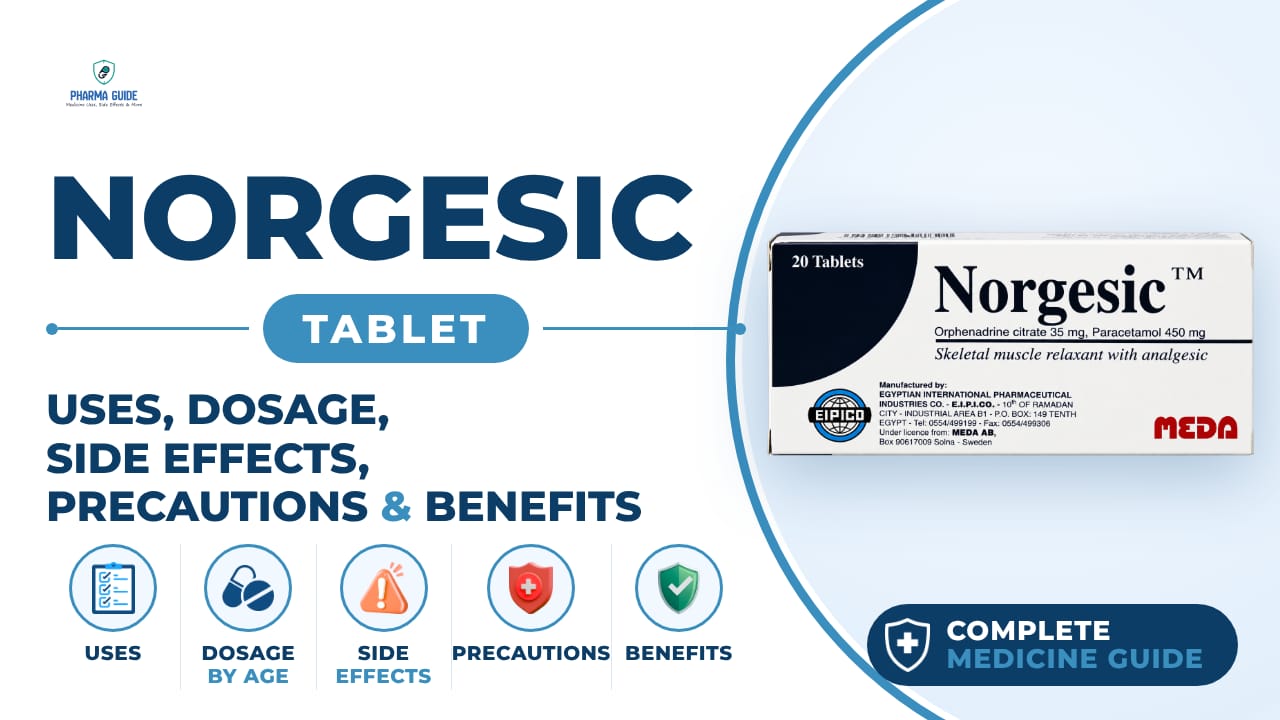
| Generic name | orphenadrine citrate, aspirin, and caffeine (some regional versions use paracetamol instead of aspirin) |
|---|---|
| Drug class | Skeletal muscle relaxant combination |
| Forms | Tablet |
Quick overview
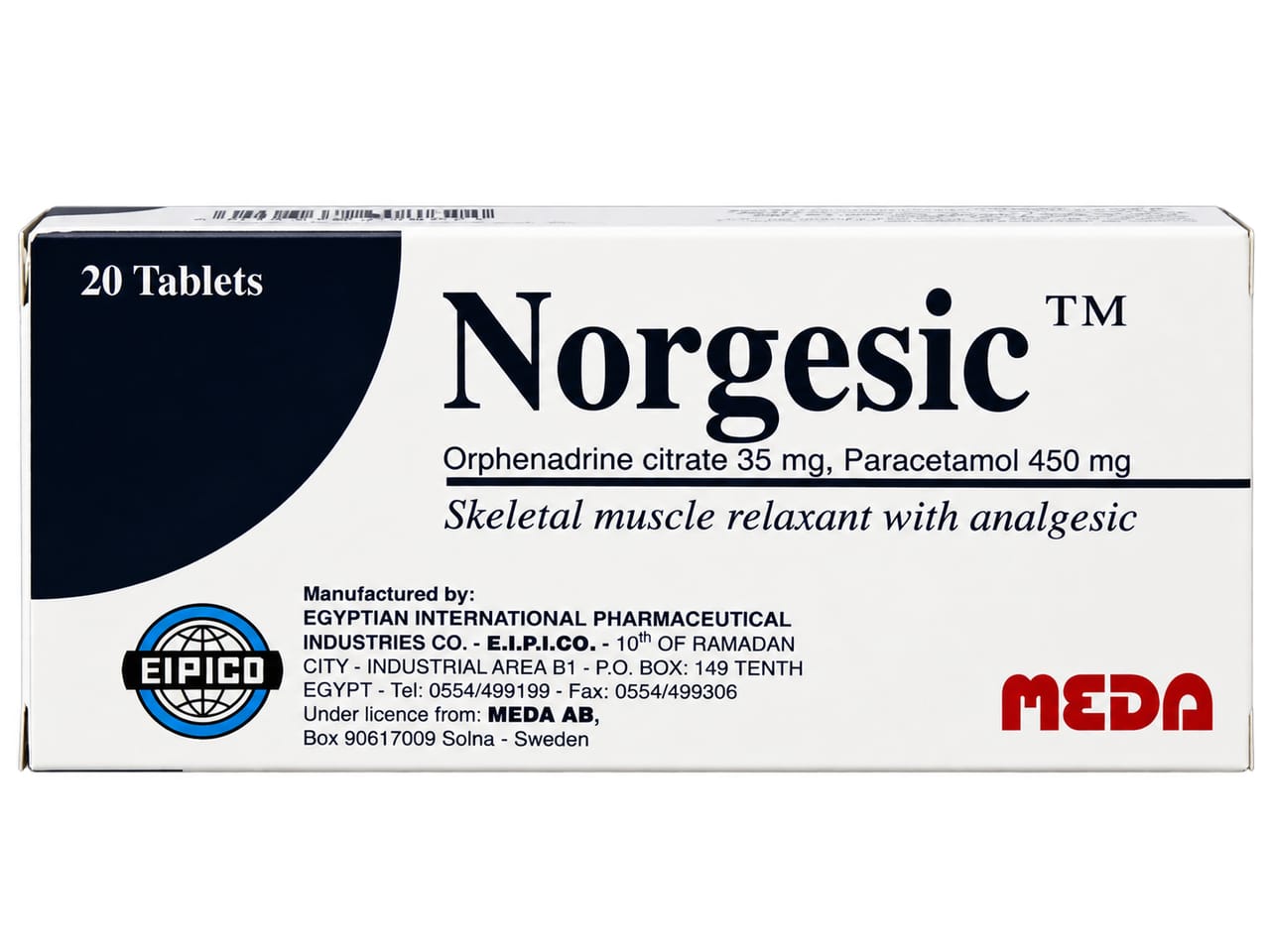
Norgesic Tablet is a combination medicine containing orphenadrine citrate, aspirin (or paracetamol in some regional versions), and caffeine. It belongs to the skeletal muscle relaxant combination drug class and is used, along with rest and physical therapy, for short-term relief of mild-to-moderate muscle pain, spasms, strains, and sprains. It is an opioid-free pain reliever available as a tablet.
What is Norgesic Tablet
Norgesic is a combination medicine that pairs a muscle relaxant (orphenadrine citrate) with a pain and fever reliever (aspirin or, in some regional versions, paracetamol) plus caffeine. It is an opioid-free pain reliever used along with rest and physical therapy for muscle pain.
Norgesic Tablet uses
- Short-term relief of mild-to-moderate acute muscle pain, spasms, strains, and sprains, used along with rest and physical therapy
- Tension headaches and headaches caused by muscle spasms in the neck and back of the head
- Discomfort from acute disorders of the muscles, bones, joints, ligaments, or tendons
Benefits of Norgesic Tablet
- Combines a muscle relaxant with a pain reliever and caffeine in one tablet for multi-action relief
- Caffeine boosts the pain-relieving effect of the other ingredients
- Can be used alongside rest and physical therapy to help you recover from muscle injuries
How Norgesic Tablet works
Orphenadrine relaxes muscles by acting on the brain and nervous system to block pain signals and reduce muscle tension. Aspirin reduces pain, swelling, and fever by lowering certain substances in the body that cause these symptoms. Caffeine is added because it boosts the pain-relieving effect of the other ingredients.
Norgesic Tablet dosage
Take each dose with a full glass of water. Take the medicine exactly as your doctor directs, and do not take more than prescribed even if your pain isn't fully relieved. If you miss a dose, take it as soon as you remember, but if it's almost time for your next dose, skip the missed one — do not double up. This medicine is not recommended for children under 12 years of age.
| Age group | Dose |
|---|---|
| Under 12 years | No established pediatric dosage; aspirin-containing formulation is not recommended for routine use |
| 12–17 years | No established adolescent-specific dosage; specialist assessment required because of aspirin-related risks |
| 18–64 years | 1–2 tablets, 3–4 times daily, according to prescription |
| 65–74 years | No separate age-specific dose; adult reference 1–2 tablets, 3–4 times daily, but lower doses may be necessary |
Available forms and strengths
- Tablet
Side effects of Norgesic Tablet
Common
- Drowsiness or dizziness
- Dry mouth
- Blurred vision or dilated pupils
- Nausea, vomiting, or stomach upset
- Constipation
- Fast or pounding heartbeat (palpitations)
- Difficulty or hesitancy urinating
- Headache
- Tremor
- Weakness
- Faint ringing in the ears
- Sweating
- Hiccups
Serious
- Signs of an allergic reaction such as difficulty breathing, swelling of the face, lips, or tongue, or hives
- Irregular or very fast heartbeat
- Confusion, hallucinations, or unusual behavior
- Red, black, or bloody stools, or blood in vomit (signs of stomach bleeding)
- Unusual bruising or bleeding
- Severe skin reactions with rash, fever, blistering, or peeling skin
- Signs of liver problems such as yellowing skin, dark urine, or abdominal pain
- Fainting or significant drop in blood pressure
- Trouble breathing
Warnings and precautions
- Do not take this medicine if you have glaucoma, myasthenia gravis, an enlarged prostate, a blockage in the bladder or intestines, or a known allergy to its ingredients.
- Because this medicine contains aspirin, do not give it to children or teenagers with a fever, flu symptoms, or chickenpox, due to the risk of a rare but serious condition called Reye's syndrome.
- Use with extra caution if you have peptic ulcers or a bleeding or clotting disorder, as the aspirin in this medicine can cause stomach bleeding.
- This medicine can cause serious, sometimes life-threatening skin or allergic reactions. Stop taking it right away and get medical help if you develop a rash, fever, trouble breathing, or swelling of the face, lips, tongue, or throat.
- Do not take other products containing aspirin at the same time, as too much aspirin can be dangerous.
- Avoid this medicine in the later stages of pregnancy. It's not known for certain whether it's safe for an unborn baby, so talk to your doctor before use if you are or might become pregnant.
- It is not known whether this medicine passes into breast milk, so talk to your doctor before use if you are breastfeeding.
- Tell your doctor if you have kidney disease before taking this medicine, since it may require special monitoring or a dosage change.
- Tell your doctor if you have liver disease before taking this medicine, since it may require special monitoring or a dosage change.
- Avoid alcohol while taking this medicine, as it can increase drowsiness and dizziness, and combined with aspirin it can also harm your stomach.
- Be careful when driving, operating machinery, or doing other activities that need full alertness, since this medicine can cause dizziness, drowsiness, or blurred vision.
Storage
- Store Norgesic at room temperature away from moisture and heat
- Store below 30°C (86°F) in a cool, dry place away from moisture, heat, or sunlight
- Keep out of the reach of children
- If you no longer need the medicine or it is out of date, take it to a pharmacy for safe disposal
When to see a doctor
- Get emergency medical help right away if you have signs of an allergic reaction such as difficulty breathing, swelling of the face, lips, tongue or throat, or hives.
- Seek emergency care for an irregular or very fast heartbeat.
- Get medical help right away if you notice confusion, hallucinations, or abnormal behavior.
- Seek emergency medical attention if you notice red, black, or bloody stools, or blood in vomit, as this could mean stomach bleeding.
- If you think you've taken too much of this medicine, seek emergency medical attention right away.
- Call your doctor right away if you develop a rash, itching, fever, or nasal congestion while on this medicine.
Alternatives
- Methocarbamol
- Naproxen
- Ibuprofen
Watch the video
FAQs
What is Norgesic Tablet used for?
It is used for short-term relief of mild-to-moderate muscle pain, spasms, strains, and sprains, along with rest and physical therapy. It also helps with tension headaches and discomfort from acute disorders of muscles, bones, joints, ligaments, or tendons.
How does Norgesic Tablet work?
Orphenadrine acts on the brain and nervous system to block pain signals and reduce muscle tension, aspirin reduces pain, swelling, and fever, and caffeine boosts the pain-relieving effect of the other ingredients.
What is the dosage of Norgesic Tablet for adults?
For adults aged 18 to 64, the typical dose is 1–2 tablets, 3–4 times daily, according to prescription. It is not recommended for children under 12 years of age.
What are the common side effects of Norgesic Tablet?
Common side effects include drowsiness, dizziness, dry mouth, blurred vision, nausea, constipation, palpitations, difficulty urinating, headache, tremor, weakness, ringing in the ears, sweating, and hiccups.
Who should avoid taking Norgesic Tablet?
It should not be taken by people with glaucoma, myasthenia gravis, an enlarged prostate, a blockage in the bladder or intestines, or a known allergy to its ingredients. Due to the aspirin content, it should not be given to children or teenagers with fever, flu symptoms, or chickenpox because of the risk of Reye's syndrome.
General information, not medical advice
Your prescriber and the leaflet in your pack know your situation. This page does not.
- Follow your prescriber and the leaflet
- Don't start, stop, or change a dose on your own
- Doses and warnings differ by country and product
Sources
Video
Related medicines

Injectafer Injection: Uses, Dosage, Side Effects, Precautions and Alternates
Iron products
Injectafer (ferric carboxymaltose) treats iron deficiency anemia and heart failure-related iron deficiency via IV. Learn uses, dosage, side effects, and

Gliclazide Tablet: Uses, Dosage, Side Effects, Precautions and Alternates
Sulfonylurea (hypoglycemic/antidiabetic agent)
Gliclazide Tablet is a sulfonylurea for type 2 diabetes that boosts insulin release. Learn about dosage, side effects, warnings, and precautions.