
Safety
General information, not medical advice
Your prescriber and the leaflet in your pack know your situation. This page does not.
- Follow your prescriber and the leaflet
- Don't start, stop, or change a dose on your own
- Doses and warnings differ by country and product
Noriday Tablet: Uses, Dosage, Side Effects, Precautions and Alternates
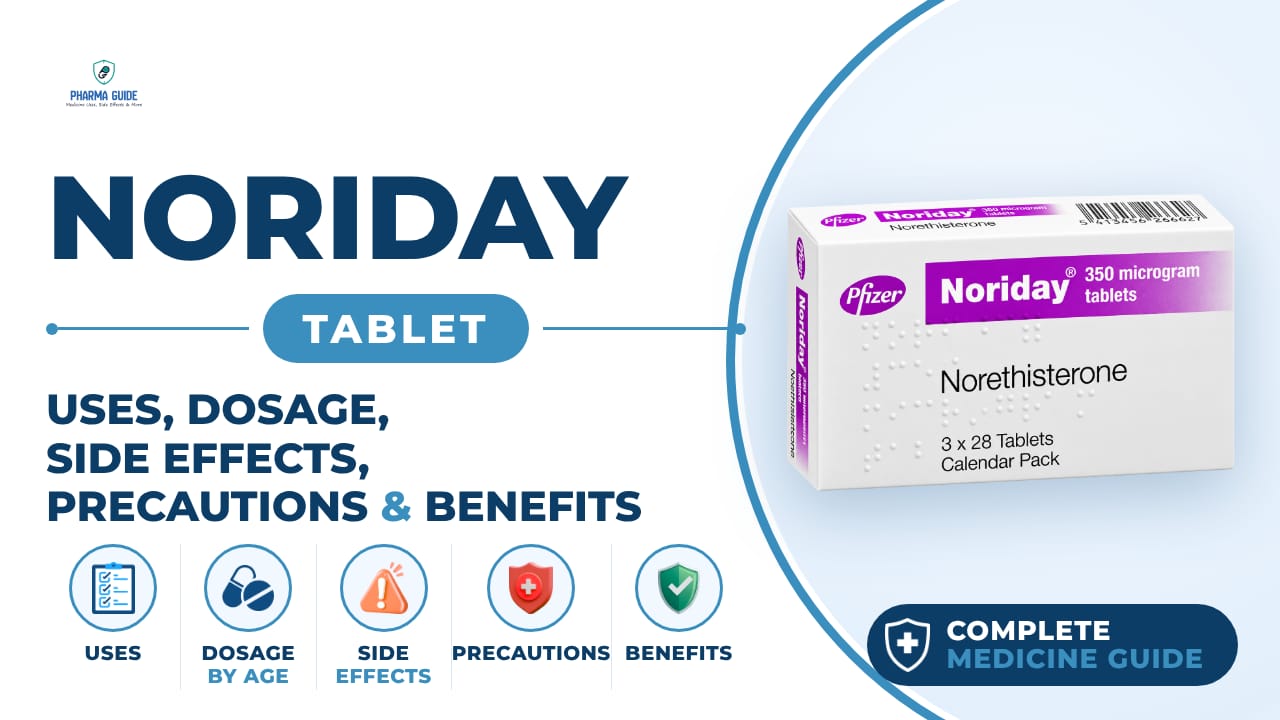
| Generic name | Norethisterone |
|---|---|
| Drug class | Progestogen-only oral contraceptive (mini-pill) |
| Forms | Tablet |
Quick overview
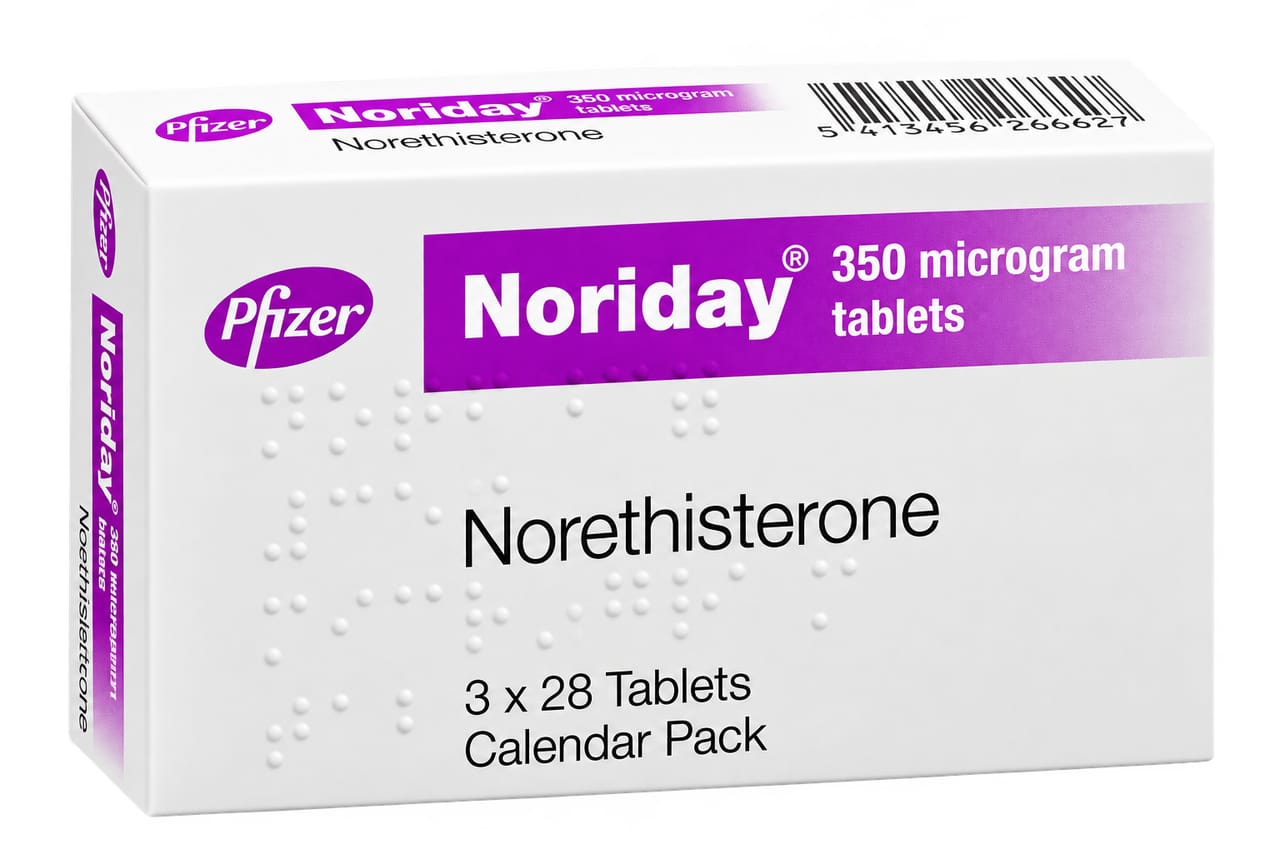
Noriday Tablet contains norethisterone, a progestogen-only oral contraceptive known as the mini-pill. It contains no estrogen and is usually given to women who cannot take combined oral contraceptives or use IUDs. It is taken once daily to prevent pregnancy by thickening cervical mucus and, in some cycles, suppressing ovulation.
What is Noriday Tablet
Noriday is a birth control pill known as a progestogen-only pill or mini pill. It contains norethisterone and no estrogen, so it is usually given to women who cannot take combined oral contraceptives or use IUDs.
Noriday Tablet uses
- Prevents pregnancy in females of reproductive potential.
- Provides continuous progestogen-only contraception.
- Thickens cervical mucus to reduce sperm penetration.
- May suppress ovulation during some menstrual cycles.
Benefits of Noriday Tablet
- Provides effective pregnancy prevention when used correctly.
- Contains no estrogen.
- Offers convenient once-daily oral administration.
- Does not require a scheduled hormone-free interval.
How Noriday Tablet works
It is not fully understood how the progestogen-only pill works, but it is thought to thicken the mucus at the entrance of the womb to make it harder for sperm to pass through, change the lining of the womb so a fertilized egg cannot grow there, and sometimes stop the ovaries from releasing an egg.
Noriday Tablet dosage
Swallow one tablet whole with a glass of water at approximately the same time every day. Start the first tablet on the first day of your next period (the day your bleeding begins). Take the tablet from the top row of the strip that matches the day of the week, and continue taking one tablet every day, following the arrows around the strip, until all tablets in the pack are finished. Start the next strip the day after finishing the previous one, with no breaks between packs. Keep taking tablets whether or not you have a period.
Use an additional non-hormonal method of contraception, such as condoms, during the first two weeks of starting the course. If you have vomiting or diarrhea, keep taking your tablets but also use a non-hormonal method of contraception until your next period, because effectiveness may be reduced.
If you are less than 3 hours late taking a tablet, take it right away and then take the next one at the usual time. If you are more than 3 hours late, still take the tablet but use an additional non-hormonal method of contraception for a period afterward. Do not take two tablets at once to make up for a missed dose. If you switch from another oral contraceptive, ask your doctor or pharmacist for directions.
| Age group | Dose |
|---|---|
| Before menarche | Not indicated before the first menstrual period; no established pediatric dosage |
| Postmenarche–17 years | 350 mcg (0.35 mg) once daily, at the same time each day, when medically appropriate |
| 18–64 years | 350 mcg (0.35 mg) once daily, continuously without a break |
| 65 years and older | Not indicated after menopause; no established geriatric dosage |
Available forms and strengths
- Tablet
Side effects of Noriday Tablet
Common
- Irregular periods, spotting, or periods stopping completely
- Headaches, dizziness, nervousness, mood swings, or depression
- Breast tenderness or discomfort
- Acne
- Changes in sex drive (libido)
- Weight changes
- Fluid retention causing swelling in the hands, ankles, or feet
- Nausea, vomiting, appetite changes, or abdominal cramps
- Gallstones
- Rash
- Feeling tired
- High blood pressure
- Changes in cervical secretions
- Discharge, itching or pain in the vaginal area
- Dark discolouration of the skin
- Excessive hair growth or hair loss
Serious
- Signs of a blood clot or cardiovascular issue, such as severe or sudden chest pain, shortness of breath, or unexplained leg swelling
- Sudden or severe headaches, or worsening/new-onset migraines
- Yellowing of the skin or eyes (jaundice) or signs of liver problems
- Sudden vision changes or complete/partial loss of vision
- Signs of a severe allergic reaction, such as swelling of the face, lips, or tongue, or wheezing
- Sharp, one-sided abdominal pain
- Weakness or paralysis of the face, arm, or leg
- Difficulty speaking, understanding, or swallowing
- Breast lumps
- Rise in blood pressure
Warnings and precautions
- Do not take Noriday if you are pregnant or think you might be pregnant. If you become pregnant while taking it, see your doctor immediately.
- Noriday can be used while breastfeeding, but tell your doctor if you are breastfeeding or plan to, since small amounts of the drug pass into breast milk and there are rare reports of effects on the nursing child, including jaundice.
- Tell your doctor if you have kidney disease, as this may affect whether Noriday is suitable for you.
- Do not take Noriday if you have or have had liver disease, including liver tumours, jaundice, or certain liver-related syndromes.
- No major direct interaction with alcohol is established, although vomiting may interfere with tablet absorption. Noriday is not generally associated with impaired alertness or driving ability.
- Do not take Noriday if you have had a stroke or heart attack, have blood clots in any vessel or the lung, have unexplained abnormal vaginal bleeding, have or suspect cancer of the breast or sex organs, have a lipid metabolism disorder or severe arterial disease, have a history of ectopic pregnancy, or have not yet had your first period.
- Smoking while taking oral contraceptives increases the risk of blood clotting and damage to the heart and blood vessels, especially for heavy smokers over 35 years old.
- Being more than 3 hours late taking a tablet reduces its contraceptive protection, so you need to use backup birth control for a period of time afterward.
- Certain other medicines, such as rifampicin, some antibiotics, antifungals, antiepileptic medicines, and St John's Wort, may reduce how well Noriday works, so an additional non-hormonal contraceptive method should be used while taking them.
Storage
- Keep your tablets in a safe place away from the sight and reach of children
- A locked cupboard at least one-and-a-half metres above the ground is a good place to store medicines
- Keep your Noriday tablets in a dry place, at a temperature below 25°C
- Do not keep your tablets in the refrigerator
- Do not store Noriday or any other medicine in the bathroom or near a sink
- Do not leave it in the car on hot days or on window sills
- If your doctor tells you to stop taking Noriday or if the tablets have passed their expiry date, ask your pharmacist what to do with any that are left over
When to see a doctor
- Get emergency medical help if you have sharp one-sided abdominal pain, weakness or paralysis of the face, arm, or leg, difficulty speaking or swallowing, unexplained or persistent pain in the head, chest, stomach, or legs, swelling and tenderness in the leg, shortness of breath, sudden vision loss or changes, severe migraine for the first time, breast lumps, jaundice, a rise in blood pressure, or swelling of the face, lips, or tongue with difficulty breathing.
- If you think you or someone else has taken too much Noriday, contact your doctor, pharmacist, or poison control center right away, or go to the emergency department, even if there are no symptoms.
- Stop taking Noriday and tell your doctor immediately if your skin or the whites of your eyes turn yellow, or if you have signs of a severe allergic reaction.
Alternatives
- Cerazette
- Desogestrel
- Norgeston
Watch the video
FAQs
What is Noriday Tablet used for?
Noriday is a progestogen-only birth control pill (mini-pill) containing norethisterone, used to prevent pregnancy by thickening cervical mucus and sometimes suppressing ovulation. It contains no estrogen.
How do I take Noriday Tablet?
Swallow one tablet whole with water at the same time every day, starting on the first day of your period. Continue taking one tablet daily following the strip's arrows, starting the next strip immediately after finishing the previous one with no breaks.
What should I do if I miss a dose of Noriday?
If you are less than 3 hours late, take it right away and continue as usual. If more than 3 hours late, take the tablet but use additional non-hormonal contraception for a period afterward. Do not double up tablets.
Can I take Noriday while breastfeeding?
Yes, Noriday can be used while breastfeeding, but you should tell your doctor since small amounts pass into breast milk and there are rare reports of effects on the nursing child, including jaundice.
What are the serious side effects of Noriday Tablet?
Serious side effects include signs of blood clots, sudden severe headaches or new migraines, jaundice, sudden vision changes, severe allergic reactions, sharp one-sided abdominal pain, weakness or paralysis, and breast lumps.
General information, not medical advice
Your prescriber and the leaflet in your pack know your situation. This page does not.
- Follow your prescriber and the leaflet
- Don't start, stop, or change a dose on your own
- Doses and warnings differ by country and product
Sources
Video
Related medicines

Injectafer Injection: Uses, Dosage, Side Effects, Precautions and Alternates
Iron products
Injectafer (ferric carboxymaltose) treats iron deficiency anemia and heart failure-related iron deficiency via IV. Learn uses, dosage, side effects, and

Gliclazide Tablet: Uses, Dosage, Side Effects, Precautions and Alternates
Sulfonylurea (hypoglycemic/antidiabetic agent)
Gliclazide Tablet is a sulfonylurea for type 2 diabetes that boosts insulin release. Learn about dosage, side effects, warnings, and precautions.