
Safety
General information, not medical advice
Your prescriber and the leaflet in your pack know your situation. This page does not.
- Follow your prescriber and the leaflet
- Don't start, stop, or change a dose on your own
- Doses and warnings differ by country and product
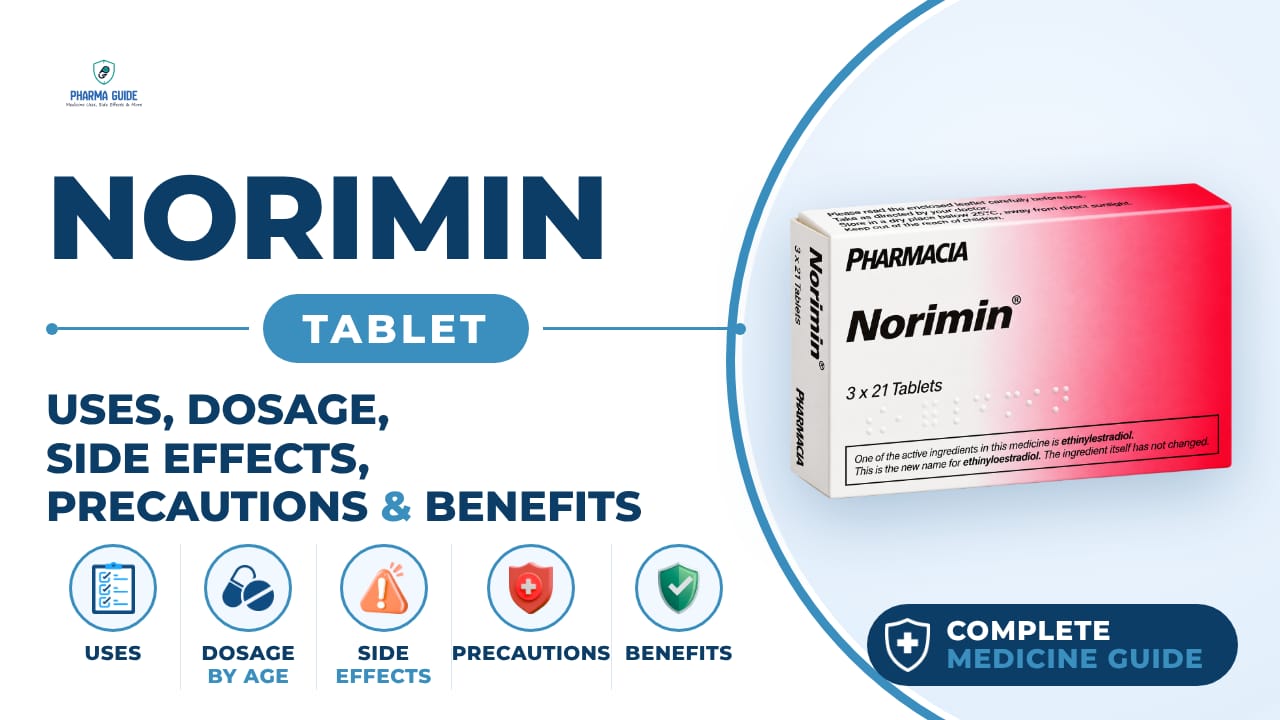
Norimin Tablet: Uses, Dosage, Side Effects, Precautions and Alternates
| Generic name | Norethisterone and Ethinylestradiol |
|---|---|
| Drug class | Combined oral contraceptive (birth control pill) |
| Forms | Tablet |
Quick overview
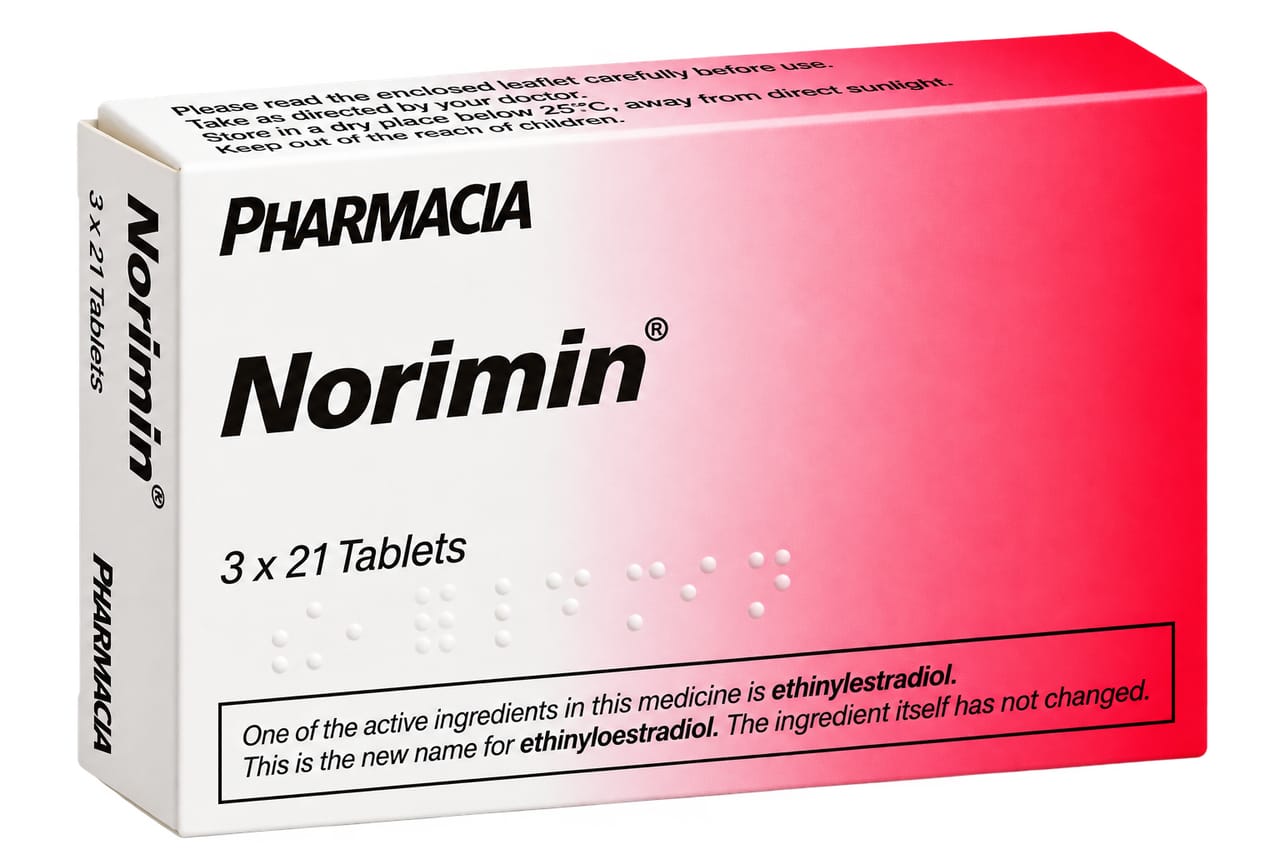
Norimin Tablet contains norethisterone and ethinylestradiol, a combined oral contraceptive. It is used to prevent pregnancy by suppressing ovulation and thickening cervical mucus. It is taken once daily following a 28-day tablet schedule and is available as a tablet.
What is Norimin Tablet
Norimin 28 Day is a combined oral contraceptive pill, commonly known as a birth control pill or 'the Pill'. It contains two hormones: ethinylestradiol (an oestrogen) and norethisterone (a progestogen).
Norimin Tablet uses
- Prevents pregnancy in females of reproductive potential.
- Suppresses ovulation as the primary contraceptive mechanism.
- Thickens cervical mucus to reduce sperm penetration.
- Provides combined estrogen-progestogen contraception.
Benefits of Norimin Tablet
- Provides effective pregnancy prevention when used correctly.
- Combines estrogen and progestogen in one tablet.
- Offers convenient once-daily oral administration.
- Uses a standardized 28-day tablet schedule.
How Norimin Tablet works
Norimin prevents pregnancy in three ways: it stops the ovary from releasing an egg each month, it thickens the mucus at the cervix so sperm have trouble getting through, and it changes the lining of the womb so a fertilized egg is less likely to implant.
Norimin Tablet dosage
Swallow the tablet whole with a full glass of water. Take one tablet at the same time every day, regardless of how often you have sex. Begin the first pack on the first day of your period, taking the tablet that matches the correct day of the week from the blue section of the strip. Continue taking one blue tablet daily until all blue tablets are finished, then take one orange tablet daily for the next 7 days. Start the next pack the day after the last orange tablet, even if you are still bleeding.
If switching from another pill, follow the specific switching instructions and use an extra non-hormonal method of contraception until a blue tablet has been taken daily for 7 days without a break. If you are less than 12 hours late taking a tablet, take it at once and then take the next one at the usual time. If you are more than 12 hours late, do not take the missed tablet; take the next day's tablet as usual and use an additional non-hormonal method of contraception for the next seven days. If you miss more than one blue tablet, contact your doctor for advice. Do not take a double dose to make up for a missed tablet.
If you have vomiting or diarrhoea, keep taking your tablets but also use a non-hormonal method of contraception for seven days afterward. You can eat and drink normally while taking this medicine.
| Age group | Dose |
|---|---|
| Before menarche | Not indicated before the first menstrual period; no established pediatric dosage |
| Postmenarche–17 years | 500 mcg/35 mcg once daily for 21 days, followed by 7 inactive tablets, when medically appropriate |
| 18–49 years | 500 mcg/35 mcg once daily for 21 days, followed by 7 inactive tablets |
| 50 years and older | Not indicated after menopause; no established geriatric dosage |
Available forms and strengths
- Tablet — 500 mcg/35 mcg
Side effects of Norimin Tablet
Common
- Changes in bleeding patterns, such as spotting or breakthrough bleeding
- Painful or absent periods
- Breast tenderness or enlargement
- Changes in sex drive
- Headaches or migraines
- Mood changes, including depression
- Nausea, vomiting, or diarrhoea
- Abdominal pain, cramps, or bloating
- Fluid retention (swelling of hands, ankles, or feet)
- Acne, rashes, or itching
- Loss of scalp hair or increased body hair
- Fluctuations in body weight
- Vaginal thrush, vaginal irritation, or bladder irritation
- Leg cramps and backache
- Fatigue or tiredness
- Contact lenses becoming uncomfortable to wear
Serious
- Blood clots in the legs or lungs (deep vein thrombosis or pulmonary embolism)
- Blood clots in the arteries, such as stroke, heart attack, or angina
- Significant rise in blood pressure
- Jaundice (yellowing of skin or eyes), often with fever, fatigue, loss of appetite, dark urine, nausea and vomiting
- Liver disease, including liver tumors or liver cancer
- Worsening or new onset of migraines or severe headaches
- Breast lumps
- Severe pain, swelling, or discoloration in a leg
- Unexplained or persistent pain in the head, chest, arm, or below the breastbone
- Sudden vision changes, blurred or double vision, or partial/complete loss of sight
- Signs of a severe allergic reaction, such as swelling of the face, lips, tongue, or throat, difficulty breathing, or wheezing
- Worsening of existing conditions such as epilepsy, asthma, gallbladder disease, kidney disease, or lupus
- Bloody diarrhoea, abdominal pain, fever, rectal bleeding, loss of appetite or weight loss
Warnings and precautions
- Do not use this medicine if you are pregnant or think you might be pregnant. Pregnancy must be ruled out before starting treatment. Talk to your doctor if you are planning to become pregnant.
- Talk to your doctor if you are breastfeeding or planning to breastfeed, so they can discuss the risks and benefits with you.
- Tell your doctor if you have kidney disease, as this may need to be monitored while you take this medicine.
- Do not use this medicine if you have liver disease, liver tumors, a history of jaundice, or certain other liver conditions.
- Make sure you know how this medicine affects you before you drive or use machines, since it may cause dizziness in some people.
- Do not take this medicine if you have ever had a blood clot in the legs, lungs, heart, or brain, or if you are at increased risk of blood clots due to factors like smoking, obesity, recent surgery, or family history.
- Do not take this medicine if you have, or have had, blood clots in the arteries, such as stroke, angina, or mini-stroke, or if you have multiple risk factors for this.
- Smoking, especially heavy smoking, increases the risk of stroke or heart attack while taking this medicine, particularly if you are over 35.
- This medicine should not be used with certain hepatitis C medicines, as this combination may cause liver problems.
- Certain medicines, such as some antibiotics, anti-epilepsy drugs, and St John's wort, can make this pill less effective at preventing pregnancy.
- Do not stop taking this medicine or change the dose without checking with your doctor, as you may become pregnant if you stop or miss tablets without using another form of contraception.
- This medicine does not protect against sexually transmitted diseases, so use a condom if you are concerned about STDs.
Storage
- Keep in a cool, dry place where the temperature stays below 25°C
- Do not keep your tablets in the refrigerator
- Keep your tablets in the blister pack until it is time to take them; if removed early they may not keep well
- Store away from moisture, heat or sunlight; do not store in the bathroom, near a sink, in the car, or on window sills
- Keep it where young children cannot reach it; a locked cupboard at least one-and-a-half metres above the ground is a good place to store medicines
- Do not use this medicine after the expiry date
- If your doctor tells you to stop taking it, or it has expired, ask your pharmacist what to do with leftover tablets
- If you no longer need the medicine or it is out of date, take it to any pharmacy for safe disposal
When to see a doctor
- Get emergency medical help right away if you have unexplained or persistent pain in the head, chest, arm, or below the breastbone, or severe pain, swelling, or discoloration in a leg.
- Seek urgent care for sudden vision changes, such as blurred or double vision, or partial or complete loss of sight.
- Seek medical help right away if you get migraine headaches for the first time, or if your existing migraines become more frequent or severe.
- Get medical help immediately if you notice yellowing of the skin or eyes, often with fever, tiredness, loss of appetite, dark urine, nausea or vomiting — this may be a sign of liver problems.
- Seek urgent medical attention if you notice signs of a serious allergic reaction, such as swelling of the face, lips, tongue, or other parts of the body, shortness of breath, wheezing, or trouble breathing.
- Contact your doctor straight away if you become pregnant while taking this medicine.
- If you think you have taken too much of this medicine, get urgent medical attention immediately, even if you feel fine.
- See your doctor if you miss two periods, even if you have taken your tablets correctly, and use a non-hormonal method of contraception in the meantime.
Alternatives
- Copper Intrauterine Devices
- Hormonal Intrauterine Devices
- Microgynon 30
Watch the video
FAQs
What is Norimin Tablet used for?
Norimin Tablet is a combined oral contraceptive used to prevent pregnancy by suppressing ovulation and thickening cervical mucus to reduce sperm penetration.
How do I take Norimin Tablet?
Take one tablet daily at the same time, starting the first pack on the first day of your period. Take blue tablets until finished, then orange tablets for 7 days, then start the next pack the day after the last orange tablet.
What should I do if I miss a Norimin tablet?
If less than 12 hours late, take it at once and continue as usual. If more than 12 hours late, skip the missed tablet, take the next one as scheduled, and use a non-hormonal contraceptive method for 7 days.
What are the serious side effects of Norimin Tablet?
Serious side effects include blood clots in the legs, lungs, or arteries (such as stroke or heart attack), significant blood pressure rise, jaundice, liver problems, severe headaches, and signs of allergic reaction.
Can smoking affect the use of Norimin Tablet?
Yes, smoking, especially heavy smoking, increases the risk of stroke or heart attack while taking this medicine, particularly in people over 35.
General information, not medical advice
Your prescriber and the leaflet in your pack know your situation. This page does not.
- Follow your prescriber and the leaflet
- Don't start, stop, or change a dose on your own
- Doses and warnings differ by country and product
Sources
Video
Related medicines

Injectafer Injection: Uses, Dosage, Side Effects, Precautions and Alternates
Iron products
Injectafer (ferric carboxymaltose) treats iron deficiency anemia and heart failure-related iron deficiency via IV. Learn uses, dosage, side effects, and

Gliclazide Tablet: Uses, Dosage, Side Effects, Precautions and Alternates
Sulfonylurea (hypoglycemic/antidiabetic agent)
Gliclazide Tablet is a sulfonylurea for type 2 diabetes that boosts insulin release. Learn about dosage, side effects, warnings, and precautions.