
Safety
General information, not medical advice
Your prescriber and the leaflet in your pack know your situation. This page does not.
- Follow your prescriber and the leaflet
- Don't start, stop, or change a dose on your own
- Doses and warnings differ by country and product
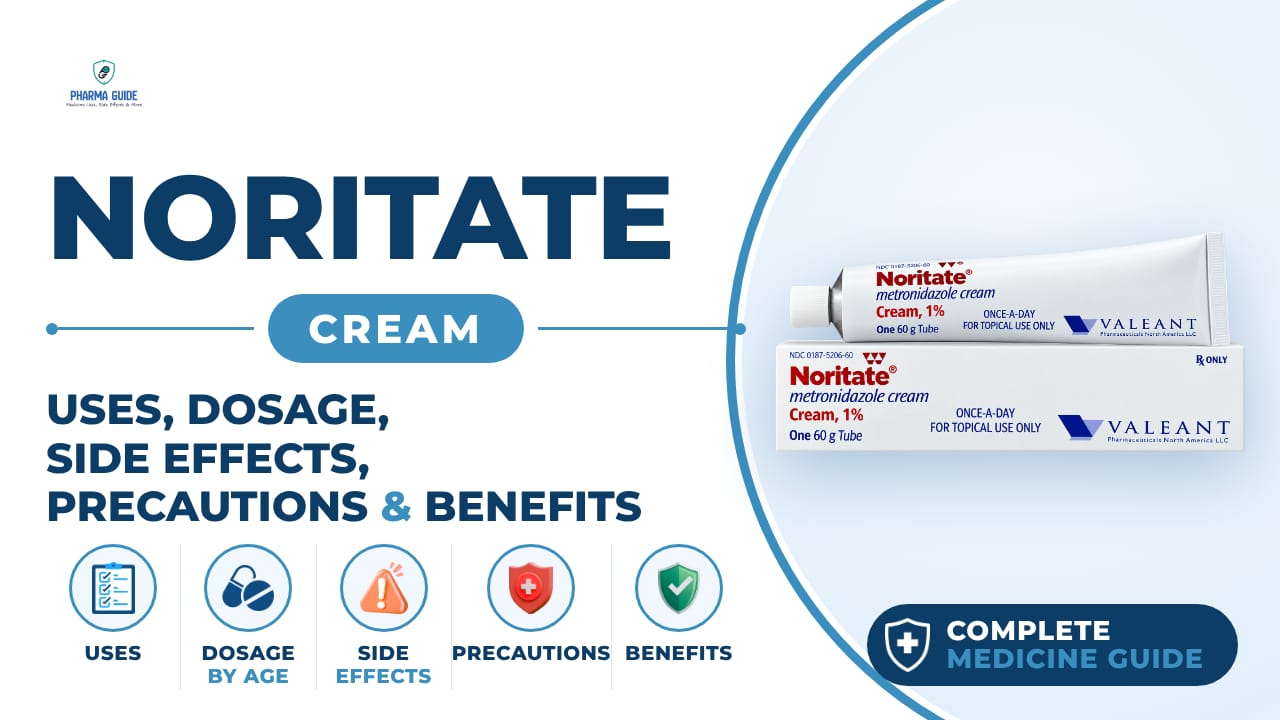
Noritate Cream: Uses, Dosage, Side Effects, Precautions and Alternates
| Generic name | metronidazole |
|---|---|
| Drug class | Topical anti-rosacea agent |
| Forms | Cream |
Quick overview
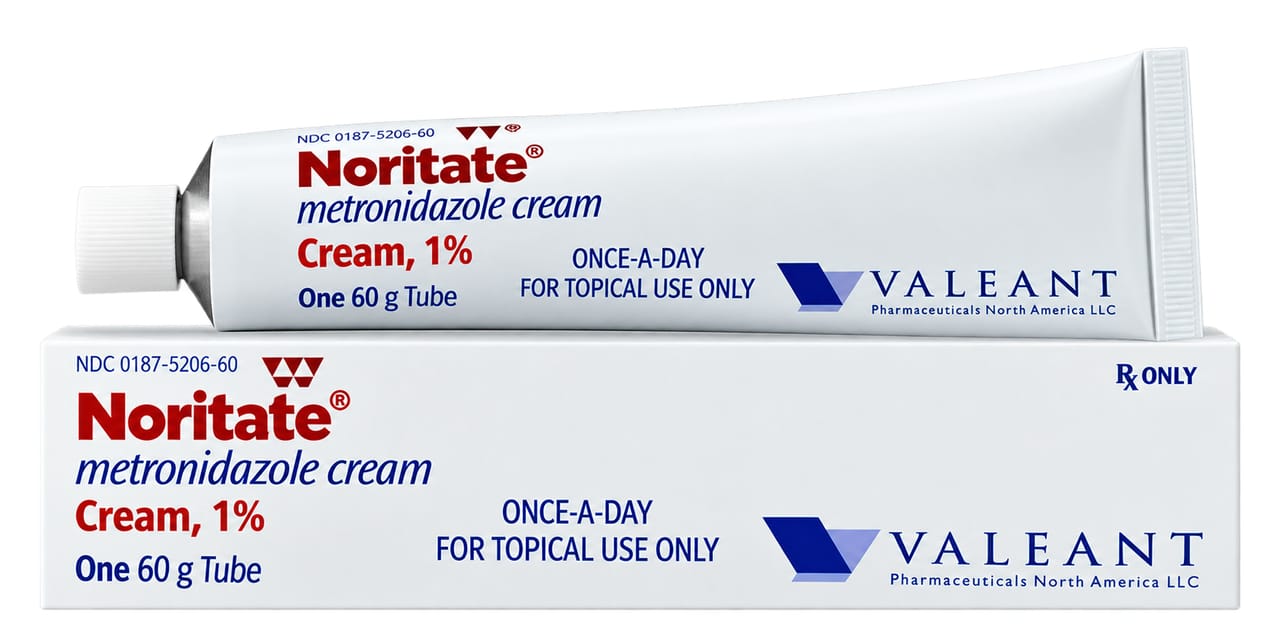
Noritate Cream is a prescription topical medicine containing metronidazole, used to treat skin problems caused by rosacea such as redness and pimple-like bumps. It belongs to the topical anti-rosacea agent drug class and is applied directly to the affected facial skin. It is used to reduce inflammatory lesions, papules, and pustules associated with rosacea. It is not approved for use in anyone younger than 18 years old.
What is Noritate Cream
Noritate is a prescription cream applied to the skin to treat skin problems caused by rosacea, such as redness and pimple-like bumps.
Noritate Cream uses
- Treats inflammatory lesions associated with rosacea.
- Helps reduce inflammatory papules.
- Helps control rosacea-related pustules.
- May improve facial redness associated with inflammation.
Benefits of Noritate Cream
- Helps reduce inflammatory rosacea lesions.
- May decrease redness associated with rosacea.
- Can improve the appearance of affected facial skin.
- Provides localized topical treatment.
How Noritate Cream works
The way metronidazole reduces rosacea redness and bumps is not fully understood, though it is thought to work by reducing inflammation and acting on certain bacteria.
Noritate Cream dosage
Wash and gently dry the skin before applying the cream. Apply a thin layer and rub it in completely over the entire affected area. Use only on the skin of the face; do not use in the vagina or near the eyes. You may apply cosmetics after applying the cream. Do not use this medicine for any skin problem other than the one it was prescribed for. Keep using it for as long as your doctor tells you, even if your symptoms improve quickly. This medicine is not approved for use in anyone younger than 18 years old.
| Age group | Dose |
|---|---|
| Under 17 years | Safety and effectiveness not established; no approved pediatric dosage |
| 18–39 years | Apply 1% cream once daily as a thin layer to rosacea-affected skin |
| 75 years and older | Apply 1% cream once daily, with careful monitoring of skin tolerance |
Available forms and strengths
- Cream, 1%
Side effects of Noritate Cream
Common
- Burning or stinging when applying the cream
- Skin redness or irritation
- Dry, scaly, or itchy skin
- Cold-like symptoms such as stuffy nose, sneezing, or sore throat
- Metallic taste in the mouth
- Nausea
- Headache
- Vaginal itching or discharge
Serious
- Numbness, tingling, or burning pain in the hands or feet
- Signs of an allergic reaction such as hives, difficulty breathing, or swelling of the face, lips, tongue, or throat
- Severe stinging or burning after applying the cream
- Serious eye symptoms such as sudden vision loss, blurred vision, tunnel vision, eye pain or swelling, or seeing halos around lights
- Serious heart symptoms such as a fast, irregular, or pounding heartbeat; fluttering in the chest; shortness of breath; or sudden dizziness or fainting
- Severe headache, confusion, slurred speech, arm or leg weakness, trouble walking, loss of coordination, feeling unsteady, very stiff muscles, high fever, heavy sweating, or tremors
Warnings and precautions
- Do not use this cream if you are allergic to metronidazole or any ingredient in it.
- This medicine is for use on the skin only. Do not get it in your eyes, and do not use it inside the vagina.
- Tell your doctor if you have ever had a nervous system disorder, since this medicine should be used carefully in such cases.
- Eye inflammation (conjunctivitis) has been reported with use of this medicine on the face.
- This medicine should be used carefully in people who have or have had blood disorders.
- It isn't known whether this medicine could harm an unborn baby. Tell your doctor if you are pregnant or planning to become pregnant, since it should only be used in pregnancy if clearly needed.
- This medicine passes into breast milk, so you should not breastfeed while using it unless your doctor says it is okay.
- Kidney: No routine renal dosage adjustment is established. Systemic absorption from topical application is generally low.
- Liver: No established hepatic-specific dosage adjustment is available. Patients with significant liver disease should inform their prescriber.
- Alcohol: No major interaction with alcoholic beverages has been established for topical Noritate. Alcohol may independently worsen rosacea flushing in some patients.
- Driving: Noritate Cream is not generally associated with sedation or impaired alertness.
Storage
- Store at controlled room temperature 20° to 25°C (68° to 77°F)
- Store at room temperature away from moisture or heat
- Keep out of reach of children
When to see a doctor
- Get emergency medical help right away if you have signs of a serious allergic reaction, such as hives, trouble breathing, or swelling of your face, lips, tongue, or throat.
- Call your doctor right away if you have numbness, tingling, or burning pain in your hands or feet, or if you have stinging or burning when you apply the cream.
- Seek medical care right away if you have serious eye symptoms such as sudden vision loss, blurred vision, eye pain or swelling, or seeing halos around lights.
- Seek medical care right away if you have serious heart symptoms such as a fast, irregular, or pounding heartbeat, fluttering in your chest, shortness of breath, or sudden dizziness or fainting.
- Seek medical care right away if you have a severe headache, confusion, slurred speech, weakness in your arm or leg, trouble walking, loss of coordination, very stiff muscles, high fever, heavy sweating, or tremors.
- Call your doctor if your symptoms do not improve or if they get worse while using this medicine.
- If you accidentally get the cream in your eyes, rinse them thoroughly with water.
Alternatives
- Metronidazole Cream 0.75%
- Metronidazole Gel
- MetroCream
Watch the video
FAQs
What is Noritate Cream used for?
Noritate Cream is a prescription topical medicine used to treat skin problems caused by rosacea, such as redness and pimple-like bumps, including inflammatory lesions, papules, and pustules.
How do you apply Noritate Cream?
Wash and gently dry the skin, then apply a thin layer of the cream and rub it in completely over the entire affected facial area once daily. Use only on facial skin and avoid the eyes and vagina.
What are the common side effects of Noritate Cream?
Common side effects include burning or stinging when applying the cream, skin redness or irritation, dry or itchy skin, cold-like symptoms, metallic taste, nausea, headache, and vaginal itching or discharge.
Can Noritate Cream be used in children?
No, Noritate Cream is not approved for use in anyone younger than 18 years old because safety and effectiveness have not been established in that age group.
Is it safe to use Noritate Cream during pregnancy or breastfeeding?
It isn't known whether Noritate could harm an unborn baby, so it should only be used in pregnancy if clearly needed. It also passes into breast milk, so breastfeeding should be avoided unless your doctor approves.
General information, not medical advice
Your prescriber and the leaflet in your pack know your situation. This page does not.
- Follow your prescriber and the leaflet
- Don't start, stop, or change a dose on your own
- Doses and warnings differ by country and product
Sources
Video
Related medicines

Injectafer Injection: Uses, Dosage, Side Effects, Precautions and Alternates
Iron products
Injectafer (ferric carboxymaltose) treats iron deficiency anemia and heart failure-related iron deficiency via IV. Learn uses, dosage, side effects, and

Gliclazide Tablet: Uses, Dosage, Side Effects, Precautions and Alternates
Sulfonylurea (hypoglycemic/antidiabetic agent)
Gliclazide Tablet is a sulfonylurea for type 2 diabetes that boosts insulin release. Learn about dosage, side effects, warnings, and precautions.