
Safety
General information, not medical advice
Your prescriber and the leaflet in your pack know your situation. This page does not.
- Follow your prescriber and the leaflet
- Don't start, stop, or change a dose on your own
- Doses and warnings differ by country and product
Noroxin Tablet: Uses, Dosage, Side Effects, Precautions and Alternates
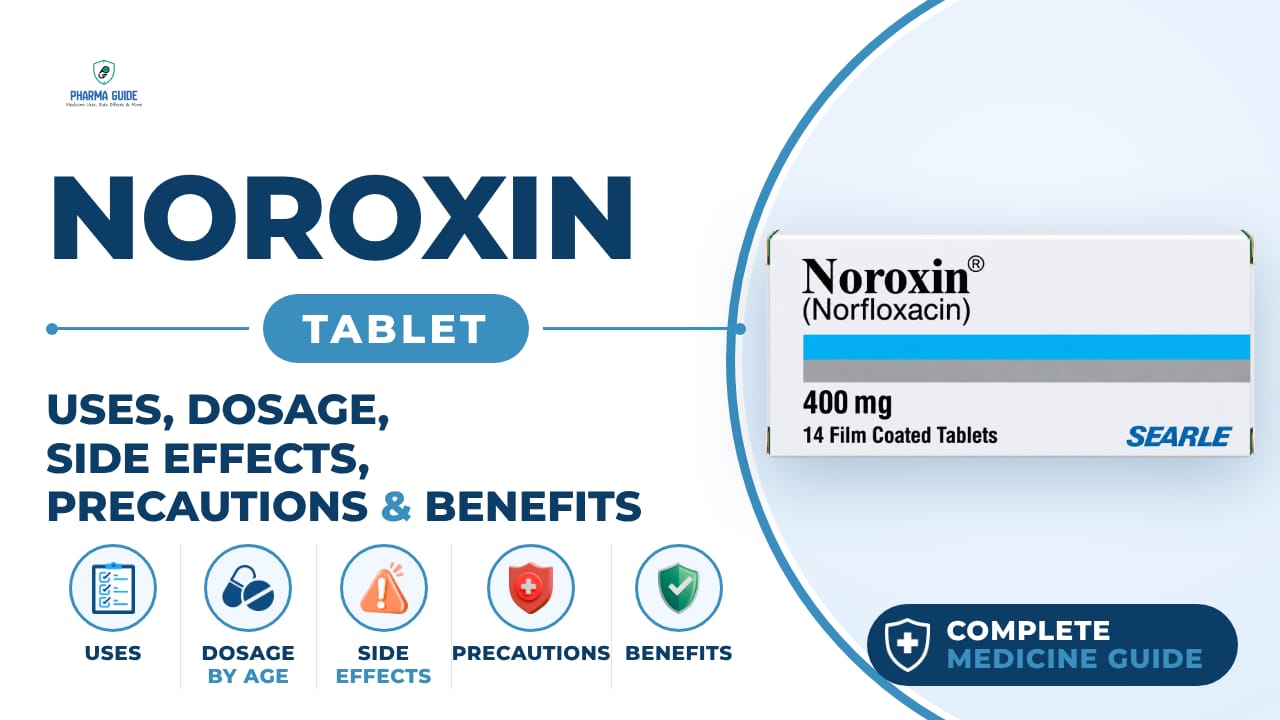
| Generic name | Norfloxacin |
|---|---|
| Drug class | Fluoroquinolone antibiotic |
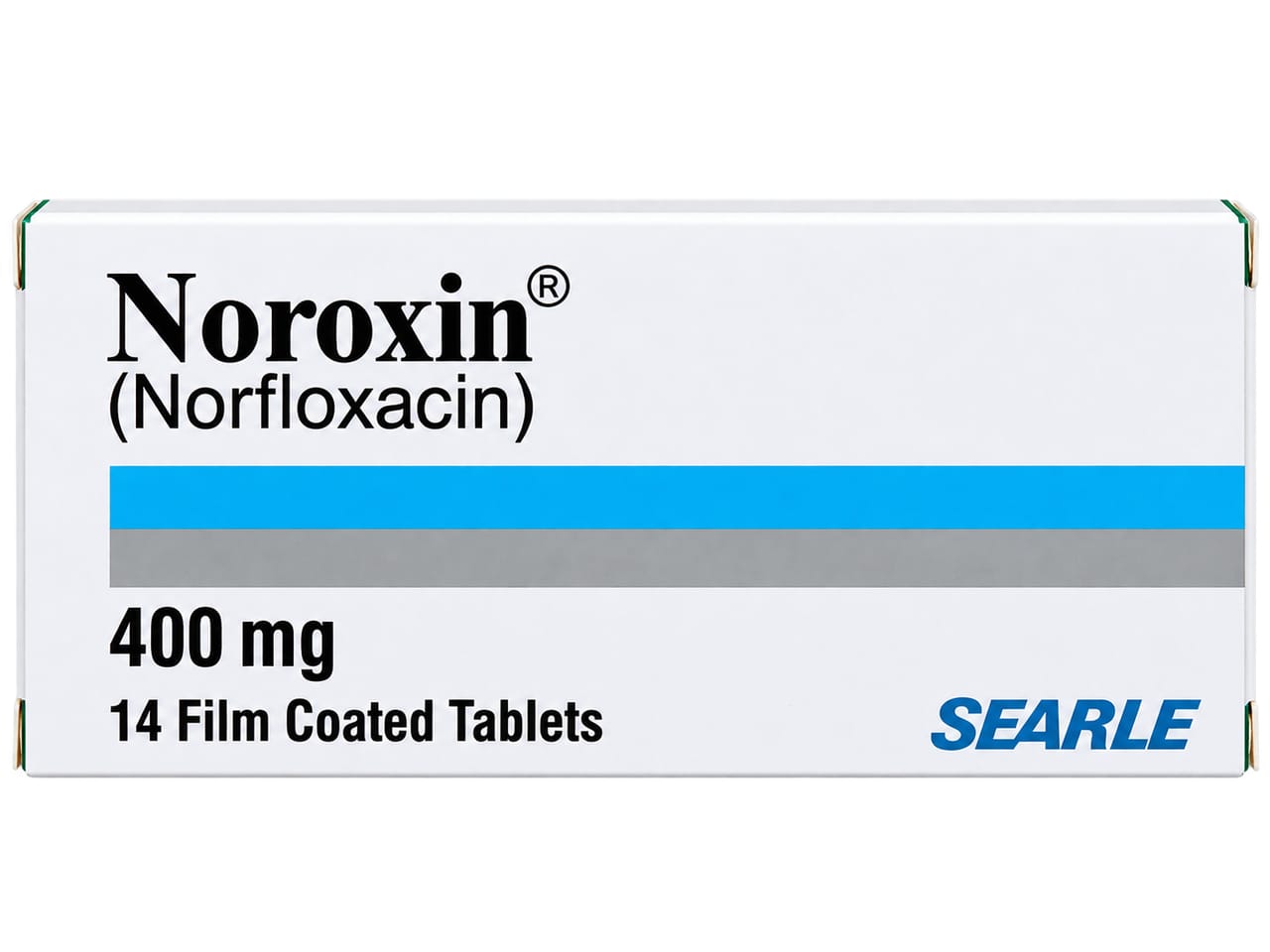
| Forms | Tablet |
Quick overview
Noroxin Tablet contains norfloxacin, a fluoroquinolone antibiotic used in adults to treat certain bacterial infections, including urinary tract infections, gonorrhea, and prostatitis caused by Escherichia coli. It works by stopping bacteria from copying their DNA, which kills the bacteria. It does not work against infections caused by viruses, such as the common cold or flu.
What is Noroxin Tablet
Noroxin is a fluoroquinolone antibiotic medicine used in adults to treat certain infections caused by bacteria. It does not work against infections caused by viruses, such as the common cold or flu.
Noroxin Tablet uses
- Uncomplicated urinary tract infections (including cystitis)
- Complicated urinary tract infections
- Uncomplicated urethral and cervical gonorrhea
- Prostatitis caused by Escherichia coli
Benefits of Noroxin Tablet
- Kills a broad range of bacteria that cause urinary tract infections, gonorrhea, and prostatitis
- Reaches high concentrations in urine, which helps clear urinary tract infections
- Active against several susceptible Gram-negative bacteria
- Provides an oral antibacterial treatment option
- May be used for selected infections when culture results support susceptibility
How Noroxin Tablet works
Norfloxacin stops bacteria from copying their DNA, which kills the bacteria. It blocks an enzyme bacteria need to manage their DNA and causes breaks in the bacteria's DNA strands.
Noroxin Tablet dosage
Take exactly as prescribed by your healthcare provider. This medicine is usually taken every 12 hours for patients with normal kidney function. Take it with a full glass of water, and drink plenty of fluids while taking this medicine. Take it at least one hour before or two hours after a meal or having milk or other dairy products. Do not take multivitamins or products with iron or zinc, antacids, sucralfate, or didanosine within two hours before or after taking this medicine.
Do not skip doses or stop early even if you feel better, unless told to stop by your healthcare provider or you have a serious reaction. If you miss a dose, take it as soon as you remember, but do not take two doses at the same time or more than two doses in one day. Know how this medicine affects you before driving or operating machinery, since it can cause dizziness and lightheadedness.
| Age group | Dose |
|---|---|
| Under 18 years | Safety and effectiveness are not established for routine use |
| 18–64 years | Commonly 400 mg every 12 hours, depending on the infection |
Available forms and strengths
- Tablet
Side effects of Noroxin Tablet
Common
- Dizziness
- Nausea
- Diarrhea
- Heartburn
- Headache
- Stomach (abdominal) cramping
- Weakness
- Changes in certain liver function tests
Serious
- Tendon rupture or swelling of a tendon (tendinitis)
- Nerve damage (peripheral neuropathy) with pain, burning, tingling, numbness, or weakness
- Seizures and other central nervous system effects, including hallucinations, confusion, and suicidal thoughts
- Worsening of myasthenia gravis with muscle weakness and breathing problems
- Serious allergic reactions including hives, trouble breathing or swallowing, and swelling of the face, lips, or tongue
- Skin rash, which may be a sign of a more serious reaction
- Serious heart rhythm changes (QT prolongation and torsades de pointes)
- Severe intestine infection (pseudomembranous colitis) with watery or bloody diarrhea
- Low blood sugar (hypoglycemia), especially when taken with glyburide
- Liver problems, including yellowing of skin or eyes and dark urine
- Sensitivity to sunlight (photosensitivity)
Warnings and precautions
- This medicine is linked to an increased risk of tendon swelling and tendon tearing in people of all ages. The risk is higher in people over 60, those taking steroid medicines, and those who have had a kidney, heart, or lung transplant.
- Serious and sometimes permanent side effects affecting tendons, nerves, and the central nervous system can happen together in the same person, sometimes without any warning risk factors.
- This medicine may cause nerve damage (peripheral neuropathy) that can become permanent. Stop taking it and contact your healthcare provider right away if you notice pain, burning, tingling, numbness, or weakness in your arms, hands, legs, or feet.
- This medicine may worsen symptoms of myasthenia gravis, a disease that causes muscle weakness, and can lead to life-threatening breathing problems.
- This medicine should only be used to treat infections that are proven or strongly suspected to be caused by bacteria, to help prevent bacteria from becoming resistant to antibiotics.
- This medicine can cause changes in your heart's electrical activity (QT prolongation) that may lead to a dangerous irregular heartbeat, especially in older adults or those with certain heart conditions or on certain other medicines.
- This medicine can make your skin very sensitive to sunlight, which can cause severe sunburn-like reactions, blisters, or swelling.
- Safety and effectiveness have not been established in children, adolescents under 18, pregnant women, or nursing mothers; children have a higher chance of bone, joint, or tendon problems.
- Pregnancy: It is not known if this medicine will harm an unborn baby. Tell your healthcare provider if you are pregnant or planning to become pregnant, since it should be used in pregnancy only if clearly needed.
- Breastfeeding: It is not known if this medicine passes into breast milk. You and your healthcare provider should decide together whether you should take this medicine or breastfeed.
- Kidney: Tell your healthcare provider if you have kidney problems. You may need a lower dose if your kidneys do not work well.
- Liver: Significant liver disease should be reviewed clinically.
- Alcohol: Alcohol may worsen dizziness and should be limited.
- Driving: This medicine can make you feel dizzy and lightheaded. Do not drive, operate machinery, or do activities that require alertness until you know how this medicine affects you.
Storage
- Store at room temperature between 59-86°F (15-30°C)
- Keep container closed tightly
- Keep out of the reach of children
When to see a doctor
- Get medical help right away if you hear or feel a snap or pop in a tendon, notice bruising near a tendon, or cannot move or bear weight on the affected area.
- Stop taking this medicine and get emergency help right away if you have signs of a severe allergic reaction, such as hives, trouble breathing or swallowing, swelling of the lips, tongue, or face, throat tightness or hoarseness, a rapid heartbeat, or fainting.
- Stop taking this medicine and tell your healthcare provider right away if your skin or the whites of your eyes turn yellow, or if your urine becomes dark, as these can be signs of a serious liver problem.
- Call your healthcare provider right away if you get watery diarrhea, diarrhea that does not go away, or bloody stools, with or without stomach cramps and fever, even months after finishing the antibiotic.
- Talk to your healthcare provider right away if you experience pain, burning, tingling, numbness, or weakness in your arms, hands, legs, or feet, as this may be nerve damage that needs the medicine stopped to prevent it from becoming permanent.
- Stop taking this medicine right away and talk to your healthcare provider if you have seizures, hallucinations, confusion, restlessness, tremors, anxiety, or other changes in mood or behavior.
- Call your healthcare provider right away if you notice worsening muscle weakness or breathing problems, which may signal worsening of myasthenia gravis.
- Stop taking this medicine at the first sign of a skin rash and call your healthcare provider, since rash may signal a more serious reaction.
Alternatives
- Ciprofloxacin
- Levofloxacin
- Nitrofurantoin
Watch the video
FAQs
What is Noroxin Tablet used for?
Noroxin Tablet is used to treat uncomplicated and complicated urinary tract infections (including cystitis), uncomplicated urethral and cervical gonorrhea, and prostatitis caused by Escherichia coli.
How should I take Noroxin Tablet?
Take it exactly as prescribed, usually every 12 hours for patients with normal kidney function, with a full glass of water. Take it at least one hour before or two hours after meals or dairy, and avoid multivitamins, iron or zinc products, antacids, sucralfate, or didanosine within two hours before or after dosing.
What is the common dosage of Noroxin Tablet for adults?
For adults aged 18 to 64, the commonly used dose is 400 mg every 12 hours, depending on the infection being treated.
What are the serious side effects of Noroxin Tablet?
Serious side effects include tendon rupture or tendinitis, peripheral nerve damage, seizures and other central nervous system effects, worsening of myasthenia gravis, serious allergic reactions, severe heart rhythm changes, pseudomembranous colitis, low blood sugar, liver problems, and sensitivity to sunlight.
What precautions should I take while using Noroxin Tablet?
Avoid driving or operating machinery until you know how the medicine affects you, limit alcohol, protect your skin from sunlight, and tell your healthcare provider about any kidney or liver problems, myasthenia gravis, or pregnancy and breastfeeding status.
General information, not medical advice
Your prescriber and the leaflet in your pack know your situation. This page does not.
- Follow your prescriber and the leaflet
- Don't start, stop, or change a dose on your own
- Doses and warnings differ by country and product
Sources
Video
Related medicines
Norfloxacin Tablet: Uses, Dosage, Side Effects, Precautions and Alternates
fluoroquinolone antibiotic
Norfloxacin Tablet treats UTIs, kidney, prostate, and certain gut or reproductive infections. Learn uses, dosage, side effects, and key warnings.

Gemifloxacin Tablet: Uses, Dosage, Side Effects, Precautions and Alternates
Fluoroquinolone antibiotic
Gemifloxacin Tablet is a fluoroquinolone antibiotic for pneumonia, bronchitis, and other infections. Learn its uses, dosage, side effects, and precautions.