
Safety
General information, not medical advice
Your prescriber and the leaflet in your pack know your situation. This page does not.
- Follow your prescriber and the leaflet
- Don't start, stop, or change a dose on your own
- Doses and warnings differ by country and product
Norpace Capsule: Uses, Dosage, Side Effects, Precautions and Alternates
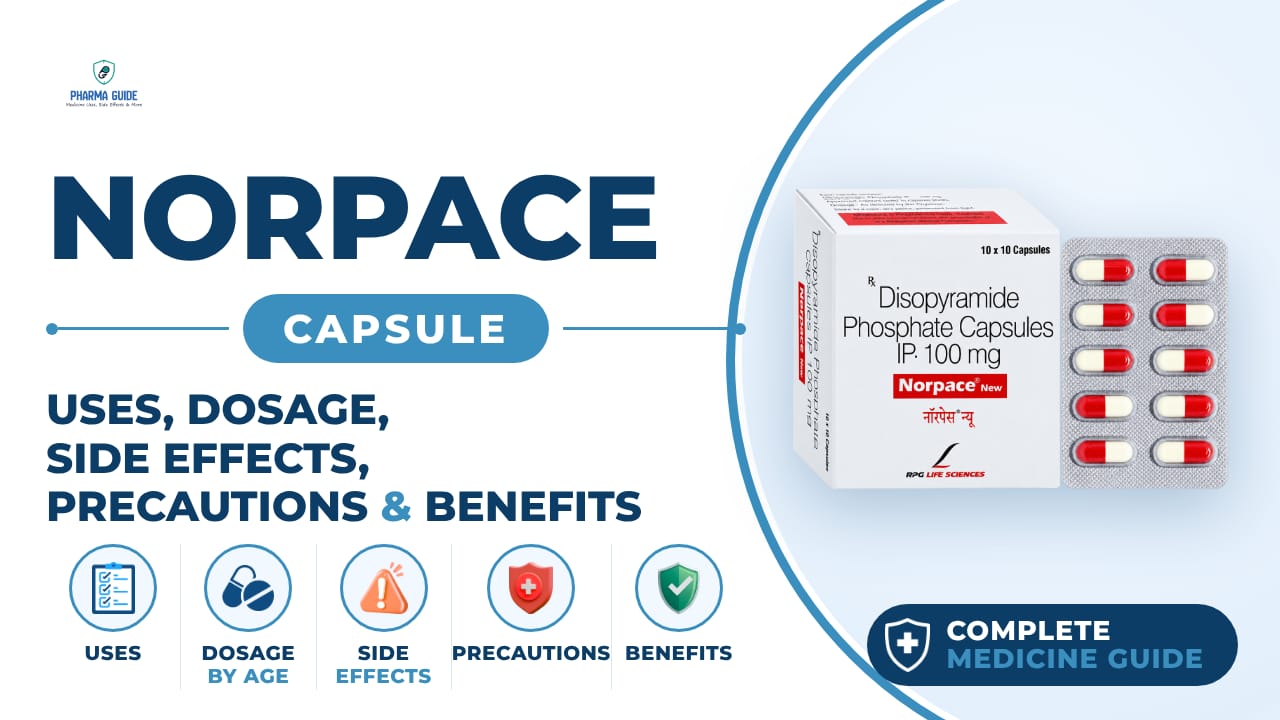
| Generic name | disopyramide (disopyramide phosphate) |
|---|---|
| Drug class | Antiarrhythmic (Group I antiarrhythmic) |
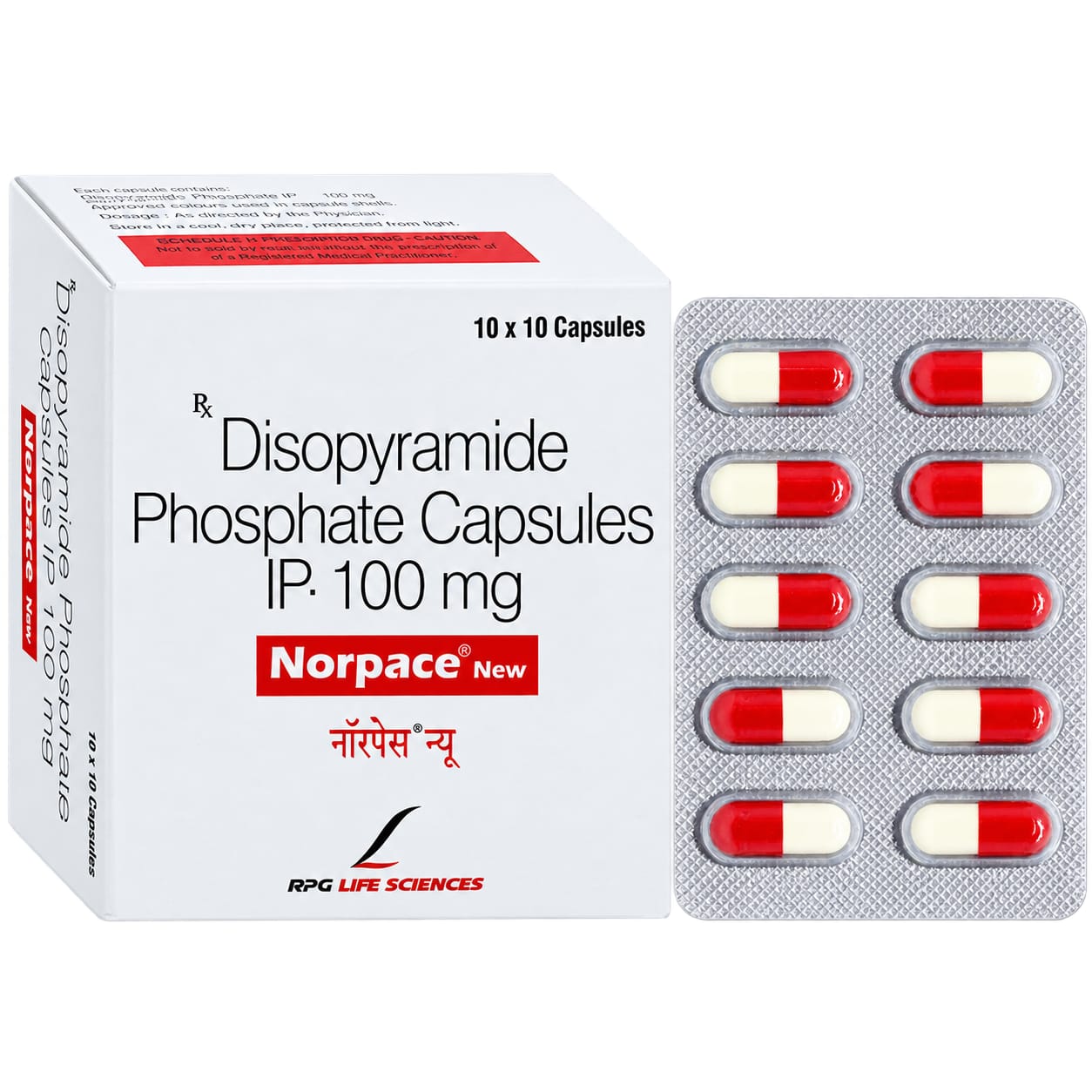
| Forms | Capsule (immediate-release), Extended-release (controlled-release) capsule, Oral liquid suspension (pharmacist-prepared) |
Quick overview
Norpace Capsule (disopyramide phosphate) is a prescription antiarrhythmic medicine taken by mouth to treat life-threatening irregular heartbeat patterns, such as sustained ventricular tachycardia. It comes in regular and extended-release (Norpace CR) capsule forms, as well as a pharmacist-prepared liquid. It works by blocking certain electrical signals in the heart and requires careful monitoring, including ECG checks, during treatment.
What is Norpace Capsule
Norpace is a prescription medicine that affects the way your heart beats. It is taken as a capsule and comes in both regular and extended-release (Norpace CR) forms. Its generic name is disopyramide (disopyramide phosphate), and it belongs to the antiarrhythmic (Group I antiarrhythmic) drug class.
Norpace Capsule uses
- Treating life-threatening irregular heartbeat patterns, such as sustained ventricular tachycardia
Benefits of Norpace Capsule
- Helps control serious irregular heartbeats that could otherwise be life-threatening
- The extended-release (CR) form allows for less frequent dosing compared to the regular capsule
- Helps control certain abnormal heart rhythms
- Can suppress selected ventricular arrhythmias
How Norpace Capsule works
Disopyramide works by blocking certain electrical signals in the heart that cause it to beat too fast or irregularly, which helps the heart return to a normal rhythm.
Norpace Capsule dosage
Follow all directions on your prescription label and do not take more or less than recommended, or for longer than recommended. Your doctor may give your first dose in a hospital or clinic so they can watch for side effects. Do not crush, chew, break, or open an extended-release capsule; swallow it whole. Your heart function may need to be checked with an ECG (EKG) during treatment. Do not skip doses or change your dosing schedule without your doctor's advice, since sudden changes can make your condition worse. If you miss a dose, take it as soon as you remember, but skip it if it is almost time for your next dose; do not take extra medicine to make up for it.
A pharmacist can prepare a liquid version of this medicine for children or people who have trouble swallowing capsules; this liquid should be shaken well before each dose and kept refrigerated.
| Age group | Dose |
|---|---|
| 18–64 years | Common immediate-release regimen: 150 mg every 6 hours; total daily dose often 600 mg/day |
| 65–74 years | Usually started more cautiously, with dose adjustment based on kidney function, heart rhythm, and tolerance |
Available forms and strengths
- Capsule (immediate-release)
- Extended-release (controlled-release) capsule
- Oral liquid suspension (pharmacist-prepared)
Side effects of Norpace Capsule
Common
- Dry mouth, nose, or throat
- Dry eyes, blurred vision
- Nausea, stomach pain, bloating, gas
- Constipation
- Headache, tiredness, general ill feeling
- Muscle pain or weakness
- Dizziness
- Urinary hesitancy
Serious
- New or worsening irregular heartbeat
- Little or no urinating, painful or difficult urination
- Light-headed feeling like you might pass out
- Shortness of breath, swelling, rapid weight gain (signs of heart failure)
- Low blood sugar (headache, hunger, weakness, sweating, confusion, irritability, dizziness, fast heart rate, feeling jittery)
- Signs of a severe allergic reaction: hives, difficulty breathing, swelling of face, lips, tongue, or throat
- Chest pain
- Fainting
Warnings and precautions
- This medicine should not be used by people with certain serious heart conditions, such as AV block without a pacemaker, long QT syndrome, or cardiogenic shock.
- This medicine can cause or worsen heart failure or cause severely low blood pressure because of its effect on heart muscle contraction.
- Significant widening of the heart's electrical signal (QRS complex) can occur, and the medicine should be stopped if this happens.
- This medicine can prolong the heart's electrical recovery time (Q-T interval) and may cause dangerous heart rhythm problems, including a type called torsade de pointes.
- In rare cases this medicine can cause significant drops in blood sugar, especially in people with heart failure, poor nutrition, or liver/kidney disease, or those taking certain other drugs or alcohol.
- Because of its effects on certain nerve signals, this medicine should not be used by people with glaucoma, myasthenia gravis, or urinary retention unless special precautions are taken, and men with an enlarged prostate are at particular risk of urinary retention.
- Taking this medicine together with certain antibiotics (clarithromycin or erythromycin) or antifungal drugs has been linked to life-threatening interactions.
- An overdose of this medicine can be fatal and may cause trouble breathing, irregular heartbeats, and loss of consciousness.
- It is not known whether this medicine could harm an unborn baby. Tell your doctor if you are or plan to become pregnant, since the medicine should only be used in pregnancy if the benefit outweighs the possible risk.
- This medicine can pass into breast milk and may harm a nursing baby. Your doctor will help you decide whether to stop breastfeeding or stop the medicine.
- This medicine is removed from the body mainly by the kidneys, so people with kidney problems may need a lower dose and closer monitoring.
- Liver problems can cause the medicine to stay in the body longer, so the dose may need to be reduced and heart tracings monitored closely.
- Drinking alcohol can increase certain side effects of this medicine, including dizziness and low blood sugar.
- This medicine may cause blurred vision and affect your alertness or coordination, so be careful driving or doing anything that requires clear vision and quick reactions until you know how it affects you.
Storage
- Store at room temperature away from moisture and heat.
- Store at 25°C (77°F); excursions permitted to 15–30°C (59–86°F).
- Disopyramide should be stored at room temperature, between 68 F to 77 F (20 C to 25 C). It can be exposed to temperatures between 59 F to 86 F (15 C to 30 C) for shorter periods of time, such as when transporting it. Store in a cool, dry place.
- If you take liquid disopyramide, keep it refrigerated, between 36 F and 46 F (2 C to 8 C). Throw away any medicine left in the bottle after 30 days.
When to see a doctor
- Get emergency help right away if you have signs of a serious allergic reaction, such as hives, trouble breathing, or swelling of your face, lips, tongue, or throat.
- Call your doctor right away if you notice a new or worsening irregular heartbeat, little or no urination, painful urination, feeling faint, shortness of breath, swelling, rapid weight gain, or signs of low blood sugar such as headache, hunger, weakness, sweating, confusion, or a fast heart rate.
- Get emergency help right away if you have chest pain, shortness of breath, or feel dizzy, lightheaded, or faint, as these may be signs of a dangerous heart rhythm change.
- If you or someone else has taken too much of this medicine, seek emergency medical attention or contact a poison control center right away.
Alternatives
- Flecainide
- Propafenone
- Sotalol
Watch the video
FAQs
What is Norpace Capsule used for?
Norpace Capsule is used for treating life-threatening irregular heartbeat patterns, such as sustained ventricular tachycardia.
How does Norpace Capsule work?
Disopyramide works by blocking certain electrical signals in the heart that cause it to beat too fast or irregularly, which helps the heart return to a normal rhythm.
What are the common side effects of Norpace Capsule?
Common side effects include dry mouth, nose, or throat, dry eyes, blurred vision, nausea, stomach pain, bloating, gas, constipation, headache, tiredness, muscle pain or weakness, dizziness, and urinary hesitancy.
Can Norpace Capsule be taken during pregnancy or breastfeeding?
It is not known whether this medicine could harm an unborn baby, so it should only be used in pregnancy if the benefit outweighs the possible risk. It can also pass into breast milk and may harm a nursing baby, so your doctor will help you decide whether to stop breastfeeding or stop the medicine.
How should Norpace Capsule be stored?
Store at room temperature, between 68 F to 77 F (20 C to 25 C), away from moisture and heat, with brief excursions to 59-86 F (15-30 C) allowed during transport. The pharmacist-prepared liquid version should be kept refrigerated between 36 F and 46 F (2 C to 8 C) and discarded after 30 days.
General information, not medical advice
Your prescriber and the leaflet in your pack know your situation. This page does not.
- Follow your prescriber and the leaflet
- Don't start, stop, or change a dose on your own
- Doses and warnings differ by country and product
Sources
Video
Related medicines

Injectafer Injection: Uses, Dosage, Side Effects, Precautions and Alternates
Iron products
Injectafer (ferric carboxymaltose) treats iron deficiency anemia and heart failure-related iron deficiency via IV. Learn uses, dosage, side effects, and

Gliclazide Tablet: Uses, Dosage, Side Effects, Precautions and Alternates
Sulfonylurea (hypoglycemic/antidiabetic agent)
Gliclazide Tablet is a sulfonylurea for type 2 diabetes that boosts insulin release. Learn about dosage, side effects, warnings, and precautions.