
Safety
General information, not medical advice
Your prescriber and the leaflet in your pack know your situation. This page does not.
- Follow your prescriber and the leaflet
- Don't start, stop, or change a dose on your own
- Doses and warnings differ by country and product
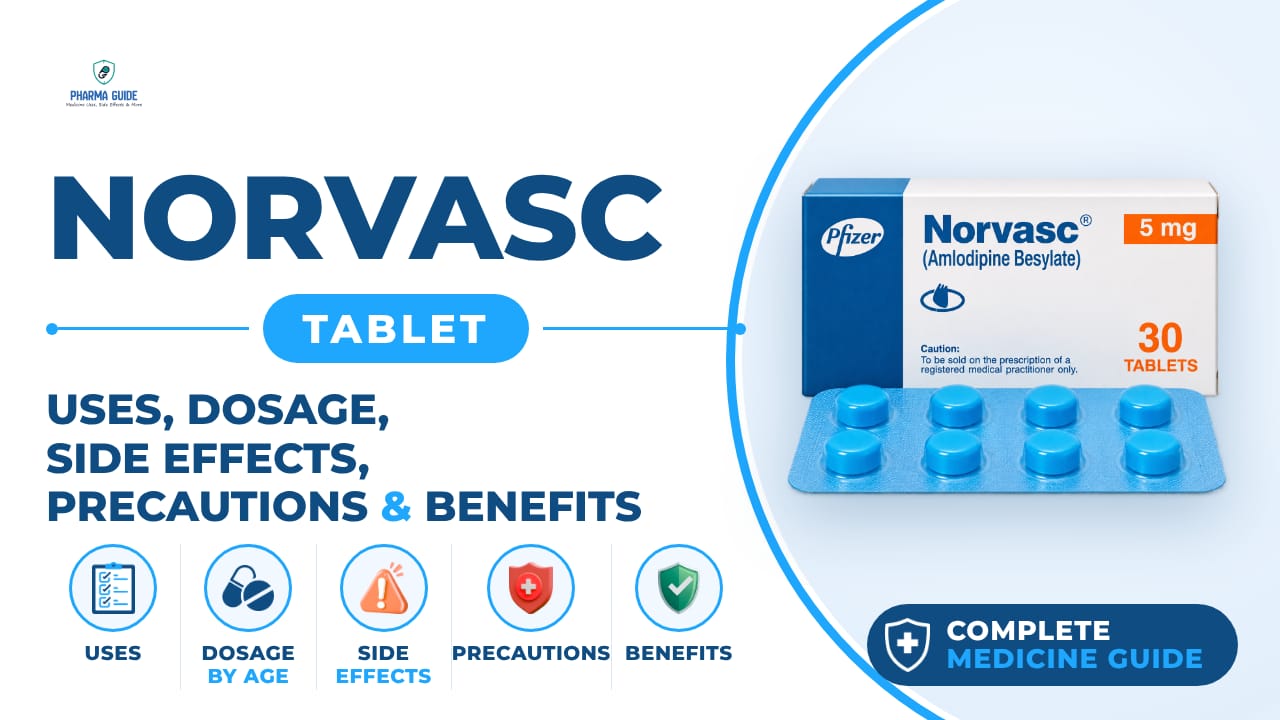
Norvasc Tablet: Uses, Dosage, Side Effects, Precautions and Alternates
| Generic name | Amlodipine besylate |
|---|---|
| Drug class | Calcium channel blocker (antihypertensive-antianginal agent) |
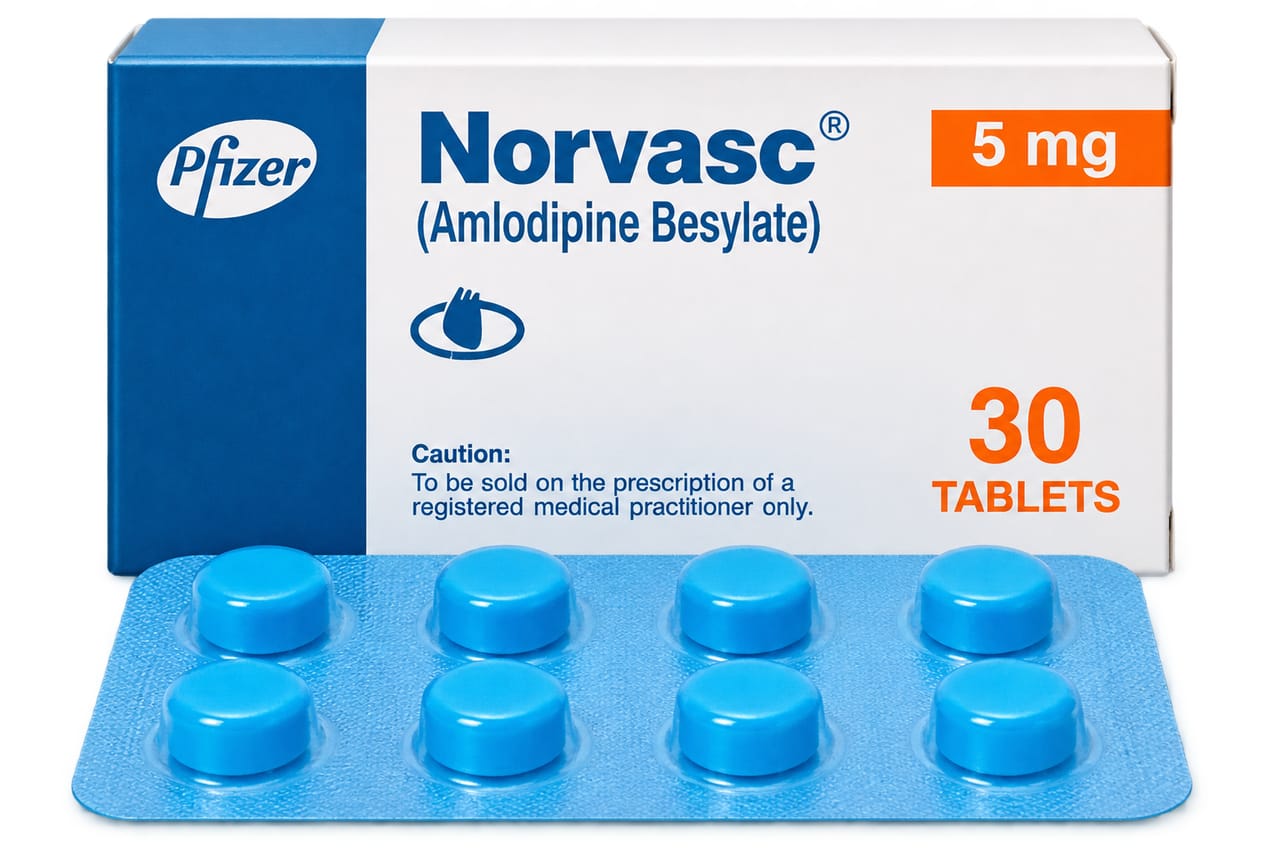
| Forms | Tablets, 5 mg and 10 mg (a 5 mg tablet can be split in half for a 2.5 mg dose) |
Quick overview
Norvasc Tablet contains amlodipine besylate, a calcium channel blocker used in adults and children 6 years and older to treat high blood pressure and manage chest pain known as angina. It works by relaxing blood vessels to improve blood flow and ease the heart's workload. It is taken once daily, exactly as prescribed, and is available as 5 mg and 10 mg tablets.
What is Norvasc Tablet
Norvasc is a prescription medicine that contains amlodipine besylate. It belongs to a group of medicines called calcium channel blockers. It is used in adults and children 6 years of age and older to treat high blood pressure and to manage a type of chest pain called angina.
Norvasc Tablet uses
- Treat high blood pressure (hypertension)
- Manage chronic stable angina (chest pain)
- Variant (Prinzmetal) angina
- Can be used alone or with other medicines to treat these conditions
Benefits of Norvasc Tablet
- Lowers blood pressure, which may lower the risk of stroke or heart attack
- Improves blood and oxygen supply to the heart, reducing how hard the heart has to work
- Helps control chest pain (angina) when taken regularly
How Norvasc Tablet works
Norvasc relaxes blood vessels, making it easier for blood to flow, which helps lower blood pressure. For chest pain, it improves blood and oxygen supply to the heart, which reduces how much work the heart has to do.
Norvasc Tablet dosage
Take it exactly as your healthcare professional tells you. Try to take it at the same time each day to help you remember. It can be taken with or without food. Swallow the tablet whole with a full glass of water. Do not stop taking your medication without talking to your healthcare professional first.
If you miss a dose, take it as soon as you remember unless it has been more than 12 hours since the missed dose, in which case skip it and continue with your regular schedule. Do not take a double dose to make up for a missed dose. Keep taking it every day, even if you feel well, since high blood pressure often has no symptoms.
| Age group | Dose |
|---|---|
| Under 6 years | Not routinely recommended; doctor required |
| 6–17 years | 2.5–5 mg once daily |
| 18 years & older | 5 mg once daily |
| Adults | 5 mg once daily; may be increased to 10 mg once daily |
Available forms and strengths
Tablets, 5 mg and 10 mg (a 5 mg tablet can be split in half for a 2.5 mg dose).
Side effects of Norvasc Tablet
Common
- Headaches
- Tiredness, extreme sleepiness, insomnia
- Stomach pain, nausea
- Dizziness
- Flushing of the face
- Constipation, diarrhea, indigestion
- Muscle cramps
- Weak muscles
- Nervousness
- Shortness of breath
- Swelling of the arms, hands, legs, feet or ankles, face or airway passages (edema)
Serious
- Allergic reactions: rash, hives, swelling of the face, lips, tongue or throat, difficulty breathing or swallowing, wheezing, nausea and throwing up
- Arrhythmia (abnormal heart rhythms): rapid, slow or irregular heartbeat
- Erectile dysfunction
- Gynecomastia (enlargement of breast tissue in men)
- Hypotension (low blood pressure): dizziness, fainting, light-headedness, blurred vision, nausea, vomiting when standing up
- Liver disorder: yellowing of the skin or eyes, dark urine and pale stools, abdominal pain, nausea, vomiting, loss of appetite
- Myocardial infarction (heart attack): pressure or squeezing pain in the chest, jaw, left arm, between the shoulder blades or upper abdomen, shortness of breath, dizziness, fatigue, light-headedness, clammy skin, sweating, indigestion, anxiety, feeling faint and possible irregular heartbeat
- Worsening angina (chest pain): discomfort in the shoulder, arm, back, throat, jaw or teeth; pain or pressure in the chest
- Extrapyramidal symptoms (problems with body movement): muscle stiffness, body spasms, tremors, restlessness, upward eye rolling, exaggeration of reflexes, drooling, difficulty moving how and when you want
Warnings and precautions
- Do not take Norvasc with strong CYP3A4 inhibitor medicines such as clarithromycin, ketoconazole, itraconazole, or ritonavir, since this combination can cause serious drug interactions.
- Do not eat grapefruit or drink grapefruit juice while taking this medicine, as it may increase blood levels and blood-pressure-lowering effects of the drug.
- Norvasc can occasionally cause low blood pressure, so blood pressure will be monitored, especially in people who have had a stroke or take other blood-pressure-lowering medicines.
- Chest pain can become worse when first starting this medicine or when the dose is increased.
- Do not stop taking this medicine suddenly or change your dose without talking to your doctor first.
- There is no clinical experience with Norvasc in pregnant women. It should be used during pregnancy only if the potential benefit outweighs the potential risk to the mother and baby.
- Norvasc should not be taken while breastfeeding, since it is not known whether it is safe for a nursing baby.
- People with impaired kidney function should start with a lower dose, and dose increases should be made gradually and with caution.
- People with liver problems should be treated carefully, and a lower starting dose may be needed since the medicine is broken down by the liver and can build up more in people with liver disease.
- Drinking alcohol can lower blood pressure further within the first 12 hours of taking this medicine and may increase certain side effects.
- Be careful before driving or using machines until you know how this medicine affects you, since it may cause dizziness or drowsiness.
Storage
- Store NORVASC at room temperature (between 15-30°C)
- Protect from light
- Keep out of reach and sight of children
When to see a doctor
- Get emergency help right away if you have signs of an allergic reaction, such as hives, difficulty breathing, or swelling of the face, lips, tongue, or throat.
- Seek emergency medical attention if your chest pain gets worse or you have symptoms of a heart attack, such as chest pain or pressure, pain spreading to the jaw or shoulder, nausea, or sweating.
- Call your doctor right away if you have worsening chest pain or a light-headed feeling like you might pass out.
- If you think you or someone you are caring for has taken too much of this medicine, contact a healthcare professional, hospital emergency department, or your local poison control center right away, even if there are no symptoms.
- Call your doctor immediately if you notice serious side effects such as changes in heartbeat, swelling of the ankles, feet, face or hands, symptoms of liver disease, or unusual movements like trembling or stiffness.
Alternatives
- Losartan
- Atenolol
- Lisinopril
- Hydrochlorothiazide
Watch the video
FAQs
What is Norvasc Tablet used for?
Norvasc is used to treat high blood pressure and manage chronic stable angina and variant (Prinzmetal) angina. It can be used alone or with other medicines.
How should I take Norvasc Tablet?
Take it exactly as prescribed, at the same time each day, with or without food. Swallow the tablet whole with a full glass of water, and do not stop taking it without talking to your healthcare professional first.
What should I avoid while taking Norvasc?
Avoid grapefruit or grapefruit juice, as it may increase blood levels and blood-pressure-lowering effects of the drug. Also avoid strong CYP3A4 inhibitors like clarithromycin, ketoconazole, itraconazole, or ritonavir.
What are the common side effects of Norvasc?
Common side effects include headaches, tiredness, stomach pain, dizziness, flushing, constipation or diarrhea, muscle cramps, nervousness, shortness of breath, and swelling of the arms, legs, or ankles.
What should I do if I miss a dose of Norvasc?
If you miss a dose, take it as soon as you remember unless it has been more than 12 hours since the missed dose, in which case skip it and continue your regular schedule without doubling the dose.
General information, not medical advice
Your prescriber and the leaflet in your pack know your situation. This page does not.
- Follow your prescriber and the leaflet
- Don't start, stop, or change a dose on your own
- Doses and warnings differ by country and product
Sources
Video
Related medicines

Injectafer Injection: Uses, Dosage, Side Effects, Precautions and Alternates
Iron products
Injectafer (ferric carboxymaltose) treats iron deficiency anemia and heart failure-related iron deficiency via IV. Learn uses, dosage, side effects, and

Gliclazide Tablet: Uses, Dosage, Side Effects, Precautions and Alternates
Sulfonylurea (hypoglycemic/antidiabetic agent)
Gliclazide Tablet is a sulfonylurea for type 2 diabetes that boosts insulin release. Learn about dosage, side effects, warnings, and precautions.