
Safety
General information, not medical advice
Your prescriber and the leaflet in your pack know your situation. This page does not.
- Follow your prescriber and the leaflet
- Don't start, stop, or change a dose on your own
- Doses and warnings differ by country and product
Norvasc V Tablet: Uses, Dosage, Side Effects, Precautions and Alternates
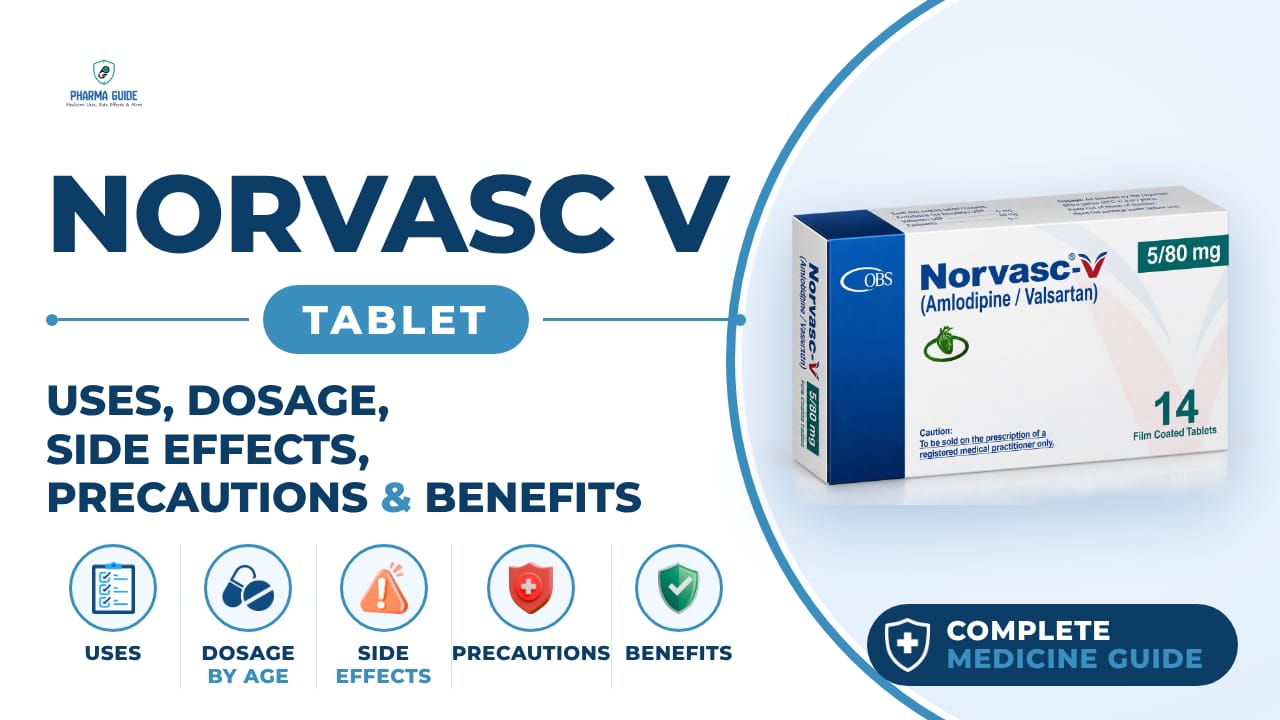
| Generic name | Amlodipine besylate and Valsartan |
|---|---|
| Drug class | Calcium channel blocker and angiotensin II antagonist combination |
| Forms | Film-coated tablet |
Quick overview
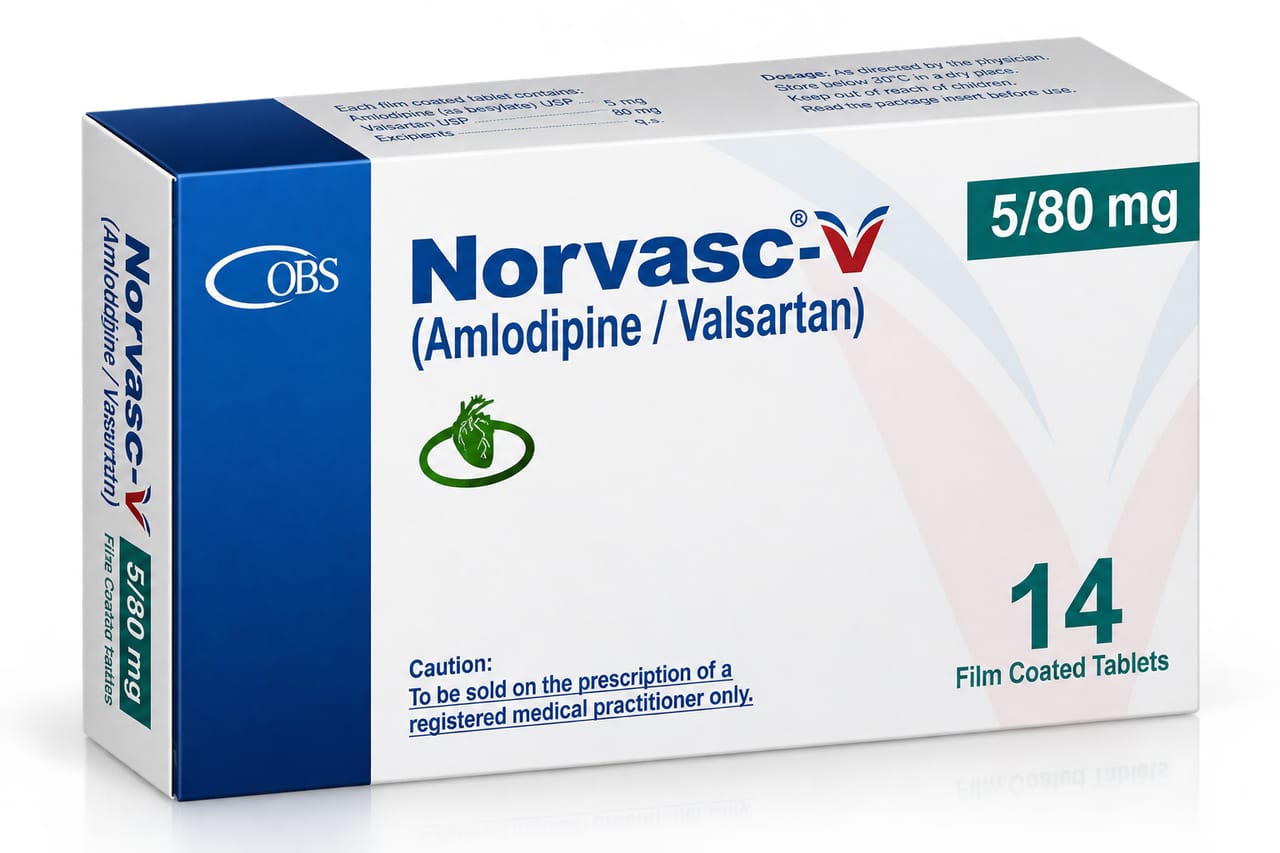
Norvasc V Tablet contains amlodipine besylate and valsartan, a combination of a calcium channel blocker and an angiotensin II receptor antagonist. It is used to treat high blood pressure that is not fully controlled by either medicine alone. The combination works through two different mechanisms to lower blood pressure more effectively than either medicine used on its own.
What is Norvasc V Tablet
Norvasc V is a combination tablet containing amlodipine (a calcium channel blocker) and valsartan (an angiotensin II receptor blocker). It is used to treat high blood pressure that is not fully controlled by either medicine alone.
Norvasc V Tablet uses
- Treatment of essential hypertension (high blood pressure)
- Used in adults whose blood pressure is not adequately controlled on amlodipine or valsartan alone
- Treats essential hypertension
- Helps lower high blood pressure
- Used when amlodipine or valsartan alone does not provide adequate blood-pressure control
Benefits of Norvasc V Tablet
- Lowers chronic high blood pressure, which helps lower the risk of stroke, heart attack, and kidney damage
- Combines two medicines that work in different ways to lower blood pressure more than either one alone
- Effect lasts a full 24 hours after a single dose
How Norvasc V Tablet works
This medicine combines two blood-pressure-lowering drugs that work in different ways. One part relaxes and widens blood vessels by blocking calcium from entering the muscle cells in blood vessel walls. The other part blocks a hormone (angiotensin II) that would otherwise narrow blood vessels. Together they lower blood pressure more than either one used alone.
Norvasc V Tablet dosage
Take one tablet per day. It can be taken with or without food, with some water. If you forget a dose, take it as soon as you remember, but skip it if it is almost time for your next dose; do not take a double dose. Caution is needed when increasing the dose in elderly patients, who should use the lowest available dose. This medicine is not established for use in children under 18 years.
| Age group | Dose |
|---|---|
| Under 18 years | Safety and effectiveness of the fixed-dose Norvasc V combination are not established; no standard pediatric dose |
| 18–39 years | Usually 1 tablet once daily; strength depends on previous amlodipine or valsartan treatment and blood-pressure response |
| 40–64 years | Usually 1 tablet once daily, using 5/80 mg, 5/160 mg, or 10/160 mg as clinically appropriate |
| 65–74 years | Usually follows adult dosing, with closer monitoring of blood pressure, kidney function, and potassium |
Available forms and strengths
Film-coated tablet, available in strengths of 5/80 mg, 5/160 mg, and 10/160 mg.
Side effects of Norvasc V Tablet
Common
- Swelling of the legs, ankles, or feet (edema)
- Headache
- Dizziness
- Fatigue, tiredness, weakness
- Flushing or sudden warmth/redness in the face
- Nasopharyngitis (cold-like symptoms) and flu
- Low potassium levels
- Facial swelling
Serious
- Severe low blood pressure (hypotension), which can cause fainting or extreme dizziness
- Irregular heartbeat (arrhythmia)
- Worsening chest pain (angina) when starting the medicine or increasing the dose
- Allergic reactions including swelling of the face, lips, tongue, or throat (angioedema)
- Kidney problems (decreased kidney function, raised creatinine)
- Liver problems (hepatitis, jaundice)
Warnings and precautions
- Do not use this medicine if you have severe low blood pressure, are in shock, have certain severe heart valve or heart muscle conditions, or have unstable heart failure right after a heart attack.
- This medicine must not be combined with certain other blood pressure medicines (aliskiren-containing products) in people with diabetes or kidney problems, because it raises the risk of dangerous side effects.
- This medicine must not be used in the second or third trimester of pregnancy, as it can seriously harm the baby's kidneys and other organs.
- If you take potassium supplements, certain water pills, or salt substitutes containing potassium, your potassium levels need to be monitored closely because this medicine can raise potassium too high.
- Grapefruit or grapefruit juice is not recommended with this medicine because it can increase the amount of drug in your blood and strengthen its blood-pressure-lowering effect.
- If you take simvastatin (a cholesterol medicine), your doctor should limit your simvastatin dose, because this medicine can increase simvastatin levels in your blood.
- This medicine is not recommended during pregnancy. It should not be started if you are planning pregnancy, and must be stopped immediately if pregnancy is confirmed, since it can seriously harm the unborn baby, especially after the first three months.
- This medicine is not recommended while breastfeeding because there isn't enough information about its safety, especially for newborn or premature babies. Other options with better-known safety are preferred.
- People with mild to moderate kidney problems usually don't need a dose change, but blood potassium and creatinine levels should be checked, especially with moderate impairment. There isn't enough information on use in severe kidney impairment.
- This medicine should not be used by people with severe liver problems. Caution is needed in people with mild to moderate liver impairment or bile-related disorders, and dose limits apply to the valsartan component.
- Alcohol can increase dizziness and the blood-pressure-lowering effect.
- This medicine can occasionally cause dizziness or tiredness, which may affect your ability to drive or use machines safely. Be careful if you feel dizzy, have a headache, feel tired, or feel sick.
Storage
- Do not store above 30°C
- Store in the original package in order to protect from moisture
When to see a doctor
- Get emergency medical help right away if you notice swelling of your face, lips, tongue, or throat, or have difficulty breathing — these can be signs of a serious allergic reaction.
- Seek medical attention if you feel very dizzy, faint, or notice a very fast or irregular heartbeat, as this may mean your blood pressure has dropped too low.
- Call your doctor right away if your chest pain gets worse or doesn't go away, especially soon after starting the medicine or increasing your dose.
Alternatives
- Amlodipine
- Valsartan
- Exforge
- Losartan + amlodipine
Watch the video
FAQs
What is Norvasc V Tablet used for?
It is used to treat essential hypertension (high blood pressure) in adults whose blood pressure is not adequately controlled on amlodipine or valsartan alone.
How does Norvasc V Tablet work?
It combines two medicines that lower blood pressure differently: one relaxes blood vessels by blocking calcium entry into vessel wall muscle cells, and the other blocks angiotensin II, a hormone that narrows blood vessels. Together they lower blood pressure more than either alone.
What is the dosage of Norvasc V Tablet?
Usually one tablet is taken once daily, with or without food, with water. If a dose is missed, take it as soon as remembered unless it is almost time for the next dose, in which case skip it—do not double the dose.
What are the common side effects of Norvasc V Tablet?
Common side effects include swelling of the legs, ankles, or feet, headache, dizziness, fatigue, flushing, cold-like symptoms, low potassium levels, and facial swelling.
Can Norvasc V Tablet be used during pregnancy?
No, it is not recommended during pregnancy and must not be used in the second or third trimester, as it can seriously harm the baby's kidneys and other organs. It should be stopped immediately if pregnancy is confirmed.
General information, not medical advice
Your prescriber and the leaflet in your pack know your situation. This page does not.
- Follow your prescriber and the leaflet
- Don't start, stop, or change a dose on your own
- Doses and warnings differ by country and product
Sources
Video
Related medicines

Injectafer Injection: Uses, Dosage, Side Effects, Precautions and Alternates
Iron products
Injectafer (ferric carboxymaltose) treats iron deficiency anemia and heart failure-related iron deficiency via IV. Learn uses, dosage, side effects, and

Gliclazide Tablet: Uses, Dosage, Side Effects, Precautions and Alternates
Sulfonylurea (hypoglycemic/antidiabetic agent)
Gliclazide Tablet is a sulfonylurea for type 2 diabetes that boosts insulin release. Learn about dosage, side effects, warnings, and precautions.