
Safety
General information, not medical advice
Your prescriber and the leaflet in your pack know your situation. This page does not.
- Follow your prescriber and the leaflet
- Don't start, stop, or change a dose on your own
- Doses and warnings differ by country and product
Norvir Tablet: Uses, Dosage, Side Effects, Precautions and Alternates
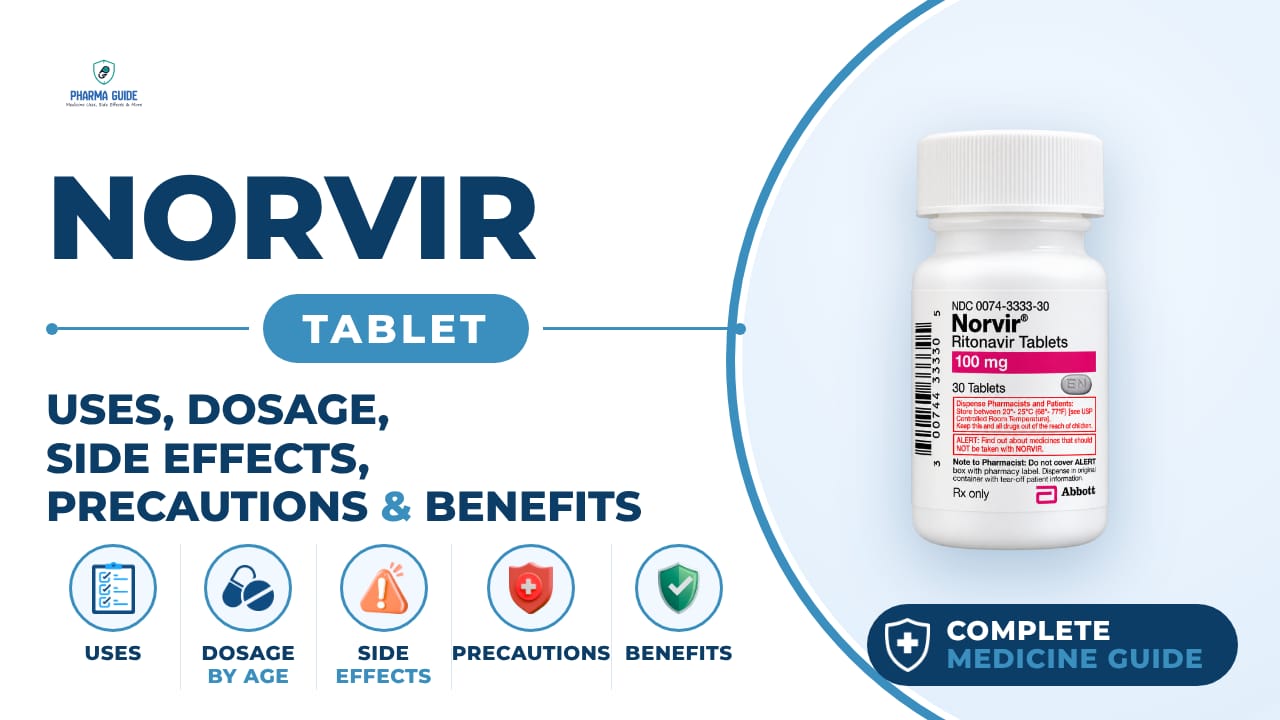
| Generic name | ritonavir |
|---|---|
| Drug class | HIV protease inhibitor (antiviral booster) |
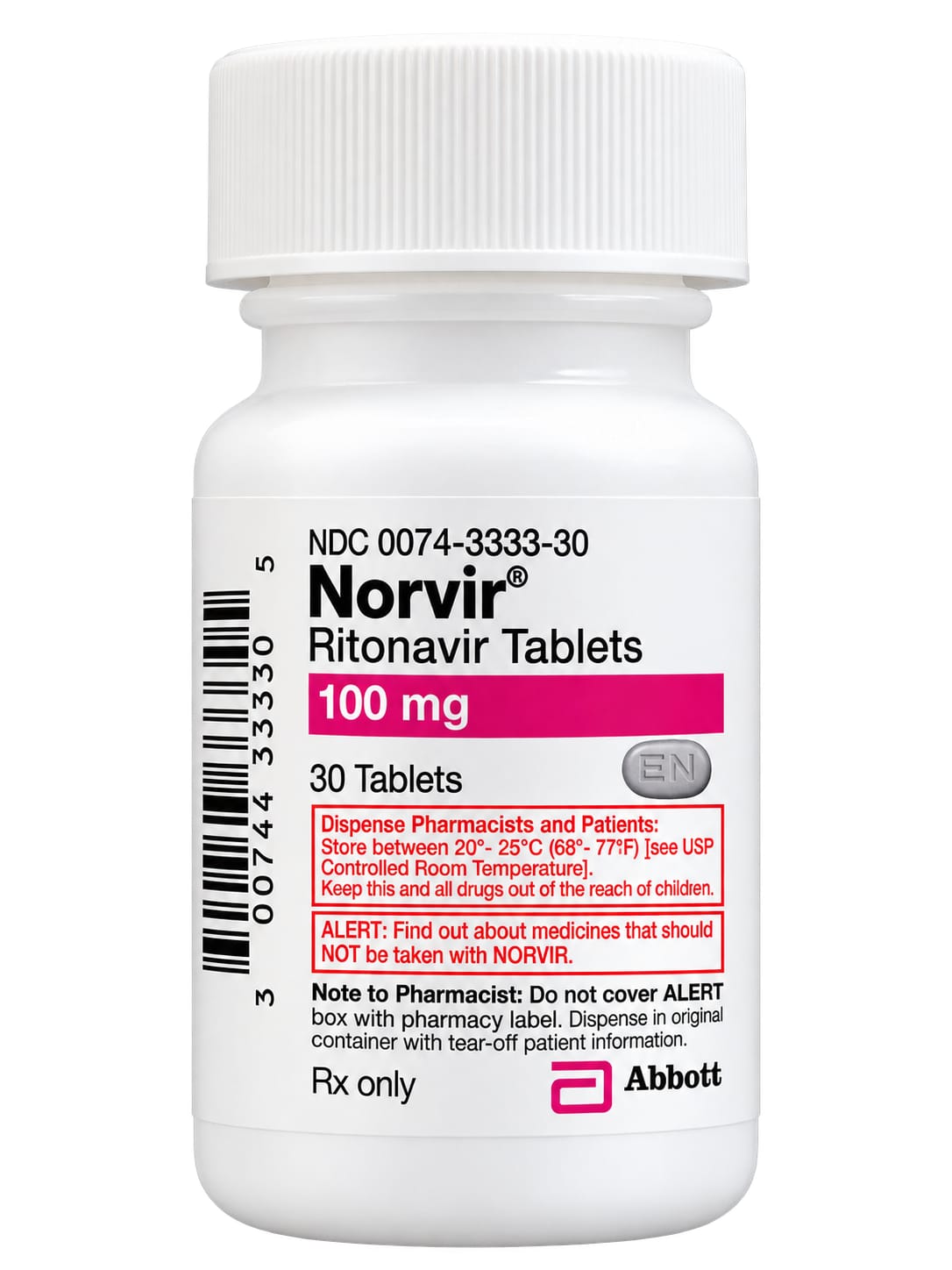
| Forms | Tablet (100 mg ritonavir, film-coated), Oral powder (100 mg ritonavir per packet), Oral solution (80 mg ritonavir per mL) |
Quick overview
Norvir Tablet (ritonavir) is a prescription HIV protease inhibitor used together with other antiretroviral medicines to treat HIV-1 infection. It does not cure HIV or AIDS. Norvir works by blocking an HIV enzyme and by boosting levels of other HIV medicines in the body. It is taken with meals, always in combination with other anti-HIV drugs, and requires regular monitoring by a doctor.
What is Norvir Tablet
Norvir is a prescription anti-HIV medicine used together with other anti-HIV medicines to treat people with human immunodeficiency virus (HIV-1) infection. It belongs to a group of medicines called protease inhibitors. Norvir does not cure HIV or AIDS.
Norvir Tablet uses
- Treatment of HIV-1 infection in combination with other antiretroviral agents
- NORVIR oral powder is used in combination with other antiretroviral agents to treat HIV-1 infection in children
Benefits of Norvir Tablet
- May reduce the amount of HIV in your blood (viral load)
- May help increase the number of CD4 (T) cells in your blood, which help fight off other infections
- Reducing HIV and increasing CD4 cell count may improve your immune system and may reduce your risk of death or opportunistic infections
How Norvir Tablet works
Ritonavir works in two ways. First, it blocks an HIV enzyme called protease that the virus needs to mature, so new virus particles stay immature and unable to infect other cells. Second, at lower doses it slows down a liver enzyme that breaks down many other medicines, which helps keep levels of certain other HIV medicines higher for longer.
Norvir Tablet dosage
Norvir must always be used in combination with other antiretroviral drugs. Take NORVIR with meals. Swallow NORVIR tablets whole; do not chew, break, or crush them. If you cannot swallow NORVIR tablets whole, tell your doctor, as you may need a different medicine.
NORVIR oral powder can be mixed with soft food such as applesauce or vanilla pudding, or with liquid such as water, chocolate milk, or infant formula, and should be taken within 2 hours of preparation. For children, the dose is based on body surface area and should not exceed the adult maximum; tell the doctor if your child's weight changes so the dose can be adjusted.
Stay under the care of a doctor while using NORVIR; do not change the dose or stop treatment without talking to your doctor first. If you miss a dose, take it as soon as possible and then return to your normal schedule; do not double the next dose.
| Age group | Dose |
|---|---|
| 12–17 years | Often 100–200 mg once or twice daily when used as a booster, depending on the companion HIV medicine |
| 18–64 years | Common booster dose: 100–200 mg once or twice daily |
Available forms and strengths
- Tablet (100 mg ritonavir, film-coated)
- Oral powder (100 mg ritonavir per packet)
- Oral solution (80 mg ritonavir per mL)
Side effects of Norvir Tablet
Common
- Diarrhea
- Nausea
- Vomiting
- Upper and lower abdominal pain
- Tingling feeling or numbness in hands or feet or around the lips (paresthesia)
- Rash
- Feeling weak or tired
- Headache
- Dizziness
- Difficulty sleeping
- Change in how certain foods taste
- Dry mouth
- Mouth ulcer
- Indigestion
- Flatulence
Serious
- Liver problems, including worsening of hepatitis B or C, which can be life-threatening
- Pancreatitis (inflammation of the pancreas), which can be fatal
- Severe allergic reactions including anaphylaxis, toxic epidermal necrolysis, and Stevens-Johnson syndrome
- Changes in heart rhythm and electrical activity of the heart (PR interval prolongation), including second- and third-degree heart block
- Large increases in cholesterol and triglycerides
- New onset or worsening of diabetes mellitus and high blood sugar
- Immune reconstitution syndrome (inflammatory response to hidden infections as the immune system recovers)
- Redistribution or accumulation of body fat (buffalo hump, central obesity, facial or limb wasting)
- Increased bleeding in patients with hemophilia
- Kidney stones
Warnings and precautions
- Taking NORVIR together with certain other medicines, including some sedatives, heart rhythm medicines, or ergot-based medicines, can cause serious or life-threatening reactions because of how NORVIR affects the liver's processing of these drugs. Always tell your doctor about every medicine you take.
- NORVIR can cause serious liver problems, including cases that have been fatal. Regular liver monitoring is important, especially in people with hepatitis B or C.
- NORVIR can cause pancreatitis, which has sometimes been fatal. Treatment should be stopped if pancreatitis is diagnosed.
- Serious allergic reactions have occurred, including anaphylaxis and severe skin reactions. Treatment should be stopped if a severe reaction develops.
- NORVIR can affect the heart's electrical activity, causing a delay called PR interval prolongation, and has been linked to cases of serious heart block. Caution is needed in people with existing heart conditions.
- Do not take NORVIR with certain medicines such as alfuzosin, certain heart rhythm drugs (amiodarone, dronedarone, flecainide, propafenone, quinidine), voriconazole at higher ritonavir doses, colchicine if you have kidney or liver problems, certain antipsychotics (lurasidone, pimozide), ergot medicines, cisapride, St. John's Wort, lovastatin or simvastatin, sildenafil for pulmonary arterial hypertension, or oral midazolam/triazolam, because serious or life-threatening reactions can occur.
- NORVIR oral solution is not recommended during pregnancy because of its alcohol content. There is a pregnancy registry that tracks outcomes for women who take NORVIR during pregnancy; talk to your doctor about taking part.
- Women with HIV should not breastfeed while taking NORVIR, because of the risk of passing HIV to the baby, possible drug resistance, and potential side effects in the infant.
- Ritonavir has not been specifically studied in people with kidney problems, but since very little of the drug is removed by the kidneys, a lower total body clearance is not expected in these patients.
- No dose change is needed for people with mild or moderate liver impairment, but NORVIR is not recommended for those with severe liver impairment because it has not been studied in this group. Caution and closer liver monitoring are advised in people with pre-existing liver disease, including hepatitis B or C.
- There is no specific information on how NORVIR affects your ability to drive or use machinery, so be cautious until you know how the medicine affects you.
Storage
- Store NORVIR tablets at or below 30°C (86°F); exposure to temperatures up to 50°C (122°F) for seven days is permitted
- Dispense and store tablets in the original container; avoid exposing tablets to high humidity outside the original container for longer than 2 weeks
- Store NORVIR oral powder at or below 30°C (86°F)
- NORVIR oral powder comes in child-resistant packets
- Throw away NORVIR that is expired or no longer needed
- Keep NORVIR and all medicines out of the reach of children
When to see a doctor
- Get emergency medical help right away if you have signs of a severe allergic reaction such as trouble breathing, wheezing, dizziness or fainting, throat tightness or hoarseness, fast or pounding heartbeat, sweating, swelling of the face, lips or tongue, muscle or joint pain, blisters or skin lesions, or mouth sores.
- Tell your doctor right away if you notice signs of liver problems, such as loss of appetite, pain or tenderness on your right side below the ribs, yellowing of the skin or eyes, or itchy skin.
- Tell your doctor right away if you have nausea, vomiting, or stomach (abdomen) pain, which could be signs of pancreatitis.
- Tell your doctor right away if you feel dizzy, lightheaded, faint, or notice an abnormal heartbeat, as these can be signs of heart rhythm changes.
- Tell your doctor if you notice increased thirst or frequent urination, which could be signs of high blood sugar or diabetes.
- If you take too much NORVIR, contact your local poison control center or go to the nearest hospital emergency room right away.
- Call your doctor right away if new symptoms appear after starting HIV treatment, as this may be a sign of immune reconstitution syndrome where the immune system reacts to hidden infections.
Alternatives
- Cobicistat
- Darunavir/cobicistat
- Atazanavir/cobicistat
Watch the video
FAQs
What is Norvir Tablet used for?
Norvir is a prescription anti-HIV medicine used together with other antiretroviral medicines to treat HIV-1 infection. It does not cure HIV or AIDS.
How should Norvir Tablet be taken?
Norvir must always be used in combination with other antiretroviral drugs and should be taken with meals. Tablets should be swallowed whole and not chewed, broken, or crushed. If you miss a dose, take it as soon as possible and then return to your normal schedule without doubling the next dose.
What are the common side effects of Norvir Tablet?
Common side effects include diarrhea, nausea, vomiting, abdominal pain, tingling or numbness in hands, feet, or around the lips, rash, weakness or tiredness, headache, dizziness, difficulty sleeping, changes in taste, dry mouth, mouth ulcers, indigestion, and flatulence.
What are the serious risks associated with Norvir Tablet?
Serious risks include liver problems (including worsening of hepatitis B or C), pancreatitis, severe allergic reactions, heart rhythm changes such as PR interval prolongation, large increases in cholesterol and triglycerides, new onset or worsening diabetes, immune reconstitution syndrome, body fat redistribution, increased bleeding in people with hemophilia, and kidney stones.
Can Norvir Tablet be taken during pregnancy or while breastfeeding?
NORVIR oral solution is not recommended during pregnancy because of its alcohol content, and there is a pregnancy registry to track outcomes. Women with HIV should not breastfeed while taking NORVIR due to the risk of passing HIV to the baby, possible drug resistance, and potential side effects in the infant.
General information, not medical advice
Your prescriber and the leaflet in your pack know your situation. This page does not.
- Follow your prescriber and the leaflet
- Don't start, stop, or change a dose on your own
- Doses and warnings differ by country and product
Sources
Video
Related medicines

Injectafer Injection: Uses, Dosage, Side Effects, Precautions and Alternates
Iron products
Injectafer (ferric carboxymaltose) treats iron deficiency anemia and heart failure-related iron deficiency via IV. Learn uses, dosage, side effects, and

Gliclazide Tablet: Uses, Dosage, Side Effects, Precautions and Alternates
Sulfonylurea (hypoglycemic/antidiabetic agent)
Gliclazide Tablet is a sulfonylurea for type 2 diabetes that boosts insulin release. Learn about dosage, side effects, warnings, and precautions.