
Safety
General information, not medical advice
Your prescriber and the leaflet in your pack know your situation. This page does not.
- Follow your prescriber and the leaflet
- Don't start, stop, or change a dose on your own
- Doses and warnings differ by country and product
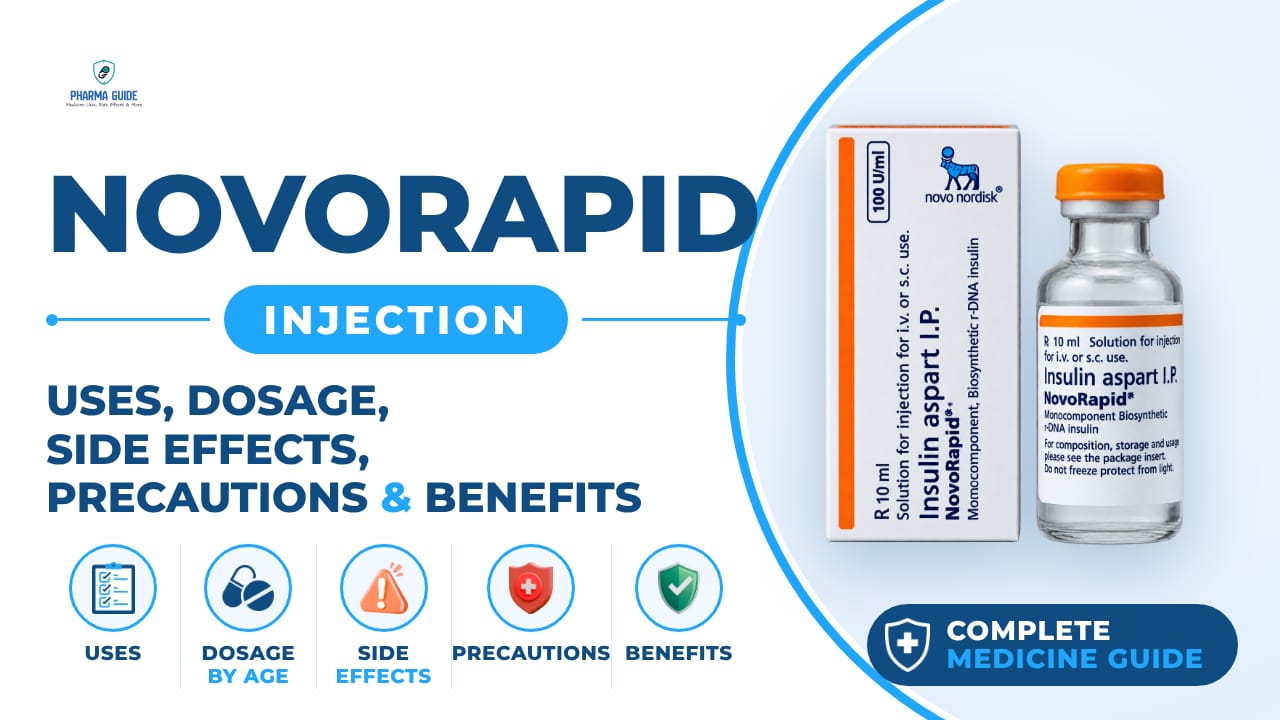
NovoRapid Injection: Uses, Dosage, Side Effects, Precautions and Alternates
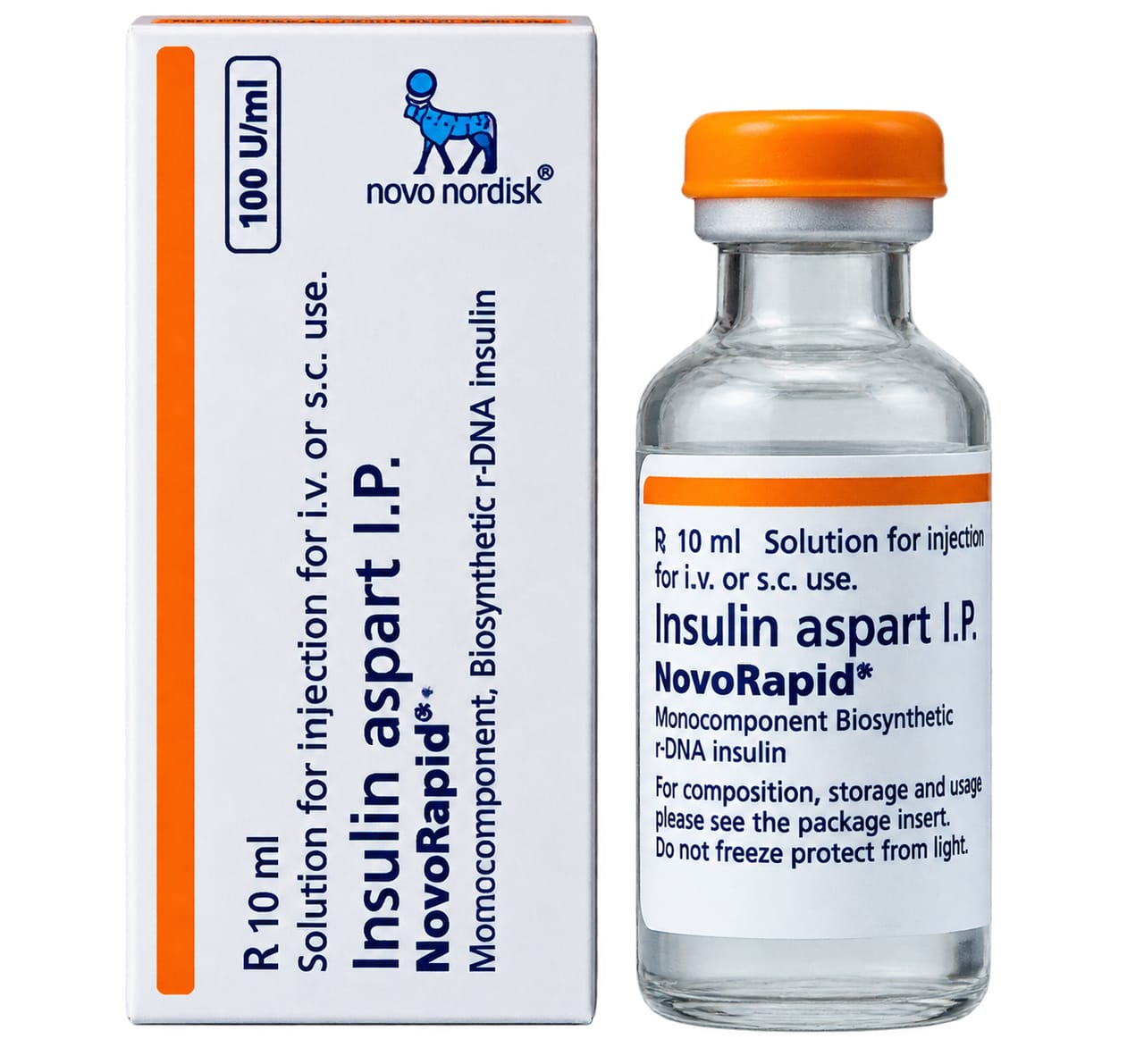
| Generic name | insulin aspart |
|---|---|
| Drug class | Rapid-acting insulin (Insulins and analogues for injection, fast-acting) |
| Forms | Solution for injection in vial, Solution for injection in pre-filled pen (FlexPen, FlexTouch, InnoLet), Solution for injection in cartridge (Penfill, PumpCart) |
Quick overview
NovoRapid Injection contains insulin aspart, a rapid-acting insulin used to treat diabetes mellitus in adults, adolescents and children aged 1 year and above. It works like the body's own insulin but starts acting faster, helping move sugar from the blood into cells and reducing the amount of sugar released by the liver. It is given by injection under the skin, usually just before a meal, and is normally used together with an intermediate- or long-acting insulin.
What is NovoRapid Injection
NovoRapid is a fast-acting insulin medicine used to treat diabetes mellitus. It contains insulin aspart, which is made to work like the body's own insulin but starts working faster.
NovoRapid Injection uses
- Treatment of diabetes mellitus in adults, adolescents and children aged 1 year and above
Benefits of NovoRapid Injection
- Gave almost identical blood sugar control results to human insulin in large studies of people with type 1 and type 2 diabetes
- Lowered HbA1c (a measure of long-term blood sugar control) slightly more than human insulin after six months of treatment
- Gave comparable results when studied in children from one year of age
- Showed a similar safety profile to human insulin in pregnant women with diabetes
How NovoRapid Injection works
Diabetes happens when the body doesn't make enough insulin to control blood sugar. NovoRapid is a replacement insulin similar to natural insulin but absorbed faster, so it starts working sooner. It helps sugar move from the blood into the body's cells and stops the liver from releasing more sugar, which lowers blood sugar levels.
NovoRapid Injection dosage
NovoRapid is given by injection under the skin in the abdomen, thigh, upper arm, shoulder, or buttock, and the injection site should be changed each time. It is usually taken immediately before a meal, but can be taken after a meal if needed, and is normally used together with an intermediate- or long-acting insulin given at least once a day. Blood glucose should be tested regularly to find the right dose. NovoRapid can also be used in an insulin pump for continuous infusion under the skin, or given into a vein by a doctor or nurse only. It is recommended to eat a meal or snack containing carbohydrate within 10 minutes of the injection.
Do not refill pre-filled pens or cartridges, and do not share needles, cartridges, or insulin delivery devices with anyone else. Do not use if the solution is not clear and colourless, or if it looks thickened or has solid bits in it. Change injection sites regularly to help prevent skin problems.
Use exactly as prescribed by your doctor or pharmacist.
Available forms and strengths
- Solution for injection in vial
- Solution for injection in pre-filled pen (FlexPen, FlexTouch, InnoLet)
- Solution for injection in cartridge (Penfill, PumpCart)
Side effects of NovoRapid Injection
Common
- Low blood sugar (hypoglycaemia)
- Pain, redness, hives, bruising, swelling or itching at the injection site
- Depression or thickening of the skin around the injection site (lipodystrophy)
- Lumps under the skin (cutaneous amyloidosis)
- Visual problems or swollen hands and feet when first starting insulin treatment
Serious
- Severe low blood sugar causing disorientation, seizures, fits, convulsions, or loss of consciousness
- Skin rashes over a large part of the body
- Shortness of breath or wheezing
- Swelling of the face, lips or tongue
- Fast pulse
- Sweating
Warnings and precautions
- NovoRapid can be used during pregnancy. Pregnancy can make managing diabetes harder, and insulin needs often decrease in the first three months and increase in the last six months. Talk to your doctor about the risks and benefits.
- There are no restrictions on using NovoRapid while breastfeeding, but check with your doctor or pharmacist first.
- Check with your doctor if you have kidney problems, as your insulin dose may need to be adjusted and monitoring increased.
- Check with your doctor if you have liver problems, as your insulin dose may need to be adjusted and monitoring increased.
- Alcohol can hide the symptoms of low blood sugar, and drinking alcohol may change how much insulin you need.
- If your blood sugar is too low or too high, it can affect your concentration and reaction time, which may affect your ability to drive or use machines safely. Ask your doctor if you can drive if you have frequent hypos or trouble recognizing low blood sugar.
- Not using enough insulin, or stopping treatment, especially in type 1 diabetes, can lead to high blood sugar and a dangerous condition called diabetic ketoacidosis.
- Skipping meals or doing unplanned, hard exercise can cause low blood sugar (hypoglycaemia).
- Some patients with long-standing type 2 diabetes and heart disease or a history of stroke who take certain diabetes tablets (thiazolidinediones) together with insulin may develop heart failure. Tell your doctor right away if you notice unusual shortness of breath, rapid weight gain, or swelling.
- Always check the insulin label before each injection to avoid mixing up NovoRapid with other insulins.
- If you are blind or have poor eyesight and cannot read the dose counter on your insulin pen, do not use it without help from someone with good eyesight who is trained to use the pen.
Storage
- Store unused NovoRapid Penfill between 2°C and 8°C in a refrigerator, not in or too near the freezer section or cooling element
- The Penfill you are using, or carrying as a spare, can be kept at room temperature (not above 30°C) for up to 4 weeks, then must be discarded even if insulin remains
- Do not use the medicine if you think it has been frozen or exposed to excessive heat
- Protect from light by keeping cartridges in the carton when not in use
- Never use after the expiry date printed on the label and carton
- Keep out of the reach of children
- Dispose of used needles and syringes safely into a yellow plastic sharps container
- If no longer needed or out of date, take the medicine to any pharmacy for safe disposal
When to see a doctor
- Get urgent medical help if you have symptoms of severe low blood sugar such as confusion, seizures, fits, or loss of consciousness, as untreated severe hypoglycaemia can cause brain damage or death.
- Get urgent medical help if you notice skin rashes over a large part of your body, shortness of breath, wheezing, swelling of the face, lips or tongue, a fast pulse, or sweating, as these may be signs of a serious allergic reaction.
- Contact your doctor immediately if your blood sugar is high or you notice symptoms of hyperglycaemia, since over time this can lead to a dangerous build-up of acid in the blood (diabetic ketoacidosis).
- If you think you have used too much NovoRapid, you may need urgent medical attention, even if you do not feel unwell.
Alternatives
- Humalog
- Fiasp
- Insulin Glulisine
Watch the video
FAQs
What is NovoRapid Injection used for?
NovoRapid is used to treat diabetes mellitus in adults, adolescents and children aged 1 year and above.
How should NovoRapid be taken?
It is injected under the skin in the abdomen, thigh, upper arm, shoulder, or buttock, usually immediately before a meal (or after if needed), and is normally used together with an intermediate- or long-acting insulin. It can also be used in an insulin pump or given into a vein by a doctor or nurse.
Can NovoRapid be used during pregnancy or breastfeeding?
Yes, NovoRapid can be used during pregnancy, though insulin needs often decrease in the first three months and increase in the last six months. There are no restrictions on use while breastfeeding, but you should check with your doctor or pharmacist first.
What are the common side effects of NovoRapid?
Common side effects include low blood sugar, pain, redness, hives, bruising, swelling or itching at the injection site, skin thickening or lumps under the skin, and visual problems or swollen hands and feet when first starting treatment.
What should I do if I notice signs of a serious allergic reaction?
Get urgent medical help if you notice skin rashes over a large part of your body, shortness of breath, wheezing, swelling of the face, lips or tongue, a fast pulse, or sweating, as these may be signs of a serious allergic reaction.
General information, not medical advice
Your prescriber and the leaflet in your pack know your situation. This page does not.
- Follow your prescriber and the leaflet
- Don't start, stop, or change a dose on your own
- Doses and warnings differ by country and product
Sources
- https://www.medicines.org.uk/emc/product/7920/smpc
- https://www.drugs.com/uk/novorapid.html
- https://medex.com.bd/brands/16775/novorapid-100-iu-sc-injection
- NovoRapid Penfill Consumer Medicine Information (Australia/New Zealand), VV-LAB-098270 v4
- NovoRapid & NovoMix Australian Product Information, VV-LAB-098490
Video
Related medicines

Injectafer Injection: Uses, Dosage, Side Effects, Precautions and Alternates
Iron products
Injectafer (ferric carboxymaltose) treats iron deficiency anemia and heart failure-related iron deficiency via IV. Learn uses, dosage, side effects, and

Gliclazide Tablet: Uses, Dosage, Side Effects, Precautions and Alternates
Sulfonylurea (hypoglycemic/antidiabetic agent)
Gliclazide Tablet is a sulfonylurea for type 2 diabetes that boosts insulin release. Learn about dosage, side effects, warnings, and precautions.