
Safety
General information, not medical advice
Your prescriber and the leaflet in your pack know your situation. This page does not.
- Follow your prescriber and the leaflet
- Don't start, stop, or change a dose on your own
- Doses and warnings differ by country and product
Noxafil Tablet: Uses, Dosage, Side Effects, Precautions and Alternates
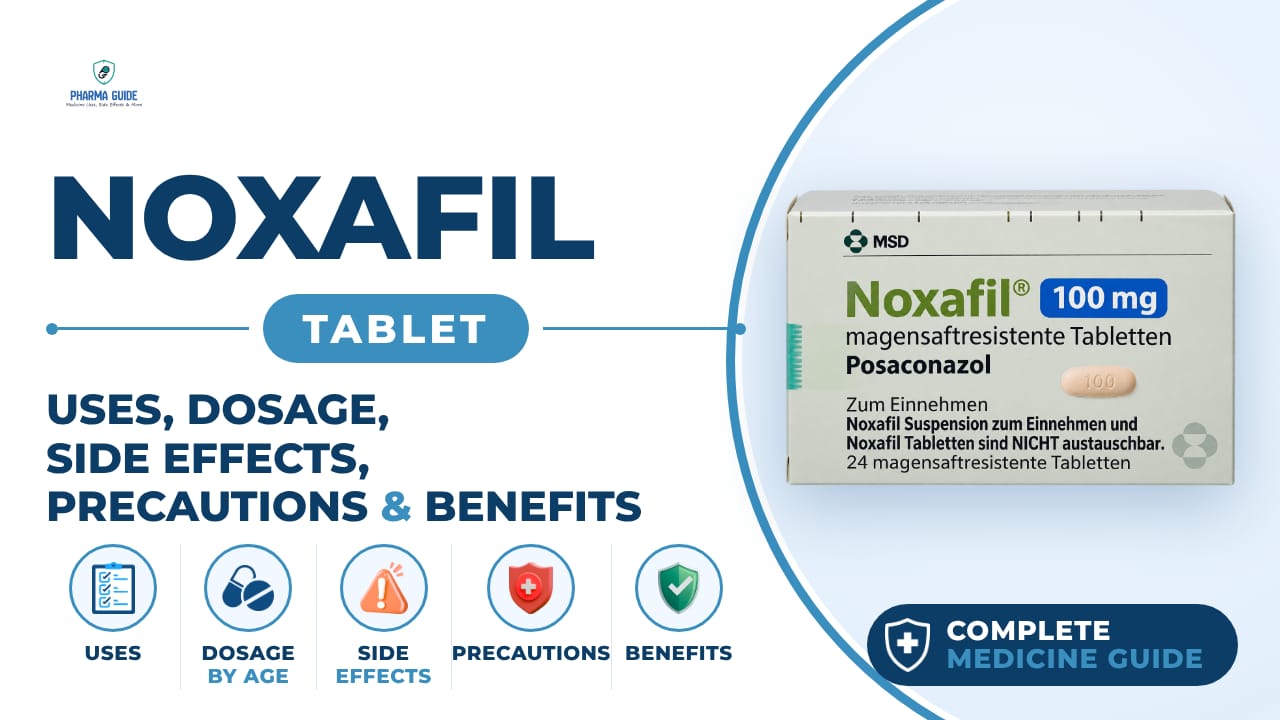
| Generic name | Posaconazole |
|---|---|
| Drug class | Azole antifungal (triazole antifungal) |
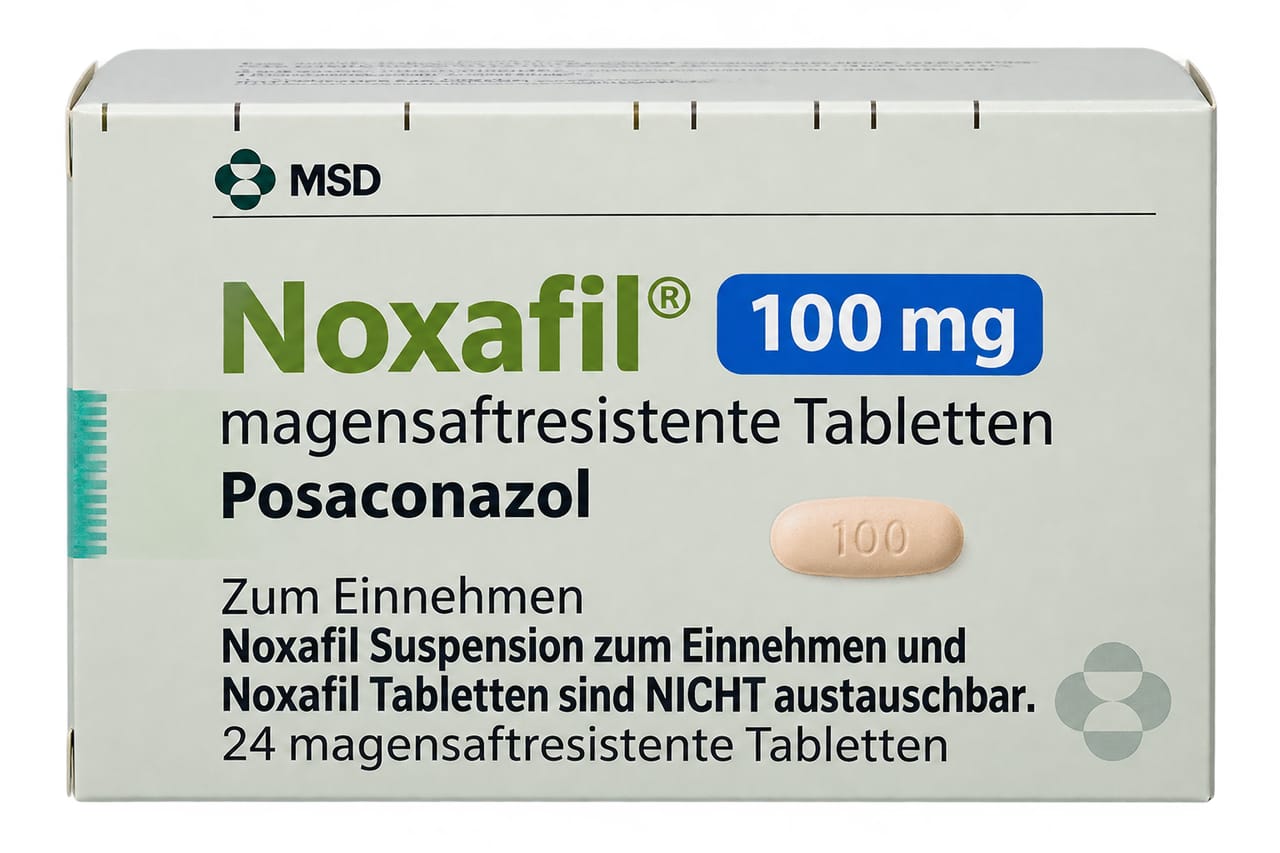
| Forms | Delayed-release tablet (100 mg), Oral suspension (liquid), Injection (solution for infusion) |
Quick overview
Noxafil Tablet (posaconazole) is a prescription azole antifungal medicine used to treat and prevent serious fungal infections in people with weakened immune systems. It comes as a delayed-release tablet, oral suspension, or injection, with the tablet form taken once daily with food. Noxafil works by weakening the fungal cell wall, helping protect high-risk patients from dangerous infections such as aspergillosis and candidiasis.
What is Noxafil Tablet
Noxafil is a prescription antifungal medicine that comes as a delayed-release tablet, an oral liquid suspension, or an injection. It is used to treat or prevent serious fungal infections in people with weakened immune systems. The generic name is posaconazole, and it belongs to the azole antifungal class, specifically triazole antifungals.
Noxafil Tablet uses
- Prevention of invasive Aspergillus and Candida infections in people at high risk because they are severely immunocompromised, such as stem cell transplant recipients with graft-versus-host disease or people with blood cancers who have prolonged low white blood cell counts from chemotherapy
- Treatment of invasive aspergillosis (tablets, injection, and oral suspension, depending on country/label)
- Treatment of thrush (oropharyngeal candidiasis) in the mouth and throat, including infections that did not respond to itraconazole or fluconazole (oral suspension)
- Treatment of other serious fungal infections such as fusariosis, coccidioidomycosis, chromoblastomycosis, and mycetoma when other antifungal medicines have not worked or cannot be tolerated
Benefits of Noxafil Tablet
- Helps prevent serious fungal infections
- Helps prevent Aspergillus infections
- Helps prevent Candida infections in high-risk patients
- Treats invasive aspergillosis
- Helps protect severely immunocompromised patients
How Noxafil Tablet works
Noxafil works by blocking an enzyme fungi need to make a substance called ergosterol, which is an important building block of the fungal cell's outer covering. Without enough ergosterol, the fungal cell wall becomes weak and the fungus cannot survive or grow properly.
Noxafil Tablet dosage
Delayed-release tablets should be swallowed whole with water; do not divide, crush, or chew them. Tablets should be taken with food to help the body absorb the medicine properly. If you cannot swallow the tablets whole, tell your healthcare provider, since you may need a different form of the medicine. Do not switch between the tablet and oral suspension forms without talking to your doctor, because they are dosed differently and are not interchangeable.
If you miss a tablet dose, take it as soon as you remember; if it is within 12 hours of your next dose, skip the missed dose and continue your regular schedule; do not double up doses. People with severe diarrhea or vomiting should be watched closely for breakthrough fungal infections while taking the tablets. Tell your doctor right away if you develop severe diarrhea or vomiting while on tablets, since this can affect how well the medicine works.
| Age group | Dose |
|---|---|
| Under 18 years | Not recommended |
| 18–64 years | 300 mg, once/day |
| 65+ years | 300 mg, once/day |
Available forms and strengths
- Delayed-release tablet (100 mg)
- Oral suspension (liquid)
- Injection (solution for infusion)
Side effects of Noxafil Tablet
Common
- Diarrhea
- Nausea
- Fever
- Vomiting
- Headache
- Coughing
- Low potassium levels in the blood (hypokalemia)
- Loss of appetite
- Trouble sleeping
- Dizziness
- Sleepiness
- Tingling in fingers or toes
- Hot flushes
- Stomach pain
- Gas
- Dry mouth
- Changed sense of taste
- Dry skin, rash, itchiness
- Back pain
- Raised blood pressure with low potassium
Serious
- Severe allergic reaction: rash, hives, itching, swelling of the face, lips, mouth, throat, or neck, difficulty breathing or swallowing
- Heart rhythm changes (QT prolongation), including fast, pounding, or irregular heartbeat, fluttering in the chest, or sudden dizziness like you might faint
- Liver problems: itchy skin, nausea or vomiting, yellowing of the eyes or skin, feeling very tired, flu-like symptoms
- Increased levels of cyclosporine or tacrolimus in the blood, which can harm the kidneys or brain; signs include swelling in an arm or leg or shortness of breath
- Increased sedative effects if taken with midazolam, causing prolonged sleepiness
- Electrolyte imbalances such as low potassium, magnesium, or calcium, which can cause muscle weakness, irregular heartbeat, or confusion
- Tingling or numbness of the hands or feet, or muscle weakness
Warnings and precautions
- Do not take Noxafil together with certain medicines, including sirolimus, pimozide, quinidine, certain cholesterol drugs (atorvastatin, lovastatin, simvastatin), or ergot medicines, because dangerous interactions can occur.
- Noxafil can cause serious heart rhythm problems in some people, especially those with existing heart risk factors or who take certain other medicines. Correcting low potassium, magnesium, or calcium levels before starting treatment is recommended.
- Serious liver problems, including liver failure and death, have occurred in some patients with underlying serious illness. Liver function should be checked before and during treatment.
- If taken with cyclosporine or tacrolimus, Noxafil can raise their blood levels enough to cause kidney damage or a brain condition; frequent blood monitoring is needed.
- People taking the tablets who develop severe diarrhea or vomiting should be watched closely, since this can reduce how well the medicine is absorbed and raise the risk of breakthrough fungal infection.
- Avoid sun exposure during treatment, as skin may become more sensitive to the sun's UV rays; cover exposed skin and use a high-SPF sunscreen.
- Noxafil may harm an unborn baby and should only be used in pregnancy if the potential benefit outweighs the potential risk. Women who could become pregnant should use effective birth control during treatment and for two weeks after stopping the medicine.
- It is not known whether Noxafil passes into human breast milk, but it does pass into milk in animal studies. Because of possible serious side effects in a nursing baby, you and your doctor should decide whether you will take Noxafil or breastfeed, not both.
- No dose adjustment of the tablets is needed for kidney problems, including severe kidney impairment, based on how the drug behaves in the body. However, people with severe kidney impairment should be watched closely for breakthrough fungal infections because drug levels can vary a lot.
- No dose adjustment is needed for people with mild, moderate, or severe liver impairment, but your doctor should check your liver function before and during treatment, since liver problems including serious or fatal liver failure have occurred in some patients, especially at higher doses.
- It is unknown whether alcohol affects the tablet form specifically, but heavy drinking can weaken your immune system and make it harder for your body to fight off infection.
- Noxafil can cause dizziness, sleepiness, or blurred vision in some people, which may affect your ability to drive or use machines. Be careful until you know how the medicine affects you.
Storage
- Store NOXAFIL delayed-release tablets at 20-25°C (68-77°F), with brief excursions allowed between 15-30°C (59-86°F)
- Keep the tablets in their original container
- Store away from moisture, heat, or sunlight; do not store in the bathroom or near a sink, and do not leave in a car or on a windowsill
- Keep out of reach of children
- Safely throw away medicine that is out of date or no longer needed; ask your pharmacist how to dispose of leftover medicine
When to see a doctor
- Get emergency help right away if you have signs of a severe allergic reaction, such as hives, swelling of the face, lips, tongue or throat, or difficulty breathing.
- Call your doctor immediately if you notice a fast, pounding, or irregular heartbeat, fluttering in your chest, or sudden dizziness as if you might faint.
- Seek medical advice right away if you notice signs of liver problems, such as nausea, vomiting, itching, tiredness, or yellowing of the skin or eyes.
- Tell your doctor right away if you have swelling in an arm or leg or shortness of breath, which could mean your cyclosporine or tacrolimus levels have become too high.
- Contact your doctor immediately if you develop severe diarrhea or vomiting while taking Noxafil, since this can affect how well the medicine works.
- Seek urgent medical attention if you think you have taken too much Noxafil, even if you feel fine.
Alternatives
- Itraconazole
- Voriconazole
- Amphotericin B
Watch the video
FAQs
What is Noxafil Tablet used for?
Noxafil Tablet is used to prevent invasive Aspergillus and Candida infections in people with severely weakened immune systems, and to treat invasive aspergillosis.
How should Noxafil Tablet be taken?
The delayed-release tablet should be swallowed whole with water and taken with food to help absorption. It should not be divided, crushed, or chewed.
What is the dosage of Noxafil Tablet for adults?
Adults aged 18 to 64 years and those 65 and older take 300 mg once daily. It is not recommended for use in people under 18 years.
What are the common side effects of Noxafil Tablet?
Common side effects include diarrhea, nausea, fever, vomiting, headache, coughing, low potassium levels, loss of appetite, trouble sleeping, and dizziness.
Can Noxafil Tablet and oral suspension be used interchangeably?
No, the tablet and oral suspension forms are dosed differently and should not be switched without talking to your doctor.
General information, not medical advice
Your prescriber and the leaflet in your pack know your situation. This page does not.
- Follow your prescriber and the leaflet
- Don't start, stop, or change a dose on your own
- Doses and warnings differ by country and product
Sources
Video
Related medicines
Cresemba Capsule: Uses, Dosage, Side Effects, Precautions and Alternates
azole antifungal (triazole antifungal)
Cresemba Capsule (isavuconazonium) treats invasive aspergillosis and mucormycosis. Learn about dosage, side effects, warnings, and precautions before use.
Triflucan Capsule: Uses, Dosage, Side Effects, Precautions and Alternates
Azole antifungal (triazole antifungal)
Triflucan Capsule (fluconazole) treats fungal and yeast infections like vaginal candidiasis, oral thrush, and cryptococcal meningitis. Learn dosage, side