
Safety
General information, not medical advice
Your prescriber and the leaflet in your pack know your situation. This page does not.
- Follow your prescriber and the leaflet
- Don't start, stop, or change a dose on your own
- Doses and warnings differ by country and product
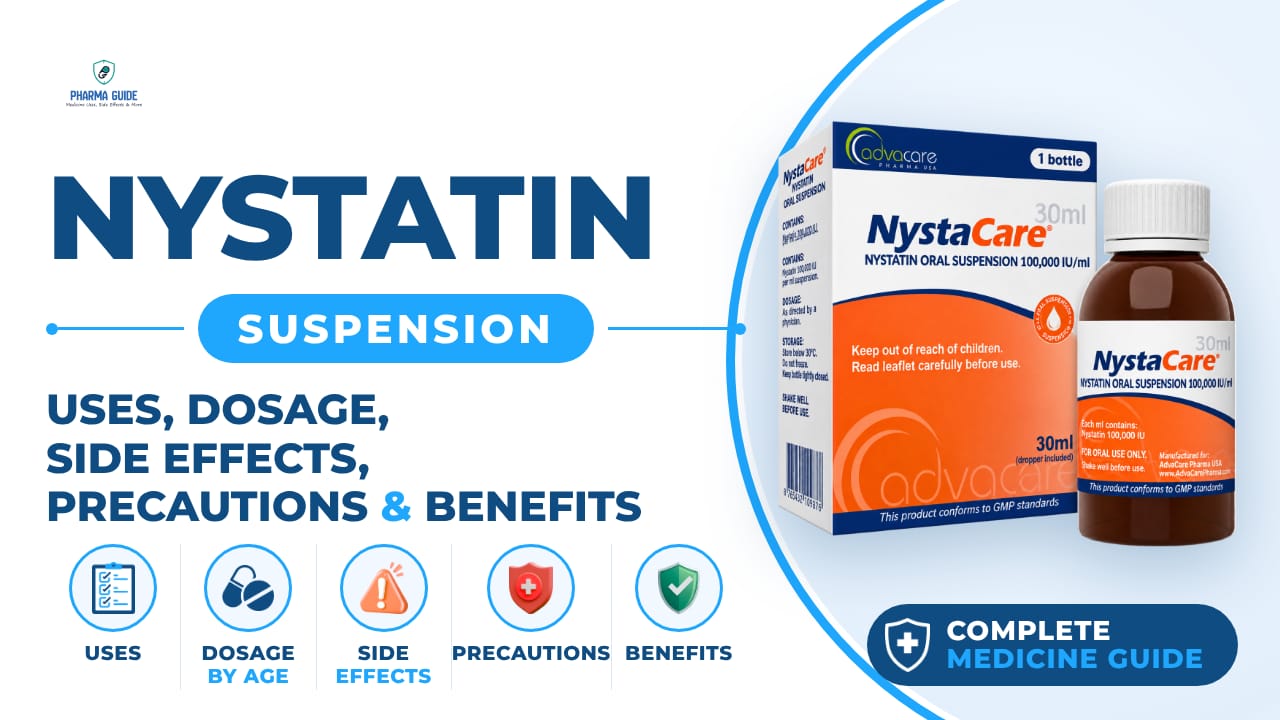
Nystatin Suspension: Uses, Dosage, Side Effects, Precautions and Alternates
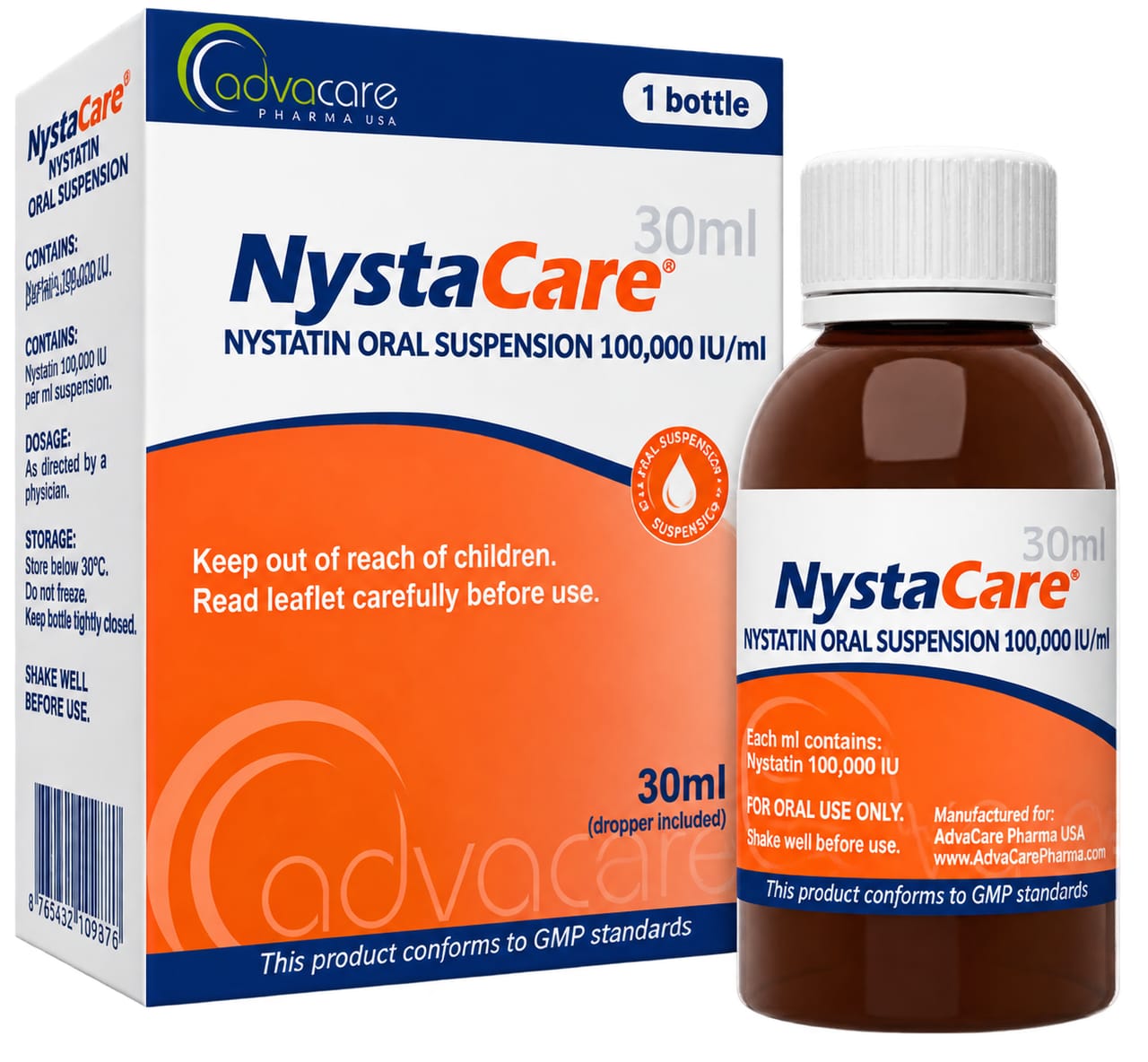
| Generic name | Nystatin |
|---|---|
| Drug class | Antifungal |
| Forms | Oral suspension |
Quick overview
Nystatin Suspension is an antifungal medicine used to treat thrush and other fungal or yeast infections in the mouth, esophagus, and intestines, most often caused by Candida. It works by attaching to the outer covering of the yeast or fungus, causing it to leak and die. It is generally well tolerated, even with prolonged therapy, but should be used exactly as directed by your doctor or pharmacist.
What is Nystatin Suspension
Nystatin oral suspension is a medication that treats fungal or yeast infections in your mouth like thrush. This infection causes white, raised lesions (spots) on your tongue and cheeks.
Nystatin Suspension uses
- Treats thrush, a fungal or yeast infection in the mouth
- Prevents and treats fungal infections of the mouth, esophagus, and intestines
- Most often used to treat a fungal infection caused by a yeast called Candida
Benefits of Nystatin Suspension
- Works by killing the yeast or fungus that has caused your symptoms
- Well tolerated even with prolonged therapy
How Nystatin Suspension works
Nystatin works by attaching to the outer covering of the yeast or fungus, which causes the cell to leak important contents and die.
Nystatin Suspension dosage
Follow the directions on the prescription label. Shake well before using, and use a specially marked dropper to measure every dose. Put one half of the dose in each side of your mouth, swish the medication around in your mouth and gargle, and hold your dose in your mouth for as long as you can. Swallow or spit out as directed by your care team.
Take your medication at regular intervals, and do not take it more often than directed. Do not skip doses or stop your medication early even if you feel better, and do not stop taking it except on your care team's advice.
In infants and young children, use the dropper to place one-half of the dose in each side of the mouth and avoid feeding for 5 to 10 minutes. Special care may be needed when using this medication in children. This medicine is only for you or your child; do not share it with others.
| Age group | Dose |
|---|---|
| Infants | 2 mL (200,000 units) 4 times daily |
| Children 1–11 years | 4–6 mL (400,000–600,000 units) 4 times daily |
| 12–17 years | 4–6 mL 4 times daily |
| 18–64 years | 4–6 mL 4 times daily |
| 65+ years | Usually the same adult dose |
Available forms and strengths
- Oral suspension
Side effects of Nystatin Suspension
Common
- Irritation inside the mouth
- Upset stomach
- Diarrhea
- Nausea
- Vomiting
- Stomach troubles such as pain and cramps
Serious
- Allergic reactions—skin rash, itching, hives, swelling of the face, lips, tongue, or throat
- Redness, blistering, peeling, or loosening of the skin, including inside the mouth
- Bloody diarrhea
- Rash, including hives
- Stevens-Johnson syndrome (very rare)
- Fast heartbeat (tachycardia)
- Difficulty breathing (bronchospasm)
- Facial swelling
- Muscle pain (myalgia)
Warnings and precautions
- This medicine should not be used to treat fungal infections that have spread through the body (systemic infections)
- Stop using this medicine and tell your care team if you notice irritation or an allergic reaction
- If you wear dentures, ask your care team about how to clean them, since dentures may need special cleaning to remove the fungus
- This medicine should only be given to a pregnant woman if it is clearly needed. Studies in humans have not shown that nystatin causes harm to the fetus.
- It is not known if nystatin passes into breast milk, so caution should be used if you are breastfeeding.
- In people with reduced kidney function, this medicine may occasionally reach noticeable levels in the blood after oral use.
Storage
- Keep out of the reach of children
- Store at room temperature between 15 and 25 degrees C (59 and 77 degrees F)
- Protect from light
- Throw away any unused medication after the expiration date
- Store in a tight, light-resistant container
- Protect from freezing
When to see a doctor
- Get help right away if you have signs of an allergic reaction, such as rash, itching, hives, or swelling of the face, lips, tongue, or throat
- Get help right away if you notice redness, blistering, peeling, or loosening of the skin, including inside the mouth
- If you think you have taken too much of this medicine, contact a poison control center or emergency room right away
Alternatives
- Posaconazole
- Itraconazole
- Fluconazole
- Miconazole Oral Gel
- Clotrimazole Troches
Watch the video
FAQs
What is Nystatin Suspension used for?
It treats thrush and other fungal or yeast infections in the mouth, esophagus, and intestines, most often caused by Candida.
How does Nystatin Suspension work?
It attaches to the outer covering of the yeast or fungus, causing the cell to leak important contents and die.
How is Nystatin Suspension given?
Shake well, use a marked dropper to measure the dose, put half the dose in each side of the mouth, swish and gargle, hold it in your mouth as long as possible, then swallow or spit out as directed. For infants and young children, place half the dose in each side of the mouth and avoid feeding for 5 to 10 minutes.
What are the common side effects of Nystatin Suspension?
Common side effects include irritation inside the mouth, upset stomach, diarrhea, nausea, vomiting, and stomach cramps.
Can Nystatin Suspension be used during pregnancy or breastfeeding?
It should only be given to a pregnant woman if clearly needed, though studies have not shown harm to the fetus. It is not known if it passes into breast milk, so caution is advised while breastfeeding.
General information, not medical advice
Your prescriber and the leaflet in your pack know your situation. This page does not.
- Follow your prescriber and the leaflet
- Don't start, stop, or change a dose on your own
- Doses and warnings differ by country and product
Sources
Video
Related medicines

Terbicip Tablet: Uses, Dosage, Side Effects, Precautions and Alternates
Antifungal
Terbicip Tablet contains terbinafine and treats fungal infections like athlete's foot, ringworm, jock itch, and nail infections. Know uses, dosage, and side

Ketoconazole Shampoo: Uses, Dosage, Side Effects, Precautions and Alternates
Antifungal
Ketoconazole Shampoo is an antifungal treatment for dandruff, seborrheic dermatitis, and scalp fungal infections. Learn uses, dosage, and side effects.