
Safety
General information, not medical advice
Your prescriber and the leaflet in your pack know your situation. This page does not.
- Follow your prescriber and the leaflet
- Don't start, stop, or change a dose on your own
- Doses and warnings differ by country and product
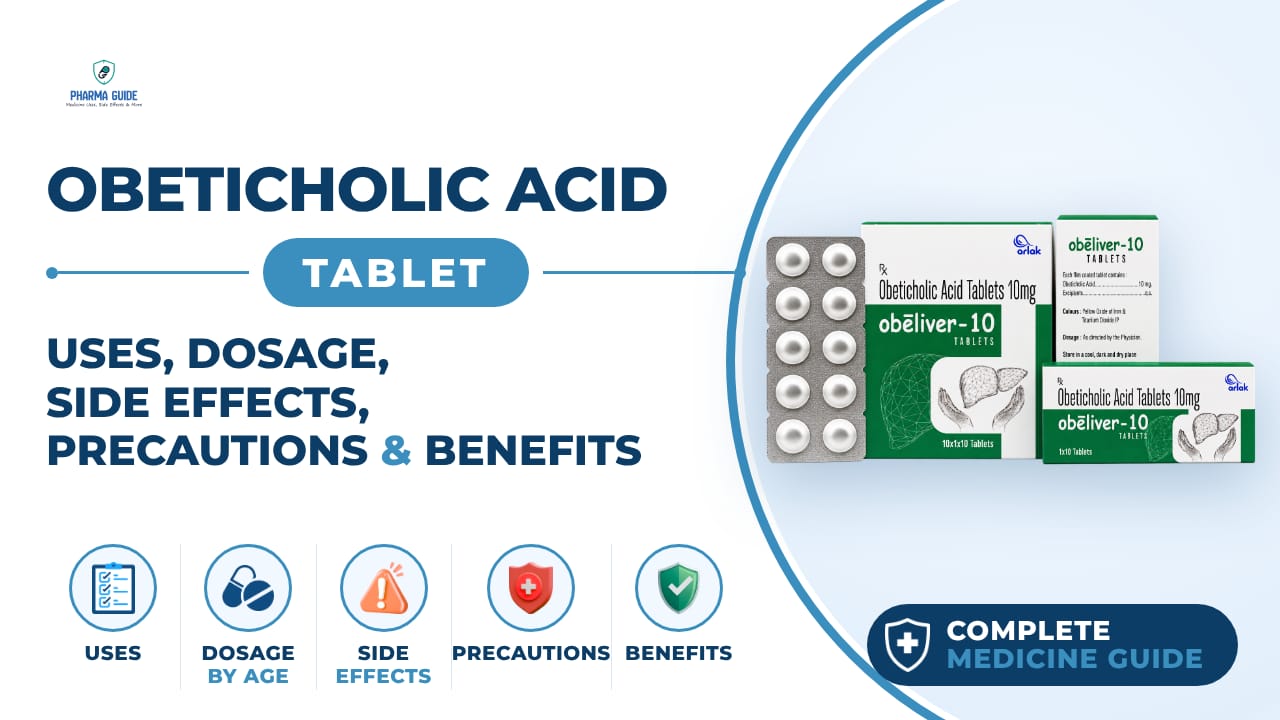
Obeticholic Acid Tablet: Uses, Dosage, Side Effects, Precautions and Alternates
| Generic name | Obeticholic acid |
|---|---|
| Drug class | Farnesoid X receptor (FXR) agonist; bile and liver therapy, bile acids and derivatives |
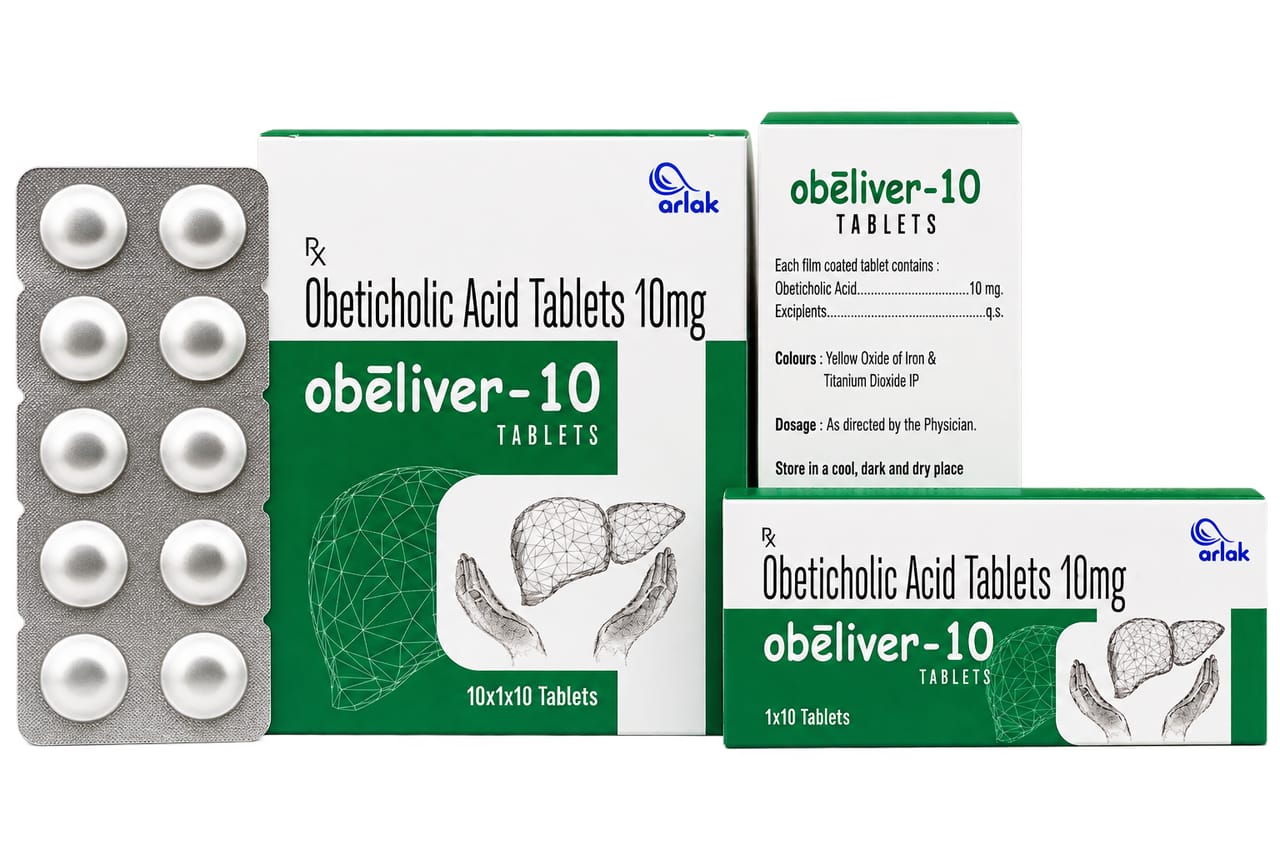
| Forms | Film-coated tablet (5 mg and 10 mg) |
Quick overview
Obeticholic Acid Tablet, sold as Ocaliva, is a prescription medicine used to treat primary biliary cholangitis (PBC), a liver disease that damages small bile ducts and causes bile to build up in the liver. It is used together with ursodeoxycholic acid (UDCA) when UDCA alone has not worked well enough, or alone in adults who cannot tolerate UDCA. It works by activating a receptor called FXR to reduce bile build-up in the liver. It can cause serious liver injury in some patients, so liver monitoring is required during treatment.
What is Obeticholic Acid Tablet
Ocaliva is a prescription medicine containing obeticholic acid. It is used to treat a liver disease called primary biliary cholangitis (PBC), which damages the small bile ducts in the liver and causes bile to build up and harm the liver over time.
Obeticholic Acid Tablet uses
- Treatment of primary biliary cholangitis (PBC) in adults, used together with ursodeoxycholic acid (UDCA) when UDCA alone has not worked well enough
- Treatment of PBC alone (monotherapy) in adults who cannot tolerate UDCA
Benefits of Obeticholic Acid Tablet
- Helps improve how the liver works by reducing the build-up of bile in the liver
- Reduces liver inflammation
- Lowers liver enzyme levels (such as alkaline phosphatase) associated with PBC
How Obeticholic Acid Tablet works
The medicine activates a receptor in the liver and intestine called FXR. This reduces how much bile acid the liver makes and helps move bile acids out of liver cells, which lowers the amount of bile the liver is exposed to.
Obeticholic Acid Tablet dosage
Take the tablet by mouth once a day, with or without food. Try to take it at around the same time every day. If you also take a bile acid binding resin (such as cholestyramine, colestipol, or colesevelam), take this medicine at least 4 to 6 hours before or 4 to 6 hours after that medicine, or space them as far apart as possible. Keep taking this medicine even if you feel well; do not stop without talking to your doctor. This medicine is not meant for use in children or adolescents. Your doctor may raise or lower your dose over time depending on how your liver responds and whether you have itching that is hard to tolerate.
| Age group | Dose |
|---|---|
| Under 18 years | Safety and effectiveness are not established; no standard pediatric dose |
| 18–39 years | Usual starting dose: 5 mg once daily |
| 40–64 years | Usually 5 mg once daily initially |
| 65–74 years | No separate age-specific dose; generally follows adult dosing with careful liver monitoring |
Available forms and strengths
Film-coated tablet (5 mg and 10 mg)
Side effects of Obeticholic Acid Tablet
Common
- Itching of the skin, which can become severe
- Stomach pain and discomfort
- Feeling tired (fatigue)
- Thyroid hormone irregularity
- Dizziness
- Fast or irregular heartbeat (palpitations)
- Pain in the mouth and throat
- Constipation
- Dry, red, or itchy skin (eczema)
- Rash
- Joint pain
- Swelling in the hands and feet
- Fever
Serious
- Liver failure, sometimes fatal or requiring a liver transplant
- Increased bilirubin on liver blood tests
- Yellowing of the eyes or skin (jaundice)
- Scarring of the liver (cirrhosis) or worsening of existing liver scarring
- Severe, hard-to-tolerate itching over much of the body
Warnings and precautions
- Do not take this medicine if you are allergic to obeticholic acid or any of its ingredients, or if you have a complete blockage of the bile ducts.
- Serious and sometimes fatal liver failure has occurred in people taking this medicine, including those with liver cirrhosis, even at the recommended dose.
- Serious liver injury and death have been reported after this medicine was taken more often than recommended in patients with moderate to severe loss of liver function.
- This medicine can cause severe itching that may affect the whole body; your doctor may need to adjust your dose or add other medicines to manage it.
- If you take a bile acid binding resin, taking it too close in time to this medicine can make this medicine less effective.
- This medicine can change how well warfarin works; blood clotting tests should be monitored and the warfarin dose adjusted if needed.
- This medicine may raise blood levels of certain other medicines, such as theophylline (for breathing) and tizanidine (for muscle stiffness), so these may need closer monitoring.
- There is no information on using this medicine during pregnancy. As a precaution, it should be avoided during pregnancy.
- It is not known if this medicine passes into breast milk. Your doctor will help you decide whether to stop breastfeeding or stop the medicine, weighing the benefits of each.
- No dose change is needed for people with kidney problems, though there is limited data in some cases.
- This medicine can cause serious liver injury, especially in people with advanced or decompensated cirrhosis, and must not be used in some of these patients. Your doctor must check your liver health before and during treatment.
- Tell your doctor if you have ever drunk large amounts of alcohol, since this may affect your liver and how this medicine should be used.
- This medicine is not expected to affect your ability to drive or use machines.
Storage
- Keep this medicine out of the sight and reach of children
- Do not use this medicine after the expiry date shown on the carton and bottle after "EXP"
- This medicinal product does not require any special storage conditions
- Do not throw away any medicines via wastewater or household waste; ask your pharmacist how to dispose of medicines you no longer use
- Store it at room temperature and away from excess heat and moisture (not in the bathroom)
When to see a doctor
- Get medical help right away if you notice yellowing of the skin or eyes, dark urine, black or bloody stools, coughing up or vomiting blood, swelling around the stomach, confusion, slurred speech, anxiety, mood swings, or personality changes.
- Call your doctor if nausea, vomiting, diarrhea, stomach pain, weight loss, loss of appetite, tiredness or weakness, lightheadedness, fever, chills, or reduced urination are severe or do not go away.
- If you take too many tablets by accident, you may develop itching or liver-related symptoms such as yellowing skin — contact a doctor or go to a hospital right away.
- Talk to your doctor if you experience itching that is difficult to tolerate, as your treatment or dose may need to be adjusted.
Alternatives
- Ursodeoxycholic acid
- Seladelpar / Livdelzi
- Elafibranor
- Other hepatologist-selected PBC therapy
Watch the video
FAQs
What is Obeticholic Acid Tablet used for?
It is used to treat primary biliary cholangitis (PBC) in adults, either combined with ursodeoxycholic acid (UDCA) when UDCA alone hasn't worked well enough, or alone in adults who cannot tolerate UDCA.
How does Obeticholic Acid Tablet work?
It activates a receptor called FXR in the liver and intestine, which reduces how much bile acid the liver makes and helps move bile acids out of liver cells, lowering the amount of bile the liver is exposed to.
What is the common dosage of Obeticholic Acid Tablet?
The usual starting dose is 5 mg once daily by mouth, with or without food, taken at about the same time each day. The doctor may adjust the dose over time based on liver response and tolerability of itching.
What are the serious side effects of Obeticholic Acid Tablet?
Serious side effects include liver failure (sometimes fatal or requiring a liver transplant), increased bilirubin on liver tests, jaundice, worsening liver scarring (cirrhosis), and severe, hard-to-tolerate itching over much of the body.
Can Obeticholic Acid Tablet be taken with a bile acid binding resin?
If you take a bile acid binding resin like cholestyramine, colestipol, or colesevelam, take Obeticholic Acid Tablet at least 4 to 6 hours before or after it, since taking them too close together can make this medicine less effective.
General information, not medical advice
Your prescriber and the leaflet in your pack know your situation. This page does not.
- Follow your prescriber and the leaflet
- Don't start, stop, or change a dose on your own
- Doses and warnings differ by country and product
Sources
Video
Related medicines

Injectafer Injection: Uses, Dosage, Side Effects, Precautions and Alternates
Iron products
Injectafer (ferric carboxymaltose) treats iron deficiency anemia and heart failure-related iron deficiency via IV. Learn uses, dosage, side effects, and

Gliclazide Tablet: Uses, Dosage, Side Effects, Precautions and Alternates
Sulfonylurea (hypoglycemic/antidiabetic agent)
Gliclazide Tablet is a sulfonylurea for type 2 diabetes that boosts insulin release. Learn about dosage, side effects, warnings, and precautions.