
Safety
General information, not medical advice
Your prescriber and the leaflet in your pack know your situation. This page does not.
- Follow your prescriber and the leaflet
- Don't start, stop, or change a dose on your own
- Doses and warnings differ by country and product
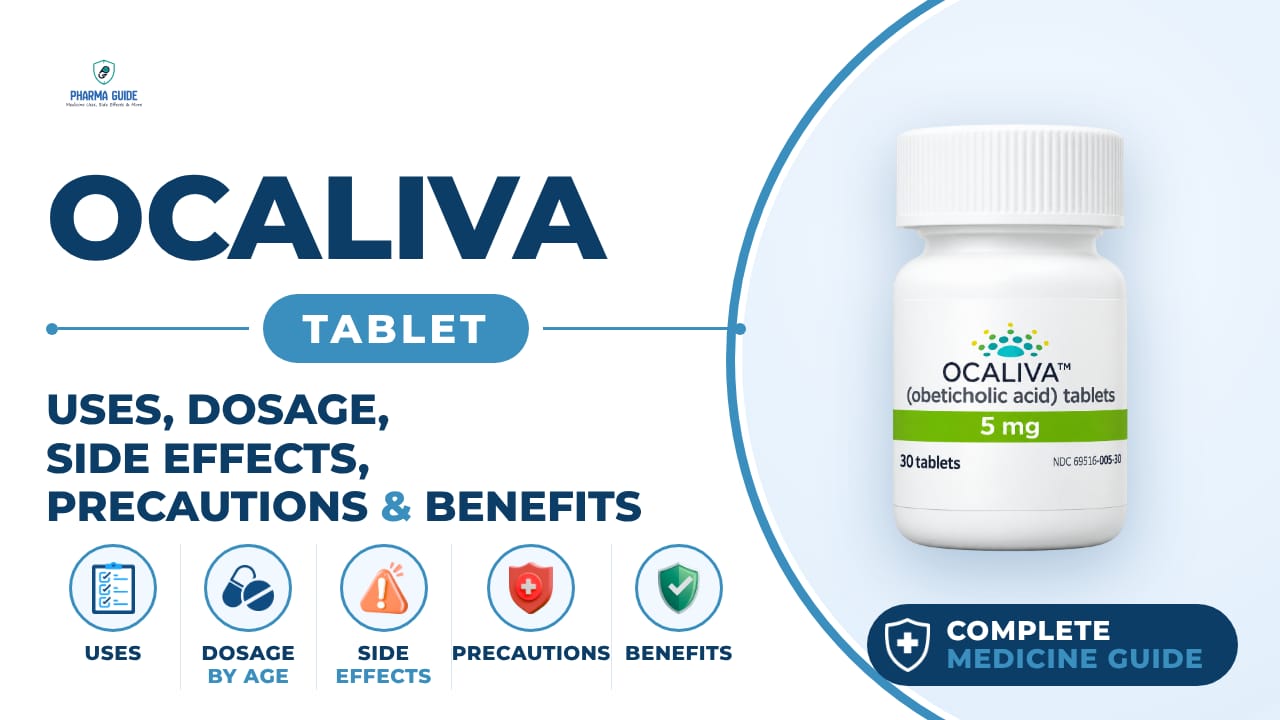
Ocaliva Tablet: Uses, Dosage, Side Effects, Precautions and Alternates
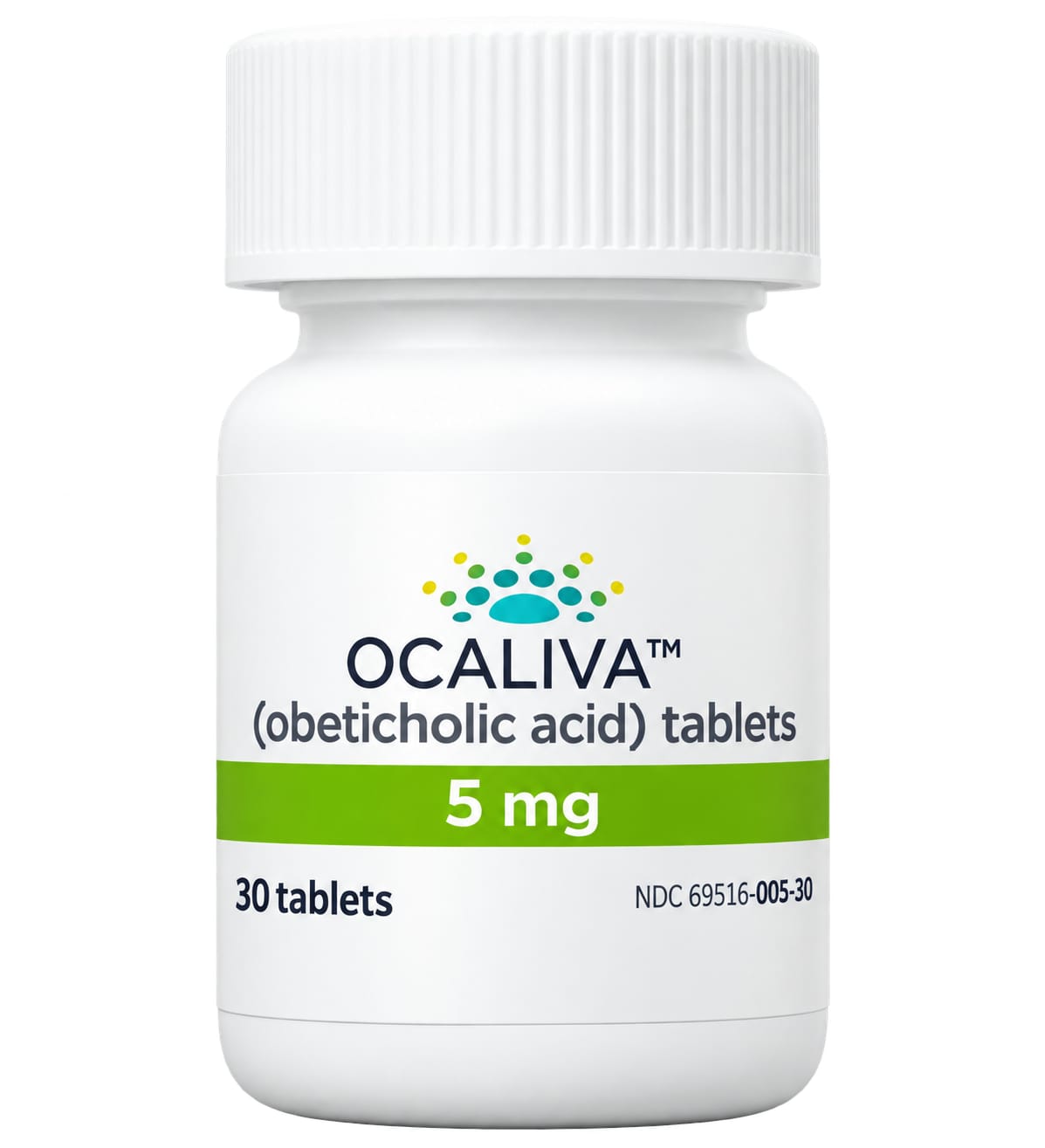
| Generic name | obeticholic acid |
|---|---|
| Drug class | Miscellaneous GI agents (farnesoid X receptor agonist) |
| Forms | Oral tablets, 5 mg and 10 mg strengths |
Quick overview
Ocaliva is a prescription tablet containing obeticholic acid, used to treat primary biliary cholangitis (PBC), a long-term disease that slowly damages the bile ducts in the liver. It was used together with ursodeoxycholic acid (UDCA) or alone in adults who could not tolerate UDCA. Ocaliva was voluntarily withdrawn from the U.S. market in 2025 due to concerns about serious liver injury, so this information is kept mainly for reference; availability may differ in other countries.
What is Ocaliva Tablet
Ocaliva is a prescription tablet containing obeticholic acid. It was used to treat primary biliary cholangitis (PBC), a long-term disease that slowly damages the bile ducts in the liver. Ocaliva was voluntarily withdrawn from the U.S. market in 2025 due to concerns about serious liver injury, so this information is kept mainly for reference; availability may differ in other countries.
Ocaliva Tablet uses
- Treatment of primary biliary cholangitis (PBC) in adults, used together with ursodeoxycholic acid (UDCA) if UDCA alone did not work well enough
- Used alone in adults who cannot tolerate UDCA
- Can only be used in people without cirrhosis, or with compensated cirrhosis and no signs of portal hypertension
Benefits of Ocaliva Tablet
- Lowers blood levels of alkaline phosphatase (ALP), a marker of liver condition
- Lowers bilirubin levels
- Helps bile flow out of the liver instead of building up and causing damage
- Demonstrated reductions in alkaline phosphatase levels in clinical studies
- Helped regulate bile acid synthesis and transport
How Ocaliva Tablet works
Ocaliva activates a receptor called FXR in the liver and gut. This receptor helps control bile acid levels in the body. By turning on FXR, the drug tells the liver to make less bile acid and helps move bile acids out of the liver, which reduces the harmful buildup that happens in PBC.
Ocaliva Tablet dosage
Take this medicine exactly as your doctor tells you, usually once a day. You can take it with or without food. Try to take it at the same time every day so you don't forget.
If you also take a bile acid-binding resin such as cholestyramine, colestipol, or colesevelam, take this medicine at least 4 hours before or 4 hours after that medicine, or space them as far apart as possible, since these products can stop this medicine from being fully absorbed.
Keep taking this medicine regularly to get the most benefit from it. Do not take more than your doctor tells you to. Do not stop taking this medicine without talking to your doctor first, even if you feel fine. You will need regular blood tests to check your liver while taking this medicine.
If you miss a dose, take it as soon as you remember, but skip it if it's almost time for your next dose — do not take two doses at once.
| Age group | Dose |
|---|---|
| Under 18 years | Safety and effectiveness not established; no approved pediatric dosage |
| 18–74 years | Starting dose: 5 mg once daily; former maximum 10 mg once daily |
| 75 years and older | Starting dose: 5 mg once daily; former maximum 10 mg once daily, with careful monitoring |
Available forms and strengths
Oral tablets, 5 mg and 10 mg strengths.
Side effects of Ocaliva Tablet
Common
- Severe or intense itching (affects up to 70% of patients)
- Fatigue or tiredness
- Stomach pain and discomfort
- Skin rash
- Sore mouth or throat
- Dizziness
- Constipation
- Joint pain and muscle or back discomfort
- Swelling in hands, ankles, or feet
- Lowered levels of 'good' HDL cholesterol
- Thyroid function changes
- Fever
- Eczema (dry, irritated, red, crusting, or draining skin)
- Fast or irregular heartbeat
Serious
- Worsening liver problems or liver failure, which can require a liver transplant or be fatal
- Severe itching that disrupts sleep or daily activities
- Significant drop in HDL cholesterol
- Allergic reaction: hives, difficulty breathing, swelling of face, lips, tongue, or throat
- Abnormal liver function test results
- Thyroid gland disorder
- Fluid buildup in the stomach area (ascites)
- Yellowing of skin or eyes (jaundice)
- Liver inflammation (hepatitis)
- High bilirubin levels
Warnings and precautions
- This medicine has a boxed warning — the most serious type of warning — because it can cause worsening liver function or liver failure in people with PBC and cirrhosis.
- This can sometimes be fatal or require a liver transplant.
- Do not take this medicine if you have a complete blockage of the bile ducts in the liver or gallbladder.
- Do not take this medicine if you have decompensated cirrhosis or compensated cirrhosis with signs of portal hypertension.
- This medicine can lower 'good' HDL cholesterol. Your doctor will check your cholesterol levels during treatment.
- Severe itching is possible and may need treatment; tell your doctor if itching becomes intense or widespread.
- It is not known whether this medicine will harm an unborn baby. Talk with your doctor about the risks and benefits if you are pregnant or planning to become pregnant.
- It is not known if this medicine passes into breast milk. Talk with your doctor about the best way to feed your baby if you are taking this medicine.
- No routine renal dosage adjustment was established. Patients with significant kidney disease required individualized medical evaluation.
- This medicine can cause serious liver problems, including liver failure, in people with cirrhosis.
- It must not be used in people with decompensated cirrhosis, a history of liver decompensation, or compensated cirrhosis with signs of high blood pressure in the liver's blood vessels (portal hypertension). Your doctor will test your liver before and during treatment.
- Ocaliva carries serious risks of liver injury, hepatic decompensation, and liver failure, including cases requiring liver transplantation. These risks contributed to its withdrawal.
- Contraindicated in patients with decompensated cirrhosis, previous hepatic decompensation, or compensated cirrhosis with portal hypertension.
Storage
- Store at room temperature between 68°F to 77°F (20°C to 25°C), with brief excursions allowed between 59°F and 86°F
- Store away from light and moisture
- Do not store in the bathroom
- Keep out of the reach of children and pets
- Do not flush medications down the toilet or pour them into a drain unless instructed to do so; ask your pharmacist or local waste disposal company about proper disposal
When to see a doctor
- Get medical help right away if you notice swelling in your stomach area from fluid buildup.
- Get medical help right away if your skin or the whites of your eyes turn yellow.
- Get medical help right away if you have black, tarry, or bloody stools.
- Get medical help right away if you cough up or vomit blood, or if your vomit looks like coffee grounds.
- Get medical help right away if you have mental changes such as confusion, being more sleepy than usual or hard to wake up, slurred speech, mood swings, or personality changes.
- Tell your doctor right away if you have severe or ongoing stomach-area pain, nausea, vomiting, diarrhea, loss of appetite, weight loss, new or worsening tiredness, weakness, fever and chills, light-headedness, or urinating less than usual.
- Get emergency medical help right away if you have signs of a serious allergic reaction, such as hives, trouble breathing, or swelling of the face, lips, tongue, or throat.
- Tell your doctor if itching becomes severe or keeps getting worse.
Alternatives
- Livdelzi
- Iqirvo
- Ursodiol
Watch the video
FAQs
What is Ocaliva Tablet used for?
Ocaliva was used to treat primary biliary cholangitis (PBC) in adults, either together with ursodeoxycholic acid (UDCA) if UDCA alone wasn't enough, or alone in those who couldn't tolerate UDCA.
Why was Ocaliva withdrawn from the market?
Ocaliva was voluntarily withdrawn from the U.S. market in 2025 due to concerns about serious liver injury, including hepatic decompensation and liver failure that could require a liver transplant.
How does Ocaliva work?
Ocaliva activates a receptor called FXR in the liver and gut, which helps control bile acid levels by telling the liver to make less bile acid and helping move bile acids out of the liver.
What are the common side effects of Ocaliva?
Common side effects include severe itching (affecting up to 70% of patients), fatigue, stomach pain, skin rash, dizziness, constipation, joint pain, swelling in hands or feet, and lowered HDL cholesterol.
Who should not take Ocaliva?
Ocaliva should not be used by people with a complete blockage of the bile ducts, decompensated cirrhosis, or compensated cirrhosis with signs of portal hypertension.
General information, not medical advice
Your prescriber and the leaflet in your pack know your situation. This page does not.
- Follow your prescriber and the leaflet
- Don't start, stop, or change a dose on your own
- Doses and warnings differ by country and product
Sources
Video
Related medicines

Injectafer Injection: Uses, Dosage, Side Effects, Precautions and Alternates
Iron products
Injectafer (ferric carboxymaltose) treats iron deficiency anemia and heart failure-related iron deficiency via IV. Learn uses, dosage, side effects, and

Gliclazide Tablet: Uses, Dosage, Side Effects, Precautions and Alternates
Sulfonylurea (hypoglycemic/antidiabetic agent)
Gliclazide Tablet is a sulfonylurea for type 2 diabetes that boosts insulin release. Learn about dosage, side effects, warnings, and precautions.