
Safety
General information, not medical advice
Your prescriber and the leaflet in your pack know your situation. This page does not.
- Follow your prescriber and the leaflet
- Don't start, stop, or change a dose on your own
- Doses and warnings differ by country and product
Ocrevus Injection: Uses, Dosage, Side Effects, Precautions and Alternates
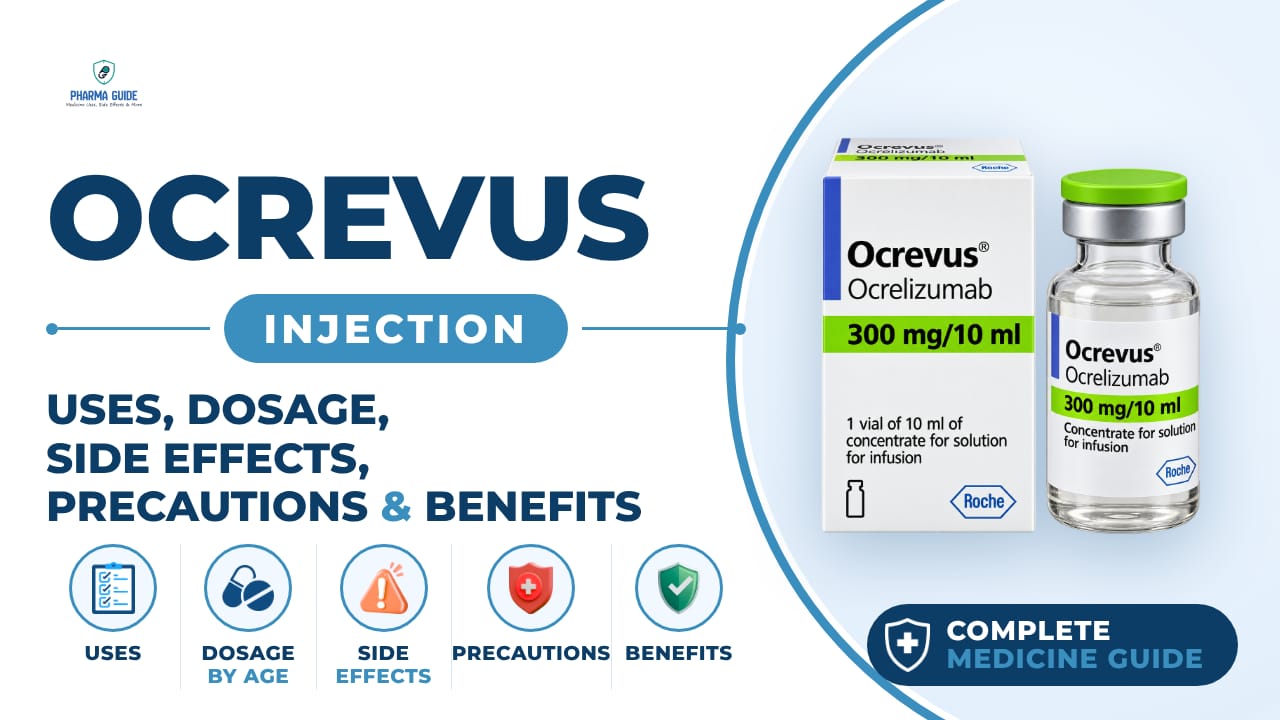
| Generic name | ocrelizumab |
|---|---|
| Drug class | CD20 monoclonal antibody |
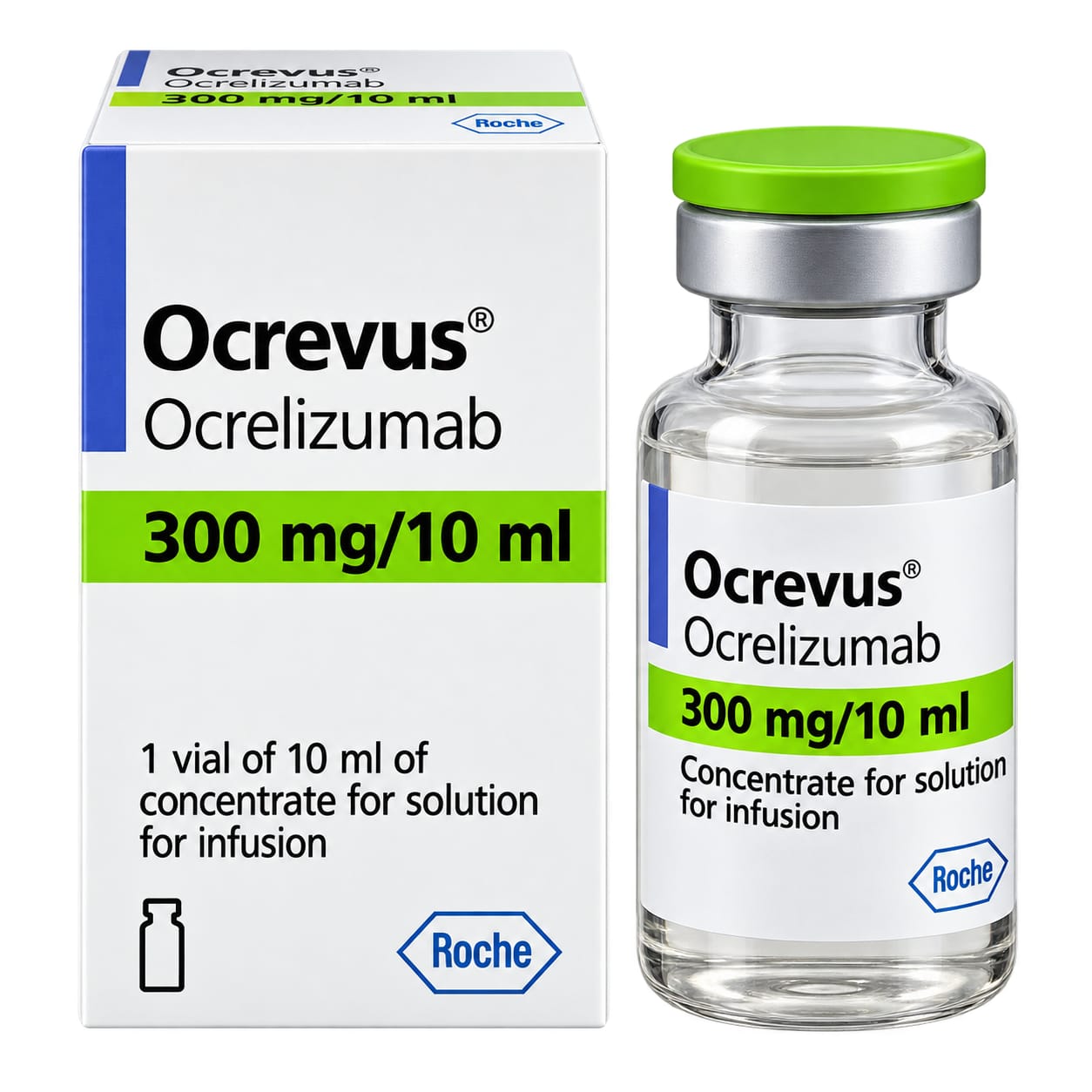
| Forms | Injection: 300 mg/10 mL (30 mg/mL) in a single-dose vial |
Quick overview
Ocrevus Injection (ocrelizumab) is a CD20 monoclonal antibody given by IV infusion for certain forms of multiple sclerosis in adults. It works by targeting and reducing B cells involved in the immune attack seen in MS. It is given as an initial two-part dose followed by infusions every 6 months, with premedication and monitoring required at each visit.
What is Ocrevus Injection
Ocrevus is a prescription medicine given by IV infusion into a vein. It is a lab-made antibody that targets a specific type of immune cell (B cells) involved in multiple sclerosis.
Ocrevus Injection uses
- Relapsing forms of multiple sclerosis (MS), including clinically isolated syndrome, relapsing-remitting disease, and active secondary progressive disease, in adults
- Primary progressive MS, in adults
Benefits of Ocrevus Injection
- Lowers the annual relapse rate compared to an active comparator in relapsing MS
- Reduces the proportion of patients with confirmed disability progression
- Reduces MRI signs of disease activity (fewer new brain lesions)
- Slows time to confirmed disability progression in primary progressive MS
How Ocrevus Injection works
Ocrevus attaches to a marker called CD20 found on certain immune cells called B cells. This causes those B cells to be destroyed, which is thought to reduce the immune attack on nerve cells that happens in MS.
Ocrevus Injection dosage
Ocrevus is given as an IV infusion into a vein by a healthcare professional. Before each infusion, you will be given a corticosteroid medicine and an antihistamine to help reduce the chance and severity of infusion reactions; an antipyretic like acetaminophen may also be used. Your healthcare provider will check for an active infection before each infusion and delay treatment if you have one.
The first full dose is given as two separate infusions two weeks apart; later doses are given as a single infusion every 6 months. You will be watched during the infusion and for at least one hour afterward for signs of a reaction. Infusion reactions can happen up to 24 hours after the infusion, so watch for symptoms even after you leave.
If you miss a scheduled infusion, contact your healthcare provider to get it as soon as possible rather than waiting for the next scheduled date; doses must be spaced at least 5 months apart. Blood tests for hepatitis B and immunoglobulin levels are needed before starting treatment. Any needed vaccines should be completed before starting treatment — live vaccines at least 4 weeks before and non-live vaccines ideally at least 2 weeks before.
| Age group | Dose |
|---|---|
| Under 18 years | Safety and effectiveness have not been established |
| 18–64 years | Initial dose: 300 mg IV, followed by a second 300 mg IV dose 2 weeks later; then 600 mg IV every 6 months |
Available forms and strengths
- Injection: 300 mg/10 mL (30 mg/mL) in a single-dose vial
Side effects of Ocrevus Injection
Common
- Upper respiratory tract infections
- Infusion reactions
- Depression
- Lower respiratory tract infections
- Back pain
- Herpes virus-associated infections
- Pain in extremity
- Skin infections
- Stuffy nose, sneezing, sore throat
Serious
- Serious infusion reactions requiring hospitalization
- Serious infections, including herpes infections affecting the brain, eyes, or skin
- Hepatitis B virus reactivation, which can cause liver failure
- Progressive multifocal leukoencephalopathy (PML), a rare brain infection
- Decreased immunoglobulin levels linked to serious infections
- Increased risk of certain cancers, including breast cancer
- Immune-mediated colitis (inflammation of the colon)
- Liver injury
Warnings and precautions
- This medicine can cause infusion reactions that may be serious and may require hospital care. Reactions can happen during the infusion or up to 24 hours afterward.
- This medicine raises the risk of infections, including serious upper and lower respiratory infections, skin infections, and herpes infections. Treatment should be delayed if you have an active infection.
- A rare but serious brain infection called PML (progressive multifocal leukoencephalopathy) has occurred with this medicine and usually leads to death or severe disability.
- This medicine can lower certain antibody (immunoglobulin) levels in the blood, which has been linked to a higher rate of serious infections.
- There may be an increased risk of certain cancers, including breast cancer, with this medicine.
- Inflammation of the colon (immune-mediated colitis) has been reported, sometimes serious enough to need hospital care or surgery.
- If you have ever had hepatitis B, the virus can become active again during or after treatment, which can cause serious liver problems.
- You should not receive live or live-attenuated vaccines while on this medicine and until your immune system recovers.
- It is not known if this medicine will harm an unborn baby. Animal studies showed harm to offspring. Women who can become pregnant should use effective birth control during treatment and for 6 months after the last infusion.
- It isn't known if this medicine passes into breast milk or how it might affect a nursing baby. Talk with your doctor about the best way to feed your baby if you are taking this medicine.
- People with mild kidney problems were included in studies and no major change in how the drug works in the body was seen.
- People with mild liver problems were included in studies and no major change in how the drug works in the body was seen. However, serious liver injury has occurred in some people using this medicine, so liver function tests may be done before and during treatment.
- No major direct interaction with alcohol is established, but discuss alcohol use if liver disease or other medicines are involved.
- This medicine usually does not directly impair driving, but avoid driving if infusion reactions, dizziness, or fatigue occur.
Storage
- Store Ocrevus vials at 2°C to 8°C (36°F to 46°F) in the outer carton to protect from light.
- Do not freeze or shake.
- Use the prepared infusion solution immediately. If not used immediately, store up to 24 hours in the refrigerator at 2°C to 8°C (36°F to 46°F) and 8 hours at room temperature up to 25°C (77°F), which includes infusion time.
- In the event an intravenous infusion cannot be completed the same day, discard the remaining solution.
When to see a doctor
- Get medical help right away if you have signs of an infusion reaction such as itchy skin, trouble breathing, rash, hives, swelling of the throat, fast heartbeat, dizziness, fever, or wheezing — these can happen up to 24 hours after the infusion.
- Contact your healthcare provider right away if you have signs of infection, such as fever, chills, or a cough that won't go away, or signs of herpes infection like cold sores, genital sores, or shingles.
- Call your healthcare provider right away if you notice new or worsening problems with thinking, eyesight, strength, balance, or weakness on one side of the body — these could be signs of a serious brain infection (PML).
- Tell your healthcare provider promptly if you have diarrhea, stomach pain, or blood in your stool, which could be signs of colitis.
- Tell your healthcare provider about symptoms of liver injury such as worsening tiredness, loss of appetite, nausea, vomiting, right upper belly discomfort, dark urine, or yellowing of the skin or eyes.
Alternatives
- Kesimpta
- Briumvi
- Tysabri
- Mavenclad
Watch the video
FAQs
How is Ocrevus Injection given?
It is given as an IV infusion by a healthcare professional. The first dose is split into two infusions two weeks apart, then a single infusion every 6 months, with premedication (corticosteroid and antihistamine) before each infusion.
What is Ocrevus Injection used for?
It is used to treat relapsing forms of multiple sclerosis (including clinically isolated syndrome, relapsing-remitting disease, and active secondary progressive disease) and primary progressive MS in adults.
What are the serious side effects of Ocrevus Injection?
Serious risks include severe infusion reactions, serious infections (including herpes infections), hepatitis B reactivation, progressive multifocal leukoencephalopathy (PML), decreased immunoglobulin levels, increased risk of certain cancers like breast cancer, immune-mediated colitis, and liver injury.
What should I do if I miss an Ocrevus infusion?
Contact your healthcare provider to get the infusion as soon as possible rather than waiting for the next scheduled date; doses must be spaced at least 5 months apart.
Can I receive vaccines while on Ocrevus Injection?
Live vaccines should be completed at least 4 weeks before starting treatment, and non-live vaccines ideally at least 2 weeks before. Live or live-attenuated vaccines should not be given while on this medicine and until the immune system recovers.
General information, not medical advice
Your prescriber and the leaflet in your pack know your situation. This page does not.
- Follow your prescriber and the leaflet
- Don't start, stop, or change a dose on your own
- Doses and warnings differ by country and product
Sources
Video
Related medicines

Injectafer Injection: Uses, Dosage, Side Effects, Precautions and Alternates
Iron products
Injectafer (ferric carboxymaltose) treats iron deficiency anemia and heart failure-related iron deficiency via IV. Learn uses, dosage, side effects, and

Gliclazide Tablet: Uses, Dosage, Side Effects, Precautions and Alternates
Sulfonylurea (hypoglycemic/antidiabetic agent)
Gliclazide Tablet is a sulfonylurea for type 2 diabetes that boosts insulin release. Learn about dosage, side effects, warnings, and precautions.