
Safety
General information, not medical advice
Your prescriber and the leaflet in your pack know your situation. This page does not.
- Follow your prescriber and the leaflet
- Don't start, stop, or change a dose on your own
- Doses and warnings differ by country and product
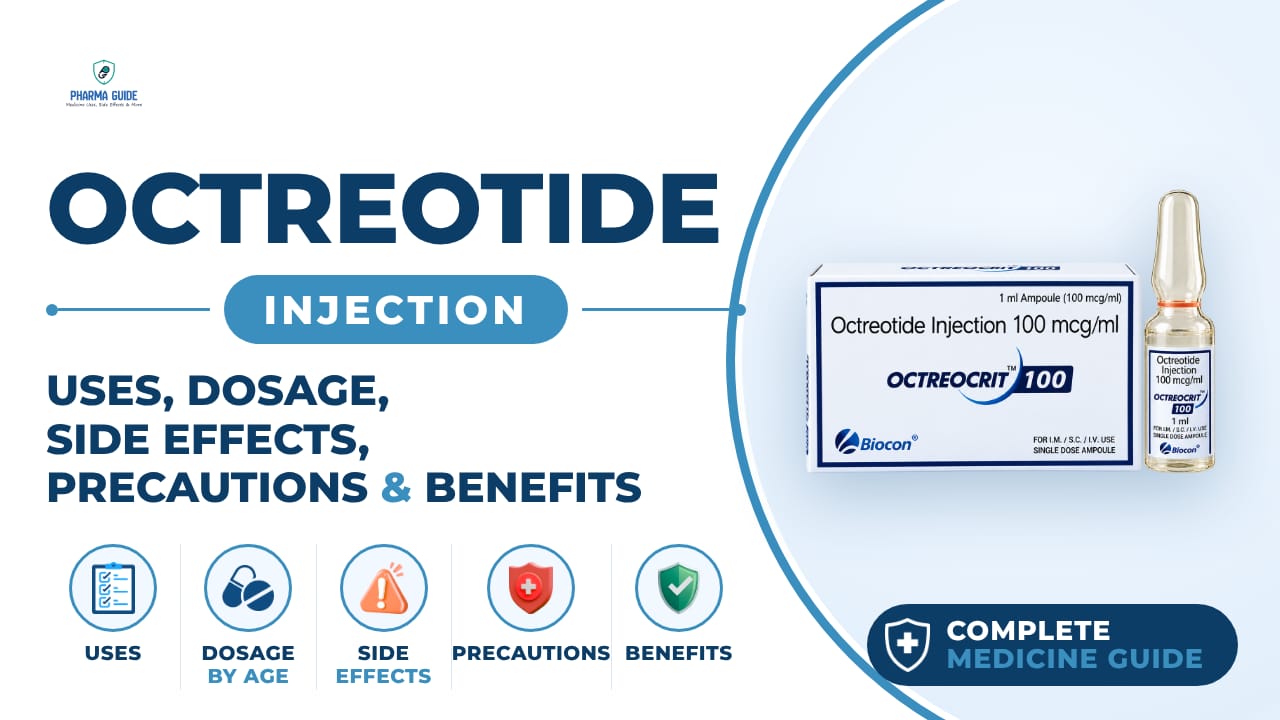
Octreotide Injection: Uses, Dosage, Side Effects, Precautions and Alternates
| Generic name | Octreotide acetate |
|---|---|
| Drug class | Synthetic Octapeptide Analogue of Somatostatin |
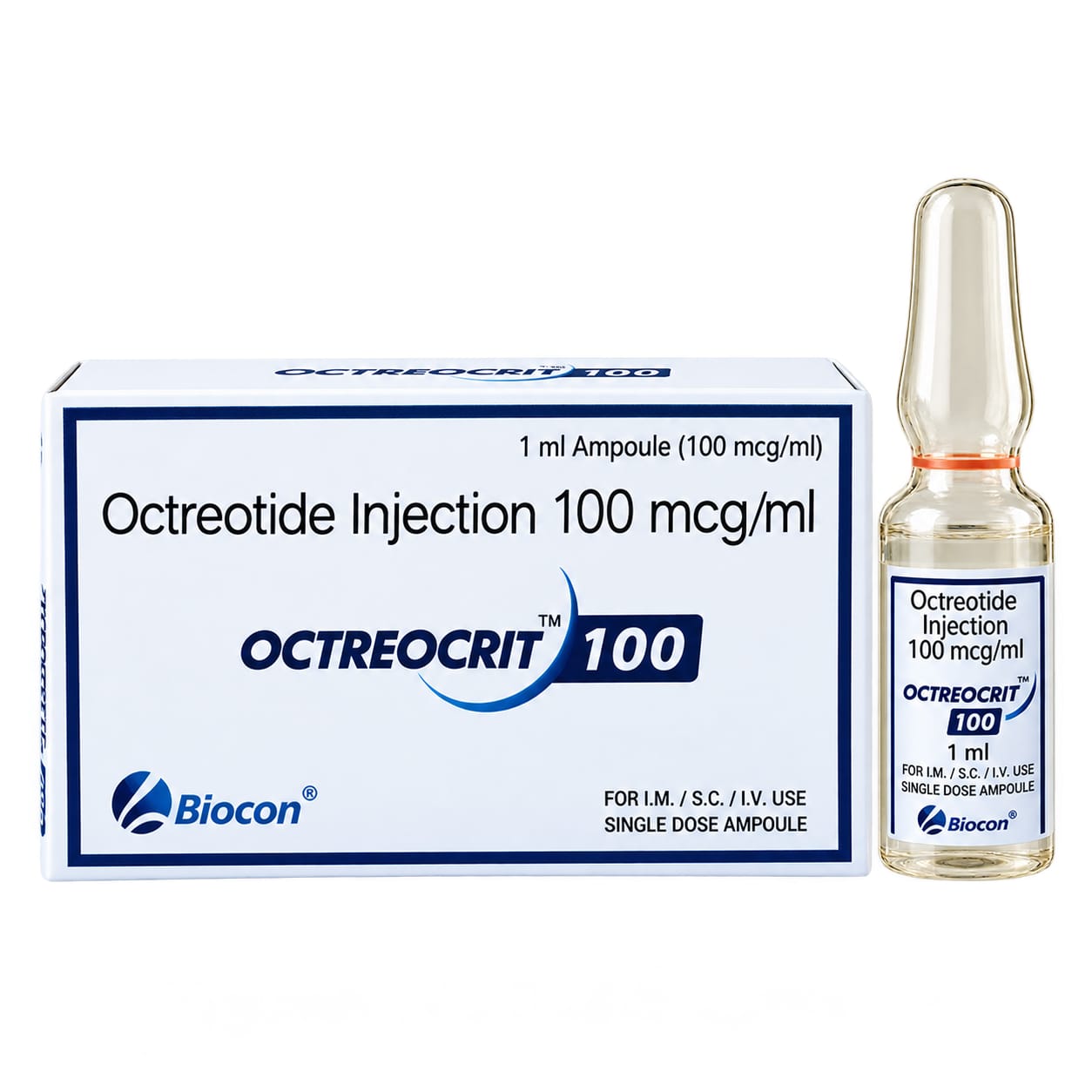
| Forms | 1 mL single-use vials (100 mcg or 500 mcg octreotide), 5 mL multidose vials (1000 mcg octreotide, 200 mcg/mL), Solution for subcutaneous injection or intravenous infusion |
Quick overview
Octreotide Injection (octreotide acetate) is a synthetic octapeptide analogue of somatostatin, given as an injection to control symptoms caused by certain tumours and other hormone-related conditions. It is used for carcinoid tumour symptoms, VIPoma-related diarrhoea, acromegaly, prevention of complications after pancreatic surgery, and emergency management of bleeding gastro-oesophageal varices. It works by reducing overproduction of growth hormone and certain gut hormones, and by increasing water absorption in the body.
What is Octreotide Injection
Octreotide Injection is a man-made version of a natural body substance called somatostatin. It is given as an injection to control symptoms caused by certain tumours and other conditions.
Octreotide Injection uses
- Control of symptoms in patients with metastatic carcinoid tumours, including severe diarrhoea and flushing
- Treatment of profuse watery diarrhoea associated with VIP-secreting tumours (VIPomas)
- Reduction of blood levels of growth hormone and IGF-1 in acromegaly
- Prevention of complications following pancreatic surgery in patients undergoing high-risk procedures
- Emergency management of bleeding gastro-oesophageal varices in patients with cirrhosis, used together with treatments like endoscopic sclerotherapy
Benefits of Octreotide Injection
- Suppresses or inhibits severe diarrhoea and flushing episodes from carcinoid tumours
- Improves overall condition and electrolyte abnormalities in VIPoma patients
- Reduces growth hormone and IGF-1 levels in acromegaly and may shrink pituitary tumour mass
- Reduces incidence and severity of complications after high-risk pancreatic surgery
- Improves control of bleeding, reduces re-bleeding and transfusion needs, and improves survival in bleeding varices when combined with other treatments
How Octreotide Injection works
Octreotide works by reducing the overproduction of growth hormone from the pituitary gland, slowing down overproduction of certain hormones made by the stomach, bowels, or pancreas that cause flushing and diarrhea, and increasing water absorption in the body.
Octreotide Injection dosage
This medicine is injected under the skin (subcutaneous injection); intravenous use has been used in emergencies under medical supervision. Pay close attention to the amount of drug drawn into the syringe and make sure it matches what your doctor prescribed. Multiple injections at the same site within a short period of time should be avoided; choose a new injection site each time.
Injecting the solution at room temperature rather than straight from the refrigerator may reduce burning or stinging at the injection site. Occurrence of stomach-related side effects may be reduced by avoiding meals around the time of injection, such as timing injections between meals or at bedtime.
If you forget a scheduled injection, check with your doctor; do not double the dose at the next injection. Elderly patients are usually started at the lower end of the dosing range because of a greater chance of reduced liver, kidney, or heart function, or other health conditions or medicines.
| Age group | Dose |
|---|---|
| 18–64 years with acromegaly | Usually starts at 50 mcg subcutaneously 3 times daily |
| Adults with VIPoma | Usually 200–300 mcg/day, divided into 2–4 doses; initial treatment may range about 150–750 mcg/day |
Available forms and strengths
- 1 mL single-use vials (100 mcg or 500 mcg octreotide)
- 5 mL multidose vials (1000 mcg octreotide, 200 mcg/mL)
- Solution for subcutaneous injection or intravenous infusion
Side effects of Octreotide Injection
Common
- Diarrhoea
- Abdominal discomfort or stomach pain
- Loose stools
- Nausea
- Flatulence (wind)
- Constipation
- Abdominal distention or bloating
- Fatty or abnormal stools
- Pain, redness, swelling, bruising or burning sensation at the injection site
- Headache
- Dizziness
- Fatigue or tiredness
- Flushing or hot flashes
- Dry mouth
- Nose bleeds
- Ringing or buzzing in the ears (tinnitus)
- Hair loss
- Leg cramps
- Loss of appetite
- Vomiting
- Weight gain or changes in weight
- Swelling of arms, hands, legs, feet or face
- Joint, back, foot or leg pain
- Sore throat
- Flu and cold-like symptoms
- Congested nose
- Haemorrhoids
- Mood changes such as anxiety, sadness or irritability
Serious
- Gallstones, gallbladder inflammation (cholecystitis), or bile duct inflammation (cholangitis) - severe upper right abdominal pain, nausea, vomiting, fever
- Vision problems
- Urinary tract infection
- Slow heartbeat (bradycardia)
- Fast heartbeat (tachycardia)
- Acute pancreatitis (severe stomach pain)
- Diabetes, worsening diabetes, or high blood sugar - unusual thirst, frequent urination, fatigue, blurred vision
- Low blood sugar (hypoglycaemia) - hunger, dizziness, fast heartbeat, tingling, trembling, sweating, tiredness
- Underactive thyroid (hypothyroidism) - changes in heart rate, appetite or weight, tiredness, feeling cold, neck swelling
- Liver inflammation (hepatitis) - yellowing of skin/eyes, nausea, vomiting, loss of appetite, feeling unwell, itching, light-coloured urine
- Allergic skin reactions - rash, hives, itching, redness
- Low platelet levels (thrombocytopenia) - increased bleeding or bruising, fatigue, weakness
- Severe allergic reaction (anaphylaxis) - difficulty swallowing or breathing, rash, hives, swelling of face/lips/tongue/throat, dizziness or loss of consciousness
Warnings and precautions
- Sudden loss of symptom control can happen occasionally, with a rapid return of severe symptoms, so dose adjustments may be needed.
- Growth hormone-producing pituitary tumours can sometimes grow larger, causing serious complications such as vision problems, so patients need careful monitoring.
- This medicine can affect the balance of hormones that control blood sugar, possibly causing high or low blood sugar, and can also affect thyroid hormone, possibly causing an underactive thyroid.
- Heart rhythm problems, including slow heart rate, have occurred during treatment with this medicine.
- Long-term use may lead to gallstones or related gallbladder and bile duct problems, so periodic ultrasound checks of the gallbladder are recommended.
- This medicine may change how the body absorbs dietary fat and vitamin B12, and may raise zinc levels in people on intravenous nutrition, so these levels should be monitored.
- Treatment should not be stopped suddenly without talking to a doctor.
- There are no adequate, well-controlled studies of this medicine in pregnant women.
- Tell your doctor right away if you become pregnant or think you might be pregnant, and use effective birth control during treatment. If used for acromegaly, pregnancy may increase risks of gestational diabetes, high blood pressure, and worsening of heart disease.
- It is not known whether this medicine passes into human breast milk, though animal studies showed it is excreted in breast milk. Do not breastfeed during treatment.
- In patients with severe kidney failure requiring dialysis, the medicine stays in the body longer, so the maintenance dose may need to be adjusted.
- In patients with liver cirrhosis, the medicine stays in the body longer, so the maintenance dose may need to be adjusted.
- This medicine may cause dizziness, light-headedness, or weakness, so alcohol should be avoided during treatment.
- This medicine may cause dizziness, light-headedness, or weakness. Do not drive or operate machinery if you experience these effects.
Storage
- OCTREOTIDE INJECTION must be stored at 2 to 8°C (in a refrigerator)
- You may leave your daily dose (single-use or multidose vials) out at room temperature (15°C to 30°C) for up to 2 weeks
- The single-use vials should be opened just prior to administration and any unused portion discarded
- Keep the container in the outer carton to protect from light
- Do not freeze
- Do not use OCTREOTIDE INJECTION after the expiry date
- Keep out of reach and sight of children
When to see a doctor
- Get medical help right away for signs of an allergic reaction, such as difficulty breathing or swallowing, rash, hives, or swelling of the face, lips, tongue or throat, especially with dizziness or loss of consciousness.
- Seek medical help for severe pain in the upper right abdomen, possibly with nausea, vomiting, or fever, which could mean gallstones or gallbladder/bile duct inflammation.
- Seek medical help for vision changes while on this medicine, as they may signal tumour growth.
- Seek medical help if you notice signs of a urinary tract infection such as pain or burning while urinating, frequent urination, blood in urine, or pelvic pain.
- Tell your doctor if your heartbeat becomes unusually slow or fast.
- Seek medical help for symptoms of acute pancreatitis, such as severe stomach pain.
- Seek medical help for signs of high or worsening blood sugar, such as unusual thirst, frequent urination, fatigue, or blurred vision, or signs of low blood sugar such as hunger, dizziness, fast heartbeat, tingling, trembling, sweating, or tiredness.
- Seek medical help for signs of liver inflammation, such as yellowing of the skin or eyes, nausea, vomiting, loss of appetite, feeling generally unwell, itching, or light-coloured urine.
- If you think too much of this medicine has been injected, contact a health professional, hospital emergency department, or your local poison control center right away, even if there are no symptoms.
Alternatives
- Sandostatin
- Lanreotide
- Pasireotide
Watch the video
FAQs
What is Octreotide Injection used for?
It is used to control symptoms of metastatic carcinoid tumours, treat watery diarrhoea from VIPomas, reduce growth hormone and IGF-1 levels in acromegaly, prevent complications after pancreatic surgery, and manage bleeding gastro-oesophageal varices.
How is Octreotide Injection given?
It is injected under the skin (subcutaneous injection), though intravenous use has been used in emergencies under medical supervision. Multiple injections at the same site within a short time should be avoided, and a new injection site should be chosen each time.
What are the common side effects of Octreotide Injection?
Common side effects include diarrhoea, abdominal discomfort, nausea, flatulence, constipation, bloating, injection site reactions, headache, dizziness, fatigue, flushing, dry mouth, and mood changes.
How should Octreotide Injection be stored?
It must be stored at 2 to 8°C in a refrigerator, protected from light in its outer carton, and not frozen. A daily dose may be left at room temperature (15°C to 30°C) for up to 2 weeks.
What warnings should I know before using Octreotide Injection?
It can affect blood sugar and thyroid hormone balance, may cause heart rhythm problems, and long-term use may lead to gallstones, so periodic gallbladder ultrasounds are recommended. Treatment should not be stopped suddenly without consulting a doctor.
General information, not medical advice
Your prescriber and the leaflet in your pack know your situation. This page does not.
- Follow your prescriber and the leaflet
- Don't start, stop, or change a dose on your own
- Doses and warnings differ by country and product
Sources
Video
Related medicines

Injectafer Injection: Uses, Dosage, Side Effects, Precautions and Alternates
Iron products
Injectafer (ferric carboxymaltose) treats iron deficiency anemia and heart failure-related iron deficiency via IV. Learn uses, dosage, side effects, and

Gliclazide Tablet: Uses, Dosage, Side Effects, Precautions and Alternates
Sulfonylurea (hypoglycemic/antidiabetic agent)
Gliclazide Tablet is a sulfonylurea for type 2 diabetes that boosts insulin release. Learn about dosage, side effects, warnings, and precautions.