
Safety
General information, not medical advice
Your prescriber and the leaflet in your pack know your situation. This page does not.
- Follow your prescriber and the leaflet
- Don't start, stop, or change a dose on your own
- Doses and warnings differ by country and product
Ocuflox Eye Drops: Uses, Dosage, Side Effects, Precautions and Alternates
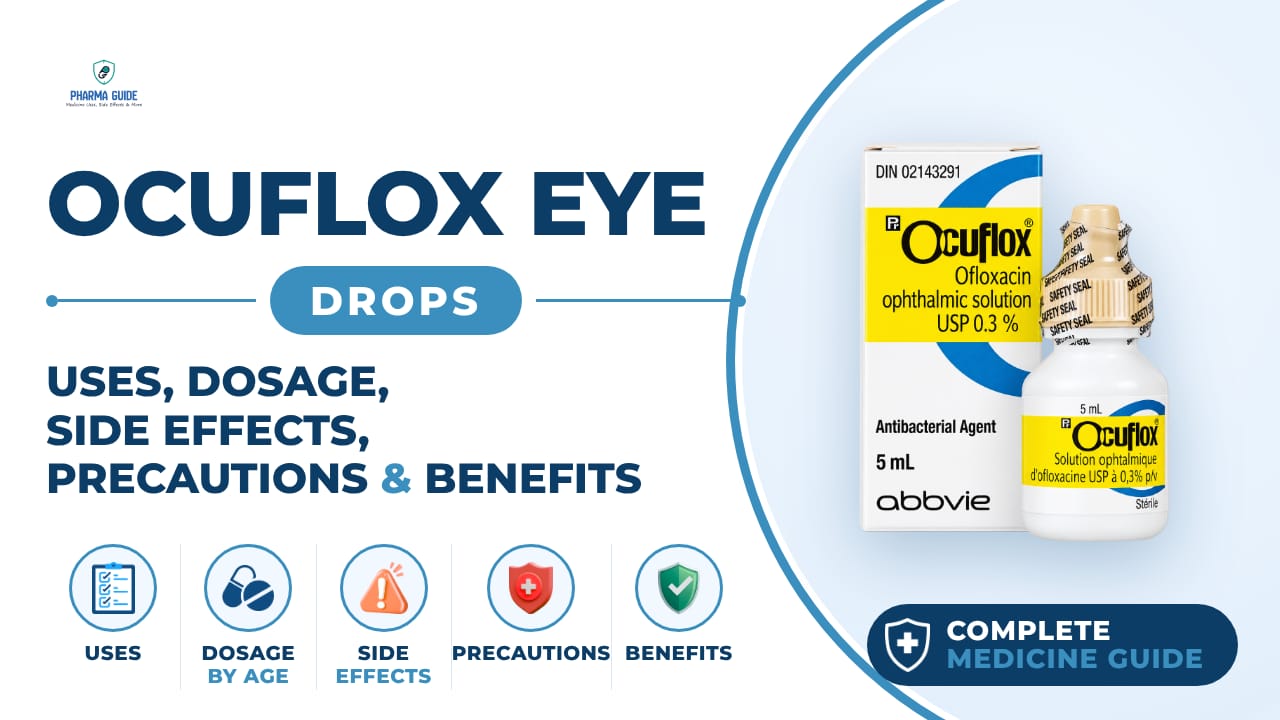
| Generic name | ofloxacin |
|---|---|
| Drug class | Ophthalmic anti-infectives (fluoroquinolone antibiotic) |
| Forms | eye drops (solution) |
Quick overview
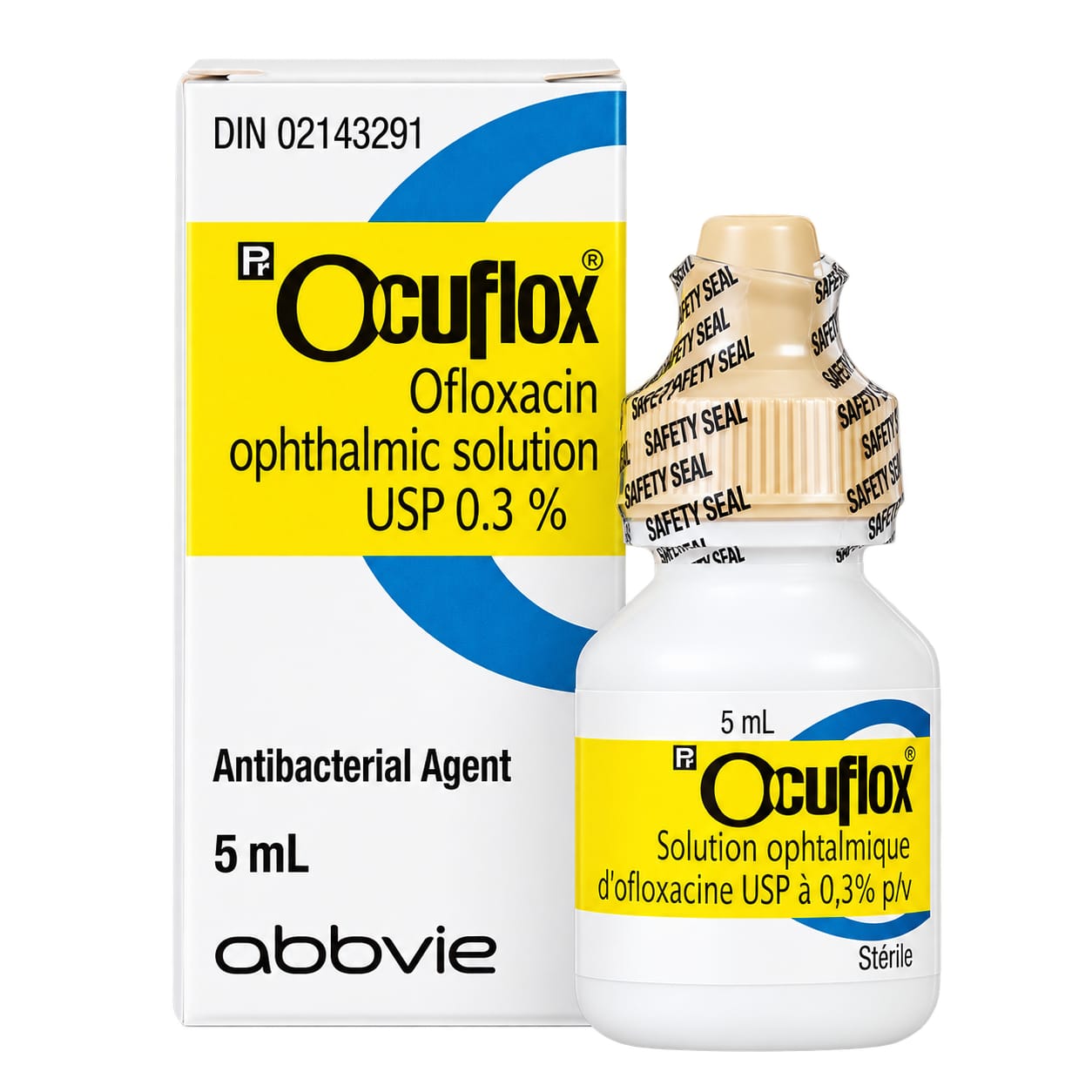
Ocuflox Eye Drops contain ofloxacin, a fluoroquinolone antibiotic used to treat bacterial infections of the eye, including corneal ulcers and conjunctivitis. The drops work by killing many types of bacteria that cause these infections. They are for use in the eye only and should be used exactly as directed by a doctor.
What is Ocuflox Eye Drops
Ocuflox is eye drops containing the antibiotic ofloxacin, used to treat bacterial infections of the eye.
Ocuflox Eye Drops uses
- Treats ulcers on the front layer of the eye (corneal ulcers)
- Treats severe eye infections (conjunctivitis)
- Treats bacterial infections of the eyes
Benefits of Ocuflox Eye Drops
- Helps treat bacterial conjunctivitis
- Can be used for certain corneal ulcers
- Reduces infection caused by susceptible bacteria
- Helps relieve infection-related redness and discharge
How Ocuflox Eye Drops works
Ofloxacin is an antibiotic that works by killing many types of bacteria that cause certain eye infections.
Ocuflox Eye Drops dosage
These eye drops are for use in the eye only. Wash your hands well with soap and water before using the drops. If you wear soft contact lenses, remove them before using the drops and wait at least 15 minutes before putting them back in.
Tilt your head back and look up, then gently pull down your lower eyelid to form a pocket for the drop. Do not let the dropper tip touch your eye, eyelid, or any other surface. After putting in the drop, close your eye without blinking or rubbing it, and press gently on the inside corner of your eye near your nose for about two minutes to stop the medicine draining away. Wash your hands again after using the drops.
Follow your doctor's instructions on how many drops to use and how often, and do not stop earlier or use for longer than instructed, even if you feel better. If you forget a dose, skip the missed dose and use your next dose at the normal time; do not use a double dose. Wait for your vision to clear before driving or using machines.
| Age group | Dose |
|---|---|
| 1–17 years | For bacterial conjunctivitis: commonly 1–2 drops in the affected eye(s) every 2–4 hours for the first 2 days, then 4 times daily |
| 18–64 years | Same usual conjunctivitis regimen: 1–2 drops every 2–4 hours for 2 days, then 4 times daily |
Available forms and strengths
- Eye drops (solution)
Side effects of Ocuflox Eye Drops
Common
- Burning, stinging, or watering eye
- Itchy eye or eyelid
- Feeling like something is in the eye
- Being unable to tolerate sunlight or bright light
- Eye redness
- Swelling of the eyelid or face
- Dry eye
- Eye pain
- Skin rash
- Blurred vision
- Nausea
Serious
- Inflamed eye(s)
- Dizziness
- Severe allergic reaction, including swelling of the tongue, lips and throat, and difficulty breathing
- Severe skin reaction with fever, sore throat, facial or tongue swelling, burning eyes, and a red or purple skin rash that spreads and causes blistering and peeling
Warnings and precautions
- Do not use this medicine if you are allergic to ofloxacin, similar antibiotics (such as ciprofloxacin, moxifloxacin, or nalidixic acid), or any of the ingredients, or if the bottle seal is broken, damaged, expired, or the liquid looks unusual.
- Avoid direct sunlight or artificial ultraviolet light exposure while using this medicine.
- Do not use this medicine while wearing soft contact lenses, as a preservative in the drops may discolour them.
- This medicine should not be used in children younger than 12 years old according to the Australian leaflet (other sources state it should not be used under 1 year old).
- This medicine only treats bacterial eye infections, not viral or fungal infections.
- Ocuflox is not recommended for women who are pregnant or planning to become pregnant. Tell your doctor right away if you become pregnant while using this medicine.
- Ocuflox is not recommended for women who are breastfeeding.
- No routine dose adjustment is generally needed for topical eye use in people with kidney problems.
- No routine dose adjustment is generally required for people with liver problems.
- There is no information on how alcohol affects this medicine.
- Wait until your vision is clear again after using the drops before you drive or use machinery, since the drops can cause blurred vision.
Storage
- Store it in a cool place, below 25°C, away from heat, or sunlight.
- Do not store it in the car or on window sills.
- Keep it where young children cannot reach it.
- Discard the bottle 4 weeks after first opening it.
- If your doctor advises that you no longer need to use this medicine or it is out of date, take it to any pharmacy for safe disposal.
When to see a doctor
- Call your doctor right away if you injure your eye, have eye surgery, or become pregnant while using this medicine.
- Go straight to the Emergency Department if you notice signs of a severe allergic reaction, such as swelling of the tongue, lips, or throat, or difficulty breathing.
- If the medicine is accidentally swallowed, rinse your eyes with warm water and contact your doctor or go to the nearest hospital Emergency Department right away, even if you feel fine.
- Tell your doctor if your eye infection seems to be getting worse or is not improving.
Alternatives
- Ciprofloxacin eye drops
- Moxifloxacin eye drops
- Tobramycin eye drops
Watch the video
FAQs
What is Ocuflox Eye Drops used for?
Ocuflox Eye Drops contain the antibiotic ofloxacin and are used to treat bacterial infections of the eye, including corneal ulcers and bacterial conjunctivitis.
How do you use Ocuflox Eye Drops?
Wash your hands, tilt your head back, pull down the lower eyelid to form a pocket, and apply the drop without letting the dropper touch the eye. Close your eye without blinking and press gently on the inside corner near your nose for about two minutes. Follow your doctor's instructions on frequency and duration.
Can I wear contact lenses while using Ocuflox Eye Drops?
No, you should not use this medicine while wearing soft contact lenses, as a preservative in the drops may discolour them. If you wear soft contact lenses, remove them before use and wait at least 15 minutes before putting them back in.
What are the common side effects of Ocuflox Eye Drops?
Common side effects include burning, stinging, or watering eye, itchy eye or eyelid, sensitivity to light, eye redness, swelling of the eyelid or face, dry eye, eye pain, skin rash, blurred vision, and nausea.
Is Ocuflox Eye Drops safe during pregnancy?
Ocuflox is not recommended for women who are pregnant or planning to become pregnant. Tell your doctor right away if you become pregnant while using this medicine.
General information, not medical advice
Your prescriber and the leaflet in your pack know your situation. This page does not.
- Follow your prescriber and the leaflet
- Don't start, stop, or change a dose on your own
- Doses and warnings differ by country and product
Sources
- OCUFLOX® Consumer Medicine Information (CMI), AbbVie Pty Ltd, July 2025
- Australian Commission on Safety and Quality in Health Care, Medicine Finder - Ocuflox
- Drugs.com - Ocuflox (ofloxacin ophthalmic) Consumer Medication Information
Video
Related medicines
Zymaxid Eye Drops: Uses, Dosage, Side Effects, Precautions and Alternates
Ophthalmic anti-infectives (fluoroquinolone antibiotic)
Zymaxid Eye Drops (gatifloxacin) treat bacterial eye infections like pink eye. Learn about dosage, side effects, warnings, and usage instructions.

Injectafer Injection: Uses, Dosage, Side Effects, Precautions and Alternates
Iron products
Injectafer (ferric carboxymaltose) treats iron deficiency anemia and heart failure-related iron deficiency via IV. Learn uses, dosage, side effects, and