Ofloxacin Eye Drops: Uses, Dosage, Side Effects, Precautions and Alternates
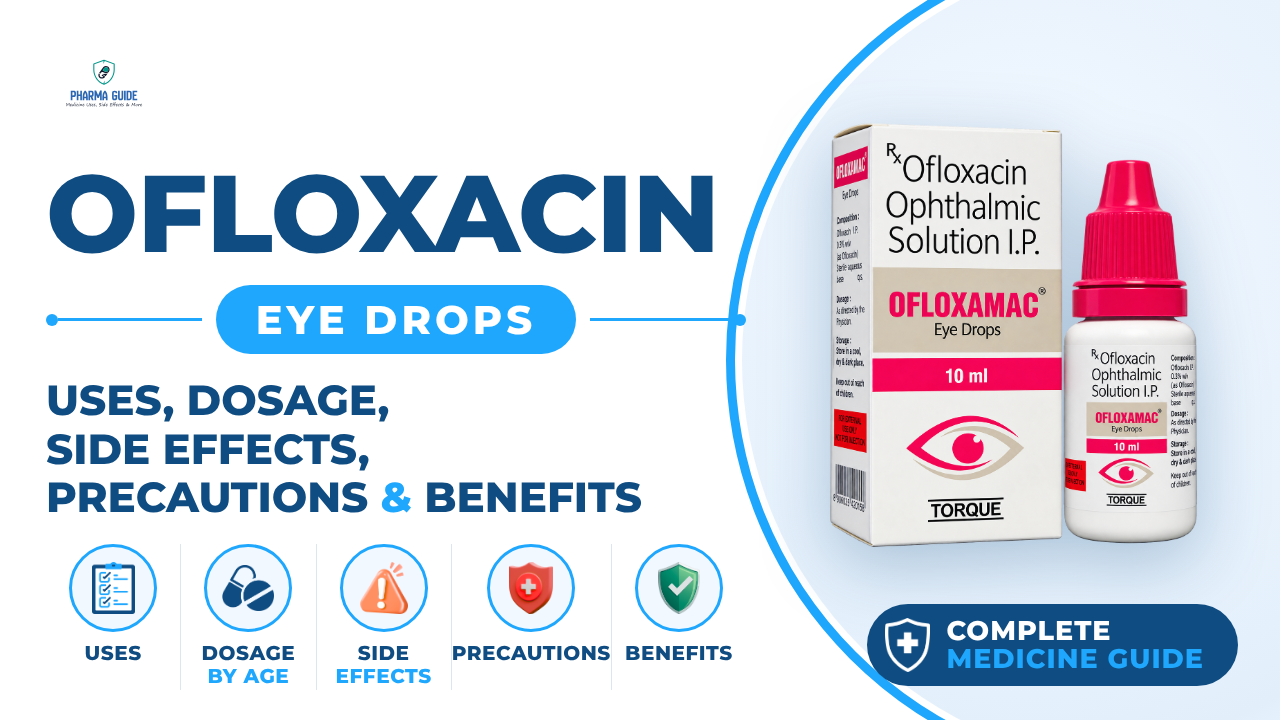
| Generic name | Ofloxacin |
|---|---|
| Drug class | Quinolone (fluoroquinolone) antibacterial agent |
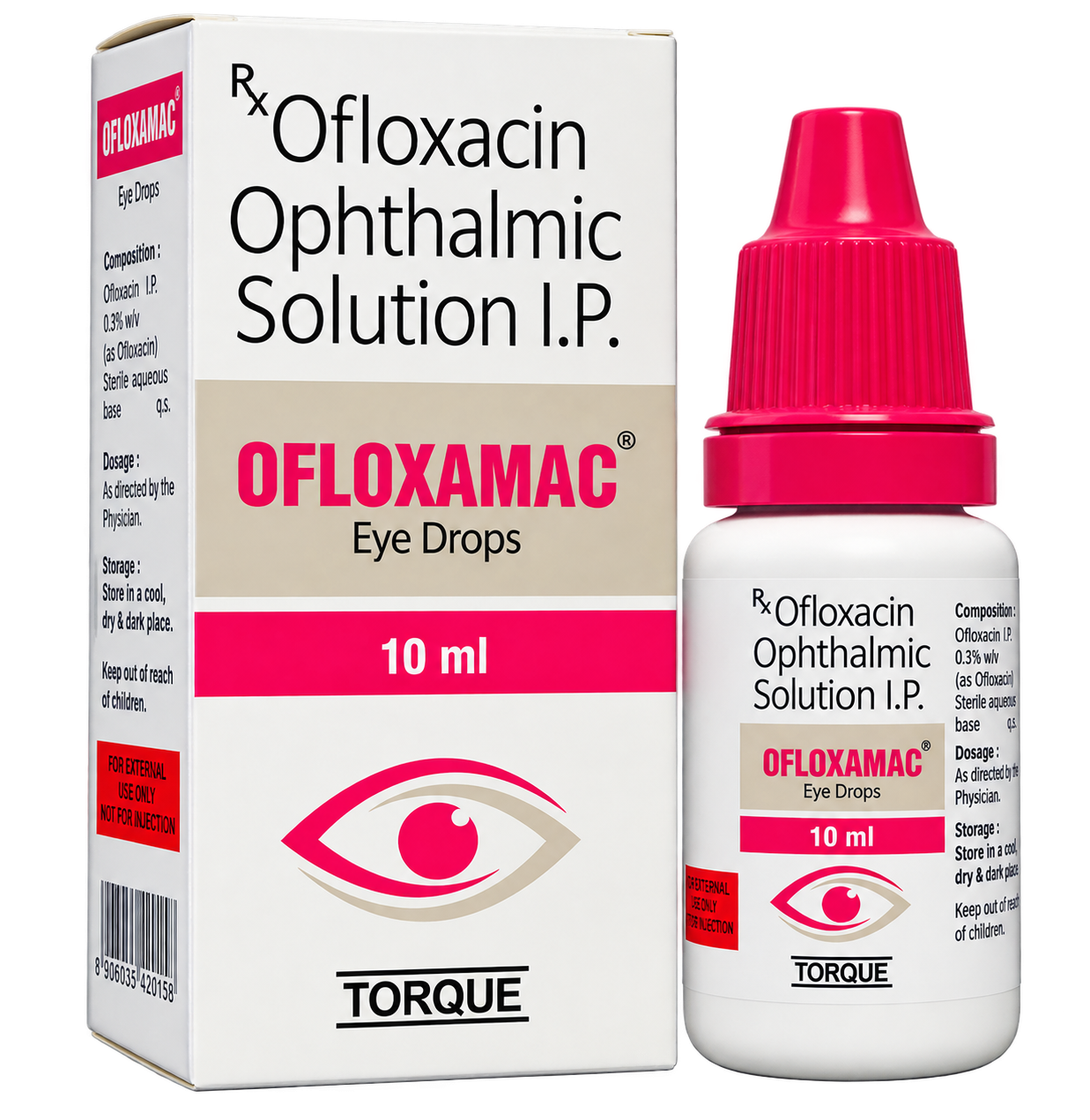
| Forms | Ophthalmic solution (eye drops), 0.3% w/v |
Quick overview
Ofloxacin Eye Drops are a prescription antibiotic medicine belonging to the quinolone (fluoroquinolone) class, used to treat certain bacterial infections of the eye such as bacterial conjunctivitis (pink eye) and some corneal infections. They only work against bacteria and do not treat infections caused by viruses, fungi, or eye problems caused by allergies, dryness, or irritation. The drops are for use in the eye only and are available as a 0.3% w/v ophthalmic solution.
What is Ofloxacin Eye Drops
Ofloxacin eye drops are a prescription antibiotic medicine used to treat certain bacterial infections of the eye, such as bacterial conjunctivitis (pink eye) and some corneal infections. They only work against bacteria and do not treat infections caused by viruses, fungi, or eye problems caused by allergies, dryness, or irritation.
Ofloxacin Eye Drops uses
- Treatment of bacterial conjunctivitis (pink eye) caused by bacteria
- Treatment of certain bacterial corneal infections
Benefits of Ofloxacin Eye Drops
- Helps stop bacteria from multiplying so the eye can heal
- Treats outer eye infections caused by susceptible bacteria
How Ofloxacin Eye Drops works
Ofloxacin belongs to a group of antibiotics called fluoroquinolones (quinolones). It works by interfering with bacterial enzymes needed for bacteria to grow and reproduce, so the bacteria can no longer multiply and the infection can begin to clear.
Ofloxacin Eye Drops dosage
This medicine is only for use in the eye. Do not take it by mouth. Wash your hands before and after use.
Tilt your head back, look up, and gently pull down your lower eyelid to form a small pocket, then squeeze the drops into the pocket. Do not let the tip of the bottle touch your eye, eyelids, fingers, or any other surface, as this can introduce germs.
Close your eye gently for a short time after using the drops to help spread and keep the medicine in place; avoid rubbing the eye right away. Your vision may blur for a few minutes after use.
Use your doses at regular intervals and do not use the medicine more often than directed. If more than one eye medicine is used, space them by several minutes; ointments are usually applied after drops.
Finish the full prescribed course even if the eye looks or feels better, because symptoms can improve before the infection is fully cleared.
Remove soft contact lenses before using the drops and wait 15 minutes after using the drops before putting lenses back in; contact lenses are usually avoided during an active eye infection unless your doctor advises otherwise.
Put the cap back on and close the bottle immediately after use.
| Age group | Dose |
|---|---|
| Under 1 year | Use only if specifically prescribed by an eye specialist |
| 1–11 years | 1–2 drops every 2–4 hours initially, then less frequently as infection improves |
| 12–17 years | 1–2 drops 4–6 times daily, depending on infection |
| 18–64 years | 1–2 drops 4 times daily; severe infections may require more frequent dosing initially |
| 65+ years | Usually the adult dose; follow medical advice |
Available forms and strengths
- Ophthalmic solution (eye drops), 0.3% w/v
Side effects of Ofloxacin Eye Drops
Common
- Temporary burning, stinging, or discomfort after using the drops
- Eye irritation
- Redness
- Itchy eye or eyelid
- Dryness / dry eyes
- Increased tearing after use
- Light sensitivity (photophobia)
- Temporary blurred vision
- A feeling that something is in the eye
- Eye or eyelid swelling
- Eye pain
- Dizziness
- Nausea
- Swelling of the face
Serious
- Severe allergic reaction: swelling of the mouth, throat, tongue, hands or feet; difficulty breathing; skin redness, irritation, blistering or peeling; loss of consciousness or collapse
- Toxic epidermal necrolysis (severe skin reaction): redness, blistering and/or peeling of large areas of the skin
- New or worsening eye pain, redness, irritation, or discharge
- Pain or swelling in tendons
Warnings and precautions
- Do not use this medicine if you are allergic to ofloxacin, to other quinolone antibiotics, or to any ingredient in the drops.
- If you develop pain or swelling in your tendons, stop using the medicine and get immediate medical help. This is more likely if you are elderly or taking corticosteroids at the same time.
- The drops contain the preservative benzalkonium chloride, which may discolor soft contact lenses. Remove soft contact lenses before use and wait 15 minutes before putting them back in.
- Do not stop treatment early just because the eye looks better; finishing the full course helps prevent the infection returning or becoming harder to treat.
- This medicine is only for you. Do not share it with others.
- Do not use any other eye products without telling your care team.
- There have been no adequate studies in pregnant women. Because quinolones taken through the body have caused joint problems in immature animals, this medicine should be used during pregnancy only if the benefit justifies the possible risk to the baby.
- Tell your doctor if you are pregnant or planning to become pregnant.
- Ofloxacin taken through the body passes into breast milk and could harm a nursing baby.
- Your doctor will help decide whether to stop breastfeeding during treatment or not use the drug.
- Tell your doctor if you are breastfeeding or planning to breastfeed.
- Using the drops may temporarily blur your vision.
- Do not drive or use machines until your vision has cleared.
Storage
- Store at room temperature between 15°C and 30°C.
- Keep the bottle tightly closed when not in use.
- Discard 28 days after opening.
- Throw away any unused eye solution after the expiration date.
- Keep out of the reach and sight of children.
When to see a doctor
- Get urgent medical care for severe eye pain or sudden vision changes.
- Get prompt help for swelling around the eye or trouble opening the eye.
- Get medical attention urgently if you have trouble breathing, significant facial swelling, severe rash, or sudden worsening around the eyes.
- Tell your care team if your symptoms do not improve in 2 to 3 days, and if you get any sign of an allergic reaction, stop using the drops and contact your care team.
- If you think you or someone in your care has taken too much of the medicine, contact a healthcare professional, hospital emergency department, or your local poison control center at once, even if there are no symptoms.
Alternatives
- Ciprofloxacin Eye Drops
- Moxifloxacin Eye Drops
- Levofloxacin Eye Drops
- Gatifloxacin Eye Drops
- Besifloxacin Eye Drops
- Tobramycin Eye Drops
- Gentamicin Eye Drops
Watch the video
FAQs
What is Ofloxacin Eye Drops used for?
It is a prescription antibiotic used to treat bacterial conjunctivitis (pink eye) and certain bacterial corneal infections. It only works against bacteria, not viruses, fungi, or allergy-related eye problems.
How should I use Ofloxacin Eye Drops?
Wash your hands, tilt your head back, pull down the lower eyelid to form a pocket, and squeeze in the drops without letting the tip touch your eye. Close your eye gently afterward, use at regular intervals, and complete the full prescribed course even if symptoms improve.
Can I wear contact lenses while using Ofloxacin Eye Drops?
Remove soft contact lenses before using the drops and wait 15 minutes before putting them back in, since the preservative benzalkonium chloride may discolor soft lenses. Contact lenses are usually avoided during an active eye infection unless your doctor advises otherwise.
What are the common side effects of Ofloxacin Eye Drops?
Common side effects include temporary burning, stinging, irritation, redness, itching, dryness, increased tearing, light sensitivity, temporary blurred vision, a feeling of something in the eye, eye or eyelid swelling, eye pain, dizziness, and nausea.
How should Ofloxacin Eye Drops be stored?
Store at room temperature between 15°C and 30°C, keep the bottle tightly closed when not in use, discard 28 days after opening, and keep out of reach and sight of children.
Sources
- Cleveland Clinic (my.clevelandclinic.org) - Ofloxacin Eye Solution
- APO-OFLOXACIN (Ofloxacin Ophthalmic Solution) Product Monograph, Apotex Inc., Revised MAR 12, 2024
- Acibadem International Health Library - Ofloxacin Eye Drops: What Patients Need to Know
- American Academy of Ophthalmology
- National Eye Institute
- MedlinePlus
- Mayo Clinic
- U.S. Food and Drug Administration
Video
Related medicines
Levaquin Tablet: Uses, Dosage, Side Effects, Precautions and Alternates
Quinolone (fluoroquinolone) antibacterial agent
Levaquin (levofloxacin) treats bladder, kidney, prostate, sinus, and lung infections. Learn about dosage, side effects, warnings, and alternatives.
Keflex Capsule: Uses, Dosage, Side Effects, Precautions and Alternates
First generation cephalosporins
Keflex Capsule (cephalexin) treats bacterial infections like UTIs, skin and respiratory infections. Learn its uses, dosage, side effects, and precautions.