
Safety
General information, not medical advice
Your prescriber and the leaflet in your pack know your situation. This page does not.
- Follow your prescriber and the leaflet
- Don't start, stop, or change a dose on your own
- Doses and warnings differ by country and product
Olopatadine Eye Drops: Uses, Dosage, Side Effects, Precautions and Alternates
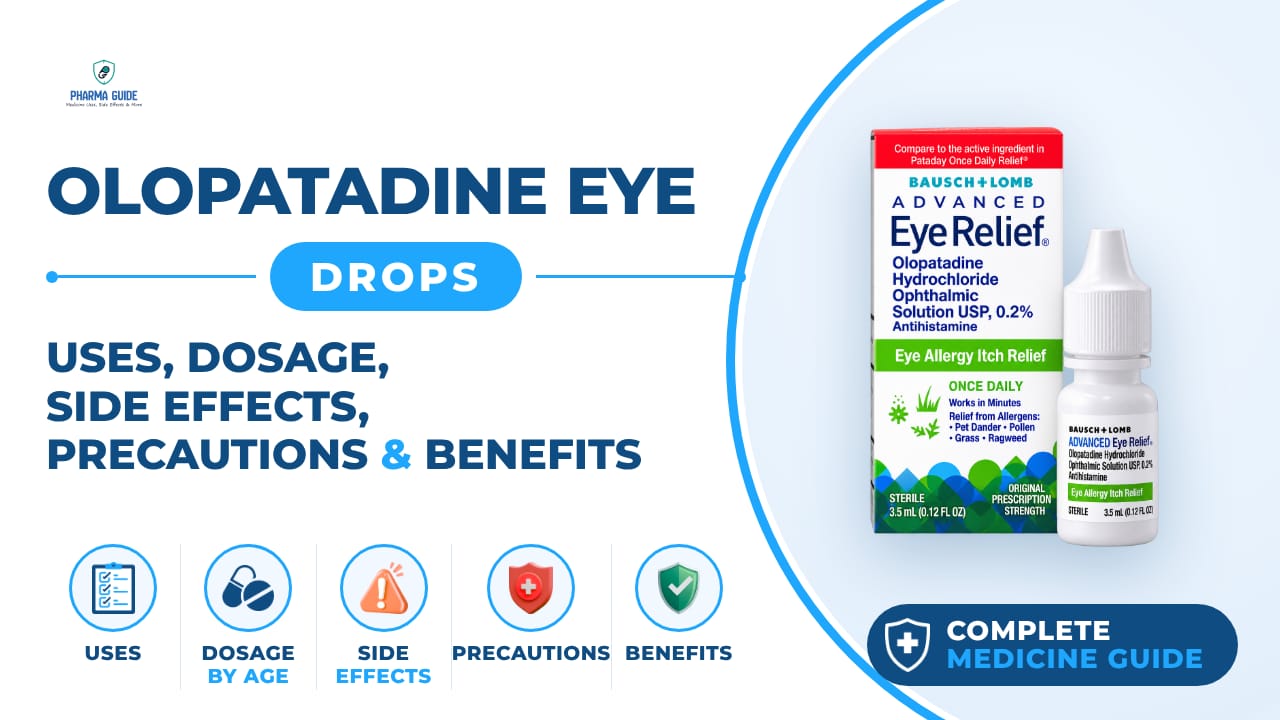
| Generic name | Olopatadine hydrochloride |
|---|---|
| Drug class | Antihistamine / mast cell stabilizer (ophthalmic antihistamine) |
| Forms | Ophthalmic solution (eye drops) |
Quick overview
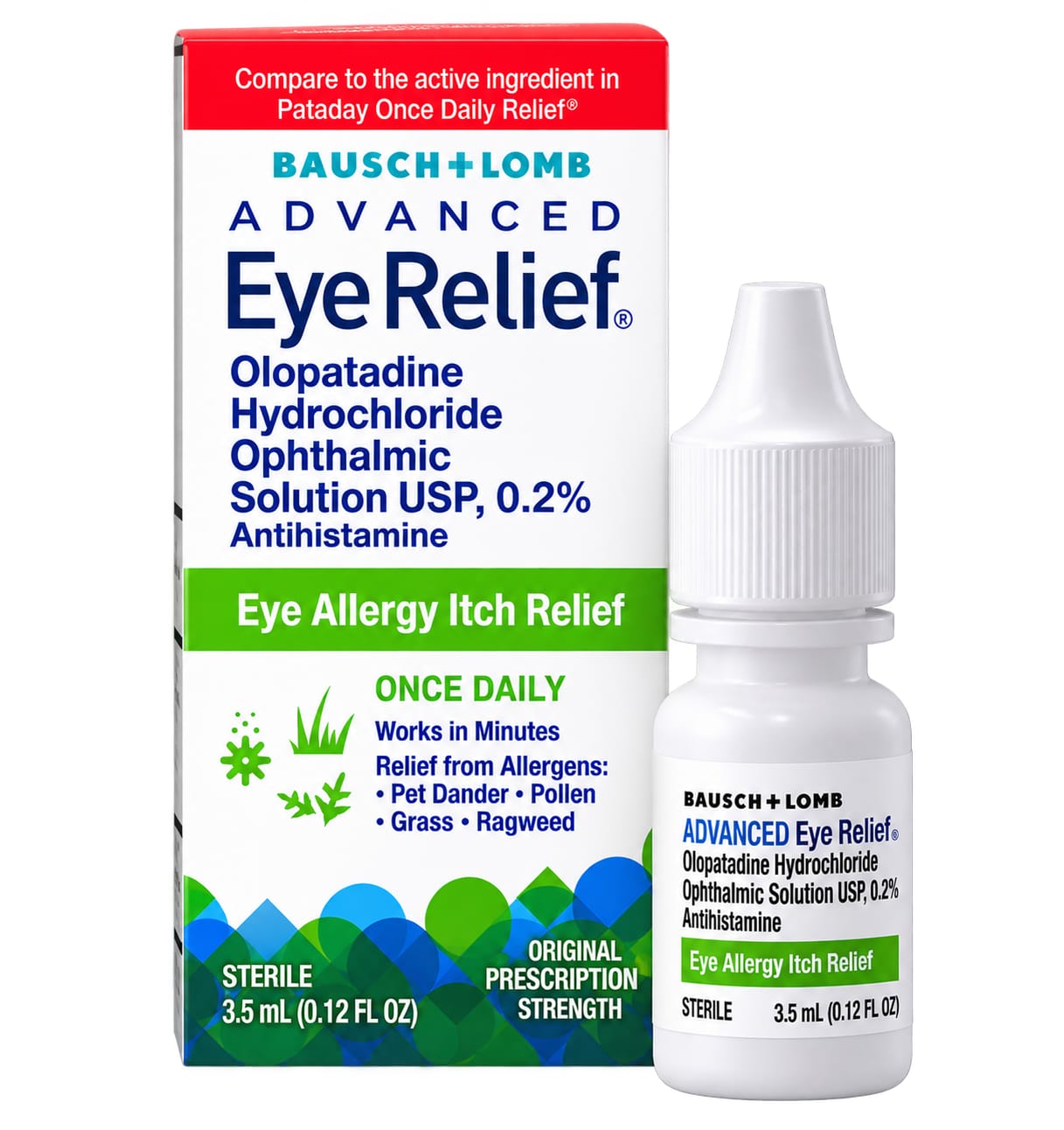
Olopatadine Eye Drops (olopatadine hydrochloride) are an ophthalmic antihistamine and mast cell stabilizer used to relieve red, itchy eyes caused by allergies such as pollen, dust, or animal hair. They are used to treat the signs and symptoms of allergic conjunctivitis. The drops work by blocking histamine release in the eye, and are typically used once daily in the affected eye or eyes.
What is Olopatadine Eye Drops
Olopatadine is an eye drop that contains an antihistamine and mast cell stabilizer. It is used to relieve red, itchy eyes caused by allergies such as pollen, dust, or animal hair.
Olopatadine Eye Drops uses
- Treatment of signs and symptoms of allergic conjunctivitis (eye allergies)
- Eye itching or redness caused by pollen, ragweed, grass, animal hair, or dander
Benefits of Olopatadine Eye Drops
- Reduces eye itching associated with allergic conjunctivitis
- Reduces redness and swelling of the eye caused by allergies
- Reduces the intensity of the allergic reaction in the eye
- Allergy Relief: Helps relieve itching associated with allergic conjunctivitis
- Redness Relief: Can reduce allergy-related eye redness
How Olopatadine Eye Drops works
Olopatadine works by blocking the release of histamine, a substance in the body that causes allergic reactions in the eye, which reduces itching, redness, and swelling.
Olopatadine Eye Drops dosage
This medicine is for use in the eye only; do not swallow or inject it. Wash your hands before and after use. Tilt your head back and pull the lower eyelid down to form a small pocket, then place the drop into the pocket. Do not touch the dropper tip to your eye, eyelid, fingers, or any other surface, to avoid contaminating the drops.
After putting in the drop, close your eyes gently and keep them closed for one to two minutes, pressing at the inner corner of the eye to help keep the medicine in the eye. Do not blink. Put the cap back on tightly right after use. Do not use the drops if the solution has changed color, is cloudy, or has particles in it.
If you use more than one eye medicine, wait at least five minutes between each product; eye ointments should be used last. Remove contact lenses before using this medicine; you can put soft contact lenses back in some time after using the drops, but not if your eyes are red or irritated. Do not use this medicine to treat eye irritation caused by contact lenses.
If you miss a dose, use it as soon as you remember; if it is almost time for your next dose, skip the missed one and go back to your normal schedule; do not use two doses at once. Vision may be blurred for a short time after using the drops, so take care with driving or tasks that need clear eyesight.
| Age group | Dose |
|---|---|
| Under 2 years | Consult a doctor |
| 2–64 years | 1 drop in affected eye(s) once daily |
| 65+ years | 1 drop in affected eye(s) once daily |
Available forms and strengths
- Ophthalmic solution (eye drops)
Side effects of Olopatadine Eye Drops
Common
- Headache
- Blurred vision
- Burning or stinging in the eye
- Dry eye
- Feeling that something is in the eye
- Change in taste
- Signs of a common cold (runny or stuffy nose, sore throat)
- Eye irritation or discomfort
- Fatigue
Serious
- Signs of an allergic reaction, such as rash, hives, itching, swelling of the face, lips, tongue, or throat, trouble breathing or swallowing, or severe skin reactions
- Change in eyesight
- Eye pain
- Severe eye irritation
- Eye redness
- Swelling of the eyelid, face, lips, or feet
- Trouble breathing
Warnings and precautions
- This medicine is for use in the eyes only. It should never be injected or taken by mouth.
- Do not use this medicine to treat eye irritation caused by contact lenses, and do not wear contact lenses if your eyes are red.
- If this medicine is swallowed by accident, it can cause harm. Contact a doctor or poison control right away if this happens.
- A preservative in the drops, benzalkonium chloride, can be absorbed by soft contact lenses. Remove lenses before use and wait before putting them back in.
- In rare cases, people with severe damage to the cornea have developed cloudy patches from calcium buildup during treatment.
- Tell your doctor if you are pregnant or planning to become pregnant. This medicine should only be used if the potential benefit justifies the potential risk to the baby, since there isn't enough human data to be sure it is safe.
- Talk to your doctor before using this medicine if you are breastfeeding. Some product information advises against using it while breastfeeding, since it is not known if it passes into breast milk in amounts that could affect a baby.
- It is not known how this medicine interacts with alcohol, so it's best to check with your doctor before drinking alcohol while using it.
- Your vision may become blurred for a short time after using the drops, so be careful when driving or doing other tasks that need clear eyesight until your vision returns to normal.
Storage
- Store at room temperature with the lid tightly closed
- Keep out of the reach of children and pets
- Throw away unused or expired drug; do not flush down a toilet or pour down a drain unless told to do so
- Ask your pharmacist about the best way to dispose of unused medicine
- Protect from light
- Some products should be thrown away four weeks after first opening the bottle; write down the date you opened it on the bottle label
When to see a doctor
- Get medical help right away if you notice signs of a serious allergic reaction, such as rash, hives, itching, swollen or blistered skin, wheezing, chest or throat tightness, or trouble breathing, swallowing, or talking, or swelling of the face, lips, tongue, or throat.
- Call your doctor right away if you have a change in eyesight, eye pain, or severe eye irritation.
- Contact your doctor if you notice eye redness.
- Stop using the medicine and see your care team as soon as possible if your eyes become swollen, painful, or have discharge.
- If you think you have used too much of this medicine, contact a poison control center or get emergency medical care right away.
Alternatives
- Ketotifen Eye Drops
- Epinastine Eye Drops
- Alcaftadine Eye Drops
Watch the video
FAQs
What is Olopatadine Eye Drops used for?
It is used to treat signs and symptoms of allergic conjunctivitis, including eye itching and redness caused by pollen, ragweed, grass, dust, animal hair, or dander.
How often should I use Olopatadine Eye Drops?
For ages 2 to 64 and 65 and older, the usual dose is 1 drop in the affected eye(s) once daily. Children under 2 years should consult a doctor.
Can I wear contact lenses while using Olopatadine Eye Drops?
You should remove contact lenses before using the drops. Soft contact lenses can be reinserted some time afterward, but not if your eyes are red or irritated, since a preservative in the drops can be absorbed by soft lenses.
What are the common side effects of Olopatadine Eye Drops?
Common side effects include headache, blurred vision, burning or stinging in the eye, dry eye, a feeling that something is in the eye, change in taste, cold-like symptoms, eye irritation, and fatigue.
Is it safe to use Olopatadine Eye Drops during pregnancy or breastfeeding?
This medicine should only be used in pregnancy if the potential benefit justifies the risk, as there isn't enough human data to confirm safety. Talk to your doctor before use if you are breastfeeding, since it is not known if it passes into breast milk.
General information, not medical advice
Your prescriber and the leaflet in your pack know your situation. This page does not.
- Follow your prescriber and the leaflet
- Don't start, stop, or change a dose on your own
- Doses and warnings differ by country and product
Sources
Video
Related medicines

Injectafer Injection: Uses, Dosage, Side Effects, Precautions and Alternates
Iron products
Injectafer (ferric carboxymaltose) treats iron deficiency anemia and heart failure-related iron deficiency via IV. Learn uses, dosage, side effects, and

Gliclazide Tablet: Uses, Dosage, Side Effects, Precautions and Alternates
Sulfonylurea (hypoglycemic/antidiabetic agent)
Gliclazide Tablet is a sulfonylurea for type 2 diabetes that boosts insulin release. Learn about dosage, side effects, warnings, and precautions.