
Safety
General information, not medical advice
Your prescriber and the leaflet in your pack know your situation. This page does not.
- Follow your prescriber and the leaflet
- Don't start, stop, or change a dose on your own
- Doses and warnings differ by country and product
Olumiant Tablet: Uses, Dosage, Side Effects, Precautions and Alternates
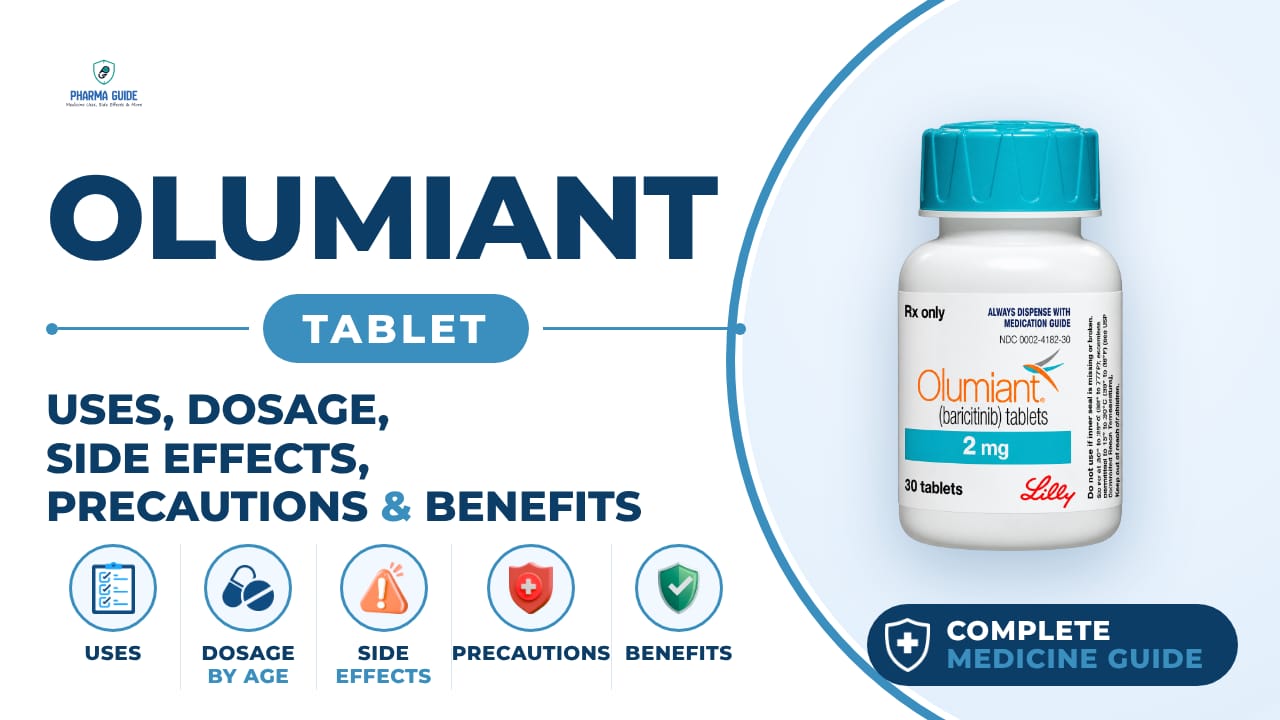
| Generic name | baricitinib |
|---|---|
| Drug class | Janus kinase (JAK) inhibitor |
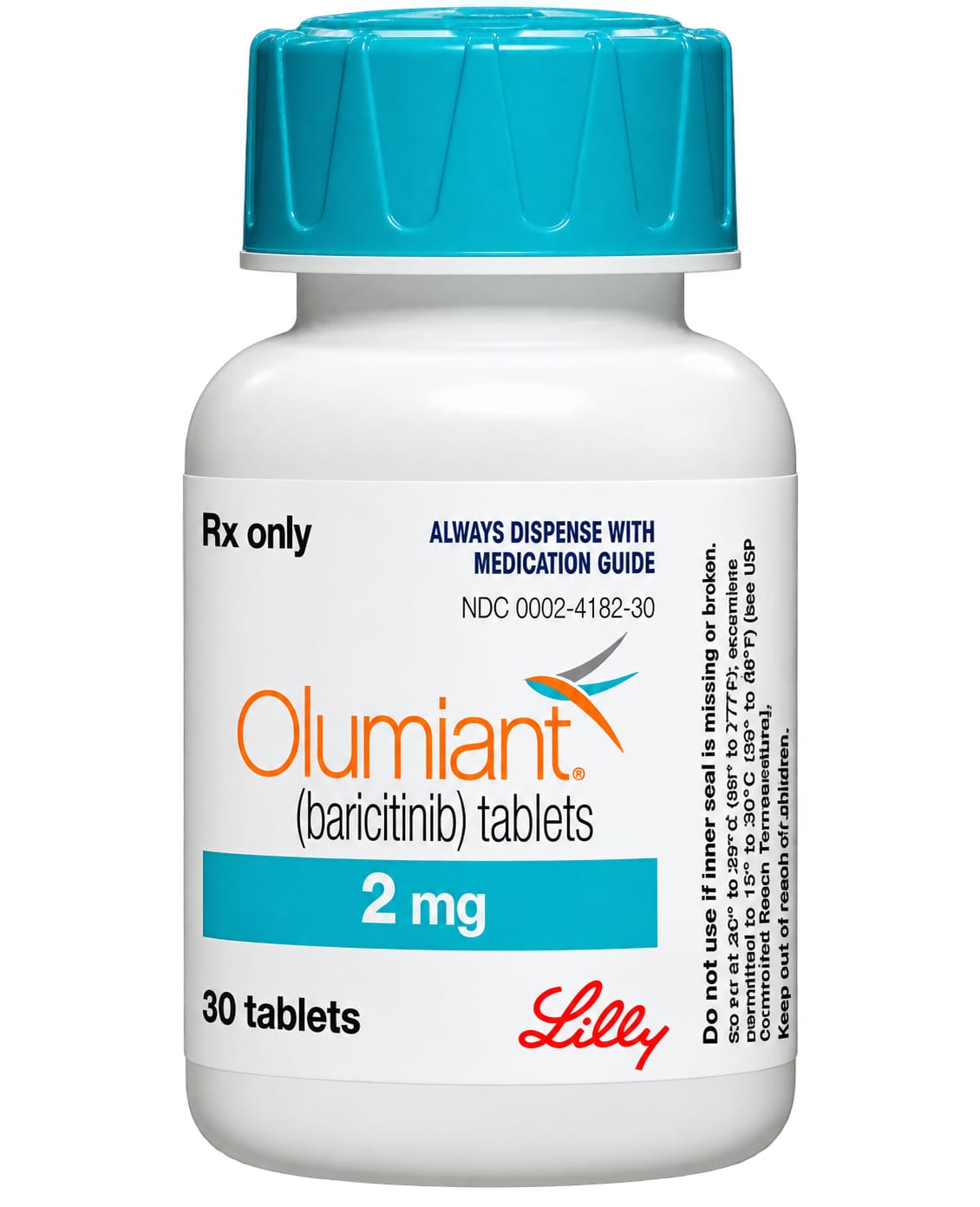
| Forms | Oral tablet (1 mg, 2 mg, and 4 mg strengths) |
Quick overview
Olumiant Tablet (baricitinib) is a prescription Janus kinase (JAK) inhibitor taken by mouth to calm an overactive immune system. It is used for moderately to severely active rheumatoid arthritis, severe alopecia areata, and severe COVID-19 in certain hospitalized adults. Olumiant works by blocking JAK enzymes that drive inflammation, and it carries several important warnings, including risks of serious infections, blood clots, and heart-related problems.
What is Olumiant Tablet
Olumiant is a prescription oral tablet containing baricitinib. It belongs to a class of medicines called Janus kinase (JAK) inhibitors, which work by calming an overactive immune system.
Olumiant Tablet uses
- Moderately to severely active rheumatoid arthritis in adults, usually after other medicines called TNF blockers have not worked well enough or could not be tolerated
- Severe alopecia areata (patchy hair loss caused by the immune system attacking hair follicles) in adults and children 12 years and older
- Severe COVID-19 in certain hospitalized adults who need supplemental oxygen or help with breathing
Benefits of Olumiant Tablet
- Decreases joint pain, stiffness, and swelling from rheumatoid arthritis and slows damage to bone and cartilage
- Helps stop the immune system from attacking hair follicles, allowing hair to regrow in severe alopecia areata
- Calms severe lung inflammation in people hospitalized with severe COVID-19
How Olumiant Tablet works
Olumiant blocks enzymes called Janus kinases (JAK1 and JAK2) inside cells. These enzymes normally relay signals from inflammation-causing chemical messengers (cytokines) that turn on genes related to inflammation. By blocking JAK enzymes, Olumiant stops this chain reaction, calming the overactive immune response involved in rheumatoid arthritis, alopecia areata, and severe COVID-19.
Olumiant Tablet dosage
Olumiant is taken once a day by mouth, with or without food. Swallow the tablet whole; do not cut, chew, break, or crush it. If you have trouble swallowing tablets whole, you can dissolve the dose in room temperature water, swirl gently, drink it right away, then rinse the container with more water and drink that too, to get the full dose. Take it at the same time each day to help you remember. Do not take more than prescribed or use it for longer than prescribed. For COVID-19, it is given once a day for up to 14 days or until discharge from the hospital, whichever comes first. If you miss a dose, take it as soon as you remember; if it is almost time for the next dose, skip the missed dose and do not double up.
| Age group | Dose |
|---|---|
| 18–64 years – rheumatoid arthritis | 2 mg once daily |
| 18–64 years – severe alopecia areata | 2 mg once daily; may be increased to 4 mg once daily if response is inadequate |
| 18–64 years – hospitalized COVID-19 | 4 mg once daily for up to 14 days or until hospital discharge |
| 65 years and older | Same indication-based adult dosing, with closer monitoring and adjustment for kidney function |
Available forms and strengths
- Oral tablet (1 mg, 2 mg, and 4 mg strengths)
Side effects of Olumiant Tablet
Common
- Upper respiratory tract infections (common cold, sinus infections)
- Nausea and stomach-area (abdominal) pain
- Headache
- Cold sores or herpes simplex/shingles flare-ups
- Urinary tract infections
- Acne or inflammation of hair follicles (folliculitis)
- Increased blood cholesterol or liver/muscle enzyme levels
- Genital yeast infections
- Low red blood cell count (anemia)
- Low white blood cell count (neutropenia)
- Increased platelets in the blood (thrombocytosis)
- Tiredness
- Weight gain
- Lower respiratory tract infections
Serious
- Serious infections, including tuberculosis and infections that can spread throughout the body
- Blood clots in the legs or lungs (deep vein thrombosis, pulmonary embolism) or arteries
- Increased risk of heart attack, stroke, and death, especially in people 50 or older with heart disease risk factors or a smoking history
- New cancers or return of past cancers, including lymphoma and skin cancer
- Severe allergic reactions
- Tears (perforation) in the stomach or intestines
- Low blood sugar in people with diabetes
- Serious drops in blood cell counts
- Liver damage
- High cholesterol levels
Warnings and precautions
- Olumiant can lower your immune system's ability to fight infections, leading to serious illnesses such as tuberculosis or infections that spread through the body. Some people have died from these infections.
- There is an increased risk of death in people 50 years of age or older who have at least one heart disease risk factor and are taking a JAK inhibitor medicine like Olumiant.
- Olumiant may increase the risk of certain cancers, including lymphoma and lung cancer, especially in current or past smokers.
- Olumiant increases the risk of serious heart and blood vessel problems such as heart attack, stroke, or death, especially in people 50 or older with a heart disease risk factor who smoke or used to smoke.
- Olumiant can cause blood clots in the legs, lungs, or arteries, which can be life-threatening.
- Olumiant can cause tears in the stomach or intestines, especially in people who also take NSAIDs, corticosteroids, or methotrexate.
- People with diabetes may develop low blood sugar while taking Olumiant.
- You should not receive live vaccines while taking Olumiant.
- It is not known if Olumiant will harm an unborn baby. Tell your healthcare provider if you are pregnant or plan to become pregnant.
- It is not known if Olumiant passes into breast milk. You should not breastfeed during treatment and for 4 days after the last dose.
- Tell your healthcare provider if you have kidney problems before taking Olumiant.
- Tell your healthcare provider if you have liver problems before taking Olumiant, as liver damage can occur with this medicine.
- It is not known if alcohol affects Olumiant, but drinking alcohol may increase the risk of tiredness and liver damage while taking it.
- Olumiant usually does not directly impair driving, but avoid driving if dizziness, weakness, or illness affects alertness.
Storage
- Store Olumiant at room temperature between 68°F and 77°F (20°C and 25°C)
- It can be exposed to temperatures between 59°F and 86°F (15°C and 30°C) for shorter periods, such as during transport
- Store in a cool, dry place, away from light and moisture
- Do not store in the bathroom
- Keep Olumiant and all medicines out of the reach of children and pets
- Do not flush medications down the toilet or pour them into a drain unless instructed; properly discard expired or unneeded medicine through your pharmacist or local waste disposal company
When to see a doctor
- Get emergency help right away for signs of a heart attack or stroke, such as chest discomfort, pain spreading to the arms, back, neck, or jaw, shortness of breath, cold sweat, nausea, lightheadedness, weakness on one side of the body, or slurred speech.
- Stop taking Olumiant and get emergency help right away if you notice signs of a blood clot, such as leg swelling, pain or tenderness, sudden chest pain, or shortness of breath.
- Stop taking Olumiant and get emergency help right away if you have signs of an allergic reaction, such as hives, trouble breathing, feeling faint or dizzy, or swelling of the lips, tongue, or throat.
- Call your healthcare provider right away if you have a fever and ongoing stomach-area pain along with a change in bowel habits, which could be a sign of a tear in the stomach or intestines.
- Call your healthcare provider right away if you notice any symptoms of an infection, such as fever, chills, cough, shortness of breath, weight loss, painful skin sores, diarrhea, or burning when you urinate.
- If you take too much Olumiant, contact your healthcare provider or a poison control center, or go to the nearest emergency room right away.
Alternatives
- Etanercept
- Methotrexate
- Upadacitinib
- Tofacitinib
Watch the video
FAQs
What is Olumiant Tablet used for?
Olumiant is used for moderately to severely active rheumatoid arthritis in adults, severe alopecia areata in adults and children 12 and older, and severe COVID-19 in certain hospitalized adults needing supplemental oxygen or breathing support.
How does Olumiant Tablet work?
Olumiant blocks Janus kinase (JAK1 and JAK2) enzymes that relay inflammatory signals from cytokines, calming the overactive immune response involved in rheumatoid arthritis, alopecia areata, and severe COVID-19.
What is the dosage of Olumiant Tablet?
Olumiant is taken once daily by mouth. For rheumatoid arthritis, the dose is 2 mg once daily. For severe alopecia areata, it starts at 2 mg once daily and may increase to 4 mg if needed. For hospitalized COVID-19, it is 4 mg once daily for up to 14 days or until discharge.
What are the serious side effects of Olumiant Tablet?
Serious side effects include serious infections like tuberculosis, blood clots, increased risk of heart attack, stroke, and death, new or returning cancers including lymphoma, severe allergic reactions, tears in the stomach or intestines, and liver damage.
Can I take Olumiant Tablet if I am pregnant or breastfeeding?
It is not known if Olumiant will harm an unborn baby, so you should tell your healthcare provider if you are pregnant or planning to become pregnant. You should not breastfeed during treatment and for 4 days after the last dose.
General information, not medical advice
Your prescriber and the leaflet in your pack know your situation. This page does not.
- Follow your prescriber and the leaflet
- Don't start, stop, or change a dose on your own
- Doses and warnings differ by country and product
Sources
Video
Related medicines
Rinvoq Tablet: Uses, Dosage, Side Effects, Precautions and Alternates
Janus kinase (JAK) inhibitor
Rinvoq Tablet (upadacitinib) treats rheumatoid arthritis, psoriatic arthritis, atopic dermatitis, and more by reducing inflammation. Learn dosage, side
Anzupgo Cream: Uses, Dosage, Side Effects, Precautions and Alternates
Janus kinase (JAK) inhibitor
Anzupgo Cream (delgocitinib) treats moderate to severe chronic hand eczema in adults. Learn how it works, dosage, side effects, and warnings.