
Safety
General information, not medical advice
Your prescriber and the leaflet in your pack know your situation. This page does not.
- Follow your prescriber and the leaflet
- Don't start, stop, or change a dose on your own
- Doses and warnings differ by country and product
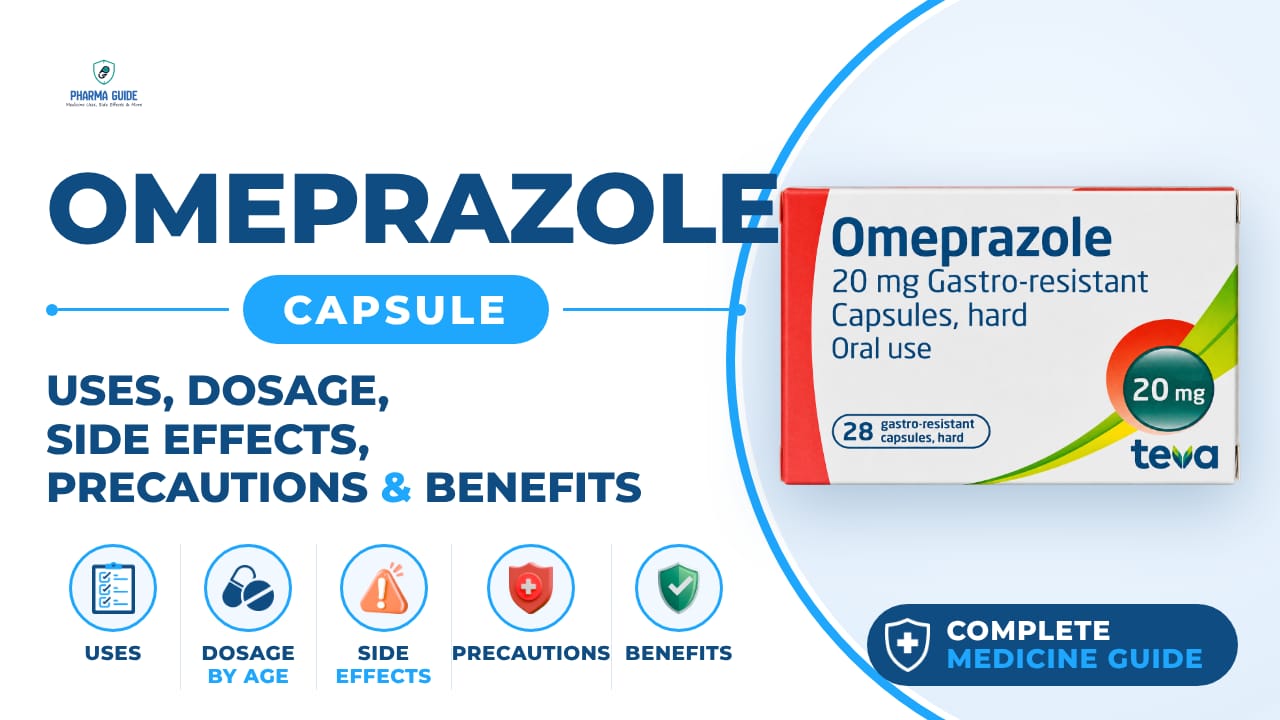
Omeprazole Capsule: Uses, Dosage, Side Effects, Precautions and Alternates
| Generic name | omeprazole |
|---|---|
| Drug class | Proton pump inhibitor (PPI) |
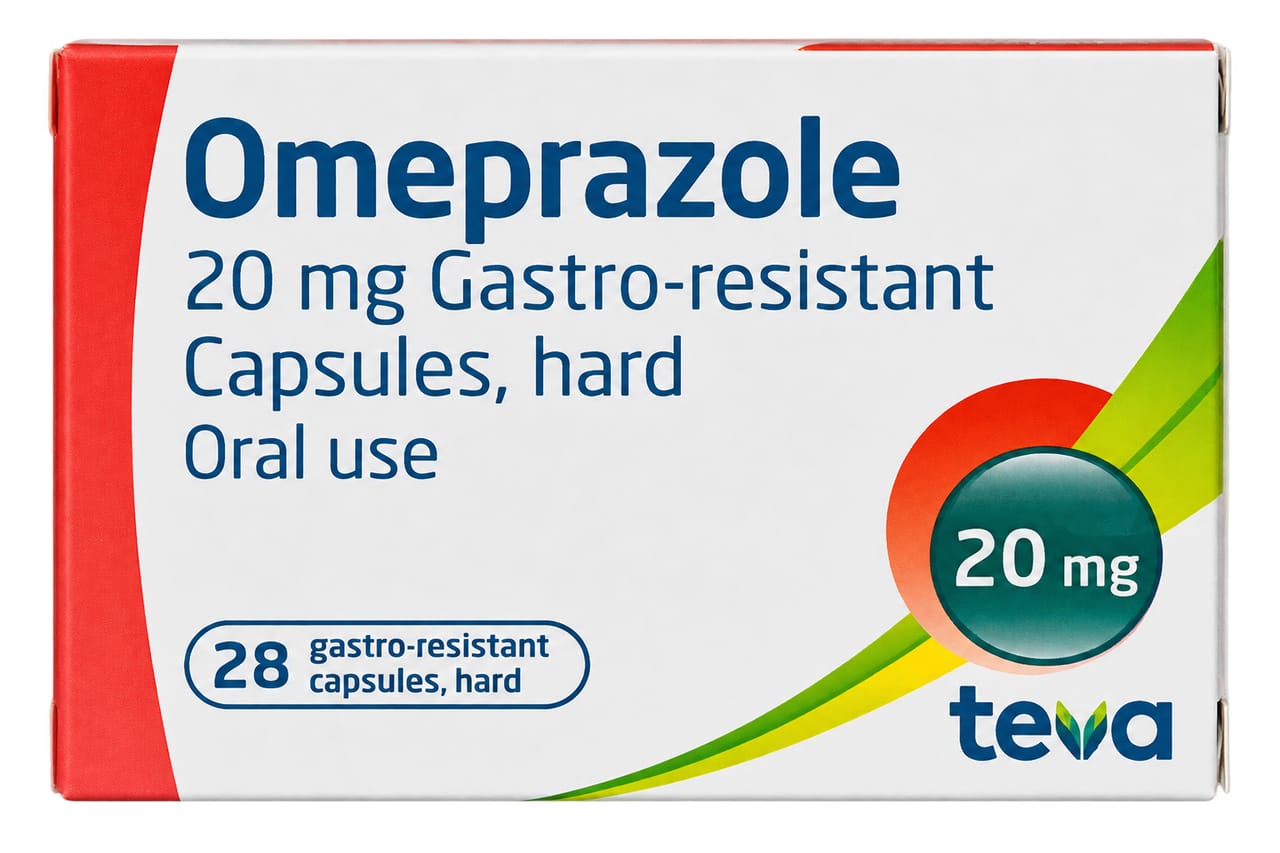
| Forms | Delayed-release oral capsule (10 mg, 20 mg, 40 mg), Delayed-release oral tablet (20 mg), Oral suspension |
Quick overview
Omeprazole is a proton pump inhibitor (PPI) that reduces the amount of acid the stomach makes. It is available by prescription and also over the counter for frequent heartburn, in both generic and brand-name forms. It is used to treat conditions such as GERD, ulcers, erosive esophagitis, and H. pylori infection, and most people notice the full benefit within 1 to 4 days of daily use.
What is Omeprazole Capsule
Omeprazole is a medicine that reduces the amount of acid your stomach makes. It comes as a prescription medicine and also as an over-the-counter product for frequent heartburn. It is available in generic form and under brand names.
Omeprazole Capsule uses
- Frequent heartburn occurring 2 or more days a week (over-the-counter use)
- Active duodenal ulcer
- Helicobacter pylori (H. pylori) infection, taken with antibiotics
- Active benign gastric (stomach) ulcer
- Gastroesophageal reflux disease (GERD) symptoms such as heartburn
- Erosive esophagitis caused by acid reflux
- Keeping erosive esophagitis healed after treatment
- Conditions where the stomach makes too much acid, including Zollinger-Ellison syndrome
- Stomach and duodenal ulcers associated with NSAID use
Benefits of Omeprazole Capsule
- Reduces stomach acid, helping irritated or damaged tissue heal
- Can relieve heartburn, acid reflux, and ulcer symptoms
- Most people feel the full benefit within 1 to 4 days of daily use
How Omeprazole Capsule works
Omeprazole blocks the acid pump in the cells of your stomach, so your stomach makes less acid. This gives irritated or damaged tissue in your stomach or esophagus a chance to heal.
Omeprazole Capsule dosage
Take exactly as directed on the label or as prescribed by your doctor. Over-the-counter omeprazole is taken once a day for 14 days in a row, and it may take 1 to 4 days to reach its full effect, so it is not meant for immediate relief of symptoms. Do not take the over-the-counter product for longer than 14 days, and wait at least 4 months before starting another 14-day course unless your doctor tells you to.
Swallow capsules whole; do not chew or crush them. If you cannot swallow a capsule whole, you can open it and sprinkle the contents into a spoonful of applesauce, then swallow right away without chewing; do not save the mixture for later. It is usually best to take omeprazole about an hour before a meal.
Some conditions are treated with a combination of omeprazole and antibiotics; take all medications as directed. Continue taking this medicine for the full length of time your doctor prescribes, even if your symptoms improve quickly. Do not give this medicine to a child without medical advice.
If you miss a dose, take it as soon as you can, but skip it if it is almost time for your next dose; do not take two doses at once.
| Age group | Dose |
|---|---|
| Under 1 year | Doctor's advice required |
| 1–11 years | 10–20 mg once daily |
| 12–17 years | 20–40 mg once daily |
| 18 years & older | 20–40 mg once daily |
| Adults | 20–40 mg once daily |
Available forms and strengths
- Delayed-release oral capsule (10 mg, 20 mg, 40 mg)
- Delayed-release oral tablet (20 mg)
- Oral suspension
Side effects of Omeprazole Capsule
Common
- Stuffy nose, sneezing, sore throat (especially in children)
- Fever (especially in children)
- Stomach pain, gas
- Nausea, vomiting, diarrhea
- Headache
- Constipation
Serious
- Signs of allergic reaction: hives, difficulty breathing, swelling of face, lips, tongue, or throat
- Severe stomach pain, watery or bloody diarrhea
- New or unusual pain in wrist, thigh, hip, or back
- Seizure (convulsions)
- Kidney problems: fever, rash, nausea, loss of appetite, joint pain, urinating less than usual, blood in urine, weight gain
- Low magnesium: dizziness, irregular heartbeats, feeling jittery, muscle cramps, muscle spasms, cough or choking feeling
- New or worsening lupus symptoms: joint pain and skin rash on cheeks or arms that worsens in sunlight
- Severe skin reactions: rash with blistering, peeling, or bleeding, fever, chills, body aches, shortness of breath, or enlarged lymph nodes
- Stomach growths called fundic gland polyps with long-term use
- Vitamin B-12 deficiency with use longer than 3 years
- Bone fractures of the hip, wrist, or spine with long-term or more-than-once-daily use
Warnings and precautions
- Diarrhea may be a sign of a new infection. Call your doctor if you have diarrhea that is watery or has blood in it.
- Omeprazole is not meant to give immediate relief of heartburn symptoms.
- Omeprazole may cause new or worsening symptoms of lupus. Tell your doctor if you have joint pain and a skin rash on your cheeks or arms that gets worse in sunlight.
- Taking this medicine long term or more than once a day may increase your chance of a broken bone.
- Do not take omeprazole if you also take the HIV medication rilpivirine.
- Using this drug for 3 months or longer can cause low magnesium levels in your body, which can be serious.
- Long-term use of this drug can cause fundic gland polyps, growths on the stomach lining.
- People who take multiple daily doses of this drug for a year or longer may have a higher risk of bone fractures in the hip, wrist, or spine.
- There is not enough information to know the risk of omeprazole use during pregnancy. Ask your doctor before using this medicine if you are pregnant, as it should only be used if the benefit outweighs the potential risk.
- Omeprazole passes into breast milk and may affect a breastfed baby. Talk to your doctor if you are breastfeeding; you may need to decide whether to stop breastfeeding or stop taking this medicine.
- Omeprazole can cause kidney problems. Tell your doctor if you are urinating less than usual or notice blood in your urine.
- If you have liver disease, ask your doctor before using this medicine, since your body may process it differently and your dose may need to be lower.
- This medicine is not likely to affect your ability to drive or use machines.
Storage
- Store at room temperature away from moisture and heat.
- Store the capsules at room temperature. Keep them between 59°F and 86°F (15°C and 30°C).
- Keep this medication away from light.
- Don't store this medication in moist or damp areas, such as bathrooms.
When to see a doctor
- Get emergency medical help if you have signs of an allergic reaction such as hives, difficulty breathing, or swelling of your face, lips, tongue, or throat.
- Get emergency help if you have chest pain that spreads to your jaw or shoulder along with sweating or light-headedness, as this can mimic a heart attack.
- Stop using this medicine and call your doctor right away if you have severe stomach pain or watery or bloody diarrhea.
- Stop using this medicine and call your doctor if you have new or unusual pain in your wrist, thigh, hip, or back.
- Stop using this medicine and call your doctor if you have a seizure.
- Stop using this medicine and call your doctor if you have signs of kidney problems such as fever, rash, nausea, loss of appetite, joint pain, urinating less than usual, blood in urine, or weight gain.
- Stop using this medicine and call your doctor if you have signs of low magnesium such as dizziness, irregular heartbeat, jitteriness, muscle cramps or spasms, or a cough or choking feeling.
- Stop using this medicine and call your doctor if you have severe skin reactions such as rash with blistering, peeling, or bleeding, along with fever, chills, body aches, shortness of breath, or swollen lymph nodes.
- Call your doctor right away if you have watery diarrhea, stomach pain, and a fever that will not go away, as this could be a serious intestinal infection.
Alternatives
- Protonix (pantoprazole)
- Nexium
- Prilosec (omeprazole)
- Dexilant
- Aciphex
- Prevacid
- Dexlansoprazole
- Rabeprazole
- Lansoprazole
- Amoxicillin and clarithromycin (used with omeprazole as combination therapy for H. pylori infection)
Watch the video
FAQs
How long does Omeprazole Capsule take to work?
Most people notice the full benefit within 1 to 4 days of daily use, so it is not meant for immediate relief of symptoms.
How long can I take over-the-counter Omeprazole?
Over-the-counter omeprazole is taken once a day for 14 days in a row. Do not take it for longer than 14 days, and wait at least 4 months before starting another 14-day course unless your doctor tells you to.
Can I open the Omeprazole capsule if I can't swallow it whole?
Yes, if you cannot swallow a capsule whole, you can open it and sprinkle the contents into a spoonful of applesauce, then swallow right away without chewing; do not save the mixture for later.
What are the serious side effects of Omeprazole Capsule?
Serious side effects include allergic reactions, severe stomach pain or watery/bloody diarrhea, new or unusual pain in the wrist, thigh, hip, or back, seizures, kidney problems, low magnesium, lupus symptoms, severe skin reactions, fundic gland polyps, vitamin B-12 deficiency, and bone fractures with long-term use.
What medicine should not be taken with Omeprazole?
You should not take omeprazole if you also take the HIV medication rilpivirine.
General information, not medical advice
Your prescriber and the leaflet in your pack know your situation. This page does not.
- Follow your prescriber and the leaflet
- Don't start, stop, or change a dose on your own
- Doses and warnings differ by country and product
Sources
- https://www.drugs.com/omeprazole.html
- https://www.medicalnewstoday.com/articles/omeprazole-oral-capsule#about
- https://www.ncbi.nlm.nih.gov/books/NBK539786/
- Omeprazole Product Monograph, Sivem Pharmaceuticals ULC
- New Zealand Data Sheet, OMEPRAZOLE ACTAVIS
Video
Related medicines

Dexlansoprazole Capsule: Uses, Dosage, Side Effects, Precautions and Alternates
Proton pump inhibitor (PPI)
Dexlansoprazole Capsule is a PPI that reduces stomach acid to treat heartburn, GERD, and erosive esophagitis. Learn dosage, side effects, and warnings.
Ppi Rabium Tablet: Uses, Dosage, Side Effects, Precautions and Alternates
Proton pump inhibitor (PPI)
Ppi Rabium Tablet (rabeprazole) reduces stomach acid to treat GERD, ulcers, H. pylori infections, and heartburn. Learn uses, dosage, and side effects.