
Safety
General information, not medical advice
Your prescriber and the leaflet in your pack know your situation. This page does not.
- Follow your prescriber and the leaflet
- Don't start, stop, or change a dose on your own
- Doses and warnings differ by country and product
Ondansetron Injection: Uses, Dosage, Side Effects, Precautions and Alternates
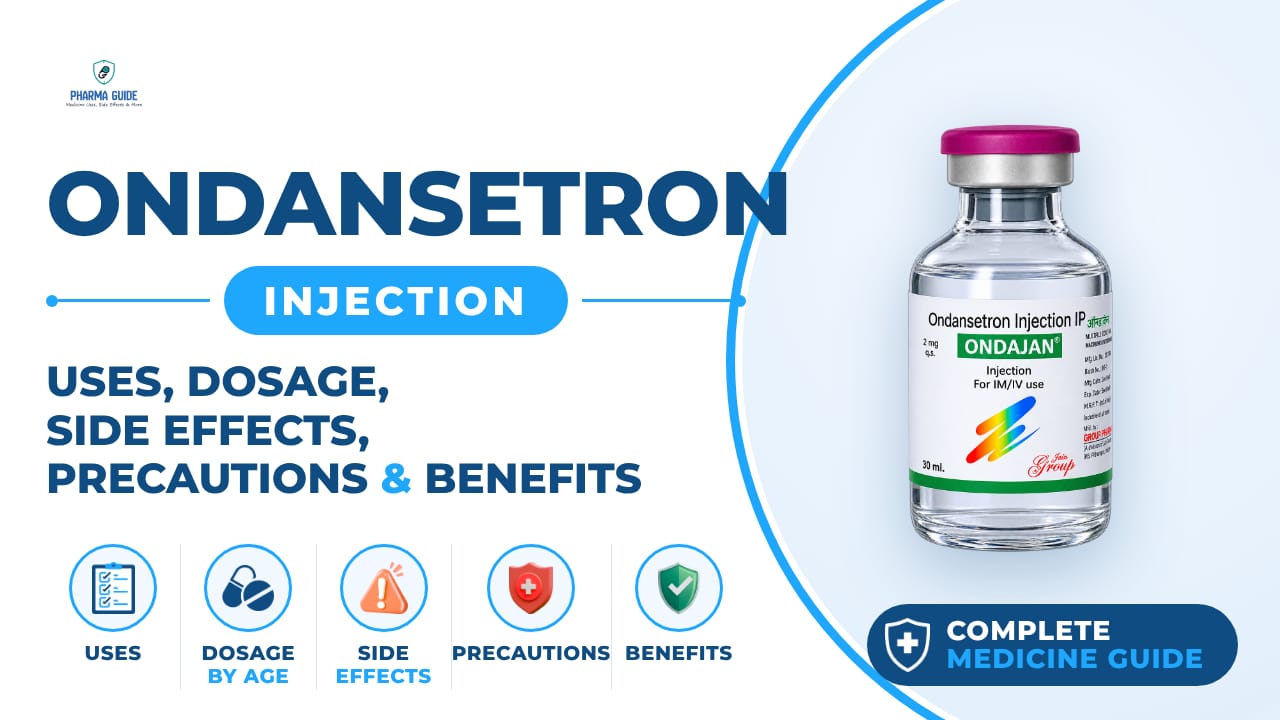
| Generic name | Ondansetron (as ondansetron hydrochloride dihydrate) |
|---|---|
| Drug class | Antiemetic, 5-HT3 receptor antagonist |
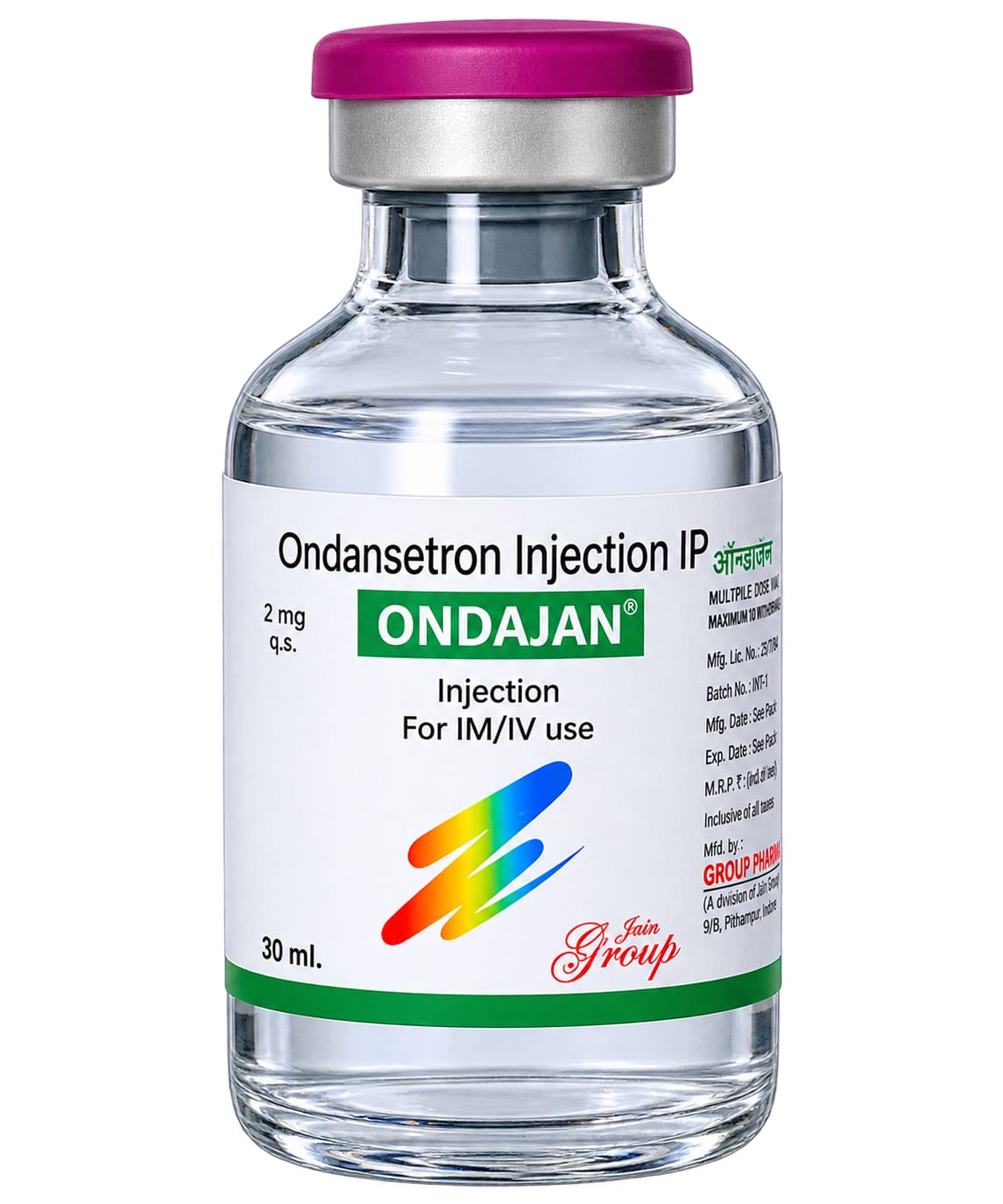
| Forms | Injection (solution for intravenous or intramuscular use), Single dose vial, Multiple dose vial, Ampoules |
Quick overview
Ondansetron Injection contains ondansetron (as ondansetron hydrochloride dihydrate), an antiemetic that works as a 5-HT3 receptor antagonist. It is given to prevent and treat nausea and vomiting caused by chemotherapy, radiation, or surgery. The injection is administered by a healthcare professional in a hospital or clinic setting.
What is Ondansetron Injection
Ondansetron prevents nausea and vomiting caused by chemotherapy, radiation, or surgery. It belongs to a class of medications called antiemetics.
Ondansetron Injection uses
- Prevention of nausea and vomiting from cancer chemotherapy, including high-dose cisplatin
- Prevention of nausea and vomiting from radiation
- Prevention and treatment of postoperative nausea and vomiting
Benefits of Ondansetron Injection
- Prevents and treats nausea and vomiting.
- Helps control chemotherapy-induced nausea and vomiting.
- Helps prevent nausea and vomiting after surgery.
- May help control radiotherapy-related nausea and vomiting when clinically appropriate.
- Injection provides an option when oral medicine cannot be taken.
How Ondansetron Injection works
Chemotherapy and radiation can cause the body to release a natural substance called serotonin, which can make you feel sick and vomit. Ondansetron is thought to block the effects of serotonin, which helps reduce nausea and vomiting.
Ondansetron Injection dosage
This medication is injected into a vein by your care team in a hospital or clinic setting. Special care may be needed when this medication is used in children; talk to your care team. Ondansetron Injection will be prepared and administered by a healthcare professional or under their supervision. Your healthcare professional will determine your dose and treatment length based on your medical condition, age, current health, and other medications you take. Do not share this medicine with others; it is only for you.
| Age group | Dose |
|---|---|
| 1 month–11 years | 0.1 mg/kg once for postoperative nausea/vomiting; max 4 mg |
| 12–17 years | Usually 4 mg IV once for postoperative nausea/vomiting |
| 18–64 years | Usually 4 mg IV once for postoperative nausea/vomiting |
| 65+ years | Usually adult dosing; consider QT-risk and other medicines |
Available forms and strengths
- Injection (solution for intravenous or intramuscular use)
- Single dose vial
- Multiple dose vial
- Ampoules
Side effects of Ondansetron Injection
Common
- Constipation
- Diarrhea
- General discomfort and fatigue
- Headache
- A feeling of flushing or warmth
- Pain, redness, and burning at the injection site
- Hiccups
Serious
- Allergic reactions—skin rash, itching, hives, swelling of the face, lips, tongue, or throat
- Bowel blockage—stomach cramping, unable to have a bowel movement or pass gas, loss of appetite, vomiting
- Chest pain (angina)—pain, pressure, or tightness in the chest, neck, back, or arms
- Heart rhythm changes—fast or irregular heartbeat, dizziness, feeling faint or lightheaded, chest pain, trouble breathing
- Serotonin syndrome—irritability, confusion, fast or irregular heartbeat, muscle stiffness, twitching muscles, sweating, high fever, seizure, chills, vomiting, diarrhea
- Myocardial ischemia—sudden chest pain, pressure or discomfort, feeling faint, feeling anxious, shortness of breath, irregular heartbeat, nausea, sudden heavy sweating
- Liver problems—yellowing of skin and eyes, unusual dark urine and pale stools, pain or swelling in the right upper abdomen, unusual tiredness
- Low potassium levels—muscle weakness, cramping, constipation, skipped heartbeats, fatigue, tingling or numbness
- Seizures
- Temporary blindness
- Severe skin reactions such as Stevens-Johnson Syndrome and Toxic Epidermal Necrolysis
- Movement disorders—loss of coordination or balance, muscle spasms, tremor, abnormal muscle stiffness
Warnings and precautions
- Ondansetron can cause QT prolongation, a heart rhythm problem that can lead to a dangerous condition called Torsade de Pointes. People with congenital long QT syndrome should avoid this medicine.
- This medicine can cause serotonin syndrome, a potentially life-threatening reaction, especially when combined with other medicines that affect serotonin levels.
- Ondansetron may hide signs of a worsening bowel blockage or stomach swelling in patients after abdominal surgery or receiving chemotherapy.
- Ondansetron can cause coronary artery spasm and reduced blood flow to the heart, which may lead to a heart attack, sometimes shortly after the injection.
- Do not use this medicine together with apomorphine, as this combination can cause a serious drop in blood pressure and loss of consciousness.
- Severe allergic reactions, including anaphylaxis and bronchospasm, can occur, especially in people who have had similar reactions to related medicines.
- Ondansetron use during pregnancy is not recommended. Its use in early pregnancy has been linked to a small increase in cleft/orofacial malformations in some studies. Talk to your doctor if you are pregnant or planning to become pregnant.
- It is not known if ondansetron passes into human breast milk, but breastfeeding is not recommended during treatment with this medicine.
- No dose changes are generally needed for kidney problems, though drug clearance is somewhat reduced in severe kidney impairment.
- People with moderate or severe liver problems need a reduced dose; the total daily dose should not go over a certain limit given as a single dose.
- In testing, ondansetron did not impair performance or cause sedation, so it is not expected to affect your ability to drive or operate machinery.
Storage
- This medication is given in a hospital or clinic and will not be stored at home.
- Ondansetron Injection should be stored between 15ºC - 30°C, protected from light and freezing.
- Ondansetron Injection is intended for single use. Discard unused portion.
- Keep your medicine in a safe place out of reach and sight of children.
When to see a doctor
- Get immediate medical help if you notice signs of a severe allergic reaction, such as swelling of the mouth or throat, difficulty breathing, rash, hives, or a fast heartbeat.
- Seek immediate medical help for symptoms of a possible heart attack, such as sudden chest pain, pressure or discomfort, feeling faint, feeling anxious, shortness of breath, irregular heartbeat, nausea, or sudden heavy sweating.
- Get medical help right away if you notice symptoms of serotonin syndrome, such as agitation, flushing, muscle twitching, eye movements, heavy sweating, high fever, or rigid muscles.
- Seek medical care if you have symptoms of a heart rhythm problem such as irregular heartbeat, palpitations, dizziness, fainting, loss of consciousness, or seizures.
- Contact a healthcare professional or emergency services right away if you think too much of this medicine has been given, even if there are no symptoms.
- Seek medical care for signs of severe skin reactions such as redness, blistering or peeling of the skin, fever, chills, or swollen glands.
Alternatives
- Aprepitant / Fosaprepitant
- Metoclopramide
- Droperidol
- Dolasetron
- Granisetron
Watch the video
FAQs
What is Ondansetron Injection used for?
It is used to prevent and treat nausea and vomiting caused by cancer chemotherapy (including high-dose cisplatin), radiation, and surgery (postoperative nausea and vomiting).
How does Ondansetron Injection work?
Chemotherapy and radiation can cause the body to release serotonin, which triggers nausea and vomiting. Ondansetron blocks the effects of serotonin, helping reduce these symptoms.
Who administers Ondansetron Injection?
This medication is injected into a vein by your care team in a hospital or clinic setting; it is prepared and administered by a healthcare professional or under their supervision.
What are the serious side effects of Ondansetron Injection?
Serious side effects include allergic reactions, bowel blockage, chest pain, heart rhythm changes, serotonin syndrome, myocardial ischemia, liver problems, low potassium levels, seizures, temporary blindness, severe skin reactions, and movement disorders.
Can Ondansetron Injection be used during pregnancy?
Its use during pregnancy is not recommended, as early pregnancy use has been linked to a small increase in cleft/orofacial malformations in some studies. Talk to your doctor if you are pregnant or planning to become pregnant.
General information, not medical advice
Your prescriber and the leaflet in your pack know your situation. This page does not.
- Follow your prescriber and the leaflet
- Don't start, stop, or change a dose on your own
- Doses and warnings differ by country and product
Sources
Video
Related medicines

Injectafer Injection: Uses, Dosage, Side Effects, Precautions and Alternates
Iron products
Injectafer (ferric carboxymaltose) treats iron deficiency anemia and heart failure-related iron deficiency via IV. Learn uses, dosage, side effects, and

Gliclazide Tablet: Uses, Dosage, Side Effects, Precautions and Alternates
Sulfonylurea (hypoglycemic/antidiabetic agent)
Gliclazide Tablet is a sulfonylurea for type 2 diabetes that boosts insulin release. Learn about dosage, side effects, warnings, and precautions.