
Safety
General information, not medical advice
Your prescriber and the leaflet in your pack know your situation. This page does not.
- Follow your prescriber and the leaflet
- Don't start, stop, or change a dose on your own
- Doses and warnings differ by country and product
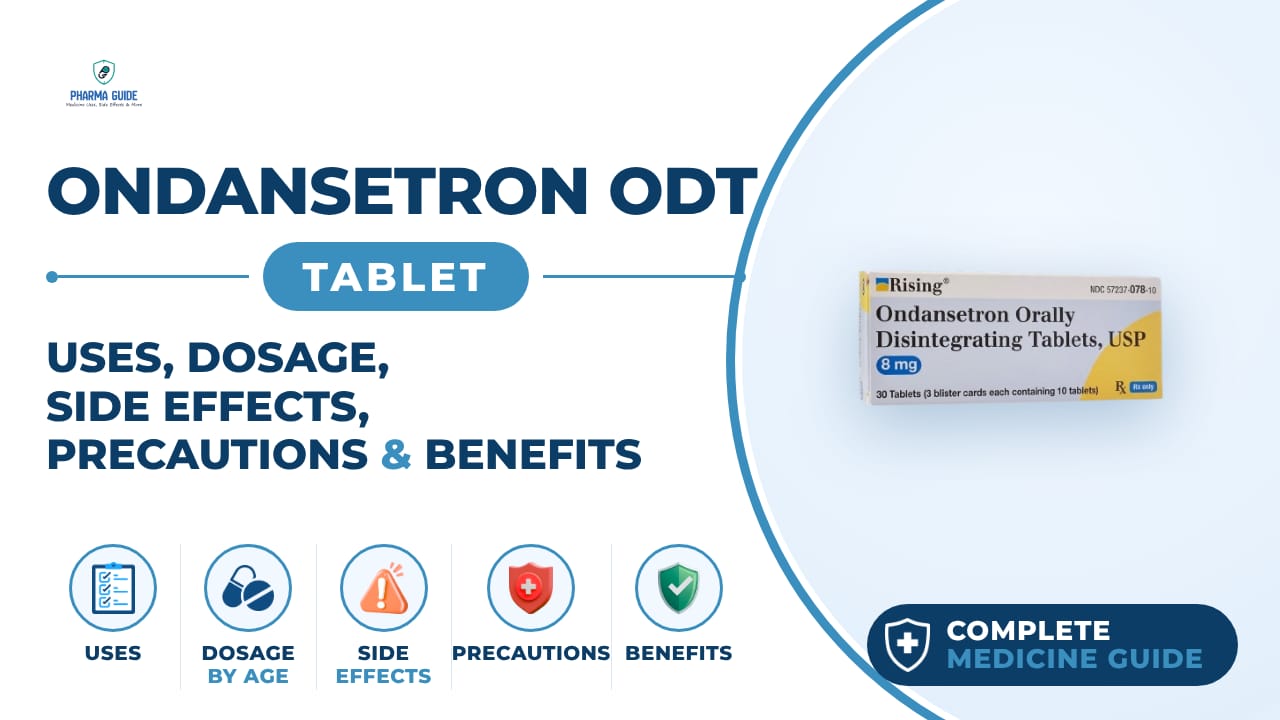
Ondansetron ODT Tablet: Uses, Dosage, Side Effects, Precautions and Alternates
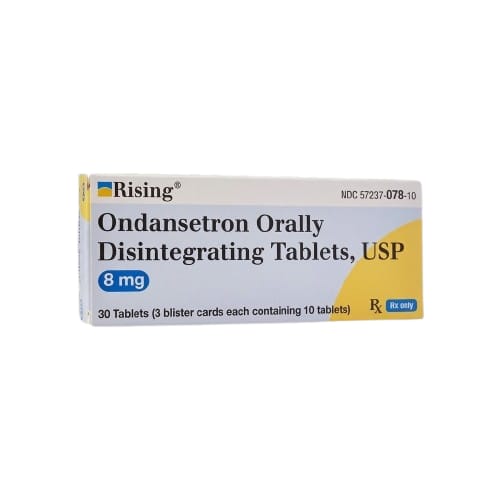
| Generic name | ondansetron |
|---|---|
| Drug class | 5HT3 receptor antagonist |
| Forms | Regular tablets, Oral solution (liquid), Oral soluble film (strip), Injection |
Quick overview
Ondansetron ODT Tablet (generic name: ondansetron) is a 5HT3 receptor antagonist that blocks chemicals in the body known to trigger nausea and vomiting. It is used to prevent nausea and vomiting caused by surgery, cancer chemotherapy, or radiation treatment. It comes as a tablet that dissolves on the tongue without needing water.
What is Ondansetron ODT Tablet
Ondansetron is a medicine that blocks the actions of chemicals in the body that can trigger nausea and vomiting. It is used to prevent nausea and vomiting caused by surgery, cancer chemotherapy, or radiation treatment.
Ondansetron ODT Tablet uses
- Prevention of nausea and vomiting caused by cancer chemotherapy
- Prevention of nausea and vomiting caused by radiation therapy
- Prevention and treatment of nausea and vomiting after surgery
- Nausea and vomiting caused by gastroenteritis (in some cases)
Benefits of Ondansetron ODT Tablet
- Helps stop the signals in the body that cause nausea and vomiting
- Can be taken as a tablet that dissolves on the tongue without needing water
- May be used before treatments known to cause nausea, such as chemotherapy, radiation, or surgery
How Ondansetron ODT Tablet works
Treatments like chemotherapy and radiotherapy cause the body to release a natural substance called serotonin, which can make you feel sick and vomit. Ondansetron is thought to block the effects of serotonin, which helps reduce nausea and vomiting.
Ondansetron ODT Tablet dosage
This medicine can be taken with or without food. The first dose is usually taken before the start of surgery, chemotherapy, or radiation treatment. Keep the tablet in its blister pack until you are ready to take it; do not push it through the foil or you may damage it. Use dry hands to remove the tablet and place it immediately on top of your tongue. Do not swallow the tablet whole; let it dissolve on your tongue without chewing. Swallow several times as the tablet dissolves; apply gentle pressure if needed.
If you vomit within one hour of taking a dose, take the same amount of medicine again; if vomiting continues, contact your healthcare professional. If you miss a dose and don't feel sick, take the next dose when it is due; if you miss a dose and feel sick or vomit, take a dose as soon as possible. Do not take extra medicine to make up for a missed dose.
| Age group | Dose |
|---|---|
| Under 4 years | Not recommended |
| 4–11 years | 4 mg, 3 times/day |
| 12–18 years | 8 mg, 2 times/day |
| 18–60 years | 8 mg, 2 times/day |
| 60+ years | 8 mg, 2 times/day |
Available forms and strengths
- Regular tablets
- Oral solution (liquid)
- Oral soluble film (strip)
- Injection
Side effects of Ondansetron ODT Tablet
Common
- Headache
- Constipation or diarrhea
- Drowsiness or tiredness
- Feeling of flushing or warmth
- Hiccups
- Dizziness
- Muscle stiffness
- Chills
Serious
- Blurred vision or temporary vision loss
- Slow, fast, or irregular heartbeat
- Trouble breathing
- Anxiety, agitation, or shivering
- Feeling like you might pass out or fainting
- Urinating less than usual or not at all
- Severe constipation, stomach pain, or bloating
- Sudden chest pain or chest tightness, severe dizziness
- Jaundice (yellowing of the skin or eyes)
- Signs of high serotonin levels: agitation, hallucinations, fever, fast heart rate, overactive reflexes, nausea, vomiting, diarrhea, loss of coordination, fainting
- Signs of a severe allergic reaction: rash, hives, swelling of the face, lips, tongue, or throat, difficulty breathing
Warnings and precautions
- Do not use this medicine if you are also using apomorphine, as the combination can cause a severe drop in blood pressure and loss of consciousness.
- This medicine can affect the heart's electrical activity (QT prolongation), which in rare cases can lead to dangerous changes in heart rhythm, dizziness, fainting, or death. People with heart disease, women, and people over 65 are at higher risk.
- This medicine can reduce blood flow to the heart, which may lead to a heart attack, sometimes shortly after taking a dose.
- Taking this medicine with certain other drugs that affect serotonin, such as some antidepressants or migraine medicines, can cause a rare but serious condition called serotonin syndrome.
- This medicine contains aspartame, so people with phenylketonuria (PKU) should be cautious, as the orally disintegrating tablets form phenylalanine.
- This medicine is not effective for preventing nausea and vomiting caused by motion sickness.
- Ondansetron is not recommended during pregnancy. Its use in early pregnancy has been linked to a small increase in cleft lip or palate in babies. Tell your doctor if you are pregnant or planning to become pregnant.
- It is not known for certain if ondansetron passes into human breast milk, but breastfeeding is not recommended while taking this medicine, as it may affect your baby.
- No dose changes are usually needed for people with kidney problems, but tell your doctor about your medical history.
- People with moderate or severe liver problems need a lower total daily dose, because the body clears the medicine more slowly. Tell your doctor if you have liver disease.
- This medicine may affect your thinking or reactions, so be careful if you drive or do anything that requires you to be alert.
Storage
- Store at room temperature between 15 and 30°C
- Keep out of the reach and sight of children
- Do not keep leftover medicine unless your healthcare professional tells you to
When to see a doctor
- Get emergency help right away if you have signs of a severe allergic reaction, such as rash, hives, fever, chills, difficulty breathing, or swelling of your face, lips, tongue, or throat.
- Call your doctor right away if you have severe constipation, stomach pain, or bloating.
- Seek immediate medical help for sudden chest pain or tightness, severe dizziness, fainting, or a fast or pounding heartbeat.
- Contact your doctor if you notice yellowing of your skin or eyes (jaundice), which can be a sign of liver problems.
- Get medical help if you have blurred vision or sudden, temporary loss of vision.
- Seek help right away if you have signs of high serotonin levels, such as agitation, hallucinations, fever, a fast heart rate, overactive reflexes, nausea, vomiting, diarrhea, or loss of coordination.
- If you suspect an overdose, contact a healthcare professional, hospital emergency department, or your regional poison control center immediately, even if there are no symptoms.
Alternatives
- Metoclopramide
- Dolasetron
- Granisetron
Watch the video
FAQs
What is Ondansetron ODT Tablet used for?
It is used to prevent and treat nausea and vomiting caused by cancer chemotherapy, radiation therapy, and surgery, and in some cases nausea and vomiting caused by gastroenteritis.
How does Ondansetron ODT Tablet work?
Treatments like chemotherapy and radiotherapy cause the body to release serotonin, which can trigger nausea and vomiting. Ondansetron blocks the effects of serotonin, helping reduce these symptoms.
How do you take Ondansetron ODT Tablet?
The tablet should be kept in its blister pack until ready to use, then placed on the tongue with dry hands and allowed to dissolve without chewing or swallowing whole, swallowing several times as it dissolves. It can be taken with or without food, and the first dose is usually taken before surgery, chemotherapy, or radiation.
What should I do if I vomit after taking Ondansetron ODT Tablet?
If you vomit within one hour of taking a dose, take the same amount of medicine again. If vomiting continues, contact your healthcare professional.
Is Ondansetron ODT Tablet safe during pregnancy?
Ondansetron is not recommended during pregnancy, as its use in early pregnancy has been linked to a small increase in cleft lip or palate in babies. You should tell your doctor if you are pregnant or planning to become pregnant.
General information, not medical advice
Your prescriber and the leaflet in your pack know your situation. This page does not.
- Follow your prescriber and the leaflet
- Don't start, stop, or change a dose on your own
- Doses and warnings differ by country and product
Sources
Video
Related medicines

Injectafer Injection: Uses, Dosage, Side Effects, Precautions and Alternates
Iron products
Injectafer (ferric carboxymaltose) treats iron deficiency anemia and heart failure-related iron deficiency via IV. Learn uses, dosage, side effects, and

Gliclazide Tablet: Uses, Dosage, Side Effects, Precautions and Alternates
Sulfonylurea (hypoglycemic/antidiabetic agent)
Gliclazide Tablet is a sulfonylurea for type 2 diabetes that boosts insulin release. Learn about dosage, side effects, warnings, and precautions.