
Safety
General information, not medical advice
Your prescriber and the leaflet in your pack know your situation. This page does not.
- Follow your prescriber and the leaflet
- Don't start, stop, or change a dose on your own
- Doses and warnings differ by country and product
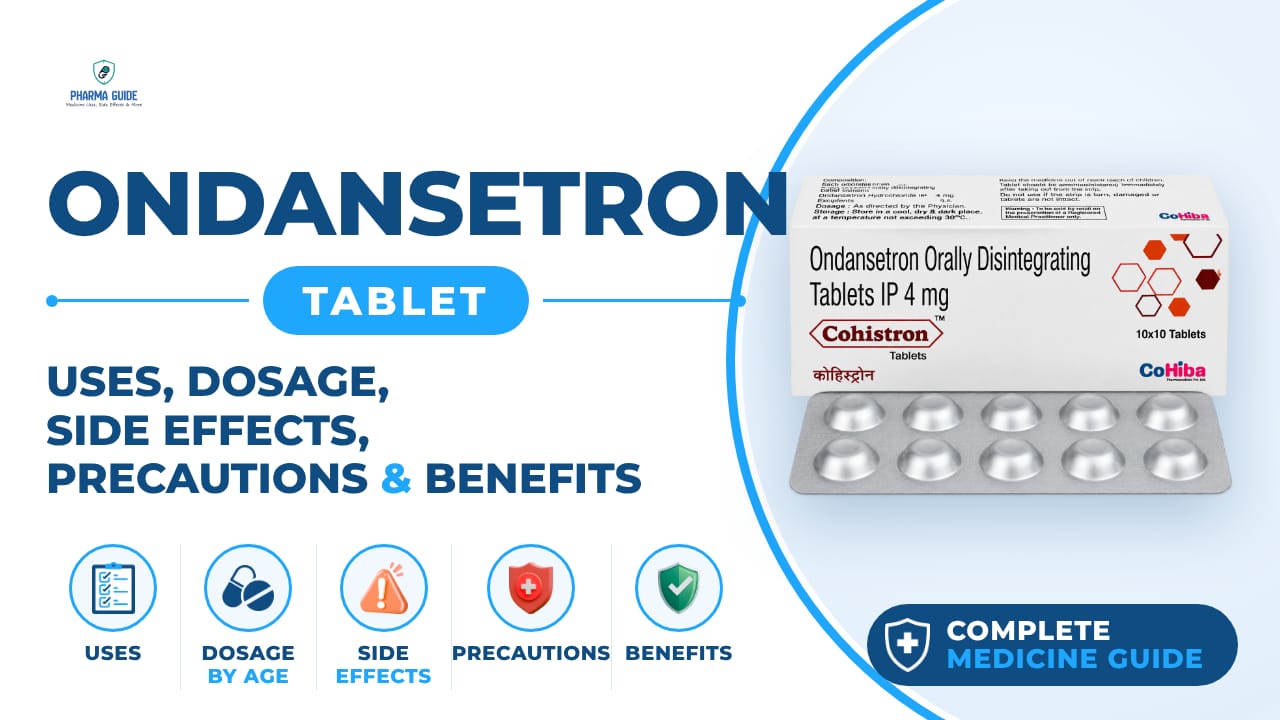
Ondansetron Tablet: Uses, Dosage, Side Effects, Precautions and Alternates
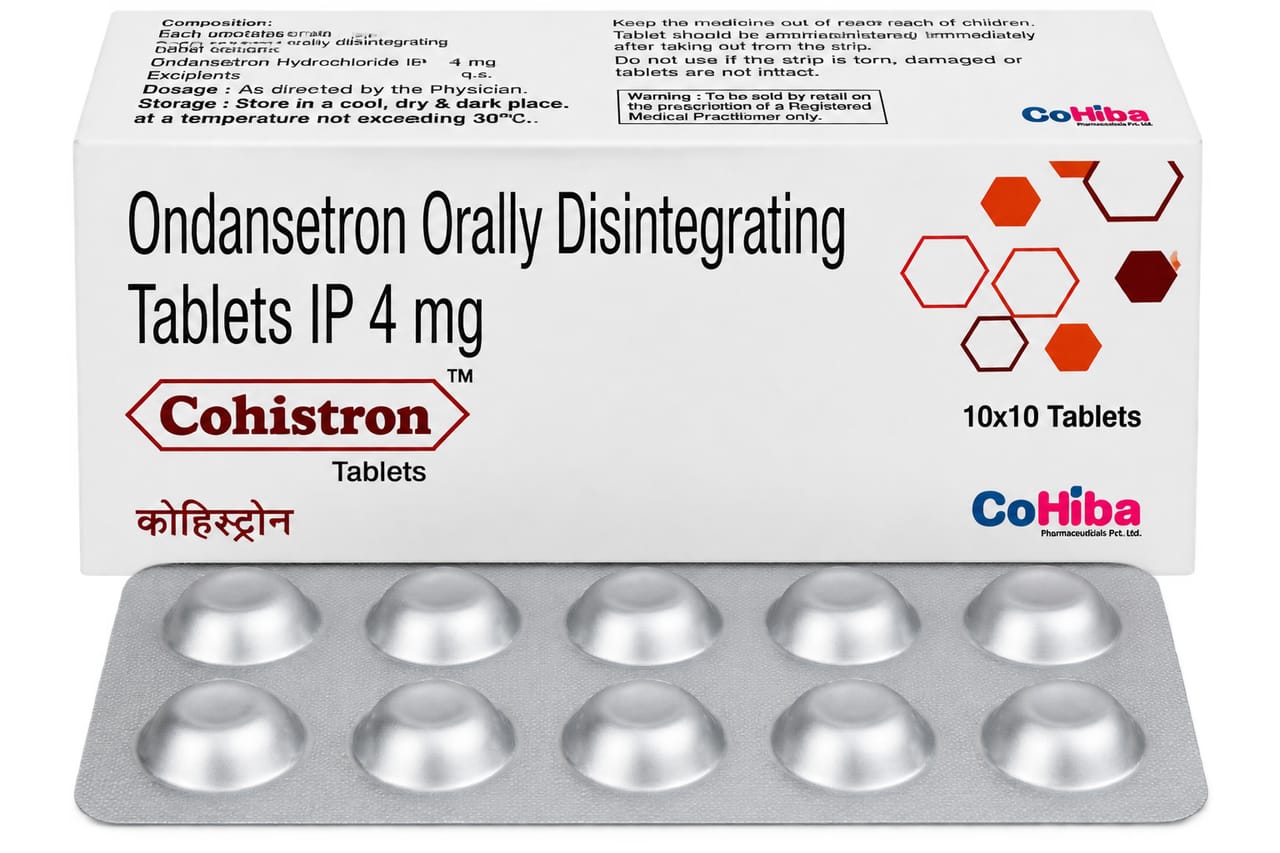
| Generic name | Ondansetron (as ondansetron hydrochloride dihydrate) |
|---|---|
| Drug class | 5-HT3 receptor antagonist (antiemetic) |
| Forms | Tablets (4 mg and 8 mg), Orally disintegrating tablets, Oral solution (liquid), Oral soluble film (strip), Injection |
Quick overview
Ondansetron Tablet is an antiemetic medicine belonging to the serotonin 5-HT3 receptor antagonist class. It is used to prevent and treat nausea and vomiting caused by cancer chemotherapy, radiotherapy, and surgery. Tablets are swallowed whole with a liquid, and the dose depends on age, condition, and other factors. It should be used exactly as directed by a healthcare professional, with attention to possible side effects and warnings, including effects on the heart.
What is Ondansetron Tablet
Ondansetron is an antiemetic medicine used to prevent and treat nausea and vomiting. It belongs to a group of medicines called serotonin 5-HT3 receptor antagonists.
Ondansetron Tablet uses
- Prevent nausea and vomiting caused by cancer chemotherapy
- Prevent nausea and vomiting caused by radiotherapy
- Prevent and treat nausea and vomiting after surgery
Benefits of Ondansetron Tablet
- Reduces the chance of feeling sick or vomiting during and after chemotherapy, radiotherapy, or surgery
- Can be taken by mouth as tablets that are swallowed whole with a liquid
How Ondansetron Tablet works
Cancer treatments like chemotherapy and radiotherapy cause the body to release a natural substance called serotonin, which can trigger nausea and vomiting. Ondansetron blocks the action of serotonin, which helps reduce nausea and vomiting, although its exact way of working is not fully known.
Ondansetron Tablet dosage
Tablets should be swallowed whole with a liquid, not chewed or crushed. The first dose is usually taken before chemotherapy, radiotherapy, or surgery begins, as directed by your healthcare professional. Do not take more doses or take them more often than prescribed. If you vomit within one hour of taking your dose, take the same amount again; if vomiting continues, contact your healthcare professional. Take the medicine exactly as your healthcare professional has told you; the dose and length of treatment depend on your condition, age, health, and other medicines you take.
| Age group | Dose |
|---|---|
| Under 2 years | Doctor's advice required |
| 2–11 years | 4 mg per dose for certain indications |
| 12 years & older | 4–8 mg per dose, depending on indication |
| Adults | 4–8 mg per dose, depending on indication |
Available forms and strengths
- Tablets (4 mg and 8 mg)
- Orally disintegrating tablets
- Oral solution (liquid)
- Oral soluble film (strip)
- Injection
Side effects of Ondansetron Tablet
Common
- Headache
- Constipation
- Diarrhea
- Fatigue or tiredness
- Drowsiness
- Chills
- Dry mouth
- Feeling of flushing or warmth
- Hiccups
Serious
- Signs of severe allergic reaction: rash, hives, swelling of face, lips, tongue or throat, difficulty breathing, wheezing, fast heart rate
- Heart problems: chest pain or discomfort, high blood pressure, irregular heart rhythm, shortness of breath, fainting
- Seizures, loss of consciousness with uncontrollable shaking, visual disturbances such as blurred vision
- Movement disorders: loss of coordination or balance, muscle spasms, tremor, abnormal muscle stiffness, upward rolling of the eyes
- Eye problems such as blurred vision or temporary blindness
- Serotonin syndrome: agitation, hallucinations, fever, fast heart rate, overactive reflexes, nausea, vomiting, diarrhea, loss of coordination, muscle twitching, heavy sweating, rigid muscles
- Liver problems: yellowing of skin or eyes (jaundice), dark urine, pale stools, pain or swelling in the right upper abdomen, unusual tiredness, nausea, or vomiting
- Low potassium levels: muscle weakness, spasms, cramping, constipation, skipped heartbeats or palpitations, fatigue, tingling or numbness
- QT interval prolongation: irregular heartbeat, palpitations, dizziness, fainting, loss of consciousness, seizures
- Low blood pressure: dizziness, fainting, light-headedness, blurred vision, nausea, vomiting
- Myocardial ischemia (reduced blood flow to the heart): sudden chest pain, pressure or discomfort, feeling faint, anxious, shortness of breath, irregular heartbeat, nausea, sudden heavy sweating
- Severe skin reactions (Stevens-Johnson Syndrome and Toxic Epidermal Necrolysis): redness, blistering or peeling of skin or inside the lips, eyes, mouth, nose, or genitals, fever, chills, headache, cough, body aches, swollen glands
Warnings and precautions
- Ondansetron can affect the heart's electrical activity (QT interval prolongation), which in rare cases can cause dangerous heart rhythm changes leading to dizziness, fainting, or death. Risk is higher in people with heart disease, women, people over 65, and those taking certain other medicines.
- Ondansetron can cause reduced blood flow to the heart (myocardial ischemia), which may lead to a heart attack, sometimes shortly after taking the medicine.
- Taking ondansetron with certain antidepressants or migraine medicines can cause a rare but potentially life-threatening condition called serotonin syndrome.
- Do not use ondansetron together with apomorphine (used for Parkinson's disease), as this combination has caused very low blood pressure and loss of consciousness.
- Ondansetron can cause severe allergic reactions in some people, including swelling of the face and throat, rash, and hives.
- Ondansetron is not effective for preventing motion sickness-related nausea and vomiting.
- People who have had an allergic reaction to a similar medicine (like granisetron or palonosetron) may have a more severe reaction if given ondansetron, so switching between these medicines after a reaction is not recommended.
- Using ondansetron during pregnancy is not recommended because it has been linked to a small increase in cleft lip/palate type birth defects when used in early pregnancy.
- Talk to your healthcare professional about the risks before using this medicine if you are or could become pregnant.
- Breastfeeding while taking ondansetron is not recommended because the medicine could pass into breast milk and affect the baby.
- People with liver problems need special care with ondansetron because the body clears the medicine more slowly, so the dose may need to be limited.
- It is not known how ondansetron interacts with alcohol, so check with your doctor before drinking alcohol while taking this medicine.
- Ondansetron does not appear to affect alertness or cause sedation in psychomotor testing, but caution is still advised if you feel unwell.
Storage
- ONDANSETRON tablets should be stored at room temperature between 15ºC and 30ºC and protected from light.
- Keep your medicine in a safe place out of reach and sight of children. Your medicine may harm them.
When to see a doctor
- Get emergency medical help right away if you have signs of a severe allergic reaction, such as swelling of the face, lips, tongue or throat, difficulty breathing, rash, or hives.
- Seek immediate medical attention if you notice symptoms of a possible heart rhythm problem such as fast, slow, or irregular heartbeat, dizziness, fainting, or loss of consciousness.
- Tell your healthcare professional right away if you notice symptoms of myocardial ischemia such as sudden chest pain, pressure or discomfort, feeling faint, feeling anxious, shortness of breath, irregular heartbeat, nausea, or sudden heavy sweating.
- Call your doctor right away if you have signs of high serotonin levels in the body such as agitation, hallucinations, fever, fast heart rate, overactive reflexes, nausea, vomiting, diarrhea, or loss of coordination.
- Call your doctor at once if you have severe constipation, stomach pain or bloating, sudden chest pain or tightness, severe dizziness, fainting, fast or pounding heartbeats, jaundice, or vision changes.
- If you think you or someone you are caring for has taken too much ondansetron, contact a healthcare professional, hospital emergency department, or your local poison control center right away, even if there are no symptoms.
Alternatives
- Zofran
- Granisetron
- Palonosetron
- Dolasetron
Watch the video
FAQs
What is Ondansetron Tablet used for?
It is used to prevent nausea and vomiting caused by cancer chemotherapy, radiotherapy, and surgery, and to treat vomiting after surgery.
How should Ondansetron Tablet be taken?
Tablets should be swallowed whole with a liquid, not chewed or crushed. The first dose is usually taken before chemotherapy, radiotherapy, or surgery begins, exactly as directed by a healthcare professional.
What should I do if I vomit after taking Ondansetron Tablet?
If you vomit within one hour of taking your dose, take the same amount again; if vomiting continues, contact your healthcare professional.
What are the serious side effects of Ondansetron Tablet?
Serious side effects include heart rhythm problems (QT prolongation), reduced blood flow to the heart, severe allergic reactions, serotonin syndrome, liver problems, low potassium, low blood pressure, and severe skin reactions.
Is Ondansetron Tablet safe during pregnancy?
Using ondansetron during pregnancy is not recommended because it has been linked to a small increase in cleft lip/palate type birth defects when used in early pregnancy.
General information, not medical advice
Your prescriber and the leaflet in your pack know your situation. This page does not.
- Follow your prescriber and the leaflet
- Don't start, stop, or change a dose on your own
- Doses and warnings differ by country and product
Sources
Video
Related medicines

Injectafer Injection: Uses, Dosage, Side Effects, Precautions and Alternates
Iron products
Injectafer (ferric carboxymaltose) treats iron deficiency anemia and heart failure-related iron deficiency via IV. Learn uses, dosage, side effects, and

Gliclazide Tablet: Uses, Dosage, Side Effects, Precautions and Alternates
Sulfonylurea (hypoglycemic/antidiabetic agent)
Gliclazide Tablet is a sulfonylurea for type 2 diabetes that boosts insulin release. Learn about dosage, side effects, warnings, and precautions.