
Safety
General information, not medical advice
Your prescriber and the leaflet in your pack know your situation. This page does not.
- Follow your prescriber and the leaflet
- Don't start, stop, or change a dose on your own
- Doses and warnings differ by country and product
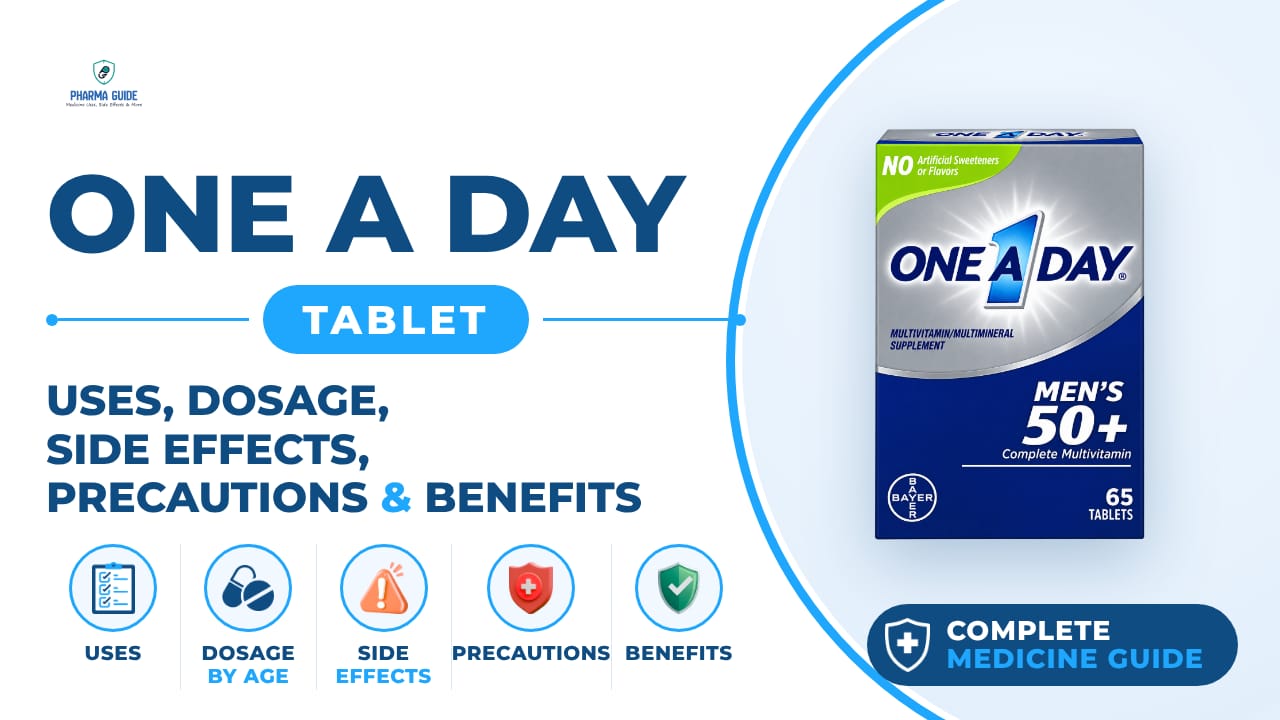
One A Day Tablet: Uses, Dosage, Side Effects, Precautions and Alternates
| Generic name | Multivitamin with minerals |
|---|---|
| Drug class | Multivitamin and mineral supplement |
| Forms | Tablet, Mini tablet, Gummy, Soft gel, Capsule, Liquid, Chewable tablet, Wafer |
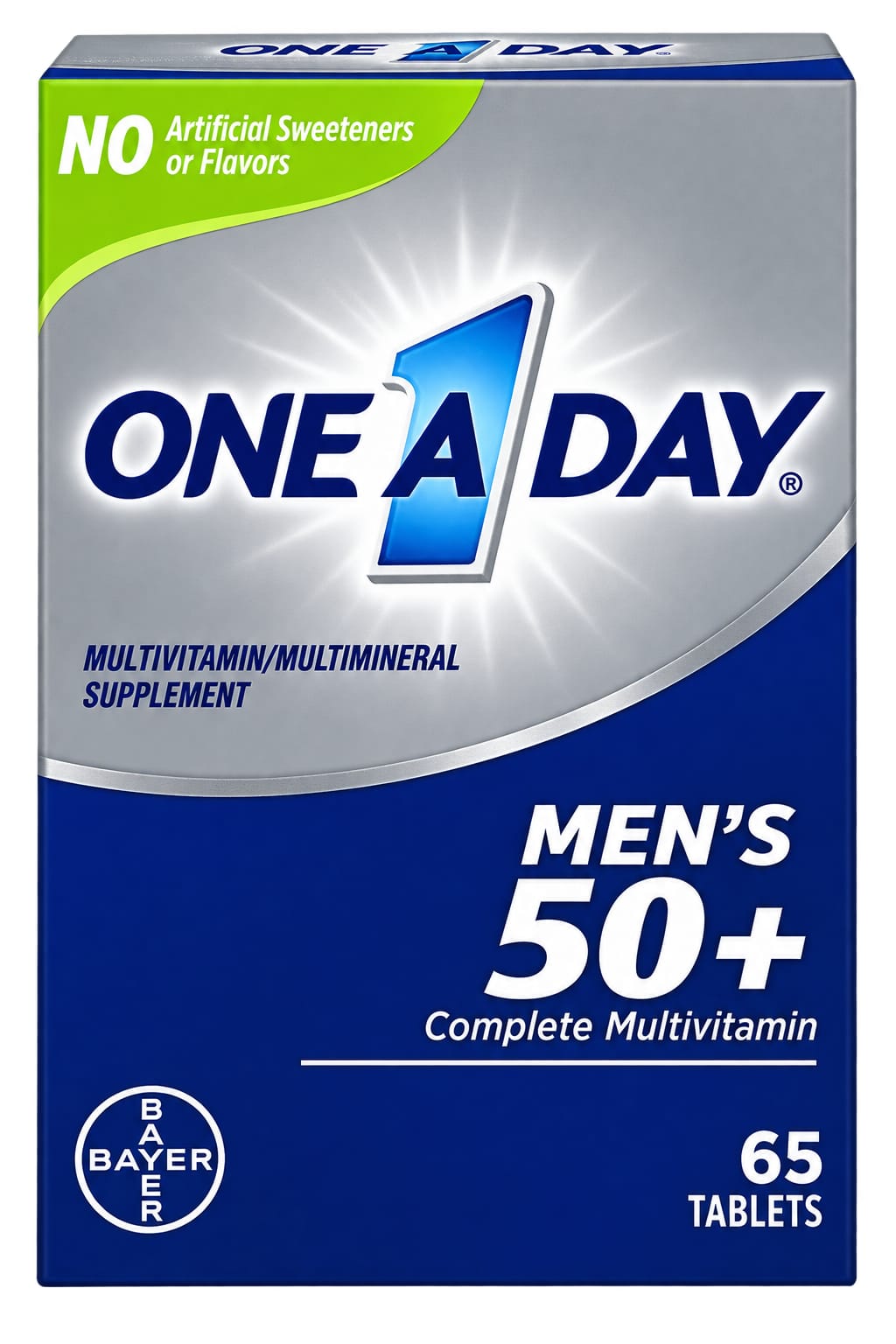
Quick overview
One A Day Tablet is a multivitamin and mineral supplement that comes in different formulas for adults and children, designed to support a healthy diet rather than replace it. It helps meet daily requirements of vitamins A, D, E, B6, and B12, and supports general nutritional wellbeing, specific life stages such as pregnancy or aging, and daily nutritional needs in men. It is generally taken as one tablet daily with food, with dosing guidance varying by age group.
What is One A Day Tablet
One A Day products are vitamin and mineral supplements that help you meet your nutritional needs. They come in different formulas for adults and children, and are meant to support a healthy diet, not replace it.
One A Day Tablet uses
- Supplement a healthy diet when dietary intake might not be enough
- Support specific life stages such as pregnancy or aging
- Daily multivitamin and mineral supplement for men
- Help meet daily requirements of vitamins A, D, E, B6 and B12
- Support general nutritional wellbeing when diet is limited
Benefits of One A Day Tablet
- Helps fill nutritional gaps by providing essential vitamins and minerals
- Supports normal energy metabolism, especially through B vitamins
- Helps support a healthy immune system with nutrients such as vitamins A, C, D, E, zinc, and selenium
- Supports bone and muscle health, depending on the formulation
- Helps maintain heart health with nutrients such as folic acid and vitamins B6 and B12
- Supports overall daily health and wellbeing when used alongside a balanced diet
How One A Day Tablet works
One ingredient, Tribulus Terrestris, is described as raising the body's own testosterone levels by increasing a hormone from the pituitary gland that stimulates the gonads.
One A Day Tablet dosage
Take with food or a full glass of water to help reduce stomach upset. Some products may require food to be taken with the supplement, so check the label. Take one tablet daily at the same time each day for consistent results. Swallow the tablet whole with water; do not chew or crush unless a doctor advises it. If taking a gummy version, chew it fully before swallowing. Do not exceed the recommended dose. Take a few hours before or after other medicines or natural health products. If a dose is missed, take it as soon as possible the same day; do not double up if you forget.
| Age group | Dose |
|---|---|
| Under 12 years | Adult One A Day tablets are generally not recommended; use an age-appropriate children's formulation |
| 12–17 years | Use only if the specific product label permits; formulation-specific |
| 18–64 years | Usually 1 tablet once daily with food |
| 65+ years | Usually 1 tablet once daily with food; choose an age-appropriate formulation such as a 50+ product |
Available forms and strengths
- Tablet
- Mini tablet
- Gummy
- Soft gel
- Capsule
- Liquid
- Chewable tablet
- Wafer
Side effects of One A Day Tablet
Common
- Mild stomach upset or nausea
- Constipation or diarrhea
- Unusual or darker stools (often due to iron content)
- Headache
- Loss of appetite
- Sleep disturbance if taken late in the day
- Mild abdominal discomfort
- Skin rash in case of sensitivity to any ingredient
- Upset stomach or throwing up
Serious
- Signs of a serious allergic reaction such as rash, hives, trouble breathing, or swelling of the face, lips, or throat
- Red, swollen, blistered, or peeling skin with or without fever
- Wheezing, tightness in the chest or throat, trouble breathing, swallowing, or talking
- Unusual hoarseness
- Swelling of the mouth, face, lips, tongue, or throat
- Very upset stomach or throwing up
- Severe diarrhea
- Very bad constipation
- Muscle weakness
- Numbness and tingling
Warnings and precautions
- Standard One A Day multivitamins are not substitutes for prenatal vitamins.
- During pregnancy, use a pregnancy-specific formulation or follow your doctor's advice because nutrient amounts vary between products. One A Day makes dedicated prenatal formulations for pregnancy.
- Usually compatible with breastfeeding at recommended doses, but nutritional needs are different during breastfeeding. A prenatal or postnatal formulation may be more appropriate.
- Use cautiously in significant kidney disease because some vitamins and minerals may accumulate or require restriction. Ask a healthcare professional before regular use.
- Use cautiously in significant liver disease, especially with supplements containing higher amounts of vitamin A or niacin.
- No direct interaction is expected with normal multivitamin doses, but excessive alcohol can affect vitamin absorption and increase liver-related risks.
- Does not normally affect the ability to drive or operate machinery.
- Certain vitamins and minerals like iron, calcium, or zinc can block absorption of thyroid medicines; separate doses by at least 4 hours if needed.
- Vitamin K content can affect blood clotting in people taking warfarin; talk to your doctor before starting and keep supplement use consistent.
- Iron, calcium, or zinc can bind to certain oral antibiotics and make them less effective; it is best to take the antibiotic well before the supplement.
- Keep these products out of reach of children, since accidental overdose of iron-containing products is a leading cause of fatal poisoning in young children.
- Vitamin E and Ginkgo Biloba in some formulas may increase bleeding risk when combined with blood thinners.
- Zinc can bind to certain antibiotics and reduce how well they are absorbed, so doses should be spaced apart.
- Ginseng may further lower blood sugar and increase the risk of low blood sugar when combined with diabetes medicines.
- Ashwagandha may raise thyroid hormone levels, so people on thyroid medication should use this product only under medical supervision.
- Ginseng and ashwagandha may stimulate immune activity and reduce the effectiveness of immunosuppressant therapy.
- Taking more than one tablet a day can lead to excess vitamin A and vitamin E intake over time.
- This formula is designed for men and is not intended for pregnant or breastfeeding women.
- Men with prostate conditions or hormone sensitive conditions should consult a doctor before use.
- Avoid combining with other selenium supplements, since excess selenium can build up in the body over time.
Storage
- Store at room temperature, according to the specific product label
- Keep in a cool, dry place away from excessive heat
- Protect tablets from moisture and direct sunlight
- Keep the bottle tightly closed in its original container
- Avoid storing in bathrooms or other hot and humid areas
- Keep out of reach and sight of children
When to see a doctor
- Stop taking the supplement if you develop a rash or hives, and get medical help right away if you have signs of a serious allergic reaction like trouble breathing or swelling of the face, lips, or throat
- Get medical help right away for signs of a serious reaction such as rash, hives, itching, red or peeling skin, wheezing, chest or throat tightness, or trouble breathing, swallowing, or talking
- Call your doctor or get medical help if you have very upset stomach or vomiting, severe diarrhea, very bad constipation, muscle weakness, or numbness and tingling
- In case of accidental overdose, contact a health care provider or your local poison control center right away
Alternatives
- Centrum
- Centrum Silver
- Wellman
- Wellwoman
- Nature Made Multivitamin
Watch the video
FAQs
How often should I take One A Day Tablet?
It is usually taken as one tablet daily with food, at the same time each day for consistent results.
Can pregnant women take One A Day Tablet?
Standard One A Day multivitamins are not substitutes for prenatal vitamins. During pregnancy, a pregnancy-specific formulation should be used or a doctor's advice followed, since nutrient amounts vary between products.
What are the common side effects of One A Day Tablet?
Common side effects include mild stomach upset or nausea, constipation or diarrhea, darker stools, headache, loss of appetite, sleep disturbance if taken late, and mild abdominal discomfort.
Can children take One A Day Tablet?
Adult One A Day tablets are generally not recommended for children under 12 years; an age-appropriate children's formulation should be used instead.
Does One A Day Tablet interact with other medicines?
Yes, iron, calcium, or zinc can reduce absorption of thyroid medicines and certain antibiotics, and vitamin K content can affect blood clotting in people taking warfarin, so doses may need to be spaced apart and a doctor consulted.
General information, not medical advice
Your prescriber and the leaflet in your pack know your situation. This page does not.
- Follow your prescriber and the leaflet
- Don't start, stop, or change a dose on your own
- Doses and warnings differ by country and product
Sources
Video
Related medicines

Injectafer Injection: Uses, Dosage, Side Effects, Precautions and Alternates
Iron products
Injectafer (ferric carboxymaltose) treats iron deficiency anemia and heart failure-related iron deficiency via IV. Learn uses, dosage, side effects, and

Gliclazide Tablet: Uses, Dosage, Side Effects, Precautions and Alternates
Sulfonylurea (hypoglycemic/antidiabetic agent)
Gliclazide Tablet is a sulfonylurea for type 2 diabetes that boosts insulin release. Learn about dosage, side effects, warnings, and precautions.