
Safety
General information, not medical advice
Your prescriber and the leaflet in your pack know your situation. This page does not.
- Follow your prescriber and the leaflet
- Don't start, stop, or change a dose on your own
- Doses and warnings differ by country and product
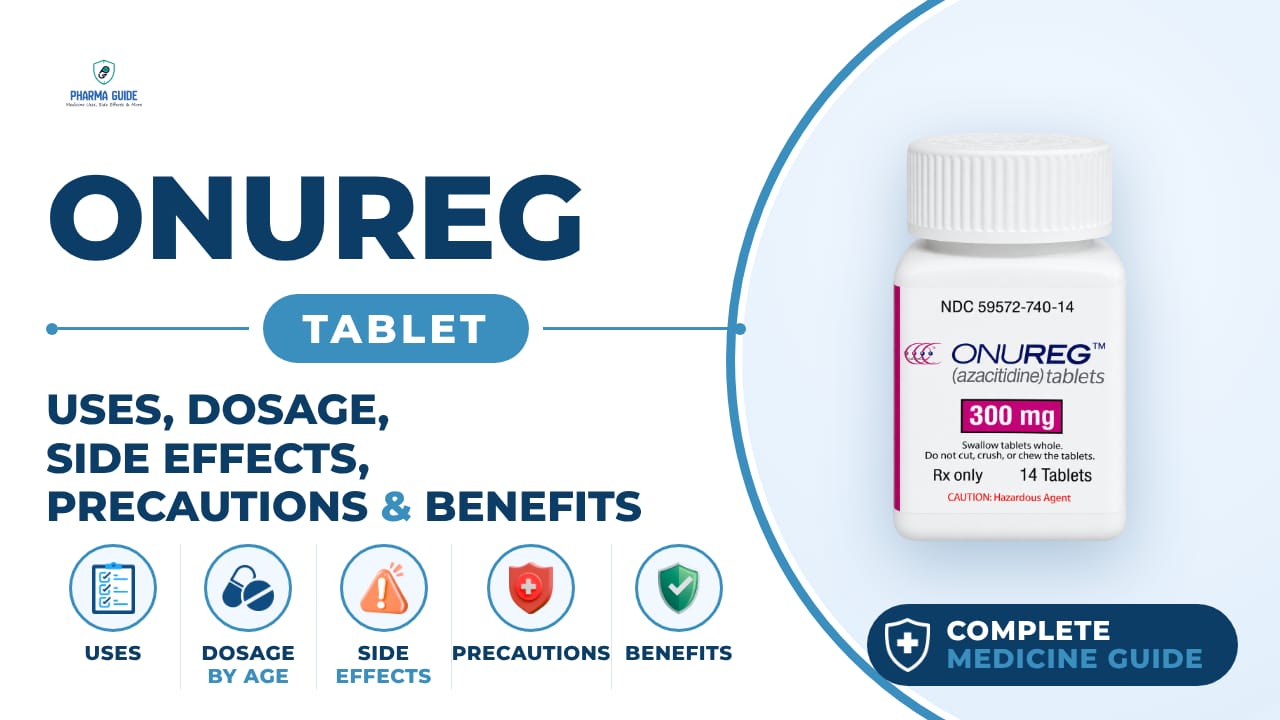
Onureg Tablet: Uses, Dosage, Side Effects, Precautions and Alternates
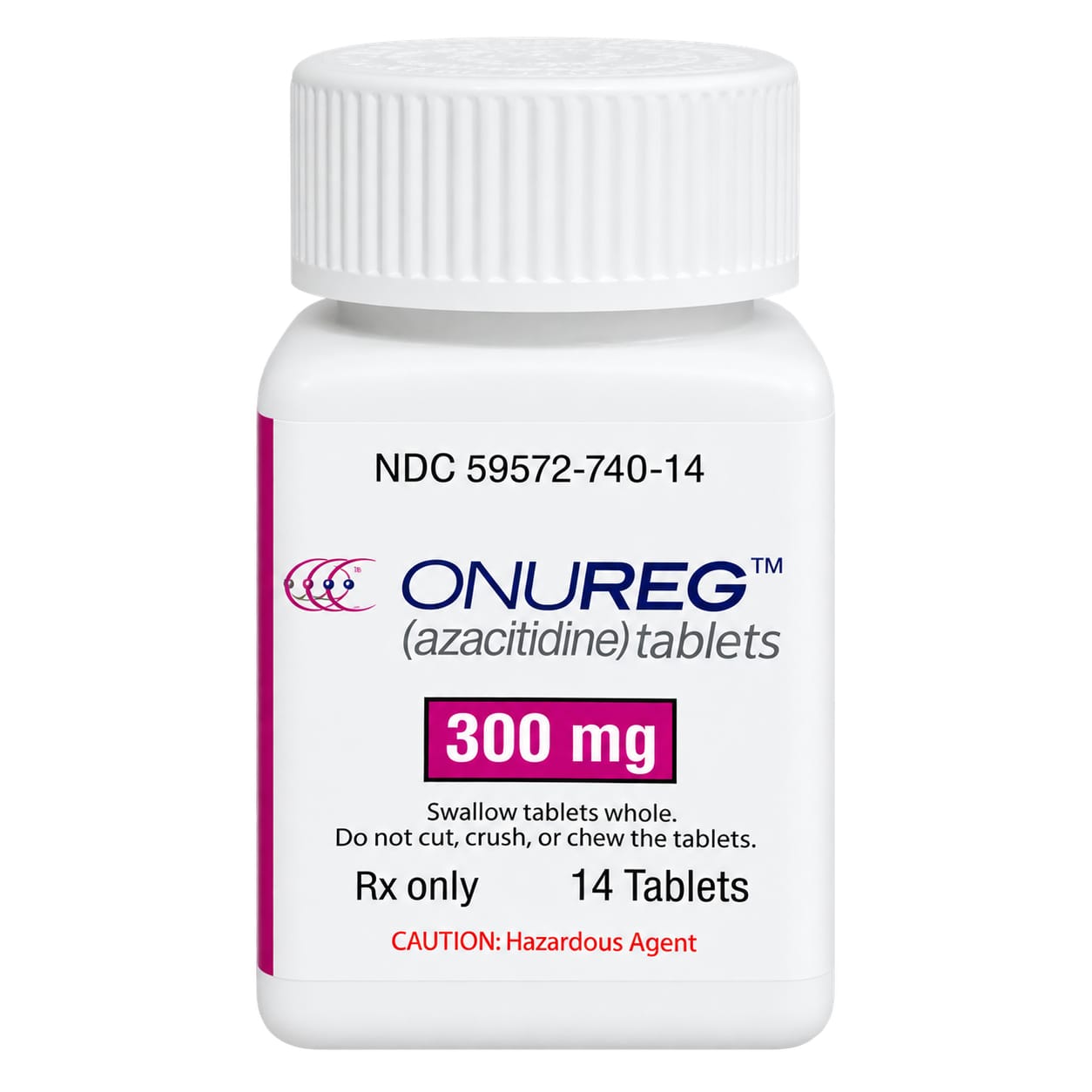
| Generic name | azacitidine |
|---|---|
| Drug class | antineoplastic, nucleoside metabolic inhibitor (antimetabolite) |
| Forms | 200 mg oral tablets, 300 mg oral tablets |
Quick overview
Onureg Tablet contains azacitidine, an antineoplastic drug classified as a nucleoside metabolic inhibitor (antimetabolite). It is an oral chemotherapy tablet used as continued (maintenance) treatment for adults with acute myeloid leukemia (AML) after their cancer has gone into remission. It is taken in repeating 28-day cycles, often for only part of each cycle.
What is Onureg Tablet
Onureg is an oral chemotherapy tablet containing azacitidine. It is used as a continued (maintenance) treatment for adults with acute myeloid leukemia (AML) after their cancer has gone into remission.
Onureg Tablet uses
- Maintenance treatment of acute myeloid leukemia (AML) in adults who reached complete remission after initial chemotherapy and cannot have a stem cell transplant
Benefits of Onureg Tablet
- Can help delay the cancer from coming back
- May help people live longer compared with not having maintenance treatment
How Onureg Tablet works
Onureg contains azacitidine, which gets taken up into the DNA and RNA of cancer cells. This changes how the cells' genes are turned on or off and interferes with new DNA and RNA being made, which helps slow cancer growth and kill cancer cells.
Onureg Tablet dosage
Onureg is taken by mouth in repeating 28-day cycles; it may only need to be taken during part of each cycle, not the whole month. Take it at the same time each day, with or without food. Swallow the tablet whole; do not crush, cut, or chew it.
Do not use a broken tablet; if the medicine from a broken tablet touches your skin, eyes, or mouth, wash or rinse the area right away. You may be given a separate medicine to help prevent nausea or vomiting; take this exactly as directed. If you vomit shortly after taking a dose, do not take another dose that day — wait until your next scheduled dose.
Onureg tablets are not interchangeable with the injectable form of azacitidine because they are used differently and dosed differently.
Use exactly as prescribed by your doctor or pharmacist.
Available forms and strengths
- 200 mg oral tablets
- 300 mg oral tablets
Side effects of Onureg Tablet
Common
- Nausea and vomiting
- Diarrhea
- Constipation
- Stomach (abdominal) pain
- Tiredness or weakness
- Dizziness
- Decreased appetite
- Joint pain
- Pain in arms or legs
- Low white blood cells, low red blood cells, and low platelets
- Fever, chills, or signs of infection such as pneumonia
Serious
- Severe allergic reactions (breathing problems, swelling of face/lips/tongue/throat, hives, racing heart)
- Serious low blood cell counts leading to infection, bleeding, or severe anemia
- Serious lung infection (pneumonia)
- Kidney problems (lower back pain, blood in urine, little or no urination, swelling in feet or ankles)
- Liver problems (upper stomach pain, itching, dark urine, yellowing of skin or eyes)
- Low potassium level (leg cramps, irregular heartbeat, muscle weakness)
- Signs of tumor cell breakdown (severe weakness, muscle cramps, fast or slow heart rate, tingling)
Warnings and precautions
- Onureg can lower levels of white blood cells, red blood cells, and platelets, which can lead to serious infections, bleeding, or anemia. Blood tests are needed regularly during treatment.
- Onureg is not meant for people with a blood condition called myelodysplastic syndrome, as it has been linked to a higher risk of early death in this group.
- Onureg tablets must never be used in place of the injectable form of azacitidine, because the dosing and safety are different and mixing them up can be fatal.
- Do not crush, cut, or chew the tablets. If broken tablet powder touches your skin, eyes, or mouth, wash or rinse the area right away.
- Onureg can harm an unborn baby. Women who can become pregnant should use effective birth control during treatment and for at least 6 months after the last dose. Men should use effective birth control if their partner can become pregnant, during treatment and for at least 3 months after the last dose.
- Tell your doctor right away if pregnancy occurs.
- It is not known if Onureg passes into breast milk. Do not breastfeed while taking this medicine and for at least one week after the last dose.
- Tell your doctor if you have kidney disease before starting Onureg, as your kidney function may need to be checked during treatment.
- Tell your doctor if you have liver disease before starting Onureg.
- It isn't known for certain whether alcohol affects this medicine, but heavy drinking can weaken your immune system and make it harder for your body to fight cancer.
Storage
- Store at room temperature, between 68 F and 77 F (20 C and 25 C)
- Can be exposed to temperatures between 59 F and 86 F (15 C and 30 C) for shorter periods, such as during transport
- Store in a cool, dry place
- Keep in its original packaging, in the bottle or blister pack
- If in a bottle, keep it tightly closed and keep the drying agent canisters (desiccants) inside; do not eat the desiccants
- If in blister packs, keep the medicine in the pack until you are ready to take it
When to see a doctor
- Get help right away if you have signs of a serious allergic reaction, such as trouble breathing, wheezing, swelling of the face, lips, mouth, tongue, or throat, or hives.
- Get help right away if you have signs of blood disorders, such as fever, chills, body aches, shortness of breath, pale or yellowish skin, easy bruising or bleeding, frequent infections, unusual weakness or tiredness, dizziness, or fast or abnormal heartbeat.
- Call your doctor right away if you have signs of infection, such as fever, cough with mucus, chest pain, or shortness of breath, which could mean a lung infection.
- Call your doctor right away if you have signs of kidney problems, such as lower back pain, blood in urine, little or no urination, or swelling in your feet or ankles.
- Call your doctor right away if you have signs of liver problems, such as upper stomach pain, itching, loss of appetite, dark urine, clay-colored stools, or yellowing of the skin or eyes.
- If you think you have taken too much Onureg, get emergency medical help right away or contact a poison control center.
Alternatives
- Venetoclax-based AML regimens
- Decitabine/cedazuridine
- Decitabine
- Injectable azacitidine in appropriate indications
Watch the video
FAQs
What is Onureg Tablet used for?
Onureg is used as maintenance treatment for adults with acute myeloid leukemia (AML) who reached complete remission after initial chemotherapy and cannot have a stem cell transplant.
How is Onureg Tablet taken?
Onureg is taken by mouth in repeating 28-day cycles, often for only part of each cycle, at the same time each day with or without food. Tablets should be swallowed whole and not crushed, cut, or chewed.
Can Onureg tablets be substituted for injectable azacitidine?
No. Onureg tablets are not interchangeable with the injectable form of azacitidine because they are dosed and used differently, and mixing them up can be fatal.
What are the common side effects of Onureg Tablet?
Common side effects include nausea, vomiting, diarrhea, constipation, stomach pain, tiredness, dizziness, decreased appetite, joint and limb pain, low blood cell counts, and signs of infection like fever or chills.
What precautions should be taken while on Onureg Tablet?
Onureg can lower blood cell counts, so regular blood tests are needed. It can harm an unborn baby, so effective birth control is required during treatment and for a period after the last dose, and breastfeeding should be avoided.
General information, not medical advice
Your prescriber and the leaflet in your pack know your situation. This page does not.
- Follow your prescriber and the leaflet
- Don't start, stop, or change a dose on your own
- Doses and warnings differ by country and product
Sources
Video
Related medicines

Injectafer Injection: Uses, Dosage, Side Effects, Precautions and Alternates
Iron products
Injectafer (ferric carboxymaltose) treats iron deficiency anemia and heart failure-related iron deficiency via IV. Learn uses, dosage, side effects, and

Gliclazide Tablet: Uses, Dosage, Side Effects, Precautions and Alternates
Sulfonylurea (hypoglycemic/antidiabetic agent)
Gliclazide Tablet is a sulfonylurea for type 2 diabetes that boosts insulin release. Learn about dosage, side effects, warnings, and precautions.