
Safety
General information, not medical advice
Your prescriber and the leaflet in your pack know your situation. This page does not.
- Follow your prescriber and the leaflet
- Don't start, stop, or change a dose on your own
- Doses and warnings differ by country and product
Opdivo Injection: Uses, Dosage, Side Effects, Precautions and Alternates
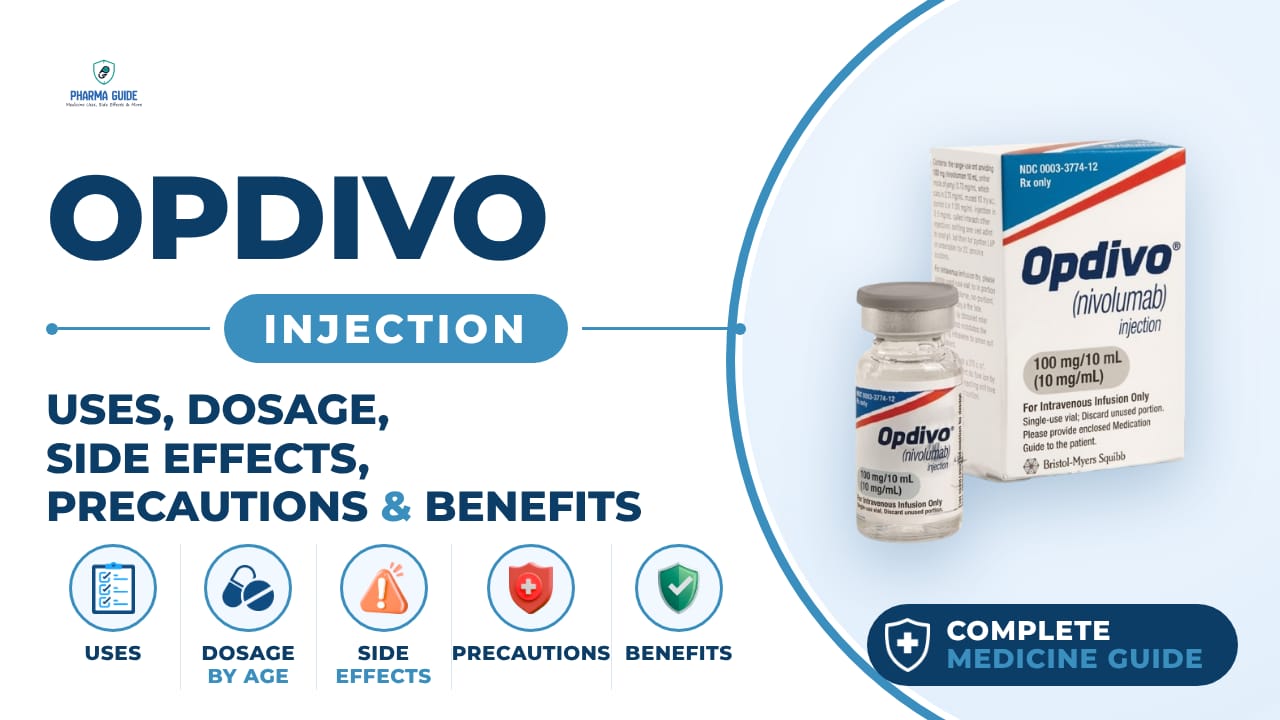
| Generic name | nivolumab |
|---|---|
| Drug class | monoclonal antibody, PD-1/PD-L1 inhibitor |
| Forms | Injection |
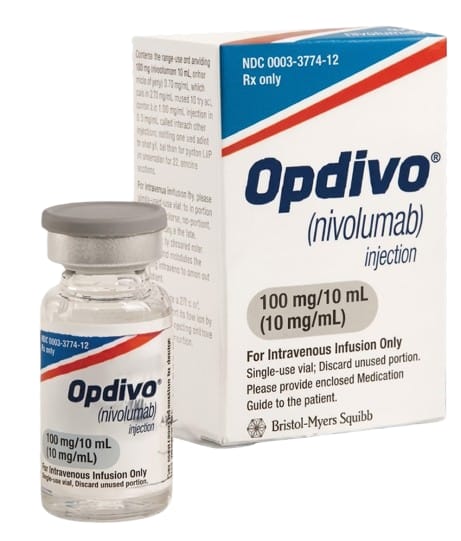
Quick overview
Opdivo Injection contains nivolumab, a monoclonal antibody that works as a PD-1/PD-L1 inhibitor. It is a prescription immunotherapy medicine given by IV infusion that helps your immune system find and attack cancer cells. Opdivo is used to treat several types of cancer, including melanoma, lung cancer, kidney cancer, Hodgkin lymphoma, and head and neck cancer. It can cause the immune system to attack normal organs and tissues, so it requires close monitoring by a healthcare provider.
What is Opdivo Injection
Opdivo is a prescription immunotherapy medicine given by IV infusion. It helps your immune system find and attack cancer cells, and it is used to treat several types of cancer including melanoma, lung cancer, kidney cancer, Hodgkin lymphoma, and head and neck cancer.
Opdivo Injection uses
- Melanoma (a type of skin cancer) that has spread or cannot be removed by surgery, alone or with ipilimumab
- Metastatic non-small cell lung cancer (NSCLC) that has gotten worse during or after platinum-based chemotherapy
- Advanced kidney cancer (renal cell carcinoma) after prior anti-angiogenic therapy
- Classical Hodgkin lymphoma that has come back or gotten worse after a stem cell transplant using your own cells and after treatment with brentuximab vedotin
- Recurrent or metastatic squamous cell carcinoma of the head and neck after platinum-based therapy
- Malignant pleural mesothelioma
- Cancer of the lining of the urinary tract (urothelial carcinoma)
- Colon or rectal cancer (colorectal cancer)
- Liver cancer (hepatocellular carcinoma)
- Esophageal cancer
- Stomach (gastric) cancer, cancer where the esophagus meets the stomach, and esophageal adenocarcinoma
Benefits of Opdivo Injection
- In clinical trials, Opdivo improved overall survival compared with chemotherapy or other treatments in several cancers, including previously treated melanoma, lung cancer, kidney cancer, and head and neck cancer
- Opdivo produced durable tumor responses, with many patients having responses lasting six months or longer
How Opdivo Injection works
Opdivo works by blocking a protein called PD-1 on immune cells (T cells). Normally, this protein can be switched on by tumors to turn off the immune system's attack. By blocking PD-1, Opdivo releases this brake, allowing the immune system to better recognize and attack cancer cells.
Opdivo Injection dosage
Opdivo is given by a healthcare provider as an intravenous (IV) infusion, usually over 60 minutes, and is usually given every 2 weeks. When given together with ipilimumab, Opdivo is usually given every 3 weeks for 4 doses, with ipilimumab on the same day; after that, Opdivo is given alone every 2 weeks. Your healthcare provider will decide how many treatments you need and will do blood tests to check for side effects. If you miss an appointment, call your healthcare provider as soon as possible to reschedule. It is not known if Opdivo is safe and effective in children under 18 years of age.
| Age group | Dose |
|---|---|
| Under 18 years | Not fixed |
| 18–60 years | 240 mg, once every 2 weeks |
| 60+ years | 240 mg, once every 2 weeks |
Available forms and strengths
- Injection
Side effects of Opdivo Injection
Common
- Pain in muscles, bones, and joints
- Feeling tired or weak
- Itchy skin
- Rash
- Diarrhea
- Cough
- Stomach-area (abdominal) pain
- Nausea and vomiting
- Constipation
- Decreased appetite
- Back pain
- Upper respiratory tract infection symptoms, such as cough and sore throat
- Fever
- Headache
- Urinary tract infection
- Low thyroid hormone levels
- Shortness of breath
Serious
- Lung problems (pneumonitis) - new or worsening cough, chest pain, shortness of breath
- Intestinal problems (colitis) - diarrhea, blood or dark tarry stools, severe stomach pain
- Liver problems (hepatitis) - yellowing of skin or eyes, severe nausea or vomiting, pain on the right side of the stomach area, dark urine, easy bruising or bleeding
- Hormone gland problems - persistent headaches, extreme tiredness, weight changes, dizziness, hair loss, feeling cold, deepening voice, mood or behavior changes
- Kidney problems - decreased urine output, blood in urine, swelling in ankles, loss of appetite
- Skin problems - rash, itching, blistering or peeling skin, painful sores in the mouth, nose, throat, or genital area
- Inflammation of the brain (encephalitis) - headache, fever, confusion, memory problems, hallucinations, seizures, stiff neck
- Severe infusion reactions - chills, shaking, itching, rash, flushing, trouble breathing, dizziness, fever, back or neck pain
Warnings and precautions
- Opdivo can cause the immune system to attack normal organs and tissues anywhere in the body, which can become serious, life-threatening, or lead to death.
- These problems can happen anytime during treatment or even after treatment ends.
- People who have received a stem cell transplant using donor cells, or who plan to, may have serious and even fatal complications related to Opdivo treatment.
- Opdivo may cause rejection of a transplanted organ. Tell your healthcare provider if you have immune system problems such as Crohn's disease, ulcerative colitis, or lupus, or nervous system conditions, before starting Opdivo.
- Opdivo can harm an unborn baby. Women who can become pregnant should use effective birth control during treatment and for at least 5 months after the last dose, and should tell their doctor right away if they become pregnant.
- It is not known if Opdivo passes into breast milk. Women should not breastfeed during treatment with Opdivo.
- Based on research, no dose adjustment is needed for people with kidney problems. No dose adjustment is needed for mild liver problems; Opdivo has not been studied in people with moderate or severe liver problems.
- It is not known whether drinking alcohol affects Opdivo.
Storage
- Store OPDIVO under refrigeration at 2°C to 8°C (36°F to 46°F)
- Protect OPDIVO from light by storing in the original package until time of use
- Do not freeze or shake
- Opdivo is usually given by a healthcare provider in a hospital or clinic; you will not store it at home
When to see a doctor
- Get medical help right away for new or worsening cough, chest pain, or shortness of breath, which could be signs of lung inflammation
- Call your healthcare provider right away for diarrhea or severe stomach pain, which could be signs of intestinal inflammation
- Call your healthcare provider right away for yellowing skin or eyes, severe nausea or vomiting, pain on the right side of your abdomen, drowsiness, dark urine, or easy bruising or bleeding, which could be signs of liver problems
- Get emergency help right away for severe skin reactions such as painful red or purple skin that looks burned and peels, or blisters on the skin, mouth, nose, or genitals
- Tell your doctor or nurse right away if you have chills, shaking, itching, rash, flushing, trouble breathing, dizziness, fever, or back/neck pain during your infusion
- If side effects seem life-threatening or you think you are having a medical emergency, get emergency help immediately
Alternatives
- Tecentriq (Atezolizumab)
- Bavencio (Avelumab)
- Imfinzi (Durvalumab)
Watch the video
FAQs
What is Opdivo Injection used for?
Opdivo is used to treat several cancers, including melanoma, non-small cell lung cancer, kidney cancer, Hodgkin lymphoma, head and neck cancer, mesothelioma, urothelial carcinoma, colorectal cancer, liver cancer, esophageal cancer, and stomach cancer.
How is Opdivo Injection given?
Opdivo is given by a healthcare provider as an intravenous infusion, usually over 60 minutes, typically every 2 weeks. When combined with ipilimumab, it is usually given every 3 weeks for 4 doses, then alone every 2 weeks.
How does Opdivo Injection work?
Opdivo works by blocking a protein called PD-1 on T cells, which tumors can use to switch off the immune system's attack. By blocking PD-1, Opdivo releases this brake, allowing the immune system to better recognize and attack cancer cells.
What are the serious side effects of Opdivo Injection?
Serious side effects include lung problems (pneumonitis), intestinal problems (colitis), liver problems (hepatitis), hormone gland problems, kidney problems, severe skin reactions, inflammation of the brain (encephalitis), and severe infusion reactions.
Can Opdivo Injection be used during pregnancy?
Opdivo can harm an unborn baby, so women who can become pregnant should use effective birth control during treatment and for at least 5 months after the last dose, and should tell their doctor right away if they become pregnant.
General information, not medical advice
Your prescriber and the leaflet in your pack know your situation. This page does not.
- Follow your prescriber and the leaflet
- Don't start, stop, or change a dose on your own
- Doses and warnings differ by country and product
Sources
Video
Related medicines

Injectafer Injection: Uses, Dosage, Side Effects, Precautions and Alternates
Iron products
Injectafer (ferric carboxymaltose) treats iron deficiency anemia and heart failure-related iron deficiency via IV. Learn uses, dosage, side effects, and

Gliclazide Tablet: Uses, Dosage, Side Effects, Precautions and Alternates
Sulfonylurea (hypoglycemic/antidiabetic agent)
Gliclazide Tablet is a sulfonylurea for type 2 diabetes that boosts insulin release. Learn about dosage, side effects, warnings, and precautions.