
Safety
General information, not medical advice
Your prescriber and the leaflet in your pack know your situation. This page does not.
- Follow your prescriber and the leaflet
- Don't start, stop, or change a dose on your own
- Doses and warnings differ by country and product
Orbactiv Injection: Uses, Dosage, Side Effects, Precautions and Alternates
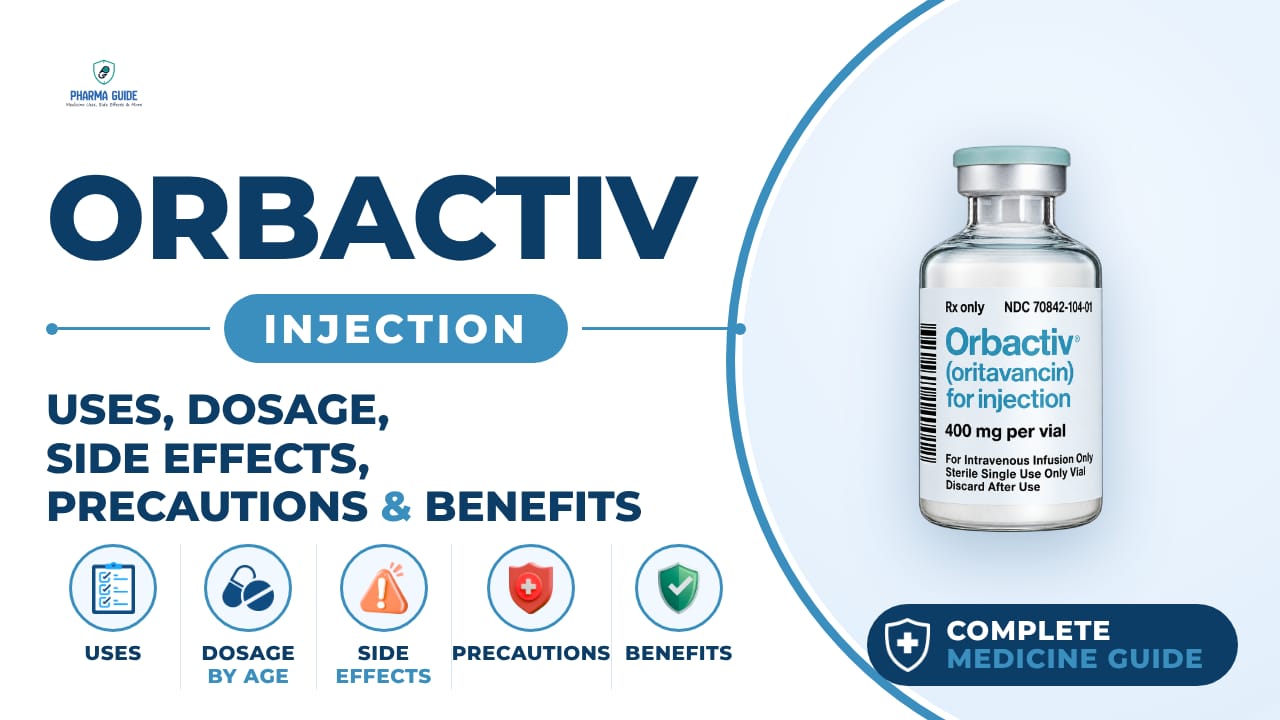
| Generic name | oritavancin |
|---|---|
| Drug class | Lipoglycopeptide antibacterial drug |
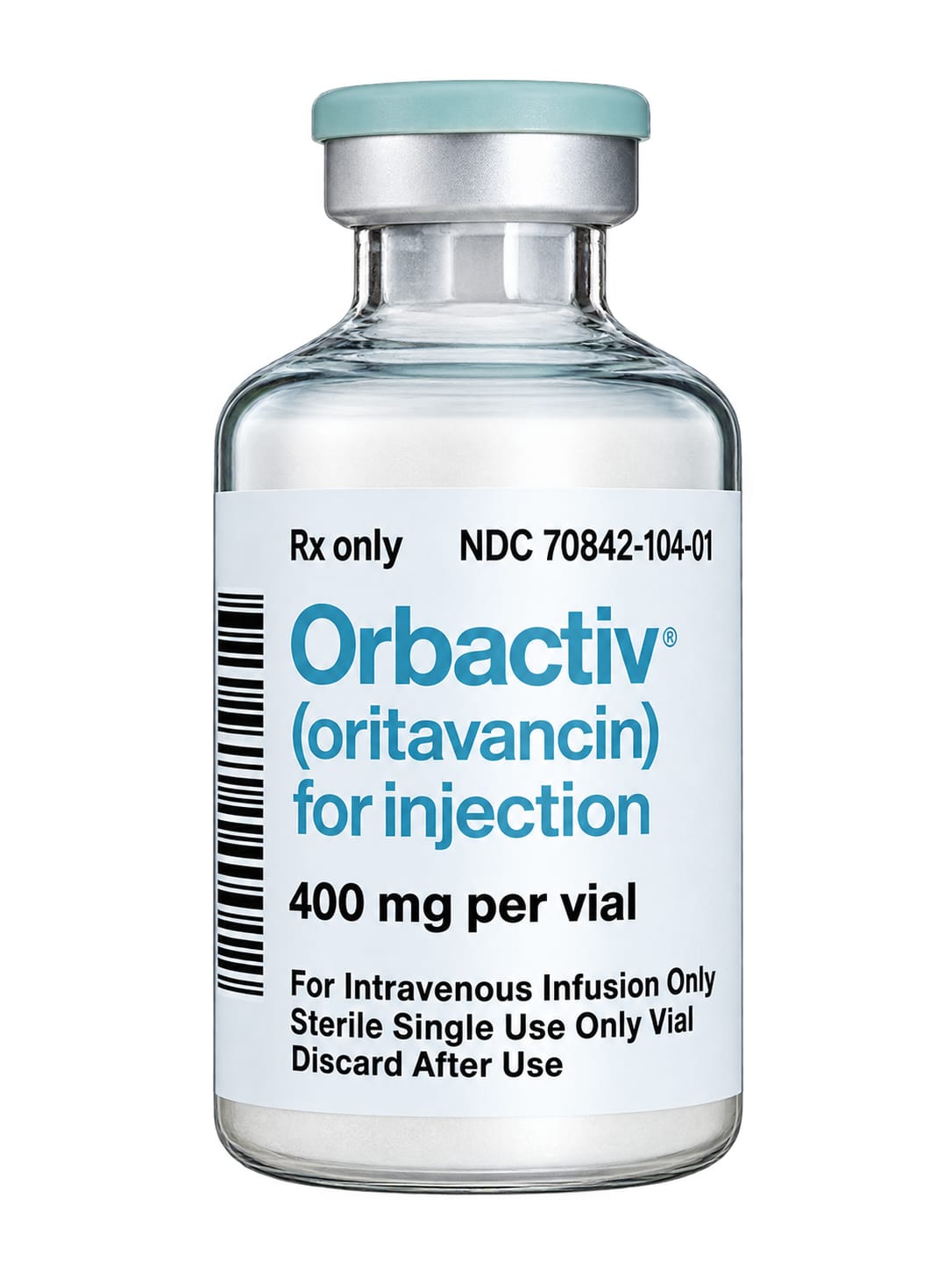
| Forms | For injection: 400 mg of lyophilized powder in a single-dose vial for reconstitution |
Quick overview
Orbactiv Injection (oritavancin) is a lipoglycopeptide antibacterial drug given by IV infusion. It is used in adult patients to treat skin infections caused by certain bacteria, including some resistant types such as MRSA. It is given as a single dose that lasts for about two weeks.
What is Orbactiv Injection
Orbactiv is an antibiotic given by IV infusion. It is used to treat adult patients with skin infections caused by certain bacteria, including some resistant types. It is given as a single dose that lasts for about two weeks.
Orbactiv Injection uses
- Treats acute bacterial skin infections
- Treats certain skin-structure infections
- Active against susceptible MRSA
- Treats infections caused by selected Gram-positive bacteria
Benefits of Orbactiv Injection
- Has been shown to avoid unnecessary hospital admissions
- Works well to treat skin and skin structure infections caused by resistant bacteria
- Only need to get one dose, because it lasts for about 2 weeks
- Can be used in certain people with kidney or liver problems
How Orbactiv Injection works
Orbactiv fights certain bacteria (called Gram-positive bacteria) by stopping them from building their protective outer covering properly, and by breaking through this covering, which causes the bacteria to die.
Orbactiv Injection dosage
Orbactiv is given as a single dose by intravenous (IV) infusion over 3 hours in adults 18 years and older. It should be used only to treat infections that are proven or strongly suspected to be caused by bacteria, not viral infections like the common cold. Patients should take the full course as directed even if they start feeling better early in treatment.
The medicine must be mixed with a specific IV fluid before use; a different sugar-water solution (D5W) must be used for dilution, not saline, because saline can cause the drug to form particles. If the same IV line is used for other medicines afterward, the line should be flushed with the D5W solution before and after the Orbactiv infusion.
| Age group | Dose |
|---|---|
| Under 18 years | Safety and effectiveness have not been established |
| 18–64 years | 1,200 mg IV as a single dose, infused over 3 hours |
| 65–74 years | Same adult dose: 1,200 mg IV once |
Available forms and strengths
- For injection: 400 mg of lyophilized powder in a single-dose vial for reconstitution
Side effects of Orbactiv Injection
Common
- Nausea
- Headache
- Vomiting
- Infection in limb or under the skin (abscess)
- Diarrhea
- Dizziness
- Inflammation in vein at injection site (infusion site phlebitis)
- Fast heart rate (tachycardia)
Serious
- Serious allergic reaction (hives, rash, blisters, skin reddening, swelling of lips or tongue, difficulty breathing)
- C. difficile-related diarrhea (foul-smelling diarrhea, frequent bowel movements up to 15 times a day, fever, stomach pain or cramps)
- Bone infection (osteomyelitis)
- Infusion reactions (chest pain, back pain, chills, tremor, flushing, hives, itching, rash)
- Bleeding problems if taking warfarin, since this medicine can affect clotting test results
Warnings and precautions
- Do not use IV unfractionated heparin for 5 days (120 hours) after getting Orbactiv, because it can cause falsely high results on a clotting test used to guide heparin dosing.
- Do not use Orbactiv if you have had an allergic reaction to oritavancin medicines before.
- Orbactiv can cause serious allergic reactions, including severe whole-body reactions. If signs of a reaction occur during the infusion, it should be stopped right away.
- Reactions can happen during the infusion itself, such as flushing, hives, itching, rash, chest pain, back pain, chills, and shaking. Slowing or stopping the infusion can help these reactions go away.
- This medicine, like nearly all antibiotics, can cause a serious intestinal infection with diarrhea that can be severe or life-threatening, and may occur even more than two months after treatment.
- This medicine can interfere with blood clotting test results, making it hard to safely monitor warfarin treatment for up to 12 hours after the dose, so patients should be watched for bleeding.
- Bone infections (osteomyelitis) were reported more often with this medicine than with a comparison antibiotic. If a bone infection is suspected, a different antibiotic treatment should be started.
- Using antibiotics like Orbactiv when there is no proven or strongly suspected bacterial infection does not help the patient and increases the risk that bacteria will become resistant to treatment.
- There is no information on using Orbactiv in pregnant women to know if it poses a risk to the baby. Animal studies at high doses did not show harm to the developing fetus.
- It is not known if Orbactiv passes into human breast milk. It does pass into the milk of rats, so it is possible it may do so in humans too. Your doctor should weigh the benefits of breastfeeding against your need for the medicine.
- No dose change is needed for people with mild or moderate kidney problems. The medicine has not been studied in people with severe kidney impairment, and it is not removed from the blood by dialysis.
- No dose change is needed for people with mild or moderate liver problems. The medicine has not been studied in people with severe liver impairment.
- No major direct interaction with alcohol is established, though avoiding alcohol during a serious infection is generally sensible.
- Orbactiv usually does not directly impair driving, but avoid driving if dizziness or weakness occurs.
Storage
- ORBACTIV vials should be stored at 20ºC to 25ºC (68ºF to 77ºF); excursions permitted to 15ºC to 30ºC (59ºF to 86ºF)
- Diluted intravenous solution in an infusion bag should be used within 6 hours when stored at room temperature, or used within 12 hours when refrigerated at 2 to 8°C (36 to 46°F)
When to see a doctor
- Get medical help right away if you notice signs of a serious allergic reaction, such as hives, rash, blisters, skin reddening, swelling of the lips or tongue, or difficulty breathing.
- Get medical help right away if you have signs that may point to a serious bowel infection, such as foul-smelling diarrhea, having a bowel movement up to 15 times a day, fever, or stomach pain or cramps.
- Tell your provider right away if you notice chest pain, shortness of breath or trouble breathing, or feeling faint or lightheaded, as these can be signs of an infusion reaction.
- Contact your healthcare provider if you develop severe watery or bloody diarrhea, as it may be a sign of a more serious intestinal infection.
- Tell your care team right away if you develop bone pain or unusual vaginal discharge, itching, or odor.
Alternatives
- Vancomycin
- Linezolid
- Daptomycin
Watch the video
FAQs
What is Orbactiv Injection used for?
Orbactiv is an IV antibiotic used to treat adult patients with acute bacterial skin and skin-structure infections caused by certain bacteria, including susceptible MRSA and other selected Gram-positive bacteria.
How is Orbactiv Injection given?
Orbactiv is given as a single dose of 1,200 mg by IV infusion over 3 hours in adults 18 years and older. It is not approved for use in patients under 18.
How long does one dose of Orbactiv last?
A single dose of Orbactiv lasts for about two weeks, so only one infusion is needed to complete treatment.
What are the serious side effects of Orbactiv Injection?
Serious side effects include severe allergic reactions, C. difficile-related intestinal infection, bone infection (osteomyelitis), infusion reactions like chest pain and chills, and bleeding problems in patients taking warfarin.
Can Orbactiv be used with heparin?
No, IV unfractionated heparin should not be used for 5 days (120 hours) after getting Orbactiv because it can cause falsely high results on a clotting test used to guide heparin dosing.
General information, not medical advice
Your prescriber and the leaflet in your pack know your situation. This page does not.
- Follow your prescriber and the leaflet
- Don't start, stop, or change a dose on your own
- Doses and warnings differ by country and product
Sources
Video
Related medicines

Injectafer Injection: Uses, Dosage, Side Effects, Precautions and Alternates
Iron products
Injectafer (ferric carboxymaltose) treats iron deficiency anemia and heart failure-related iron deficiency via IV. Learn uses, dosage, side effects, and

Gliclazide Tablet: Uses, Dosage, Side Effects, Precautions and Alternates
Sulfonylurea (hypoglycemic/antidiabetic agent)
Gliclazide Tablet is a sulfonylurea for type 2 diabetes that boosts insulin release. Learn about dosage, side effects, warnings, and precautions.