
Safety
General information, not medical advice
Your prescriber and the leaflet in your pack know your situation. This page does not.
- Follow your prescriber and the leaflet
- Don't start, stop, or change a dose on your own
- Doses and warnings differ by country and product
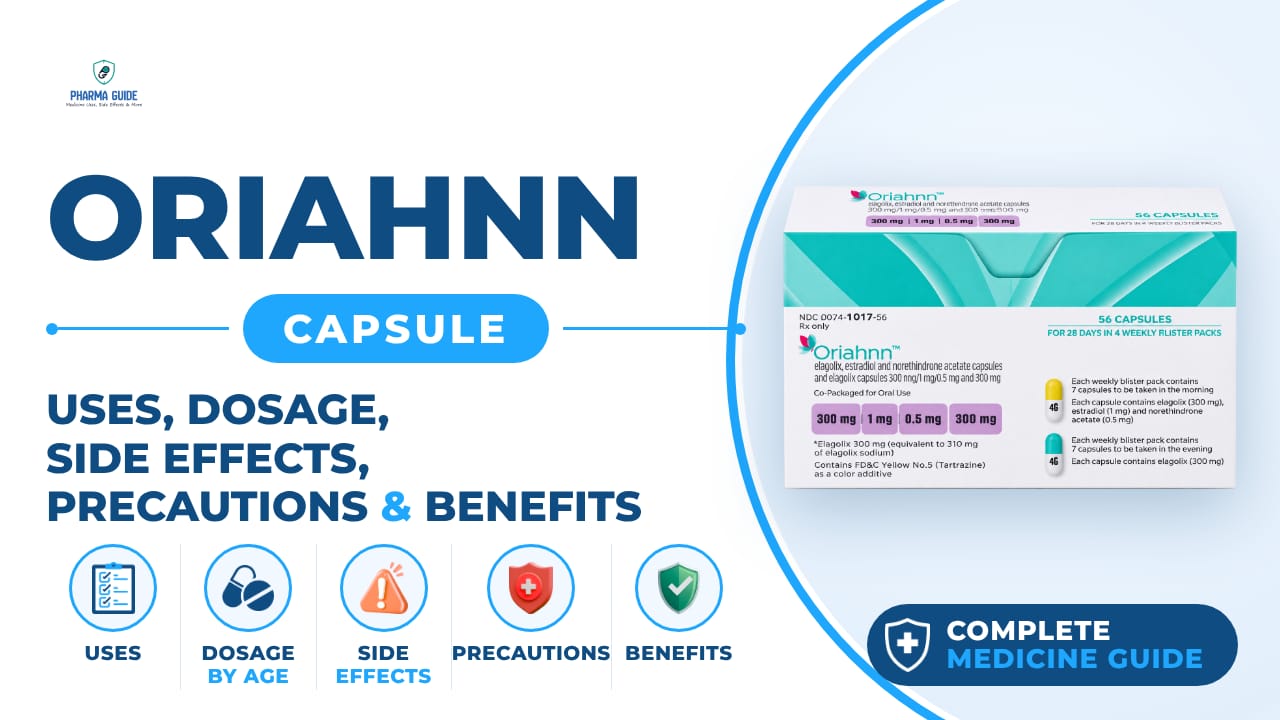
Oriahnn Capsule: Uses, Dosage, Side Effects, Precautions and Alternates
| Generic name | elagolix, estradiol, and norethindrone acetate |
|---|---|
| Drug class | Sex hormone combination (GnRH receptor antagonist plus estrogen and progestin) |
| Forms | Capsule |
Quick overview
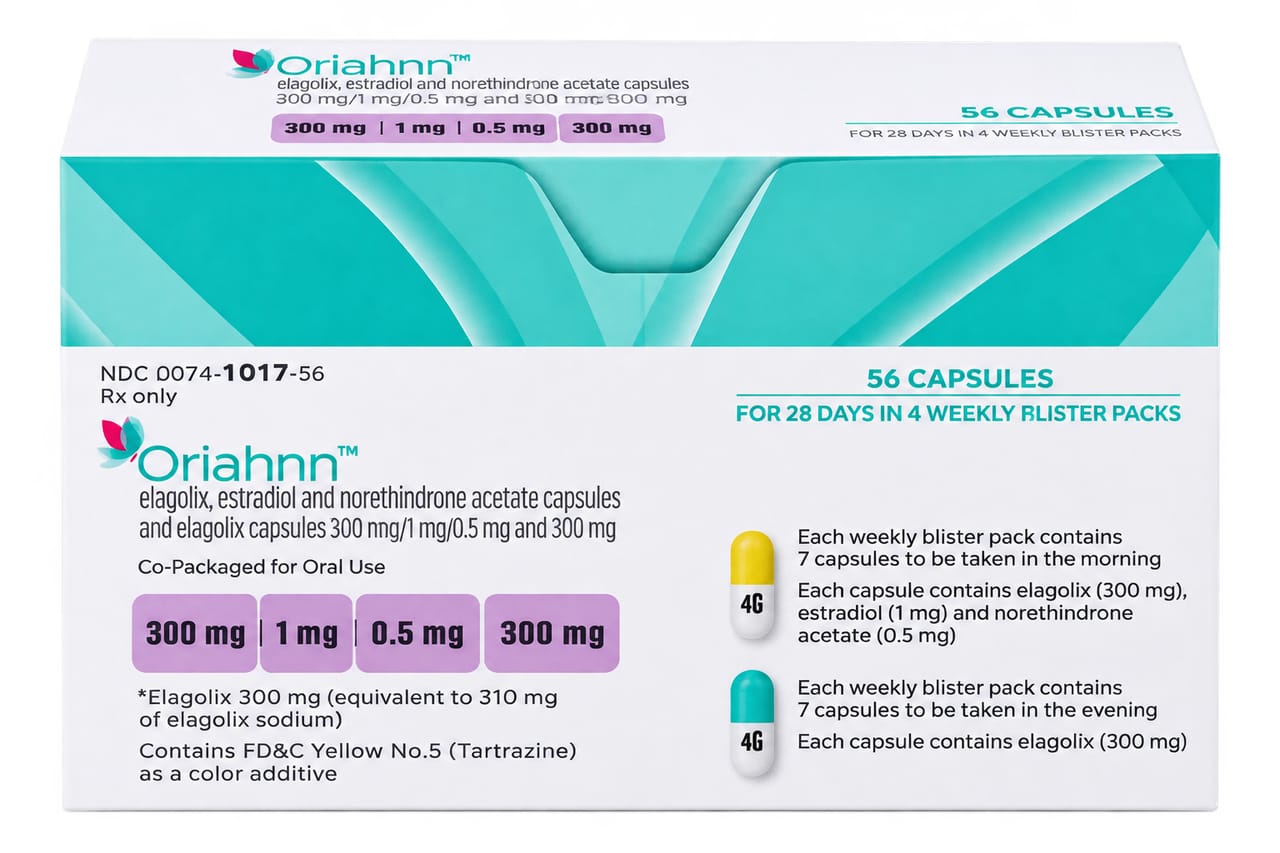
Oriahnn Capsule is a prescription medicine containing elagolix, estradiol, and norethindrone acetate, combined as two different capsules taken each day. It is used to control heavy menstrual bleeding caused by uterine fibroids in women who have not yet gone through menopause. It works by lowering certain sex hormones, and treatment is not approved for use longer than 24 months.
What is Oriahnn Capsule
Oriahnn is a prescription medicine made of two different capsules taken each day. It combines elagolix, a hormone blocker, with estradiol (an estrogen) and norethindrone acetate (a progestin). It is used to treat heavy menstrual bleeding caused by uterine fibroids in women who have not yet gone through menopause.
Oriahnn Capsule uses
- Controls heavy menstrual bleeding related to uterine fibroids in women before menopause
- Not approved for use for more than 24 months
- Not known to be safe or effective in children under 18 years of age
Benefits of Oriahnn Capsule
- Reduced the amount of heavy menstrual bleeding compared with placebo in clinical trials
- A higher proportion of women taking Oriahnn had their bleeding drop below 80 mL and had at least a 50% reduction in bleeding compared with women taking placebo
- Many women had no menstrual bleeding (though spotting was allowed) by the end of treatment
- More women with anemia who took Oriahnn had meaningful improvements in hemoglobin levels compared with placebo
How Oriahnn Capsule works
Oriahnn works by lowering certain sex hormones in the body. One part of the medicine blocks signals in the brain that tell the ovaries to make estrogen and progesterone, which reduces bleeding from fibroids. The other two parts add back some estrogen and progestin to help protect bone health and the lining of the uterus.
Oriahnn Capsule dosage
Take one capsule in the morning and one different capsule in the evening each day. Take the morning and evening capsules at about the same time each day, with or without food. Do not crush, split, or chew the capsules.
Your doctor will give you a pregnancy test before you start, or have you start within 7 days after your period begins. Treatment should not continue for more than 24 months.
If you miss a dose, take it within 4 hours of when it was due, then take your next dose at the usual time; if more than 4 hours have passed, skip the missed dose and take the next one as usual. Do not take two doses at once to make up for a missed dose.
Use a non-hormonal method of birth control while taking this medicine and for 28 days after stopping it, since this medicine does not prevent pregnancy. Avoid grapefruit and grapefruit juice while taking this medicine.
| Age group | Dose |
|---|---|
| Under 16 years | Not recommended — safety and effectiveness have not been established |
| 16–17 years | Not established; specialist advice required |
| 18–64 years | 100 mg 3 times daily |
| 65 years and older | 100 mg 3 times daily; medical monitoring recommended |
Available forms and strengths
- Capsule
Side effects of Oriahnn Capsule
Common
- Hot flashes/hot flushes
- Headache
- Fatigue
- Irregular periods or abnormal uterine bleeding (such as spotting or bleeding between periods)
Serious
- Blood clots, heart attack, or stroke
- Bone loss (decreased bone mineral density)
- Suicidal thoughts, suicidal behavior, and worsening mood, depression, or anxiety
- Abnormal liver tests or liver injury (jaundice, dark urine, fatigue, nausea/vomiting, swelling, right upper abdominal pain, easy bruising)
- High blood pressure
- Gallbladder problems (cholestasis)
- Increases in blood sugar, cholesterol, and triglyceride levels
- Hair loss (alopecia), which may not be reversible
- Changes in laboratory tests (thyroid, hormone, cholesterol, blood clotting tests)
- Allergic reaction, including possible reaction to the dye FD&C Yellow No. 5 (tartrazine)
Warnings and precautions
- This medicine can raise the risk of blood clots, heart attack, or stroke, especially in women over 35 who smoke, or who have uncontrolled high blood pressure, high cholesterol, diabetes, or obesity. Get emergency help right away for leg pain or swelling that won't go away, sudden shortness of breath, sudden vision changes, chest/arm/jaw pain or pressure, a sudden severe headache, or weakness/numbness/trouble speaking.
- This medicine can cause a decrease in bone mineral density that may not fully reverse after stopping. Because of this, it should not be used for more than 24 months, and your doctor may check your bone density before and during treatment.
- This medicine should not be used if you have current or past breast cancer or other cancers sensitive to hormones, since sex hormones can cause these cancers to grow.
- This medicine may cause or worsen suicidal thoughts, suicidal behavior, or mood disorders such as depression and anxiety.
- This medicine should not be used with uncontrolled high blood pressure, and blood pressure should be monitored regularly during treatment.
- This medicine can make it harder to recognize pregnancy because it changes menstrual bleeding. Use a non-hormonal form of birth control while taking it and for 28 days after stopping.
- This medicine contains a dye (FD&C Yellow No. 5/tartrazine) that can cause allergic-type reactions, including asthma, especially in people who are also allergic to aspirin.
- This medicine should not be taken with certain other drugs known as OATP1B1 inhibitors, which can raise blood levels of one of its ingredients and increase side effect risk.
- Do not take this medicine if you are pregnant or trying to become pregnant, because it may raise the risk of early pregnancy loss.
- If you think you might be pregnant, stop the medicine and call your doctor right away. Because this medicine can lighten or stop periods, it can be hard to know if you are pregnant, so watch for other pregnancy signs.
- It isn't known if this medicine passes into breast milk or if it's safe during breastfeeding. Talk with your doctor about the best way to feed your baby if you are taking this medicine.
- This medicine should not be used by people with known liver problems or liver disease, as it can raise liver hormone and drug levels and increase the risk of liver-related side effects.
- There isn't direct research on mixing alcohol with this medicine, but drinking alcohol may worsen certain side effects such as blood clot risk and hot flashes. Talk with your doctor about how much alcohol, if any, is safe for you.
Storage
- Store at room temperature between 68°F to 77°F (20°C to 25°C)
- Short-term storage between 59°F and 86°F (15°C to 30°C) is allowed
- Keep the capsules in their sealed blister packaging and carton, away from light
- Do not keep medicine that is out of date or that you no longer need
- Dispose of unused medicine through a community take-back program if available; otherwise follow instructions for disposing of medicine in household trash
- Do not flush this medicine down the toilet
- Keep out of the reach of children
When to see a doctor
- Get emergency medical help right away for signs of a blood clot, heart attack, or stroke, such as leg pain or swelling that won't go away, sudden shortness of breath, chest/arm/jaw pain or pressure, sudden severe headache, vision changes, or trouble speaking.
- Call your doctor or get emergency help right away if you have thoughts about suicide or dying, attempts to harm yourself, new or worse depression or anxiety, or other unusual changes in mood or behavior.
- Call your doctor right away if you notice signs of liver problems, such as yellowing of the skin or eyes, dark urine, feeling very tired, nausea and vomiting, swelling, pain in the upper right belly area, or bruising easily.
- Stop the medicine and call your doctor right away if you think you might be pregnant.
- Contact your doctor if you have concerns about hair loss or thinning, since it may not go away even after stopping the medicine.
Alternatives
- Goserelin
- Leuprolide
- Levonorgestrel intrauterine device (IUD)
- Birth control pills
- Progesterone
- Tranexamic acid
- Triptorelin
- Ulipristal
- Orilissa (elagolix alone)
- Myfembree
Watch the video
FAQs
What is Oriahnn Capsule used for?
Oriahnn is used to control heavy menstrual bleeding caused by uterine fibroids in women who have not yet gone through menopause.
How long can you take Oriahnn Capsule?
Oriahnn is not approved for use longer than 24 months because it can cause a decrease in bone mineral density that may not fully reverse after stopping.
How do you take Oriahnn Capsule?
Take one capsule in the morning and a different capsule in the evening each day, at about the same time, with or without food, without crushing, splitting, or chewing them.
What are the serious side effects of Oriahnn Capsule?
Serious side effects include blood clots, heart attack, stroke, bone loss, suicidal thoughts or worsening mood, liver injury, high blood pressure, gallbladder problems, and changes in blood sugar or cholesterol.
Do I need birth control while taking Oriahnn Capsule?
Yes, Oriahnn does not prevent pregnancy, so you should use a non-hormonal method of birth control while taking it and for 28 days after stopping.
General information, not medical advice
Your prescriber and the leaflet in your pack know your situation. This page does not.
- Follow your prescriber and the leaflet
- Don't start, stop, or change a dose on your own
- Doses and warnings differ by country and product
Sources
Video
Related medicines

Injectafer Injection: Uses, Dosage, Side Effects, Precautions and Alternates
Iron products
Injectafer (ferric carboxymaltose) treats iron deficiency anemia and heart failure-related iron deficiency via IV. Learn uses, dosage, side effects, and

Gliclazide Tablet: Uses, Dosage, Side Effects, Precautions and Alternates
Sulfonylurea (hypoglycemic/antidiabetic agent)
Gliclazide Tablet is a sulfonylurea for type 2 diabetes that boosts insulin release. Learn about dosage, side effects, warnings, and precautions.