
Safety
General information, not medical advice
Your prescriber and the leaflet in your pack know your situation. This page does not.
- Follow your prescriber and the leaflet
- Don't start, stop, or change a dose on your own
- Doses and warnings differ by country and product
Orilissa Tablet: Uses, Dosage, Side Effects, Precautions and Alternates
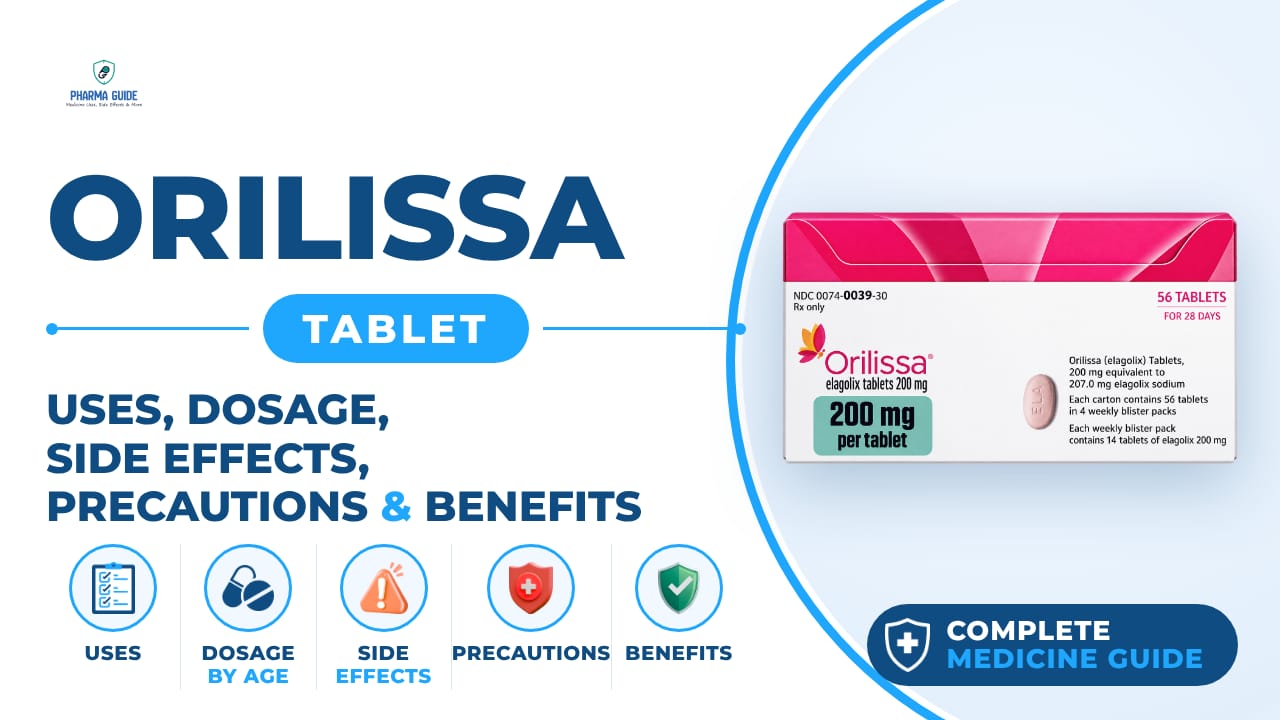
| Generic name | elagolix |
|---|---|
| Drug class | Gonadotropin-releasing hormone antagonist |
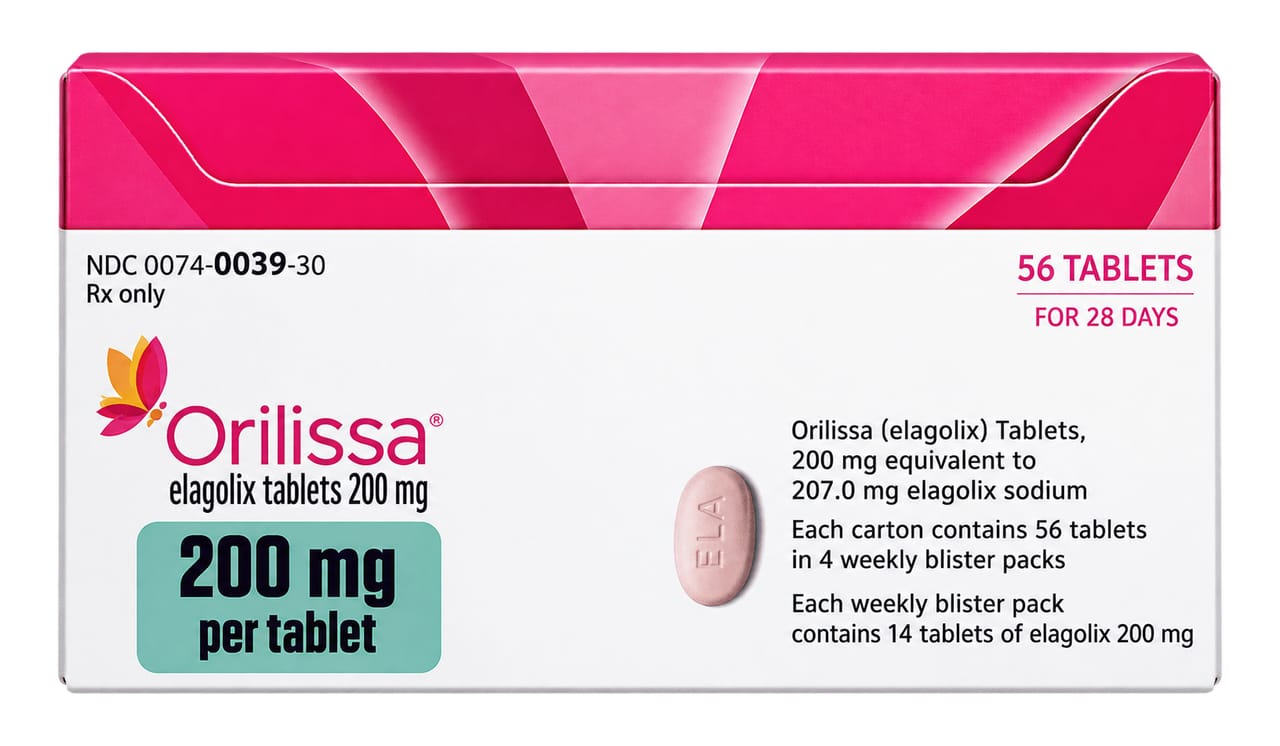
| Forms | Tablet (150 mg and 200 mg) |
Quick overview
Orilissa Tablet (elagolix) is a prescription gonadotropin-releasing hormone antagonist used to treat moderate to severe pain caused by endometriosis. It works by lowering certain hormone levels in the body, which helps reduce pain and inflammation linked to this condition. Orilissa is available in 150 mg and 200 mg strengths and is taken daily as directed by a doctor.
What is Orilissa Tablet
Orilissa is a prescription tablet used to treat moderate to severe pain caused by endometriosis. It works by lowering certain hormone levels in the body.
Orilissa Tablet uses
- Treats moderate to severe pain associated with endometriosis
Benefits of Orilissa Tablet
- Helps reduce moderate to severe pain from endometriosis
- Helps relieve painful periods (dysmenorrhea)
- Can reduce pelvic pain between periods
- May help reduce pain during sex caused by endometriosis
- Works by lowering estrogen levels, which helps reduce endometriosis-related pain and inflammation
How Orilissa Tablet works
Orilissa attaches to the same receptors in the body as a hormone that triggers sex hormone production. By doing this, it lowers blood levels of estradiol and progesterone, which are female sex hormones.
Orilissa Tablet dosage
Take Orilissa at about the same time each day, with or without food. Follow all directions on your prescription label and any medication guides. Your dosing schedule may change if you switch to a different strength of this medicine. A pregnancy test will usually be done before starting, or you may start within 7 days after your period begins. If you miss a dose, take it as soon as you remember on the same day; do not take extra doses to make up for a missed one.
| Age group | Dose |
|---|---|
| Under 18 years | Safety and effectiveness not established |
| Adult women – Endometriosis pain | 150 mg once daily, for up to 24 months |
| Adult women – More severe dyspareunia | 200 mg twice daily, for up to 6 months |
| Moderate liver impairment | 150 mg once daily, with a shorter maximum duration |
| Severe liver impairment | Contraindicated |
Available forms and strengths
- Tablet (150 mg and 200 mg)
Side effects of Orilissa Tablet
Common
- Hot flashes or night sweats
- Headache
- Nausea
- Trouble sleeping (insomnia)
- Altered mood or mood swings
- Missed menstrual periods
- Depressed mood
- Anxiety
- Joint pain
Serious
- Suicidal thoughts, actions, or behavior, and worsening of mood
- Liver problems (nausea, vomiting, stomach pain, tiredness, easy bruising, dark urine, yellowing of skin or eyes)
- Bone loss (decreased bone mineral density), which may include fractures
- Serious allergic reaction (hives, difficulty breathing, swelling of face, lips, tongue, or throat)
- Appendicitis (abdominal pain, abdominal swelling, fever, nausea and vomiting)
Warnings and precautions
- Do not take Orilissa if you are pregnant or trying to become pregnant, as it may increase the risk of early pregnancy loss. Stop taking it and call your doctor right away if you think you might be pregnant.
- It is not known if Orilissa passes into breast milk, and it may not be safe to breastfeed while using it. Talk to your doctor about the best way to feed your baby if you take this medicine.
- Do not take Orilissa if you have severe liver disease. Tell your doctor if you have liver problems, and call your doctor right away if you notice signs like yellowing skin or eyes, dark urine, tiredness, nausea, vomiting, swelling, stomach pain, or easy bruising.
- Orilissa can cause bone loss because it lowers estrogen levels. Bone density may improve after stopping the medicine but may not fully recover, and your doctor may limit how long you take it.
- Orilissa does not prevent pregnancy. You need to use effective hormone-free birth control, such as condoms or spermicide, while taking it and for 28 days after stopping. Birth control pills containing estrogen may make Orilissa less effective.
- Do not take Orilissa if you have osteoporosis, severe liver disease, are pregnant, are taking certain medicines that increase elagolix levels, or have had a serious allergic reaction to it.
- Orilissa can change your menstrual periods, making it harder to know if you are pregnant. Watch for other signs of pregnancy such as breast tenderness, weight gain, and nausea.
Storage
- Store at 2–30°C (36–86°F) or according to the specific product label
- Keep in a cool, dry place away from excessive heat
- Protect tablets from moisture and direct sunlight
- Keep tablets in the original packaging or tightly closed container
- Avoid storing in bathrooms or other hot and humid areas
- Keep out of reach and sight of children and pets
When to see a doctor
- Get emergency medical help right away if you have signs of a serious allergic reaction, such as hives, trouble breathing, or swelling of your face, lips, tongue, or throat
- Call your doctor or get emergency help right away if you have thoughts about suicide, attempt suicide, or notice new or worse depression, anxiety, or other unusual changes in mood or behavior
- Call your doctor right away if you notice signs of liver problems, such as yellowing of the skin or eyes, dark urine, tiredness, nausea, vomiting, swelling, stomach pain, or easy bruising
- If you take too much Orilissa, call your healthcare provider or go to the nearest hospital emergency room right away
Alternatives
- Progestin-only therapy
- Combined oral contraceptives
- Norethindrone acetate
- Leuprolide
- Relugolix combination therapy
Watch the video
FAQs
What is Orilissa Tablet used for?
Orilissa is a prescription tablet used to treat moderate to severe pain associated with endometriosis.
How does Orilissa Tablet work?
Orilissa attaches to the same receptors in the body as a hormone that triggers sex hormone production, lowering blood levels of estradiol and progesterone, which helps reduce endometriosis-related pain and inflammation.
What is the dosage of Orilissa for endometriosis pain?
For endometriosis pain, the usual dose is 150 mg once daily for up to 24 months. For more severe dyspareunia, the dose is 200 mg twice daily for up to 6 months.
What are the common side effects of Orilissa Tablet?
Common side effects include hot flashes or night sweats, headache, nausea, trouble sleeping, altered mood, missed menstrual periods, depressed mood, anxiety, and joint pain.
Does Orilissa Tablet prevent pregnancy?
No, Orilissa does not prevent pregnancy. You need to use effective hormone-free birth control, such as condoms or spermicide, while taking it and for 28 days after stopping.
General information, not medical advice
Your prescriber and the leaflet in your pack know your situation. This page does not.
- Follow your prescriber and the leaflet
- Don't start, stop, or change a dose on your own
- Doses and warnings differ by country and product
Sources
Video
Related medicines

Injectafer Injection: Uses, Dosage, Side Effects, Precautions and Alternates
Iron products
Injectafer (ferric carboxymaltose) treats iron deficiency anemia and heart failure-related iron deficiency via IV. Learn uses, dosage, side effects, and

Gliclazide Tablet: Uses, Dosage, Side Effects, Precautions and Alternates
Sulfonylurea (hypoglycemic/antidiabetic agent)
Gliclazide Tablet is a sulfonylurea for type 2 diabetes that boosts insulin release. Learn about dosage, side effects, warnings, and precautions.