
Safety
General information, not medical advice
Your prescriber and the leaflet in your pack know your situation. This page does not.
- Follow your prescriber and the leaflet
- Don't start, stop, or change a dose on your own
- Doses and warnings differ by country and product
Oritavancin Injection: Uses, Dosage, Side Effects, Precautions and Alternates
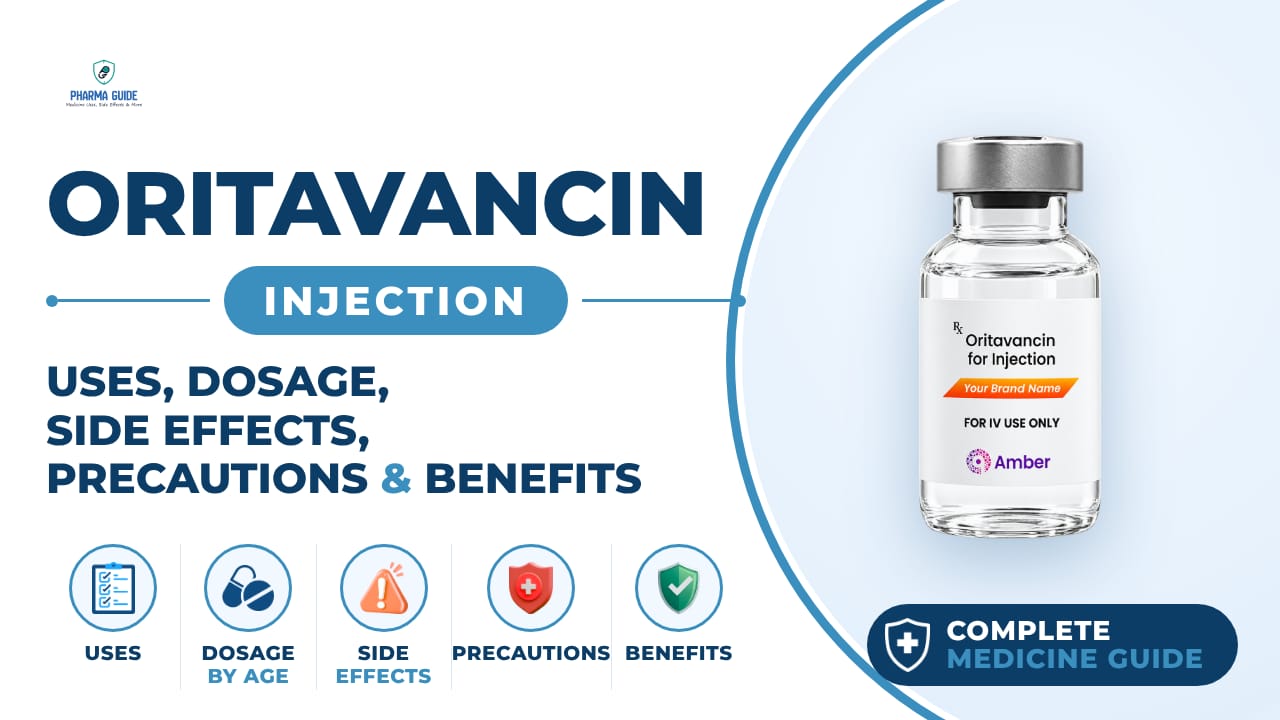
| Generic name | Oritavancin |
|---|---|
| Drug class | Glycopeptide antibacterial (lipoglycopeptide) |
| Forms | Powder for concentrate for solution for infusion (intravenous use only) |

Quick overview
Oritavancin Injection (generic name oritavancin) is a glycopeptide antibacterial from the lipoglycopeptide class. It is given by IV infusion to treat certain Gram-positive bacterial infections, including skin and skin-structure infections and infections caused by susceptible MRSA. It is typically given as a single IV dose and is administered only by a doctor or nurse. Use exactly as directed by your healthcare provider.
What is Oritavancin Injection
Oritavancin is an antibiotic given by IV infusion. It is a type of lipoglycopeptide antibiotic that kills or stops the growth of certain bacteria, mainly Gram-positive types.
Oritavancin Injection uses
- Treats acute bacterial skin infections
- Treats skin-structure infections
- Active against susceptible MRSA
- Treats selected Gram-positive bacterial infections
Benefits of Oritavancin Injection
- Provides single-dose IV treatment
- Has prolonged antibacterial activity
- Reduces the need for repeated daily antibiotic doses
- Provides activity against several important Gram-positive pathogens
How Oritavancin Injection works
Oritavancin works in three ways: it blocks two different steps bacteria need to build their cell walls, and it also damages the bacterial cell membrane, causing the bacteria to die quickly.
Oritavancin Injection dosage
Oritavancin is given only by a doctor or nurse as an infusion (drip) into a vein. It is given as a single dose; the two available strengths (400 mg and 1200 mg products) have different infusion times and preparation steps, so the specific product instructions must be followed carefully. Treatment continues to be monitored by your doctor even if you start feeling better early on. If you have a reaction during the infusion (such as flushing, rash, chest pain, or chills), your doctor may stop or slow the infusion.
| Age group | Dose |
|---|---|
| Under 18 years | Safety and effectiveness have not been established |
| 18–64 years | 1,200 mg IV as a single dose |
| 65–74 years | 1,200 mg IV as a single dose |
Available forms and strengths
Powder for concentrate for solution for infusion (intravenous use only), available as 400 mg and 1,200 mg products.
Side effects of Oritavancin Injection
Common
- Nausea
- Vomiting
- Diarrhea
- Constipation
- Headache
- Dizziness
- Itching, skin rash, hives
- Muscle pain
- Fast heartbeat
- Infusion site reactions (pain, redness, irritation)
- Abdominal pain
- Fever
- Fatigue
- Chills
- Liver enzyme increases (seen on blood tests)
- Cellulitis or abscess (worsening infection or new infection at another skin site)
- Low red blood cell count (anemia)
- Trouble sleeping
- Sore throat
- Cough
Serious
- Serious allergic reactions, including anaphylaxis and anaphylactic shock
- Severe infusion-related reactions with chest pain, chest discomfort, chills, tremor, back pain, neck pain, trouble breathing, low oxygen levels, abdominal pain, and fever
- Severe diarrhea caused by Clostridioides difficile infection, which can range from mild to life-threatening
- Bone infection (osteomyelitis)
- New abscess formation at another site on the skin
- Low blood platelet count (thrombocytopenia)
- Low blood sugar (hypoglycemia)
- High uric acid levels
- Severe skin reactions such as angioedema or erythema multiforme
Warnings and precautions
- Serious allergic reactions, including severe whole-body allergic reactions, have happened with this medicine. If this occurs during the infusion, treatment must be stopped right away and emergency care given.
- A blood-thinning medicine called unfractionated heparin must not be given within 5 days after receiving this medicine, because it can make a certain blood test falsely show incorrect results, leading to unsafe heparin dosing.
- This medicine can affect several blood clotting lab tests for hours to days afterward, which may make results inaccurate, including tests used to monitor blood thinners like warfarin.
- Severe diarrhea caused by a bacterial infection in the gut (C. difficile) can occur during or after antibiotic use and can be life-threatening.
- This medicine only works against certain types of bacteria and does not treat infections from other germs; if a mixed infection is suspected, other antibiotics are also needed.
- More cases of bone infection (osteomyelitis) were seen in people treated with this medicine compared to those treated with vancomycin in clinical trials.
- There is limited information about using this medicine during pregnancy. It should only be used in pregnancy if your doctor believes the benefit is greater than any possible risk to the baby.
- It is not known if this medicine passes into human breast milk. Animal studies showed it does pass into milk. Your doctor will help you decide whether to breastfeed or receive this treatment.
- No dose change is needed for mild or moderate kidney problems. There is very limited information for people with severe kidney problems, so caution is needed, and this medicine is not removed from the blood by dialysis.
- No dose change is needed for mild to moderate liver problems. There is no information on severe liver impairment, so caution should be used in that situation.
- No major direct interaction with alcohol is established.
- This medicine can cause dizziness, which may affect your ability to drive or use machines.
Storage
- Store vials at a controlled temperature as directed by the product (do not store above 25°C for one product; the other does not require special storage conditions)
- Keep out of the sight and reach of children
- After the medicine is mixed (reconstituted) and diluted for infusion, it should be used right away; if it cannot be used immediately, there are limited time windows for safe storage depending on temperature
- Do not throw away any unused medicine via wastewater; ask your pharmacist how to dispose of medicines no longer needed
When to see a doctor
- Get medical help right away if you notice signs of a severe allergic or infusion reaction, such as flushing, hives, itching, rash, wheezing, trouble breathing, sudden swelling of the face/throat, shivering, a fast or weak pulse, chest pain or tightness, or feeling faint or dizzy from low blood pressure.
- Tell your doctor if you develop severe or ongoing diarrhea, as this could be a sign of a serious gut infection.
- Tell your doctor if you notice new bone pain, swelling, or other signs of a possible bone infection after treatment.
Alternatives
- Vancomycin
- Dalbavancin
- Daptomycin
- Linezolid
- Ceftaroline
- Telavancin
Watch the video
FAQs
What is Oritavancin Injection used for?
It treats acute bacterial skin and skin-structure infections, including those caused by susceptible MRSA, and other selected Gram-positive bacterial infections.
How is Oritavancin Injection given?
It is given only by a doctor or nurse as a single IV infusion into a vein. It comes in 400 mg and 1,200 mg strengths with different infusion times and preparation steps.
How does Oritavancin Injection work?
It works in three ways: blocking two different steps bacteria need to build their cell walls and damaging the bacterial cell membrane, causing the bacteria to die quickly.
What are the common side effects of Oritavancin Injection?
Common side effects include nausea, vomiting, diarrhea, constipation, headache, dizziness, skin rash or itching, muscle pain, fast heartbeat, infusion site reactions, abdominal pain, fever, fatigue, and chills.
Can Oritavancin Injection be used with heparin?
No, unfractionated heparin must not be given within 5 days after receiving oritavancin because it can cause a blood test to falsely show incorrect results, leading to unsafe heparin dosing.
General information, not medical advice
Your prescriber and the leaflet in your pack know your situation. This page does not.
- Follow your prescriber and the leaflet
- Don't start, stop, or change a dose on your own
- Doses and warnings differ by country and product
Sources
Video
Related medicines

Injectafer Injection: Uses, Dosage, Side Effects, Precautions and Alternates
Iron products
Injectafer (ferric carboxymaltose) treats iron deficiency anemia and heart failure-related iron deficiency via IV. Learn uses, dosage, side effects, and

Gliclazide Tablet: Uses, Dosage, Side Effects, Precautions and Alternates
Sulfonylurea (hypoglycemic/antidiabetic agent)
Gliclazide Tablet is a sulfonylurea for type 2 diabetes that boosts insulin release. Learn about dosage, side effects, warnings, and precautions.