
Safety
General information, not medical advice
Your prescriber and the leaflet in your pack know your situation. This page does not.
- Follow your prescriber and the leaflet
- Don't start, stop, or change a dose on your own
- Doses and warnings differ by country and product
Orkambi Tablet: Uses, Dosage, Side Effects, Precautions and Alternates
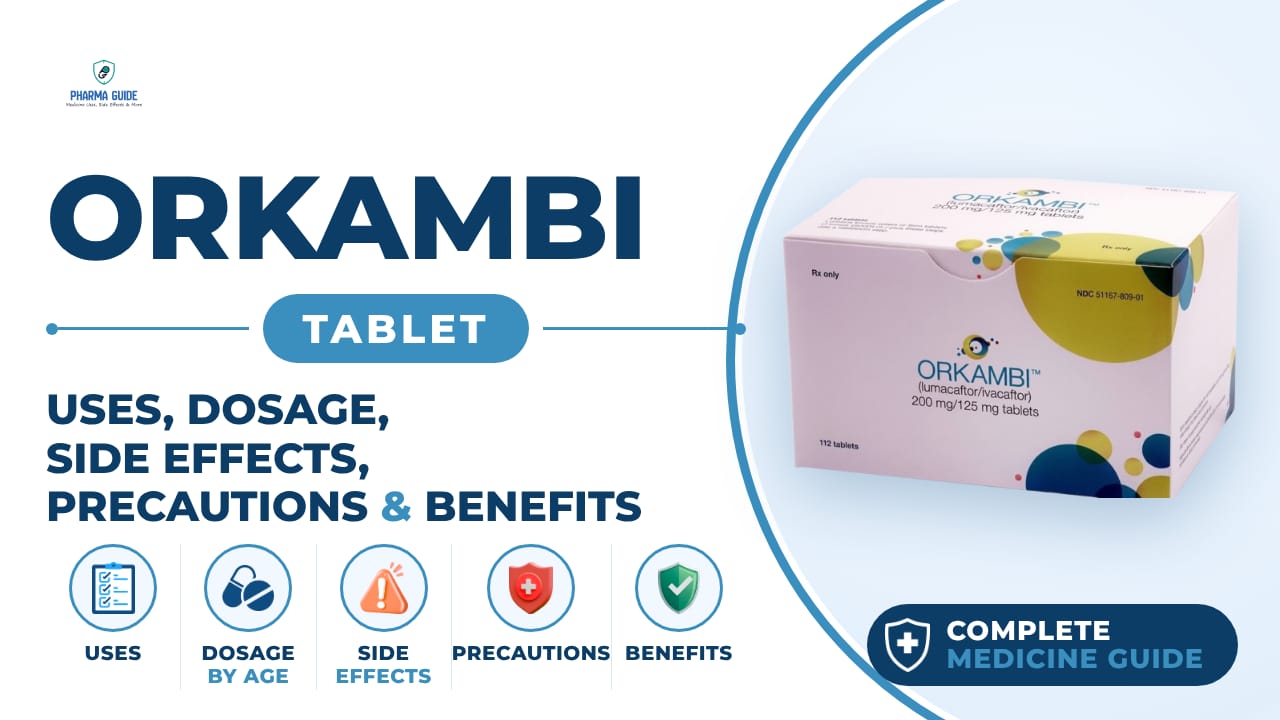
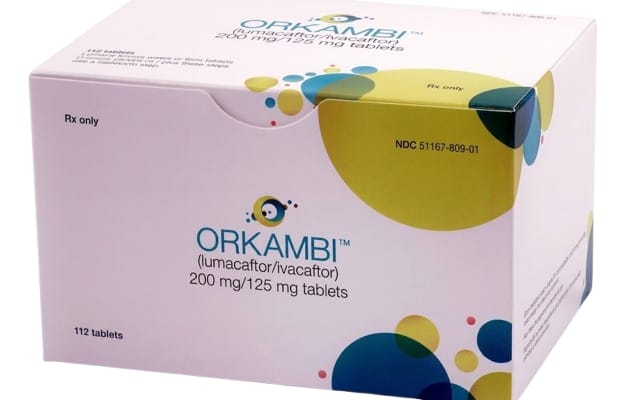
| Generic name | lumacaftor and ivacaftor |
|---|---|
| Drug class | CFTR combinations (cystic fibrosis transmembrane conductance regulator corrector and potentiator combination) |
| Forms | Tablet |
Quick overview
Orkambi Tablet (lumacaftor and ivacaftor) is a prescription CFTR corrector and potentiator combination medicine used to treat cystic fibrosis in people who have two copies of the F508del mutation in their CFTR gene. It works by helping the CFTR protein fold correctly and function better, improving chloride transport in cells. In clinical trials, it improved lung function, reduced sweat chloride levels, and reduced pulmonary exacerbations. It is taken twice daily with fat-containing food, and it carries warnings related to liver function, breathing problems, and blood pressure.
What is Orkambi Tablet
Orkambi is a prescription medicine that combines two drugs, lumacaftor and ivacaftor, used to treat cystic fibrosis in people who have two copies of the F508del mutation in their CFTR gene.
Orkambi Tablet uses
- Treatment of cystic fibrosis (CF) in patients age 1 year and older who are homozygous for the F508del mutation in the CFTR gene (have two copies of this mutation)
- Not established as safe and effective in patients with CF other than those homozygous for the F508del mutation
Benefits of Orkambi Tablet
- Improves lung function (percent predicted FEV1) compared to placebo in clinical trials
- Reduces sweat chloride levels, a marker of CFTR function
- Reduces the number of pulmonary exacerbations (flare-ups needing antibiotics)
How Orkambi Tablet works
The CFTR protein normally acts like a channel that lets chloride move in and out of cells. In cystic fibrosis caused by the F508del mutation, this protein is misshapen and doesn't work well or reach the cell surface properly. Lumacaftor helps the protein fold correctly so more of it reaches the cell surface, while ivacaftor helps the channel open and work better once it's there, together improving chloride transport.
Orkambi Tablet dosage
Take exactly as your doctor tells you to take it. Always take ORKAMBI tablets or granules with foods that contain fat, such as eggs, avocados, nuts, butter, peanut butter, cheese pizza, or whole-milk dairy products. Take your doses 12 hours apart. Swallow the tablet whole and do not crush, chew, or break it.
For oral granules: mix the entire packet with one teaspoon of age-appropriate soft food or liquid at or below room temperature, and consume completely within one hour of mixing. Give a child fat-containing food just before or just after the granules dose.
If you miss a dose and remember within 6 hours, take it with fat-containing food; if more than 6 hours have passed, skip that dose and resume your normal schedule. Do not take a double dose to make up for a missed dose. Tell your doctor if you stop taking ORKAMBI for more than 1 week, since your dose may need to be adjusted when restarting. Avoid grapefruit products during the first week of treatment.
| Age group | Dose |
|---|---|
| Under 18 years | Not recommended |
| 18–64 years | 400 mg/250 mg, twice/day |
| 65+ years | 400 mg/250 mg, twice/day |
Available forms and strengths
- Tablet
Side effects of Orkambi Tablet
Common
- Breathing problems such as shortness of breath and chest tightness
- Nausea
- Diarrhea
- Fatigue
- Increase in a certain blood enzyme called creatine phosphokinase
- Rash
- Gas (flatulence)
- Common cold symptoms (stuffy or runny nose, sore throat)
- Flu or flu-like symptoms
- Irregular, missed, or abnormal periods, and increased menstrual bleeding
- In children: cough with sputum, stuffy nose, headache, stomach pain, increase in sputum
Serious
- Worsening liver function, including liver failure that can lead to death, especially in people with advanced liver disease
- High liver enzymes in the blood, a sign of possible liver injury
- Breathing problems such as chest tightness or trouble breathing, especially when starting treatment
- Increased blood pressure
- Cataracts (eye lens abnormalities) in children and adolescents
- Allergic reaction: hives, difficulty breathing, swelling of face, lips, tongue, or throat
- Mental health problems such as anxiety, depression, suicidal thoughts or behaviors, or trouble sleeping
Warnings and precautions
- Orkambi can worsen liver function in people with advanced liver disease, and this has led to liver failure and death in some cystic fibrosis patients with pre-existing cirrhosis and high blood pressure in liver blood vessels.
- Orkambi can raise liver enzyme levels, sometimes along with raised bilirubin, which can signal liver injury. Your doctor will check your liver with blood tests before starting, every 3 months during the first year, and yearly after that.
- Breathing problems such as chest discomfort, shortness of breath, and abnormal breathing occur more often when starting Orkambi, and can be serious, especially in people with advanced lung disease.
- Orkambi can raise blood pressure in some people, so your doctor should check your blood pressure regularly during treatment.
- Orkambi can make hormonal birth control (pills, injections, implants, patches, vaginal rings) less effective and increase menstrual side effects, so a backup non-hormonal birth control method should be used.
- Orkambi can interact seriously with certain medicines, including some antibiotics, antifungals, seizure medicines, sedatives, and organ transplant anti-rejection drugs, which can make those drugs less effective or require different dosing.
- Non-congenital cataracts (clouding of the eye lens) have been reported in children treated with Orkambi or ivacaftor, so eye exams are recommended before and during treatment in pediatric patients.
- Avoid grapefruit products during the first week of treatment, as they can increase the amount of Orkambi in your blood.
- It isn't known if Orkambi will harm an unborn baby. Talk with your doctor if you are pregnant or planning to become pregnant to decide together whether to use this medicine.
- It isn't known whether Orkambi passes into human breast milk. Talk with your doctor about whether to use this medicine while breastfeeding.
- Orkambi hasn't been studied in people with kidney impairment. No dose change is needed for mild to moderate kidney problems, but caution is advised for severe kidney impairment or kidney failure.
- Orkambi should be used carefully in people with advanced liver disease, and the dose may need to be lowered. Liver failure, including fatal cases, has occurred in people with pre-existing liver cirrhosis and high blood pressure in the liver's blood vessels.
- Excessive alcohol may add to liver-related risk.
Storage
- Store at room temperature between 68°F to 77°F (20°C to 25°C)
- Do not use ORKAMBI after the expiration date on the package
- Keep ORKAMBI and all medicines out of the reach of children
When to see a doctor
- Get emergency help right away for signs of an allergic reaction, such as hives, trouble breathing, or swelling of the face, lips, tongue, or throat.
- Call your doctor right away if you notice signs of liver problems, such as pain in the upper right stomach area, yellowing of skin or eyes, loss of appetite, nausea or vomiting, dark urine, or confusion.
- Call your doctor if you have trouble breathing, shortness of breath, or chest tightness, especially when starting the medicine.
- Call your doctor right away if you notice an increase in your blood pressure.
- Call your doctor if you or your child experience vision changes, since cataracts have occurred in children and teens taking this medicine.
- Seek medical help right away if you suspect an overdose.
Alternatives
- Trikafta
- Symdeko
- Kalydeco
Watch the video
FAQs
What is Orkambi Tablet used for?
Orkambi treats cystic fibrosis in patients age 1 year and older who have two copies of the F508del mutation in the CFTR gene.
How should Orkambi Tablet be taken?
Orkambi should be taken exactly as prescribed, with fat-containing food, with doses spaced 12 hours apart. Tablets should be swallowed whole without crushing, chewing, or breaking.
What should I do if I miss a dose of Orkambi?
If you remember within 6 hours of a missed dose, take it with fat-containing food. If more than 6 hours have passed, skip that dose and resume your normal schedule without doubling up.
What are the serious side effects of Orkambi Tablet?
Serious side effects include worsening liver function or liver failure, high liver enzymes, breathing problems, increased blood pressure, cataracts in children and adolescents, allergic reactions, and mental health problems such as anxiety or suicidal thoughts.
Can Orkambi affect birth control?
Yes, Orkambi can make hormonal birth control methods like pills, injections, implants, patches, and vaginal rings less effective, so a backup non-hormonal method should be used.
General information, not medical advice
Your prescriber and the leaflet in your pack know your situation. This page does not.
- Follow your prescriber and the leaflet
- Don't start, stop, or change a dose on your own
- Doses and warnings differ by country and product
Sources
Video
Related medicines

Injectafer Injection: Uses, Dosage, Side Effects, Precautions and Alternates
Iron products
Injectafer (ferric carboxymaltose) treats iron deficiency anemia and heart failure-related iron deficiency via IV. Learn uses, dosage, side effects, and

Gliclazide Tablet: Uses, Dosage, Side Effects, Precautions and Alternates
Sulfonylurea (hypoglycemic/antidiabetic agent)
Gliclazide Tablet is a sulfonylurea for type 2 diabetes that boosts insulin release. Learn about dosage, side effects, warnings, and precautions.