
Safety
General information, not medical advice
Your prescriber and the leaflet in your pack know your situation. This page does not.
- Follow your prescriber and the leaflet
- Don't start, stop, or change a dose on your own
- Doses and warnings differ by country and product
ORS Sachet: Uses, Dosage, Side Effects, Precautions and Alternates
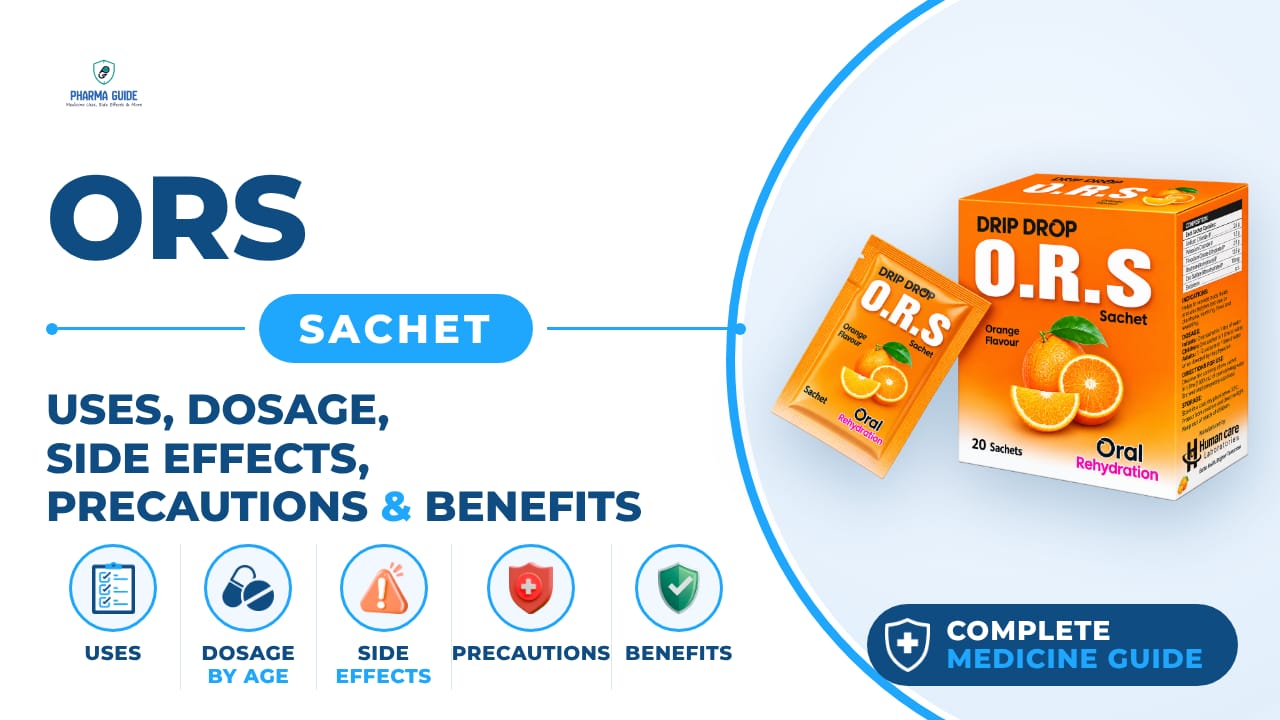
| Generic name | Oral Rehydration Salts |
|---|---|
| Drug class | Oral rehydration solution |
| Forms | Oral powder (sachet) |
Quick overview
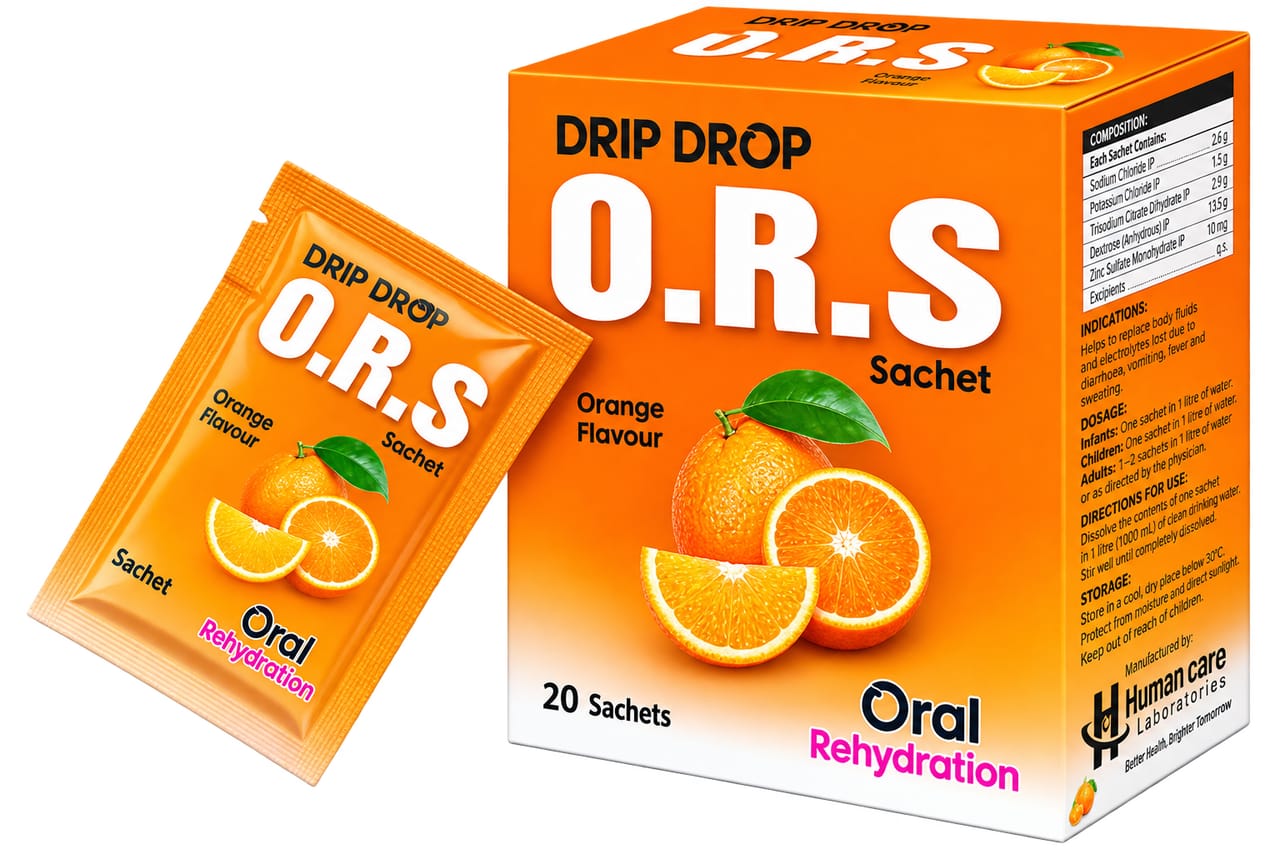
ORS Sachet contains Oral Rehydration Salts, an oral rehydration solution used to replace fluids and electrolytes lost during dehydration. It is a powder that is mixed with water and used worldwide, especially for dehydration caused by diarrhoea and vomiting. It works by helping the body absorb sodium and water more efficiently and is suitable for children and adults when prepared and used correctly.
What is ORS Sachet
ORS is a life-saving mixture of salt, sugar, and water that helps replace fluids and electrolytes lost from the body during dehydration. It comes as a powder sachet that is mixed with water and is used worldwide to treat dehydration, especially from diarrhoea and vomiting.
ORS Sachet uses
- Diarrhoea and vomiting - replaces lost fluids and electrolytes
- Heatstroke - prevents dehydration during extreme temperatures
- Athletic performance - boosts hydration levels in athletes who lose fluids through sweating
- Fatigue prevention - reduces fatigue among workers in hot environments
- Treating fluid and electrolyte loss from gastroenteritis in children with mild to moderate dehydration
Benefits of ORS Sachet
- Helps prevent and treat dehydration, especially from diarrhea.
- Replaces lost water and essential electrolytes.
- Helps restore sodium and potassium balance.
- Supports recovery from fluid loss due to vomiting, when taken in small, frequent amounts.
- Suitable for children and adults when prepared and used correctly.
How ORS Sachet works
ORS works using a process called sodium-glucose cotransport. The small intestine can still absorb sodium and glucose even during severe diarrhoea or vomiting. Glucose helps the body absorb more sodium and water in the gut, creating a pull that draws water into intestinal cells so the body can quickly take in water and electrolytes.
ORS Sachet dosage
Oral rehydration salts are usually given after each runny poo (diarrhoea). Open the sachet and mix the contents with the stated amount of tap water (use cooled boiled water for babies under 1 year). Stir well until all the powder has dissolved and the mixture is clear or just slightly cloudy.
Make sure the full dose is taken; if it cannot be drunk all at once, it can be taken over about 30 minutes, and a straw may help. Only use water to mix with the oral rehydration salts; do not use milk or juice, and never add extra sugar or salt. Use the correct amount of water when mixing, as too much or too little can unbalance the salts.
If vomiting occurs alongside diarrhoea, give small amounts often instead of large drinks. If sick less than 30 minutes after drinking the solution, give it again; if sick more than 30 minutes after, there is no need to give it again. Mothers should continue breastfeeding while giving ORS.
In the first 24 hours, babies with diarrhoea should have only breastfeeds, and older children should limit solid foods or milk, as this may worsen diarrhoea. Normal feeding should start again after 24 hours as the diarrhoea improves.
Do not use oral rehydration salts to treat diarrhoea for more than 2 to 3 days unless a doctor advises otherwise. Take small sips instead of big gulps. Always use clean, treated water to prepare ORS to avoid introducing additional pathogens.
| Age group | Dose |
|---|---|
| Under 2 years | 50–100 mL |
| 2–9 years | 100–200 mL |
| 10–17 years | As much as wanted, usually 200 mL or more |
| 18–64 years | As much as needed after each loose stool |
| 65+ years | As needed; monitor hydration and medical conditions |
Available forms and strengths
- Oral powder (sachet)
Side effects of ORS Sachet
Common
- Nausea or vomiting
- Dizziness or weakness
- Swelling in the ankles or feet
Serious
- Salt toxicity (hypernatremia) in rare cases
- Acute kidney injury, acidosis, and death if fluid loss is undervalued
- Facial edema following rehydration therapy
- Cardiovascular adverse events, seizures, and pulmonary edema
Warnings and precautions
- Oral rehydration salts do not treat the diarrhoea itself; they only replace lost salts and water to reduce the effects of dehydration.
- ORS is not suitable for patients with fluid loss greater than 10% of body weight, those unable to drink liquids, patients in shock, those who cannot keep ORS down due to vomiting, or those with bowel blockage (ileus).
- If a child has diabetes, be aware this medicine contains sugar; contact your doctor or diabetes nurse for advice.
- Only use water to mix the oral rehydration salts; never use milk or juice, and never add extra sugar or salt, as this could unbalance the formula.
- Mothers should continue breastfeeding along with ORS administration.
- If your child has liver or kidney disease, you should not use oral rehydration salts unless your doctor has told you to.
Storage
- Keep the sachets of medicine in a cupboard, away from heat and direct sunlight
- Make sure that children cannot see or reach the medicine
- Keep the medicine in the container it came in
- Do not keep the mixed solution for more than one hour at room temperature
- If kept in a fridge, the mixed solution may be kept for 24 hours
- Discard any unused mixed solution after the storage time has passed
- Make sure the medicine has not reached its 'best before' or 'use by' date; give old medicines to your pharmacist to dispose of
When to see a doctor
- Contact your doctor if your child shows signs of dehydration (such as fewer wet nappies, being less active, a dry mouth, crying without tears, or a sunken soft spot on a baby's head) and these are not improving.
- Contact your doctor straight away if your child cannot keep down any fluids at all and is showing signs of becoming dehydrated.
- Contact a doctor if your child's diarrhoea is very bad and not improving after 48 hours and you are worried about fluid loss.
- Get medical help right away if diarrhoea contains blood, a high fever is present, persistent vomiting prevents drinking, or signs of dehydration worsen despite taking ORS.
- Severe dehydration requiring intravenous fluids needs urgent medical attention.
- Seek medical attention if symptoms continue beyond 24 hours without improvement, there is blood in the stool, severe abdominal pain, a temperature above 38°C, extreme thirst despite drinking ORS, or the skin stays flat after being pinched.
Alternatives
- Rice-based ORS
- Pediatric Electrolyte Solution
- Ready-to-drink Oral Rehydration Solution
Watch the video
FAQs
How do you mix ORS Sachet?
Open the sachet and mix the contents with the stated amount of tap water (use cooled boiled water for babies under 1 year), stirring well until the powder has dissolved and the mixture is clear or just slightly cloudy. Only use water, never milk or juice, and never add extra sugar or salt.
How much ORS should be given to a child?
Dosage varies by age: under 2 years, 50–100 mL; 2–9 years, 100–200 mL; 10–17 years, usually 200 mL or more as wanted. It is usually given after each runny poo (diarrhoea), and small sips are better than big gulps.
What if my child vomits after taking ORS?
If vomiting occurs alongside diarrhoea, give small amounts often instead of large drinks. If sick less than 30 minutes after drinking the solution, give it again; if sick more than 30 minutes after, there is no need to give it again.
How long can mixed ORS solution be stored?
Do not keep the mixed solution for more than one hour at room temperature. If kept in a fridge, it may be kept for 24 hours, and any unused solution should be discarded after the storage time has passed.
When should I see a doctor while using ORS?
Contact a doctor if signs of dehydration are not improving, if your child cannot keep down any fluids, if diarrhoea is severe and not improving after 48 hours, or if there is blood in the stool, high fever, persistent vomiting, or worsening dehydration despite ORS.
General information, not medical advice
Your prescriber and the leaflet in your pack know your situation. This page does not.
- Follow your prescriber and the leaflet
- Don't start, stop, or change a dose on your own
- Doses and warnings differ by country and product
Sources
Video
Related medicines

Injectafer Injection: Uses, Dosage, Side Effects, Precautions and Alternates
Iron products
Injectafer (ferric carboxymaltose) treats iron deficiency anemia and heart failure-related iron deficiency via IV. Learn uses, dosage, side effects, and

Gliclazide Tablet: Uses, Dosage, Side Effects, Precautions and Alternates
Sulfonylurea (hypoglycemic/antidiabetic agent)
Gliclazide Tablet is a sulfonylurea for type 2 diabetes that boosts insulin release. Learn about dosage, side effects, warnings, and precautions.