
Safety
General information, not medical advice
Your prescriber and the leaflet in your pack know your situation. This page does not.
- Follow your prescriber and the leaflet
- Don't start, stop, or change a dose on your own
- Doses and warnings differ by country and product
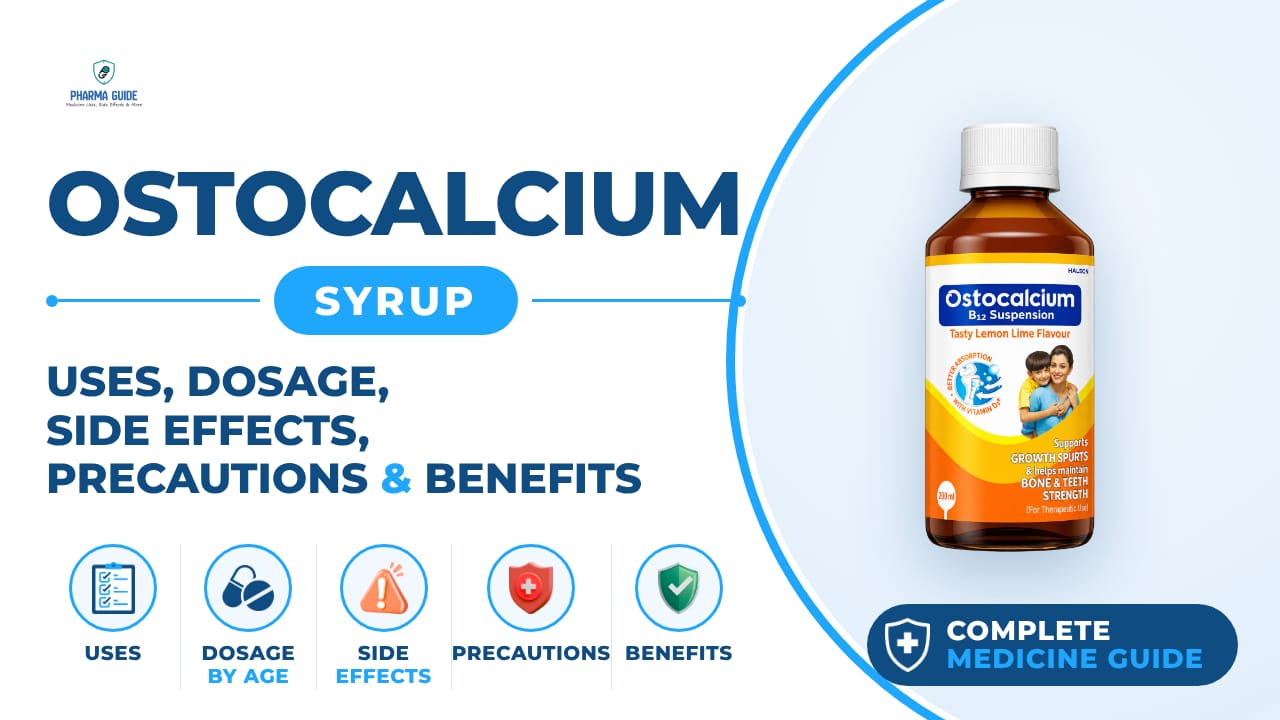
Ostocalcium Syrup: Uses, Dosage, Side Effects, Precautions and Alternates
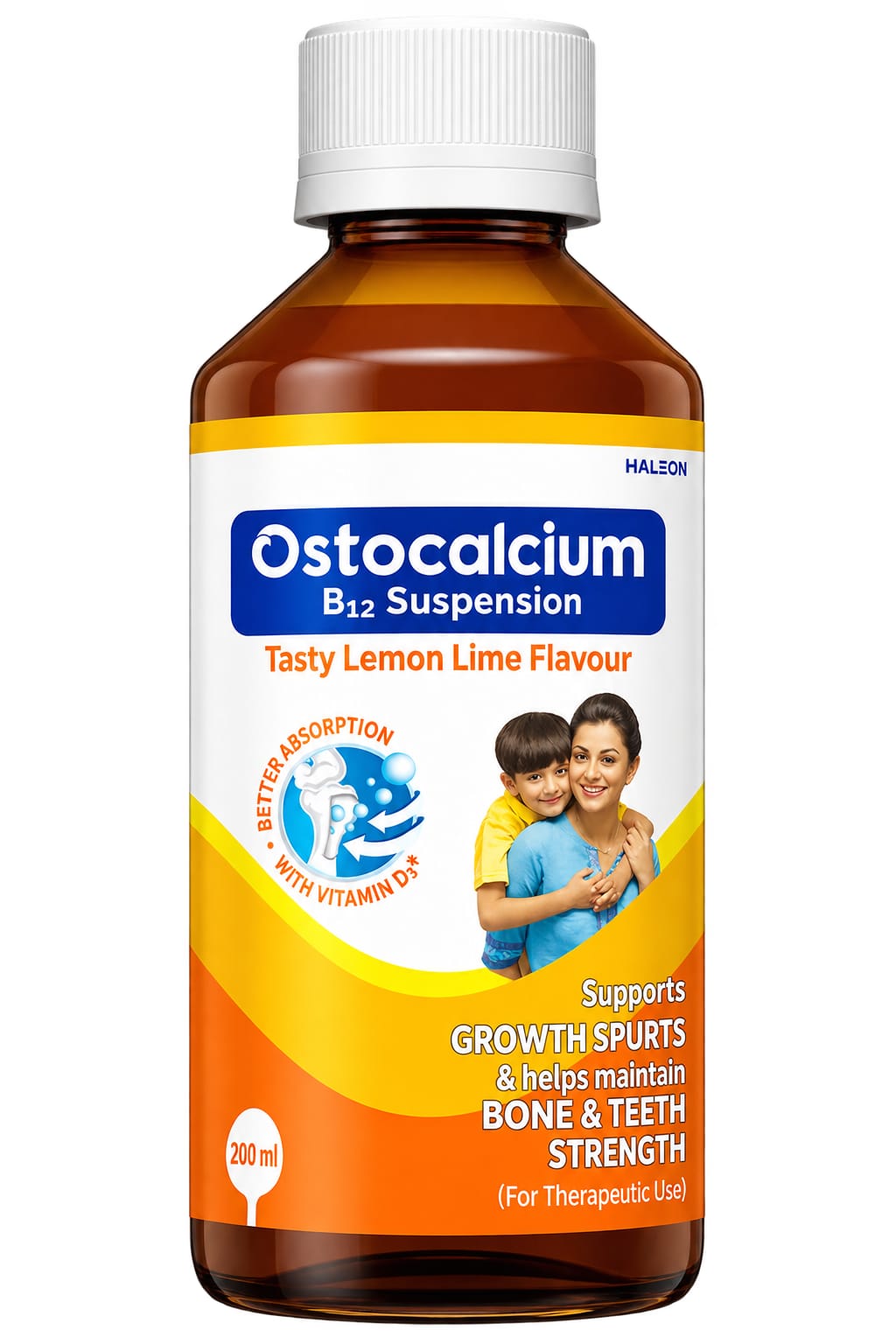
| Generic name | Suspension of Calcium and Vitamin D3 and B12 |
|---|---|
| Drug class | Mineral supplements; calcium, combinations with vitamin D and/or other drugs |
| Forms | Oral liquid (suspension) |
Quick overview
Ostocalcium Syrup is a mineral supplement containing Calcium, Vitamin D3, and Vitamin B12, used to correct combined deficiencies of these three nutrients. It supports weak bones and reduced bone mineral density linked to childhood growth, osteoporosis, and dietary deficiencies. The syrup should be shaken well before use and is generally taken after meals, with dosage depending on age and nutritional needs.
What is Ostocalcium Syrup
This medicine contains three active substances: Calcium, Vitamin D3, and Vitamin B12. It is used to correct combined deficiencies of these three nutrients.
Ostocalcium Syrup uses
- Correction of combined Vitamin D3, Calcium and Vitamin B12 deficiencies
- Supports weak bones and reduced bone mineral density linked to childhood growth, osteoporosis, and dietary deficiencies
Benefits of Ostocalcium Syrup
- Builds and maintains strong bones and teeth
- Supports normal muscle and nerve function
- Helps the body absorb calcium and phosphorus more effectively
- Supports red blood cell production and nerve health through Vitamin B12
- Meets increased calcium needs in growing children, pregnant/lactating women, and elderly people
How Ostocalcium Syrup works
Vitamin D3 helps the gut absorb calcium and phosphorus and helps the body use them to build bone, which corrects deficiency and controls the parathyroid hormone that can weaken bones. Vitamin B12 supports red blood cell production and the formation of the protective covering around nerves.
Ostocalcium Syrup dosage
Shake the bottle well before use. Children below 1 year of age should only take this medicine after consulting a doctor. It is recommended to be taken after meals.
Avoid eating foods high in oxalic acid (like spinach and rhubarb) or phytic acid (like wholegrain cereals) in the two hours before taking this medicine, as they can reduce calcium absorption. If you take tetracycline or quinolone antibiotics, thyroid hormones, or medicines containing iron, zinc, or strontium, take them at least two hours before or after this medicine. Take bisphosphonate bone medicines at least one hour before this medicine. Do not take more than the recommended amount.
| Age group | Dose |
|---|---|
| Under 1 Year | Use only if prescribed by a pediatrician |
| 1–5 Years | 2.5–5 mL once daily, as directed |
| 6–12 Years | 5–10 mL once daily, as directed |
| 13–17 Years | 10 mL once daily, as directed |
| Adults (18+ Years) | 10–20 mL daily, depending on nutritional needs |
Available forms and strengths
- Oral liquid (suspension)
Side effects of Ostocalcium Syrup
Common
- Constipation
- Flatulence
- Nausea
- Abdominal pain
- Diarrhea
- Itching
- Skin rashes and hives (urticaria)
Serious
- Excess calcium levels in the blood or urine
- Kidney stones
- Vomiting (usually a sign of overdose)
- Allergic reactions including sudden swelling of the face and neck with trouble breathing (angioedema)
- Throat swelling and tightness (laryngeal edema)
Warnings and precautions
Do not use this medicine if you are allergic to calcium, vitamin D, or any other ingredient, or if you have high blood calcium, high urine calcium, conditions that can cause these, kidney stones, calcium deposits in the kidneys, too much vitamin D in your body, or kidney failure.
If you take this medicine long-term, your doctor should regularly check your blood calcium level. This is especially important for older adults and people also taking heart medicines called cardiac glycosides or water pills (diuretics).
Tell your doctor before use if you have had kidney stones, an immune disorder called sarcoidosis, or if you are immobile with osteoporosis, since this can raise blood calcium too much.
This medicine should not be used by people with Leber's disease or tobacco amblyopia (a type of eye condition), since the Vitamin B12 in it may make these conditions worse.
Certain medicines can interact with this product, including epilepsy medicine (phenytoin) and sleep medicines (barbiturates), blood pressure water pills (thiazide diuretics), oral steroids, weight-loss medicine (orlistat), cholestyramine, mineral oil laxatives, tetracycline or quinolone antibiotics, heart medicines (cardiac glycosides), bone medicines (bisphosphonates), sodium fluoride, thyroid hormones, and medicines containing iron, zinc, or strontium, as well as omeprazole or neomycin.
If you are pregnant, think you may be pregnant, or are planning a pregnancy, ask your doctor for advice before taking this medicine. Taking too much calcium and vitamin D should be avoided, as constantly high calcium levels have been linked to harm to the developing baby.
Calcium and Vitamin D3 pass into breast milk, so check with your doctor before giving your baby any other products containing Vitamin D3. Only use higher doses of Vitamin B12 while breastfeeding if your doctor recommends it.
Do not use this medicine if you have kidney stones, calcium deposits in the kidneys, or kidney failure. Tell your doctor if you have ever had kidney stones.
This medicine is not expected to affect your ability to drive or use machines.
Storage
- Store in a well closed container at temperature not exceeding 30°C
- Protect from direct sunlight
- Do not freeze
- Keep out of reach of children
- Shake the bottle before use
When to see a doctor
Stop taking this medicine and tell your doctor right away if you get an allergic reaction such as skin rash or itching, or symptoms like nausea, diarrhea, stomach pain, constipation, or bloating.
If you think you have taken too much of this medicine and notice symptoms such as loss of appetite, extreme thirst, nausea, vomiting, constipation, stomach pain, muscle weakness, tiredness, mental changes, more frequent urination, or bone pain, stop taking it and contact your doctor immediately, even without symptoms, because too much calcium can lead to coma and death.
Alternatives
- Osteocare Liquid
- Calcium Sandoz Syrup
- Ostocalcium Tablets
Watch the video
FAQs
What is Ostocalcium Syrup used for?
It is used to correct combined deficiencies of Calcium, Vitamin D3, and Vitamin B12, and supports weak bones and reduced bone mineral density linked to childhood growth, osteoporosis, and dietary deficiencies.
What is the dosage of Ostocalcium Syrup for children?
Children aged 1–5 years take 2.5–5 mL once daily, 6–12 years take 5–10 mL once daily, and 13–17 years take 10 mL once daily, as directed. Children under 1 year should only use it if prescribed by a pediatrician.
What are the side effects of Ostocalcium Syrup?
Common side effects include constipation, flatulence, nausea, abdominal pain, diarrhea, itching, and skin rashes or hives. Serious effects include excess calcium levels, kidney stones, vomiting, and allergic reactions like angioedema or laryngeal edema.
Who should not take Ostocalcium Syrup?
It should not be used by people allergic to calcium or vitamin D, those with high blood or urine calcium, kidney stones, calcium deposits in the kidneys, excess vitamin D, kidney failure, Leber's disease, or tobacco amblyopia.
Can Ostocalcium Syrup be taken during pregnancy?
Pregnant women should consult their doctor before use, as taking too much calcium and vitamin D should be avoided since constantly high calcium levels have been linked to harm to the developing baby.
General information, not medical advice
Your prescriber and the leaflet in your pack know your situation. This page does not.
- Follow your prescriber and the leaflet
- Don't start, stop, or change a dose on your own
- Doses and warnings differ by country and product
Sources
Video
Related medicines

Injectafer Injection: Uses, Dosage, Side Effects, Precautions and Alternates
Iron products
Injectafer (ferric carboxymaltose) treats iron deficiency anemia and heart failure-related iron deficiency via IV. Learn uses, dosage, side effects, and

Gliclazide Tablet: Uses, Dosage, Side Effects, Precautions and Alternates
Sulfonylurea (hypoglycemic/antidiabetic agent)
Gliclazide Tablet is a sulfonylurea for type 2 diabetes that boosts insulin release. Learn about dosage, side effects, warnings, and precautions.