
Safety
General information, not medical advice
Your prescriber and the leaflet in your pack know your situation. This page does not.
- Follow your prescriber and the leaflet
- Don't start, stop, or change a dose on your own
- Doses and warnings differ by country and product
Oxaliplatin Injection: Uses, Dosage, Side Effects, Precautions and Alternates
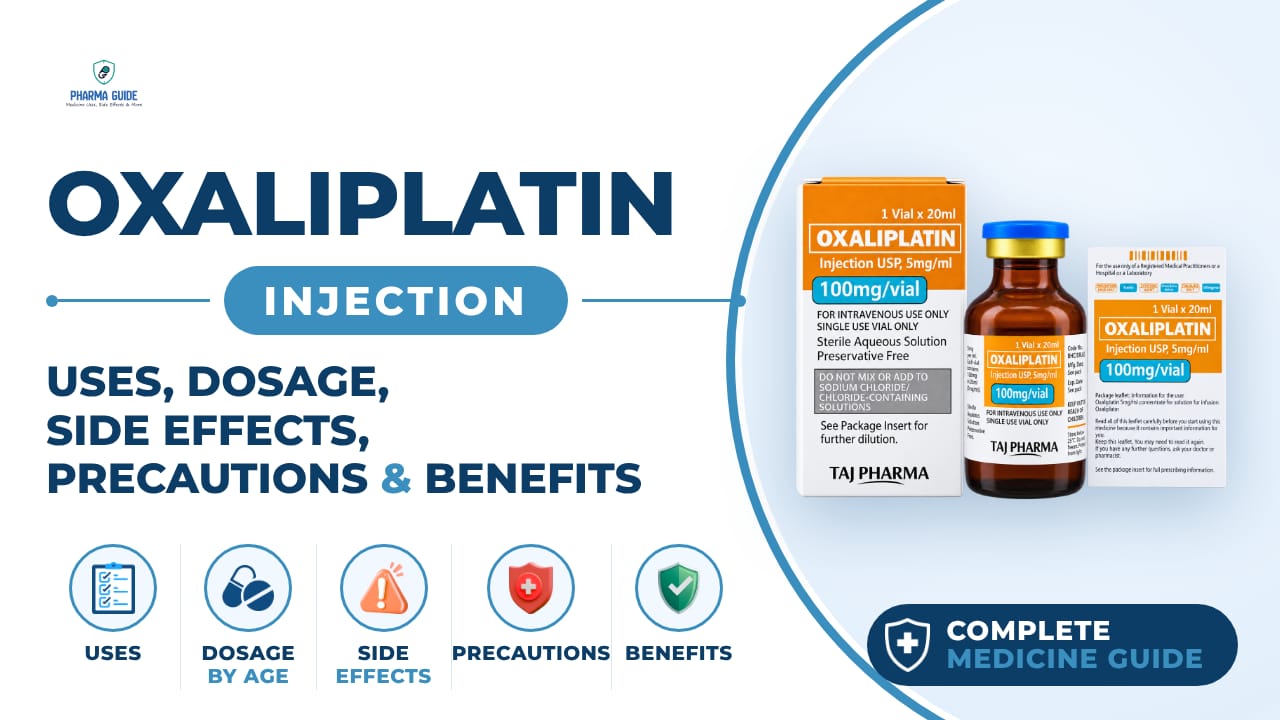
| Generic name | oxaliplatin |
|---|---|
| Drug class | Platinum-based antineoplastic agent (alkylating-type) |
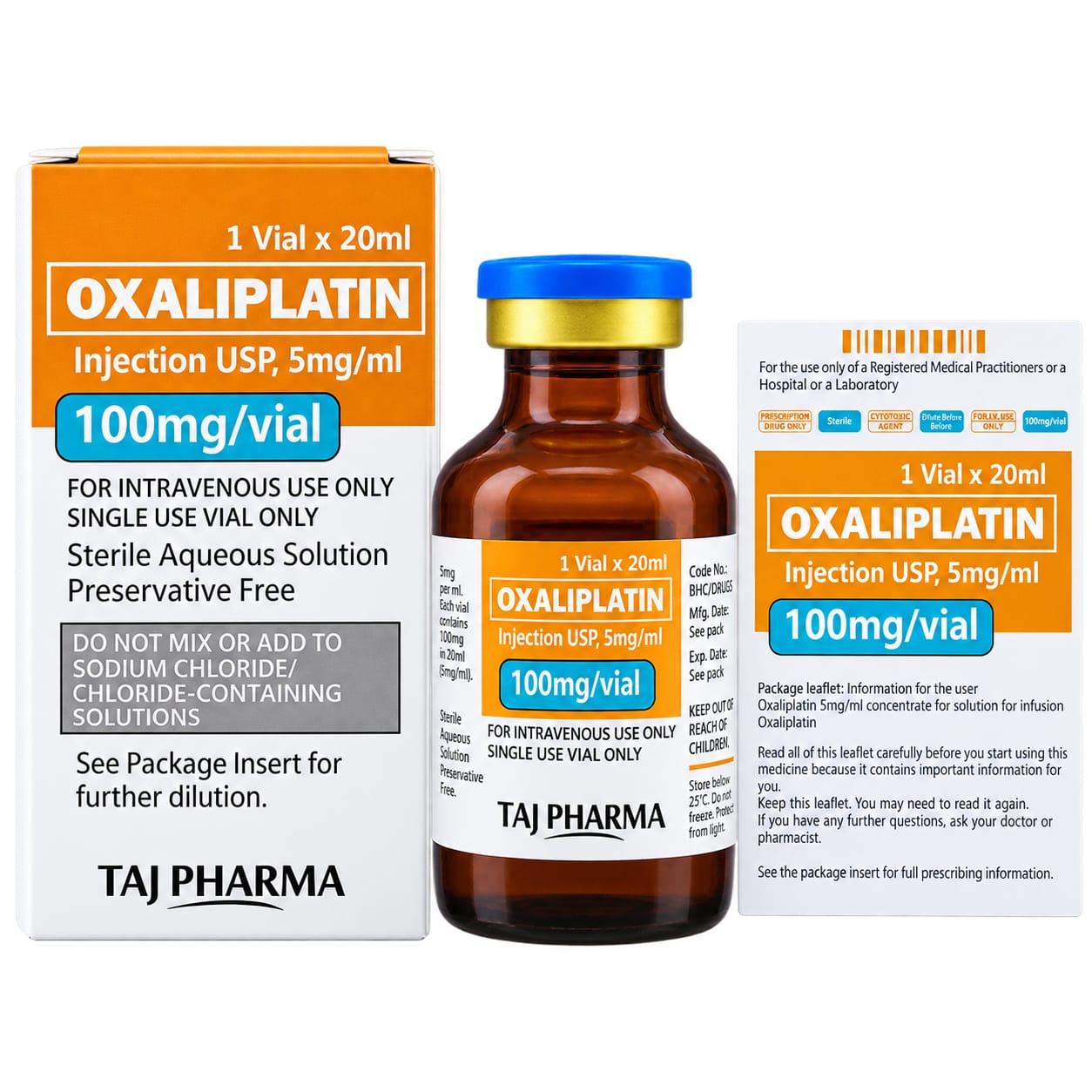
| Forms | Intravenous injection/infusion: 50 mg/10 mL (5 mg/mL) single-dose vial, Intravenous injection/infusion: 100 mg/20 mL (5 mg/mL) single-dose vial, Intravenous injection/infusion: 200 mg/40 mL (5 mg/mL) single-dose vial (one source) |
Quick overview
Oxaliplatin Injection is a platinum-based chemotherapy medicine given into a vein, used together with fluorouracil and leucovorin to treat certain colon and colorectal cancers. It is given as adjuvant treatment for stage III colon cancer after surgery and for advanced (metastatic) colorectal cancer. It works by damaging the DNA of cancer cells to stop them from multiplying. It can cause serious side effects, including allergic reactions, nerve problems, and low blood cell counts, so it is given under close medical supervision.
What is Oxaliplatin Injection
Oxaliplatin Injection is a platinum-based chemotherapy (anti-cancer) medicine given into a vein. It is used together with two other anti-cancer medicines, fluorouracil and leucovorin, to treat certain colon and colorectal cancers.
Oxaliplatin Injection uses
- Adjuvant treatment of stage III colon cancer in patients who have had complete surgical removal of the primary tumor
- Treatment of advanced (metastatic) colorectal cancer
- Always used in combination with fluorouracil and leucovorin
Benefits of Oxaliplatin Injection
- In the adjuvant setting, improved disease-free survival compared with fluorouracil/leucovorin alone in stage III colon cancer
- In previously untreated advanced colorectal cancer, longer time to tumor progression, longer overall survival, and higher response rate compared with irinotecan plus fluorouracil/leucovorin
- Higher tumor response rate when combined with fluorouracil/leucovorin compared to either fluorouracil/leucovorin or oxaliplatin alone in previously treated advanced colorectal cancer
How Oxaliplatin Injection works
Oxaliplatin changes into active forms inside the body that attach to DNA in cells, forming cross-links that block the cell's ability to copy its DNA and make new proteins. This stops cancer cells from multiplying and leads to their death.
Oxaliplatin Injection dosage
Oxaliplatin Injection is given as an intravenous infusion into a vein, together with leucovorin and followed by fluorouracil, on Day 1 of each treatment cycle. Leucovorin and fluorouracil are also given on Day 2, without oxaliplatin. Treatment cycles are usually repeated every 2 weeks.
For adjuvant treatment, cycles are usually continued for up to about 6 months (12 cycles) unless side effects become unacceptable. For advanced colorectal cancer, treatment is usually continued until the disease progresses or side effects become unacceptable.
Medicines to help prevent nausea and vomiting may be given before each treatment. Avoid cold drinks, ice, and exposure to cold temperatures or cold objects around the time of treatment, since cold can trigger or worsen nerve symptoms. Keep all scheduled appointments and follow instructions exactly, including care of the infusion pump if one is used at home.
| Age group | Dose |
|---|---|
| 18–64 years | Common colorectal-cancer regimen: 85 mg/m² IV every 2 weeks, usually as part of a combination regimen such as FOLFOX |
Available forms and strengths
- Intravenous injection/infusion: 50 mg/10 mL (5 mg/mL) single-dose vial
- Intravenous injection/infusion: 100 mg/20 mL (5 mg/mL) single-dose vial
- Intravenous injection/infusion: 200 mg/40 mL (5 mg/mL) single-dose vial (one source)
Side effects of Oxaliplatin Injection
Common
- Numbness, tingling, burning, or pain in hands, feet, or around the mouth/throat (nerve problems), often worsened by cold
- Low white blood cell count (neutropenia)
- Low platelet count (thrombocytopenia)
- Low red blood cell count (anemia)
- Nausea and vomiting
- Diarrhea
- Mouth sores (stomatitis)
- Changes in liver function blood tests
- Tiredness (fatigue)
- Loss of appetite
- Fever
- Injection site reactions (redness, swelling, pain)
Serious
- Severe allergic reactions (anaphylaxis) — trouble breathing, throat tightness, chest tightness, swelling of face/lips/tongue, wheezing, dizziness or fainting
- Severe low blood cell counts leading to serious infection, sepsis, or bleeding
- Posterior Reversible Encephalopathy Syndrome (PRES) — headache, confusion, seizures, vision changes
- Lung problems including pulmonary fibrosis or interstitial lung disease, which can be fatal
- Liver damage (hepatotoxicity)
- QT interval prolongation and irregular heartbeat, including fatal torsade de pointes
- Rhabdomyolysis (serious muscle breakdown) — muscle pain, swelling, weakness, fever, dark urine, decreased urination
- Serious bleeding (hemorrhage), including gastrointestinal bleeding, intracerebral hemorrhage
- Blood clots (thromboembolism)
- Kidney problems including acute renal failure
- Severe diarrhea or vomiting leading to dehydration and electrolyte imbalance
- Hearing loss
- Vision loss or vision changes (sometimes transient)
- Secondary cancers (reported in long-term follow-up)
Warnings and precautions
- Oxaliplatin can cause serious and sometimes fatal allergic reactions, including anaphylaxis, which can happen within minutes of the infusion and at any treatment cycle. It must not be used in anyone who has had an allergic reaction to oxaliplatin or other platinum-based medicines.
- Nerve damage (neuropathy) is common and can be sudden (within hours to days of a dose) or long-lasting. Cold temperatures can bring on or worsen these nerve symptoms.
- This medicine can severely lower blood cell counts, increasing the risk of dangerous infections, including sepsis, which can be fatal.
- A rare brain condition called Posterior Reversible Encephalopathy Syndrome (PRES) can occur, and treatment must be stopped permanently if it develops.
- Lung problems, including pulmonary fibrosis, can occur and may be fatal; unexplained cough or shortness of breath should be investigated before continuing treatment.
- This medicine can cause QT interval prolongation on heart tracings, which can lead to dangerous irregular heartbeats including fatal torsade de pointes.
- Serious muscle breakdown (rhabdomyolysis), which can be fatal, has been reported; treatment must be stopped permanently if this occurs.
- This medicine can increase the risk of serious bleeding, especially in patients also taking blood thinners.
- This medicine can cause harm to an unborn baby.
- Oxaliplatin can harm an unborn baby and should not be used during pregnancy. Women who could become pregnant should use effective birth control during treatment and for 9 months after the last dose; men should use effective contraception during treatment and for 6 months after the last dose.
- Breastfeeding is not recommended during treatment and for 3 months after the last dose because of the potential for serious harm to a nursing infant.
- Oxaliplatin is cleared mainly by the kidneys. No dose change is needed for mild or moderate kidney impairment, but the dose should be reduced in patients with severe kidney impairment, and some product information lists severe kidney impairment as a reason not to use this medicine at all.
- Liver function tests should be checked before starting treatment, before each cycle, and as needed, since this medicine can affect the liver.
- This medicine can cause dizziness, vision problems (including temporary vision loss), and nerve symptoms that may affect coordination, so patients should not drive or operate machinery if they experience these effects.
Storage
- Store at 20°C to 25°C (68°F to 77°F); brief excursions between 15°C and 30°C (59°F to 86°F) are permitted
- Do not freeze
- Protect the concentrated solution from light
- Keep the vial in its original outer carton
- Once diluted for infusion, the solution can be stored for no more than 6 hours at room temperature or 24 hours under refrigeration (2°C to 8°C); protection from light is not needed after dilution
- Discard any unused portion of the vial
- This is a hazardous (cytotoxic) drug — follow special procedures for handling and disposal; if the solution touches skin, wash immediately and thoroughly with soap and water, and flush mucous membranes with water if contacted
When to see a doctor
- Get emergency help right away for signs of a severe allergic reaction, such as trouble breathing, a feeling that the throat is closing up, or chest tightness.
- Call your healthcare provider right away for signs of a milder allergic reaction, such as rash, flushing, hives, itching, swelling of lips/tongue/face/eyelids, wheezing, sudden cough, dizziness or feeling faint, sweating, or chest pain.
- Tell your healthcare provider right away about signs of nerve problems such as extreme sensitivity to cold, trouble breathing/swallowing/speaking, jaw tightness, odd tongue sensations, chest pressure, or pain/tingling/burning/numbness in the hands, feet, or around the mouth or throat.
- Call your healthcare provider right away if you have a high or prolonged fever, or any signs of infection such as chills, sore throat, pain on swallowing or urination, redness/swelling at the IV site, persistent diarrhea, or cough with mucus.
- Tell your healthcare provider right away if you have headache, confusion or changes in thinking, seizures, or vision problems such as blurriness or vision loss, which could be signs of PRES.
- Report any persistent or recurrent cough or shortness of breath to your healthcare provider immediately, as this may indicate a serious lung problem.
- Seek medical help right away if you faint, have an irregular heartbeat, or have chest pain, as these may signal a serious heart problem.
- Tell your healthcare provider right away if you have muscle pain and swelling along with weakness, fever, dark or red-brown urine, or decreased/difficult urination, which may indicate serious muscle damage.
- Promptly tell your healthcare provider about any signs of bleeding, such as blood in stool or black stools, pink or brown urine, unusual bruising, coughing or vomiting blood, or severe/uncontrolled bleeding.
- Contact your healthcare provider for persistent vomiting, diarrhea, or signs of dehydration.
Alternatives
- Irinotecan
- Fluorouracil (5-FU)
- Capecitabine
Watch the video
FAQs
What is Oxaliplatin Injection used for?
It is used as adjuvant treatment for stage III colon cancer after surgery and for advanced (metastatic) colorectal cancer, always given in combination with fluorouracil and leucovorin.
How is Oxaliplatin Injection given?
It is given as an intravenous infusion with leucovorin followed by fluorouracil on Day 1 of each treatment cycle, with leucovorin and fluorouracil continued on Day 2; cycles are usually repeated every 2 weeks.
What are the common side effects of Oxaliplatin Injection?
Common side effects include numbness, tingling, burning, or pain in the hands, feet, or around the mouth/throat (often worsened by cold), low blood cell counts, nausea, vomiting, diarrhea, mouth sores, fatigue, loss of appetite, and fever.
Why should I avoid cold during Oxaliplatin treatment?
Cold temperatures, drinks, ice, and cold objects can trigger or worsen nerve symptoms such as numbness, tingling, or pain, so they should be avoided around the time of treatment.
Can Oxaliplatin Injection be used during pregnancy or breastfeeding?
No, it can harm an unborn baby and should not be used during pregnancy, and breastfeeding is not recommended during treatment and for 3 months after the last dose.
General information, not medical advice
Your prescriber and the leaflet in your pack know your situation. This page does not.
- Follow your prescriber and the leaflet
- Don't start, stop, or change a dose on your own
- Doses and warnings differ by country and product
Sources
Video
Related medicines

Injectafer Injection: Uses, Dosage, Side Effects, Precautions and Alternates
Iron products
Injectafer (ferric carboxymaltose) treats iron deficiency anemia and heart failure-related iron deficiency via IV. Learn uses, dosage, side effects, and

Gliclazide Tablet: Uses, Dosage, Side Effects, Precautions and Alternates
Sulfonylurea (hypoglycemic/antidiabetic agent)
Gliclazide Tablet is a sulfonylurea for type 2 diabetes that boosts insulin release. Learn about dosage, side effects, warnings, and precautions.