
Safety
General information, not medical advice
Your prescriber and the leaflet in your pack know your situation. This page does not.
- Follow your prescriber and the leaflet
- Don't start, stop, or change a dose on your own
- Doses and warnings differ by country and product
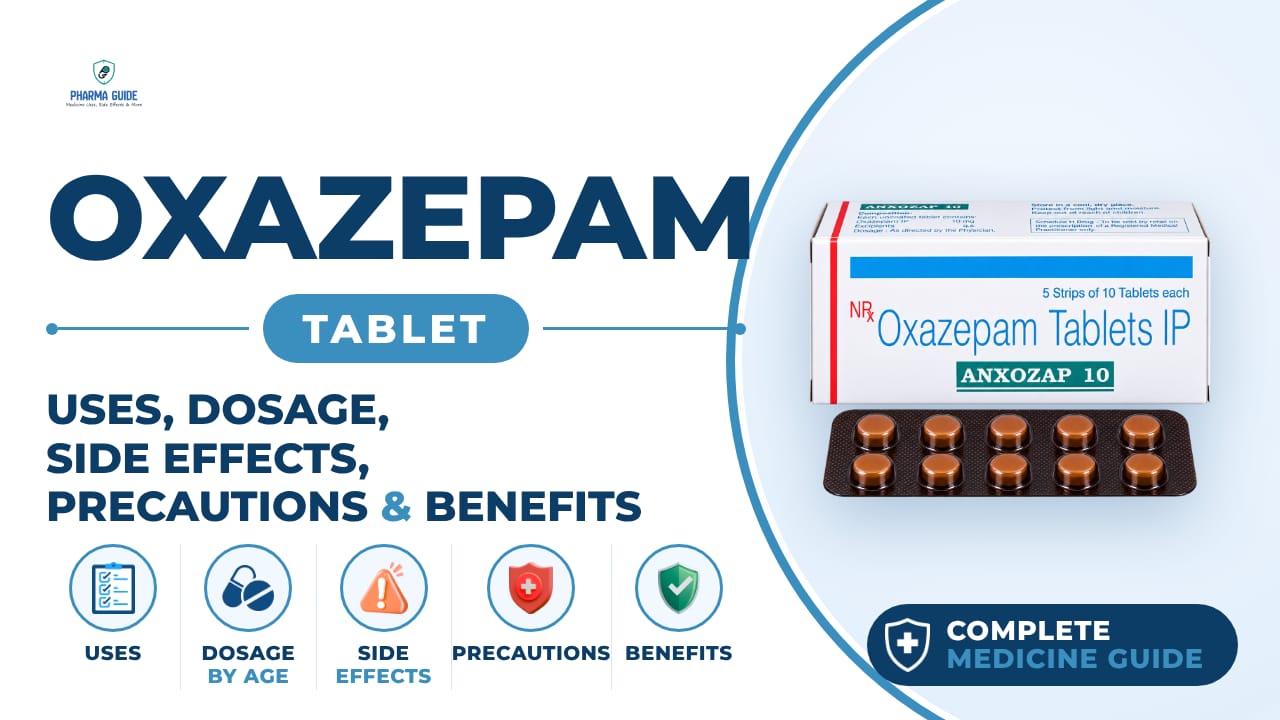
Oxazepam Tablet: Uses, Dosage, Side Effects, Precautions and Alternates
| Generic name | oxazepam |
|---|---|
| Drug class | benzodiazepine (anxiolytic, central nervous system depressant) |
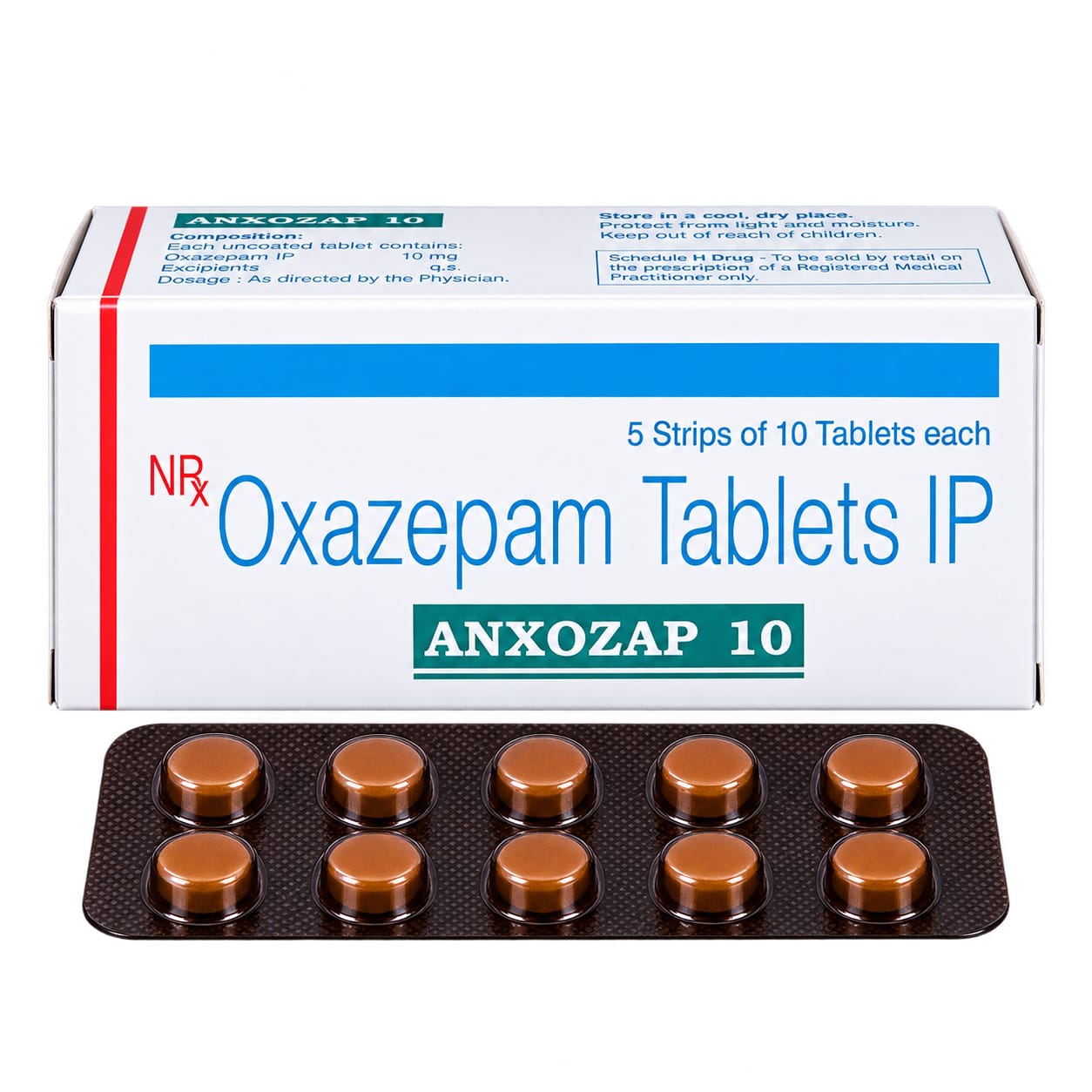
| Forms | Capsule |
Quick overview
Oxazepam is a prescription benzodiazepine medicine that slows down the central nervous system and is classified as a controlled substance. It is used mainly for anxiety disorders, short-term relief of anxiety, sudden alcohol withdrawal symptoms, and tension or agitation in older adults. It works by producing a calming effect on the brain and nerves. It carries risks of dependence, withdrawal, and dangerous interactions with alcohol and other CNS depressants.
What is Oxazepam Tablet
Oxazepam is a prescription benzodiazepine medicine that slows down the central nervous system. It is a controlled substance available only with a doctor's prescription.
Oxazepam Tablet uses
- Treating anxiety disorders
- Short-term relief of anxiety symptoms, including anxiety linked with depression
- Relieving symptoms of sudden alcohol withdrawal, such as agitation, shakiness, and anxiety
- Managing tension, agitation, and irritability in older adults
Benefits of Oxazepam Tablet
- Calms overactive brain signals to ease general anxiety, worry, and restlessness
- Lowers nervous system over-excitement to control acute alcohol withdrawal effects like severe agitation and tremors
- Helps manage tension, irritability, and agitation in older patients, often with carefully monitored lower doses
How Oxazepam Tablet works
Oxazepam produces a calming effect on the brain and nerves, which helps reduce anxiety and the symptoms of sudden alcohol withdrawal.
Oxazepam Tablet dosage
Take this medicine exactly as your doctor prescribed, and do not take more, more often, or for longer than directed. Do not stop taking it suddenly after regular use; your doctor will have you gradually lower the dose. This medicine is swallowed by mouth.
If you miss a dose, take it as soon as you remember, but if it is almost time for your next dose, skip the missed one and do not double up. Follow the instructions in the Medication Guide that comes with this medicine.
This medicine is generally meant for short-term use, usually less than 4 months. Older adults may need a lower dose and closer monitoring because they are more likely to have side effects.
Use exactly as prescribed by your doctor or pharmacist.
Available forms and strengths
- Capsule
Side effects of Oxazepam Tablet
Common
- Drowsiness or sleepiness
- Dizziness or lightheadedness
- Vertigo or a sense of being off-balance
- Headaches
Serious
- Slowed or shallow breathing (respiratory depression)
- Confusion, memory problems, or unusual behavior
- Severe skin rashes or yellowing of the eyes/skin (jaundice)
- Sudden anger, excitement, or hallucinations (paradoxical reactions)
- Low blood pressure, especially in elderly people
- Severe allergic reactions, including swelling of the face, lips, tongue, or throat, trouble breathing, or hives
- New or worsening thoughts of suicide or self-harm
- Signs of misuse or addiction, including sudden confusion, feeling paranoid, or seizures
- Withdrawal reactions if the medicine is stopped suddenly, including seizures, hallucinations, or severe anxiety
- Risk of serious harm, including coma or death, when combined with opioids, alcohol, or other CNS depressants
Warnings and precautions
- Combining this medicine with alcohol, opioid pain medicines, or other central nervous system depressants can cause extreme sleepiness, dangerously slow breathing, coma, or death.
- Never stop taking this medicine suddenly after regular use. It must be gradually reduced under a doctor's supervision to prevent severe withdrawal reactions like seizures or extreme anxiety.
- There is a risk of abuse, misuse, and addiction with this medicine, which can happen even when taken exactly as prescribed.
- This medicine may worsen depression or cause new or increased thoughts of suicide, especially after starting treatment or changing the dose.
- Using this medicine during pregnancy can harm the unborn baby. Taking it late in pregnancy may cause breathing problems, low muscle tone, or withdrawal symptoms in the newborn. Tell your doctor right away if you are or might be pregnant.
- Oxazepam can pass into breast milk and may cause sleepiness, feeding problems, and poor weight gain in a breastfed baby. Talk to your doctor about the best way to feed your baby if you take this medicine.
- People with kidney disease should use this medicine with caution, since it may build up in the body if the kidneys are not working well.
- People with liver disease should use this medicine with caution, since the medicine may not be removed from the body as quickly, increasing its effects.
- Do not drink alcohol while taking this medicine. Combining it with alcohol can cause severe dizziness, sleepiness, and breathing problems.
- This medicine can affect your alertness, thinking, and coordination. Do not drive or operate heavy machinery until you know how it affects you.
Storage
- Store the medicine in a closed container at room temperature, away from heat, moisture, and direct light
- Keep from freezing
- Keep out of the reach of children
- Do not keep outdated medicine or medicine no longer needed
- Ask your healthcare professional how you should dispose of any medicine you do not use
- Store capsules between 68°F to 77°F (20°C to 25°C); it can tolerate 59°F to 86°F (15°C to 30°C) briefly, such as during transport
- Keep in a cool, dry place, in a tightly closed container, protected from light
When to see a doctor
- Get emergency help right away if you have slow or shallow breathing, breathing stops, or you feel excessively sleepy.
- Call your doctor or go to the nearest emergency room right away if you have sudden confusion, feel paranoid, have suicidal thoughts, seizures, or trouble breathing.
- Seek emergency care if you notice signs of a serious allergic reaction, such as swelling of the face, lips, tongue, or throat, trouble breathing, or widespread hives.
- Call your doctor right away if you notice symptoms of an overdose, such as confusion, loss of consciousness, severe drowsiness, or unsteady walk.
- Call your healthcare provider right away or go to the nearest emergency room if you get withdrawal symptoms like unusual movements, seizures, hallucinations, or sudden severe mental changes after stopping the medicine.
Alternatives
- Sertraline
- Escitalopram
- Hydroxyzine
- Buspirone
Watch the video
FAQs
What is Oxazepam Tablet used for?
Oxazepam is used for treating anxiety disorders, short-term relief of anxiety symptoms including anxiety linked with depression, relieving symptoms of sudden alcohol withdrawal such as agitation and shakiness, and managing tension, agitation, and irritability in older adults.
How does Oxazepam Tablet work?
Oxazepam produces a calming effect on the brain and nerves, which helps reduce anxiety and the symptoms of sudden alcohol withdrawal.
Can I drink alcohol while taking Oxazepam?
No, you should not drink alcohol while taking this medicine. Combining it with alcohol can cause severe dizziness, sleepiness, and breathing problems, and in combination with other CNS depressants can lead to coma or death.
What are the common side effects of Oxazepam?
Common side effects include drowsiness or sleepiness, dizziness or lightheadedness, vertigo or a sense of being off-balance, and headaches.
Can I stop taking Oxazepam suddenly?
No, you should never stop taking this medicine suddenly after regular use. It must be gradually reduced under a doctor's supervision to prevent severe withdrawal reactions like seizures or extreme anxiety.
General information, not medical advice
Your prescriber and the leaflet in your pack know your situation. This page does not.
- Follow your prescriber and the leaflet
- Don't start, stop, or change a dose on your own
- Doses and warnings differ by country and product
Sources
Video
Related medicines

Injectafer Injection: Uses, Dosage, Side Effects, Precautions and Alternates
Iron products
Injectafer (ferric carboxymaltose) treats iron deficiency anemia and heart failure-related iron deficiency via IV. Learn uses, dosage, side effects, and

Gliclazide Tablet: Uses, Dosage, Side Effects, Precautions and Alternates
Sulfonylurea (hypoglycemic/antidiabetic agent)
Gliclazide Tablet is a sulfonylurea for type 2 diabetes that boosts insulin release. Learn about dosage, side effects, warnings, and precautions.