
Safety
General information, not medical advice
Your prescriber and the leaflet in your pack know your situation. This page does not.
- Follow your prescriber and the leaflet
- Don't start, stop, or change a dose on your own
- Doses and warnings differ by country and product
Oxervate Eye Drops: Uses, Dosage, Side Effects, Precautions and Alternates
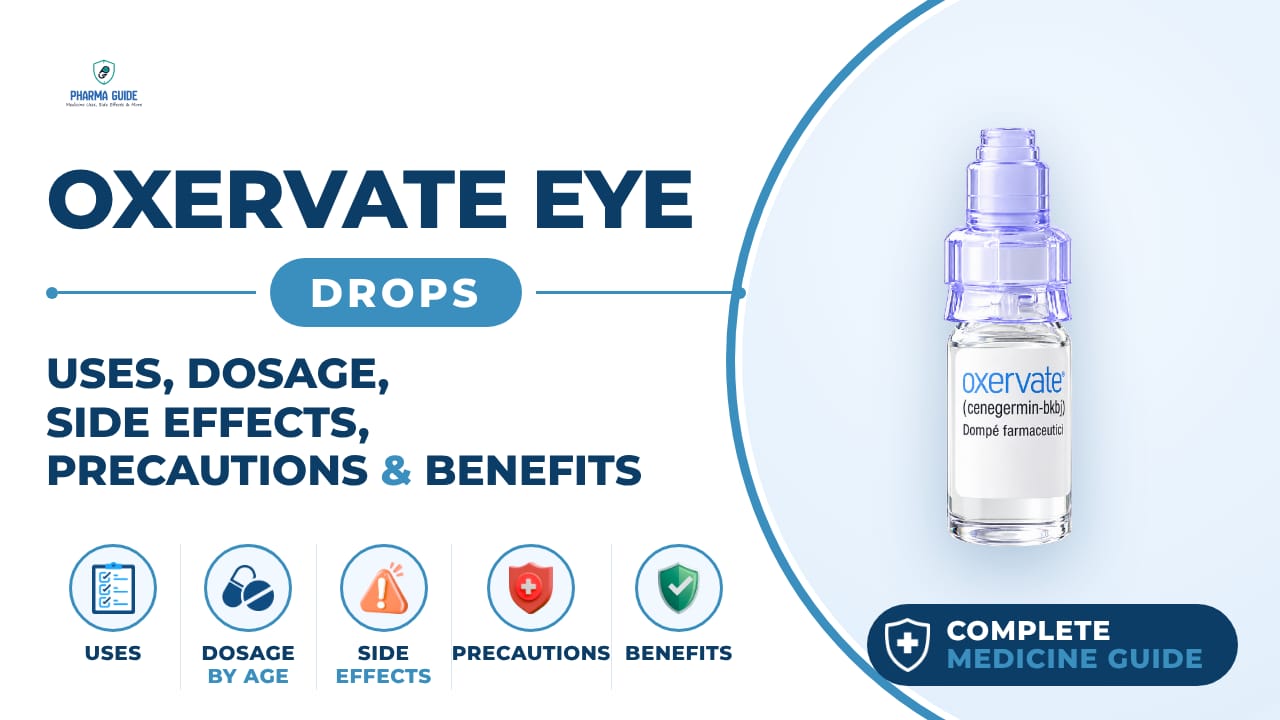
| Generic name | cenegermin-bkbj |
|---|---|
| Drug class | recombinant human nerve growth factor |
| Forms | ophthalmic solution (eye drops), 0.002% (20 mcg/mL) |
Quick overview
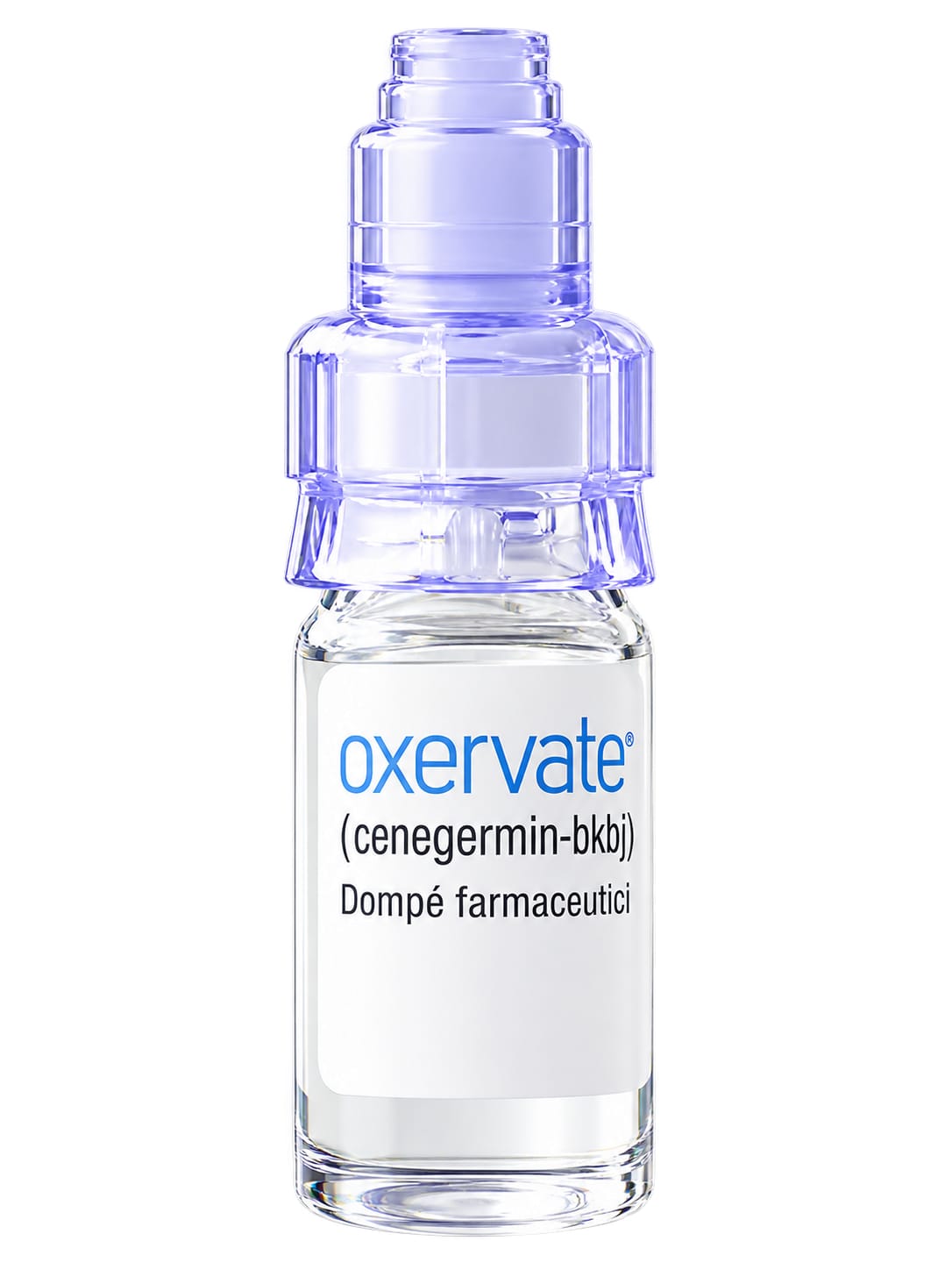
Oxervate Eye Drops (cenegermin-bkbj) is a prescription eye drop containing a lab-made form of human nerve growth factor, classified as a recombinant human nerve growth factor. It is the first FDA-approved treatment designed to heal the eye's surface in people with neurotrophic keratitis and is used in adults and children ages 2 years and older. It works by supporting nerve regrowth and corneal healing rather than simply adding moisture to the eye.
What is Oxervate Eye Drops
Oxervate is a prescription eye drop that contains a lab-made form of human nerve growth factor. It is the first FDA-approved treatment designed to heal the eye's surface in people with neurotrophic keratitis.
Oxervate Eye Drops uses
- Treats moderate to severe neurotrophic keratitis, a condition where nerve damage affects the eye surface and can cause dryness, redness, sores, and vision problems
- Used in adults and children ages 2 years and older
Benefits of Oxervate Eye Drops
- Clinical trials showed complete corneal healing in about 65% to 72% of patients after 8 weeks of treatment, compared to 17%-33% in control groups
- Most patients who healed after 8 weeks stayed healed for about a year afterward
How Oxervate Eye Drops works
Oxervate provides a lab-made version of nerve growth factor, a natural protein the eye needs to keep its nerves healthy. This helps the damaged nerves in the eye regrow and helps heal the eye's surface, rather than just adding moisture like regular eye drops.
Oxervate Eye Drops dosage
Use in the affected eye or eyes as directed by your doctor, spaced about 2 hours apart starting in the morning. Wash your hands before each use and avoid letting the dropper tip touch your eye, fingers, or other surfaces. Do not shake the vial.
If you wear contact lenses, remove them before using Oxervate and wait at least 15 minutes before putting them back in. If using other eye drops, wait at least 15 minutes between them and Oxervate; use Oxervate before any eye ointment, gel, or thicker eye drops.
Use only one pipette dropper for each eye and each dose, and throw it away right away after use. Continue using the medicine for the full course of treatment your doctor prescribes, even if your eye seems better sooner.
If you miss a dose, use it as soon as you remember, but if it is almost time for the next dose, skip the missed one and do not double up. Wait several minutes for your vision to clear before driving or operating machinery after using the drops.
| Age group | Dose |
|---|---|
| Under 2 years | Safety and effectiveness not established; no approved dosage |
| 2–64 years | 1 drop in affected eye(s), 6 times daily, every 2 hours, for 8 weeks |
| 65–74 years | 1 drop in affected eye(s), 6 times daily, every 2 hours, for 8 weeks, with routine monitoring |
| 75 years and older | 1 drop in affected eye(s), 6 times daily, every 2 hours, for 8 weeks, with careful ophthalmic monitoring |
Available forms and strengths
- Ophthalmic solution (eye drops), 0.002% (20 mcg/mL)
Side effects of Oxervate Eye Drops
Common
- Eye pain
- Feeling like something is in your eye
- Eye redness
- Inflamed eye
- Sensitivity to light
- Increased tears
- Headache
- Corneal deposits
- Blepharitis
Serious
- Severe allergic reactions, including breathing problems, wheezing, racing heart, fever, swollen lymph nodes, swelling of the face, lips, mouth, tongue or throat, trouble swallowing, hives, nausea or vomiting, dizziness or fainting, stomach cramps, or joint pain
- Eye pain that becomes severe or does not go away
- Swollen eye or eyelid
- Eye itching, discharge, or crusting
- Fever
- Worsening vision
- Worsening eye infections
Warnings and precautions
- Do not use Oxervate if you are allergic to cenegermin, Oxervate, or any of its ingredients.
- Only use Oxervate with the vial adapters, sterile disinfectant wipes, and pipettes that come in your kit, and follow the instructions for use exactly.
- Do not share Oxervate with anyone else, even if they have the same condition, since it may harm them.
- Being careless with the applicator tip touching your eye, fingers, or other surfaces can cause eye infections, so wash your hands before each use and avoid contamination.
- Safety and effectiveness have not been established in children younger than 2 years old.
- It is not known if Oxervate could affect pregnancy or harm a fetus. There is not enough human data, and it's unclear how much of the drug gets into the body. Tell your doctor if you are pregnant or planning to become pregnant so they can weigh the benefits and risks.
- It is not known if Oxervate passes into breast milk. Tell your doctor if you are breastfeeding or planning to breastfeed so they can advise you.
- No routine renal dosage adjustment is established. Systemic exposure following ophthalmic administration is expected to be limited.
- No established hepatic-specific dosage adjustment is available.
- It is not known whether drinking alcohol affects Oxervate.
- Oxervate may cause temporary blurry vision. Do not drive or do activities that need clear vision until you know how this medicine affects you, and wait several minutes for your vision to clear after using the drops before driving or operating machinery.
Storage
- When you receive the weekly carton, put it in the refrigerator as soon as possible, within five hours, between 36 F and 46 F (2 C and 8 C)
- Unopened vials can be stored in the refrigerator for up to 14 days; throw away unused vials after 14 days
- Each morning, remove one vial to use that day; only take out the number of vials needed for one day
- An opened vial can be stored in its carton in the refrigerator or at room temperature, at or below 77 F (25 C), for up to 12 hours; throw away any unused solution after 12 hours
- Oxervate is kept frozen at the pharmacy; do not store it in the freezer at home
- If you need to start treatment right away, let a vial sit at room temperature to thaw, which may take up to 30 minutes; do not shake the vials or heat them in a microwave or hot water
- Keep out of reach of children, including taking care since the medicine is stored in the refrigerator
- Properly discard this product when expired or no longer needed; do not flush it down the toilet or pour it into a drain unless told to do so
When to see a doctor
- Stop using Oxervate and get help right away if you have signs of a serious allergic reaction, such as breathing problems or wheezing, racing heart, fever or feeling very unwell, swollen lymph nodes, swelling of the face, lips, mouth, tongue, or throat, trouble swallowing, hives, nausea or vomiting, dizziness or fainting, stomach cramps, or joint pain.
- Call your health care provider right away if you have an eye infection or symptoms like severe or ongoing eye pain, a swollen eye or eyelid, eye itching, discharge or crusting, fever, or worsening vision.
- If you or someone else uses too much Oxervate, get medical help right away or contact a poison control center.
Alternatives
- Therapeutic Bandage Contact Lenses
- Lubricating Eye Gels or Ointments
- Preservative-free Artificial Tears
Watch the video
FAQs
What is Oxervate Eye Drops used for?
Oxervate treats moderate to severe neurotrophic keratitis, a condition where nerve damage affects the eye surface and can cause dryness, redness, sores, and vision problems. It's used in adults and children ages 2 years and older.
How does Oxervate Eye Drops work?
Oxervate provides a lab-made version of nerve growth factor, a natural protein the eye needs to keep its nerves healthy. This helps damaged nerves in the eye regrow and helps heal the eye's surface, rather than just adding moisture like regular eye drops.
How effective is Oxervate Eye Drops?
Clinical trials showed complete corneal healing in about 65% to 72% of patients after 8 weeks of treatment, compared to 17%-33% in control groups. Most patients who healed after 8 weeks stayed healed for about a year afterward.
What is the dosage for Oxervate Eye Drops?
For ages 2 to 64, the dose is 1 drop in the affected eye(s), 6 times daily, every 2 hours, for 8 weeks. Patients 65 and older use the same dosage with additional monitoring by their doctor.
How should Oxervate Eye Drops be stored?
Refrigerate the weekly carton within five hours of receiving it, between 36 F and 46 F. Unopened vials can be refrigerated for up to 14 days, and an opened vial can be kept in the refrigerator or at room temperature at or below 77 F for up to 12 hours before being discarded.
General information, not medical advice
Your prescriber and the leaflet in your pack know your situation. This page does not.
- Follow your prescriber and the leaflet
- Don't start, stop, or change a dose on your own
- Doses and warnings differ by country and product
Sources
Video
Related medicines

Injectafer Injection: Uses, Dosage, Side Effects, Precautions and Alternates
Iron products
Injectafer (ferric carboxymaltose) treats iron deficiency anemia and heart failure-related iron deficiency via IV. Learn uses, dosage, side effects, and

Gliclazide Tablet: Uses, Dosage, Side Effects, Precautions and Alternates
Sulfonylurea (hypoglycemic/antidiabetic agent)
Gliclazide Tablet is a sulfonylurea for type 2 diabetes that boosts insulin release. Learn about dosage, side effects, warnings, and precautions.