
Safety
General information, not medical advice
Your prescriber and the leaflet in your pack know your situation. This page does not.
- Follow your prescriber and the leaflet
- Don't start, stop, or change a dose on your own
- Doses and warnings differ by country and product
Oxybutynin Gel: Uses, Dosage, Side Effects, Precautions and Alternates
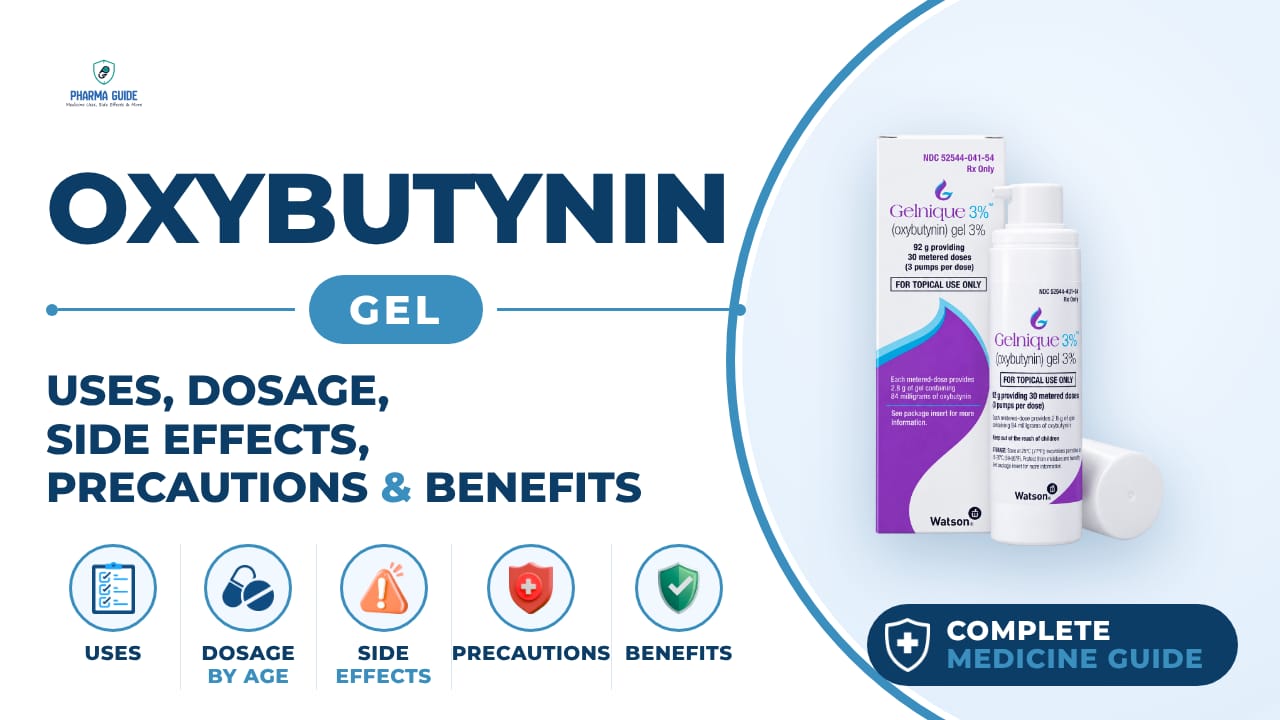
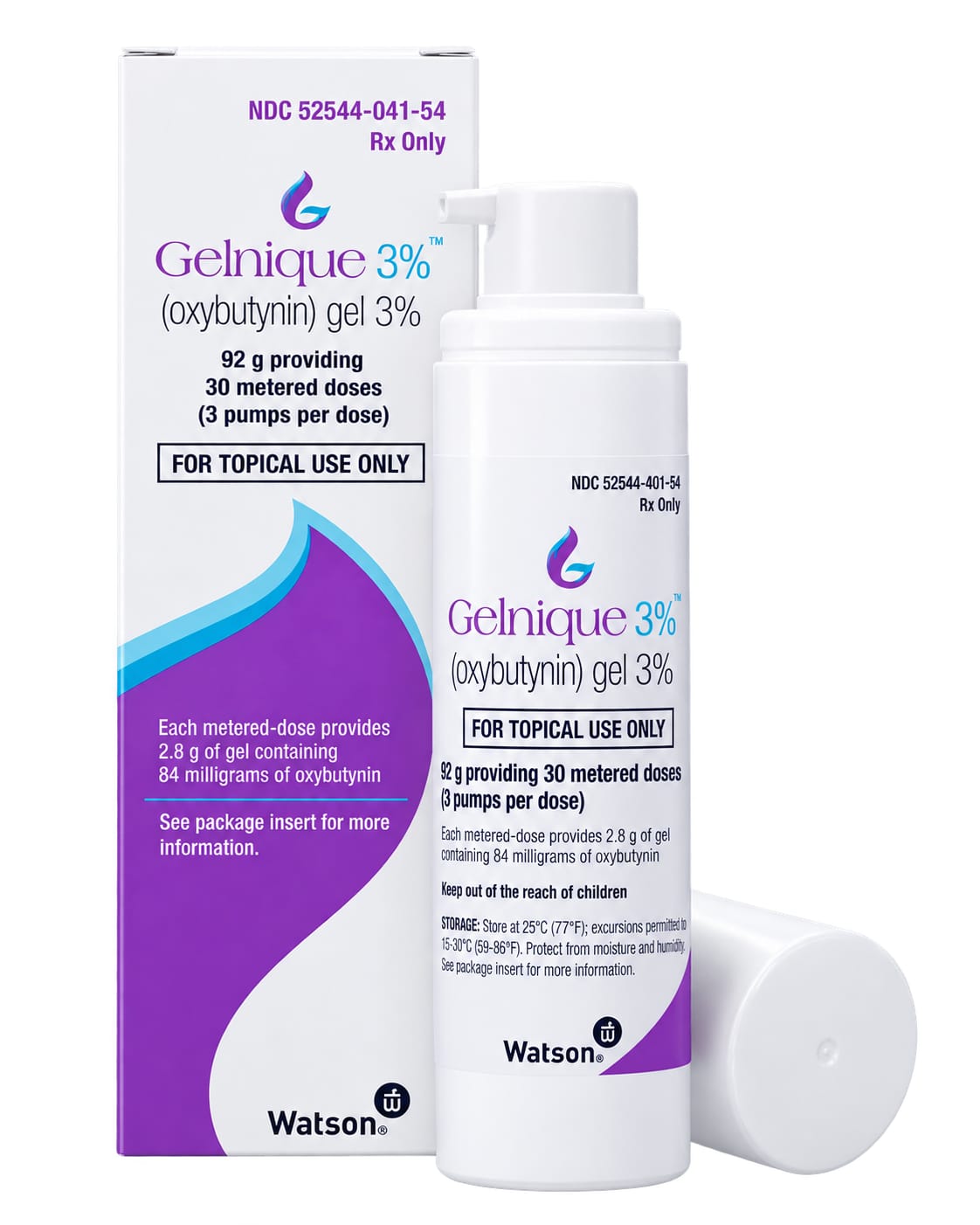
| Generic name | Oxybutynin |
|---|---|
| Drug class | Antimuscarinic (also called anticholinergic or antispasmodic) |
| Forms | Gel (applied to skin, in a pump or single-dose packets), Tablet, Extended-release tablet, Syrup, Oral solution, Transdermal patch |
Quick overview
Oxybutynin Gel is an antimuscarinic (anticholinergic/antispasmodic) medicine applied to the skin to treat overactive bladder. It works by relaxing the bladder muscle, helping to reduce frequent urination, sudden urges, and urine leakage. It is applied once daily to clean, dry, unbroken skin. Common side effects include dry mouth and dizziness, while serious effects such as allergic reactions require prompt medical attention.
What is Oxybutynin Gel
Oxybutynin gel is a medicine applied to the skin to treat overactive bladder. It works by relaxing the muscles of the bladder. The generic name is oxybutynin, and it belongs to the antimuscarinic drug class, also called anticholinergic or antispasmodic.
Oxybutynin Gel uses
- Treats overactive bladder (OAB)
- Treats a frequent need to urinate
- Treats sudden or urgent need to urinate (urgency)
- Treats urge urinary incontinence (uncontrolled urine leakage)
Benefits of Oxybutynin Gel
- Relaxes the bladder muscle, which increases how much urine the bladder can hold and reduces sudden spasms
- Because it is absorbed through the skin rather than swallowed, it skips the liver's first processing step, which can mean fewer of certain whole-body side effects compared to pills
How Oxybutynin Gel works
The gel relaxes the smooth muscle in the bladder wall. This lets the bladder hold more urine, reduces bladder spasms, and delays the urge to empty the bladder. It works by blocking a chemical called acetylcholine that normally triggers the bladder muscle to contract.
Oxybutynin Gel dosage
Apply once a day at around the same time each day. Wash your hands with soap and water before and after applying. Apply to clean, dry, unbroken skin on the abdomen, upper arms, shoulders, or thighs. Rub the gel gently into the skin until it dries, then use a different skin area each day. Do not apply to breasts, genital area, or to skin that has recently been shaved or has open sores, rashes, or tattoos.
Do not bathe, swim, shower, or exercise, or get the area wet for at least 1 hour after applying. If using sunscreen, apply it 30 minutes before or 30 minutes after the gel. Avoid fire, flames, or smoking until the area is completely dry. Let the area dry fully before putting on clothing.
Do not use more often than directed, and do not stop without talking to your care team first. Keep using the gel even if you feel well; it controls symptoms but does not cure the condition. If you miss a dose, apply it as soon as you remember, but if it is almost time for the next dose, skip the missed one — do not double up.
Do not let others touch the area where you applied the gel; cover it with clothing if needed, and if someone else touches it, they should wash the area with soap and water right away.
| Age group | Dose |
|---|---|
| Under 18 years | Safety and effectiveness not established; no FDA-approved pediatric gel dosage |
| 18–39 years | 1 g of 10% gel once daily, equivalent to 100 mg oxybutynin chloride in the applied gel |
| 40–74 years | 1 g of 10% gel once daily, equivalent to 100 mg oxybutynin chloride in the applied gel |
| 75 years and older | 1 g of 10% gel once daily, if prescribed, with careful monitoring for confusion, constipation, and urinary retention |
Available forms and strengths
- Gel (applied to skin, in a pump or single-dose packets), 10% strength
- Tablet
- Extended-release tablet
- Syrup
- Oral solution
- Transdermal patch
Side effects of Oxybutynin Gel
Common
- Dry mouth
- Dry eyes
- Constipation or stomach discomfort
- Dizziness
- Drowsiness
- Headache
- Blurred vision
- Decreased sweating
- Difficulty or pain when urinating
- Redness, rash, itching, pain, or irritation where the gel was applied
- Confusion
Serious
- Allergic reaction or angioedema — rash, itching, hives, swelling of the face, eyes, lips, tongue, arms, or legs, trouble swallowing or breathing
- Sudden eye pain or change in vision such as blurry vision, seeing halos around lights, or vision loss
- Trouble passing urine
- Hoarseness
Warnings and precautions
- Do not use this medicine if you have untreated narrow-angle glaucoma, severe blockage or slowed movement in your gut, trouble passing urine, or a known allergy to oxybutynin.
- Avoid open flames or smoking near the application site until the gel is completely dry, since the gel may catch fire.
- This medicine can reduce sweating, which raises the risk of overheating and heat stroke in hot weather or during exercise.
- Be careful not to get the gel in your eyes; if this happens, rinse them with warm, clean water right away and call your doctor if they become irritated.
- Tell your doctor if you are pregnant or trying to become pregnant before using this medicine.
- There isn't enough research to know the risk to a nursing infant, so talk with your doctor about weighing the benefits against the risks before using this medicine while breastfeeding.
- Use with caution if you have kidney disease, since it may make the condition worse.
- Use with caution if you have liver disease, since it may make the condition worse.
- Alcohol can make side effects such as drowsiness and dizziness worse, so ask your doctor about safe alcohol use while on this medicine.
- This medicine may cause dizziness, drowsiness, or blurred vision, so do not drive or operate machinery until you know how it affects you.
Storage
- Store at room temperature between 15 and 30 degrees C (59 and 86 degrees F)
- Protect from moisture and humidity
- Do not open the gel packet until you are ready to use it
- Keep out of the reach of children
- Throw away unused medication after the expiration date
- Do not flush this medication down the toilet; use a medicine take-back program
When to see a doctor
- Get medical help right away if you notice a skin rash, itching, hives, or swelling of the face, eyes, lips, tongue, arms, or legs, or trouble swallowing or breathing — these can be signs of a serious allergic reaction.
- Seek help immediately for sudden eye pain or changes in vision, such as blurry vision, seeing halos around lights, or loss of vision.
- Contact your doctor if you have trouble passing urine.
- Call your doctor or get emergency care if you have signs of heat stroke, such as fever, dizziness, upset stomach, headache, confusion, and fast pulse after being in the heat.
- If you think you have used too much of this medicine, contact a poison control center or go to an emergency room right away.
Alternatives
- Darifenacin
- Solifenacin
- Tolterodine
Watch the video
FAQs
What is Oxybutynin Gel used for?
It treats overactive bladder, including frequent urination, sudden urgency, and urge urinary incontinence, by relaxing the bladder muscle.
How do you apply Oxybutynin Gel?
Apply once daily at the same time to clean, dry, unbroken skin on the abdomen, upper arms, shoulders, or thighs, rubbing it in until dry and rotating application sites each day. Avoid breasts, genitals, and irritated or shaved skin.
What should you avoid after applying Oxybutynin Gel?
Avoid bathing, swimming, showering, exercising, or getting the area wet for at least 1 hour after applying, and avoid fire, flames, or smoking until the area is completely dry.
What are the common side effects of Oxybutynin Gel?
Common side effects include dry mouth, dry eyes, constipation, dizziness, drowsiness, headache, blurred vision, decreased sweating, and skin irritation at the application site.
Who should not use Oxybutynin Gel?
It should not be used by people with untreated narrow-angle glaucoma, severe gut blockage or slowed gut movement, trouble passing urine, or a known allergy to oxybutynin.
General information, not medical advice
Your prescriber and the leaflet in your pack know your situation. This page does not.
- Follow your prescriber and the leaflet
- Don't start, stop, or change a dose on your own
- Doses and warnings differ by country and product
Sources
Video
Related medicines

Injectafer Injection: Uses, Dosage, Side Effects, Precautions and Alternates
Iron products
Injectafer (ferric carboxymaltose) treats iron deficiency anemia and heart failure-related iron deficiency via IV. Learn uses, dosage, side effects, and

Gliclazide Tablet: Uses, Dosage, Side Effects, Precautions and Alternates
Sulfonylurea (hypoglycemic/antidiabetic agent)
Gliclazide Tablet is a sulfonylurea for type 2 diabetes that boosts insulin release. Learn about dosage, side effects, warnings, and precautions.