
Safety
General information, not medical advice
Your prescriber and the leaflet in your pack know your situation. This page does not.
- Follow your prescriber and the leaflet
- Don't start, stop, or change a dose on your own
- Doses and warnings differ by country and product
Oxybutynin Tablet: Uses, Dosage, Side Effects, Precautions and Alternates
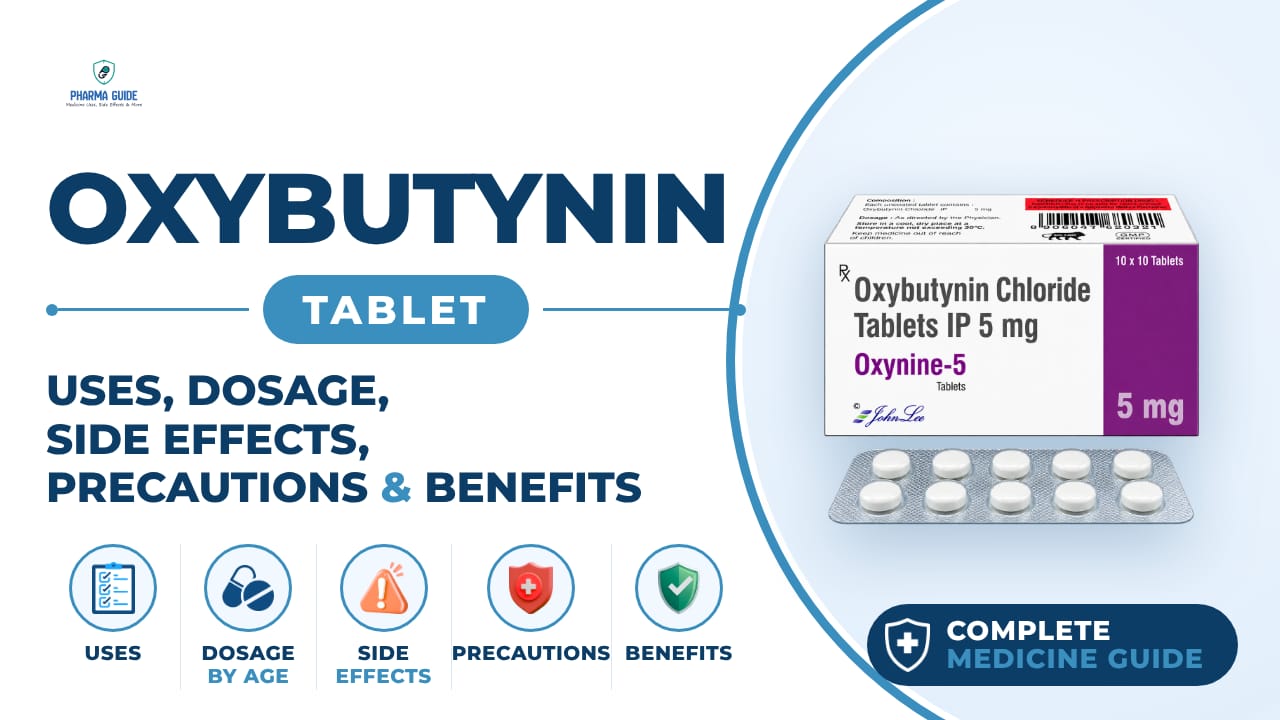
| Generic name | oxybutynin chloride |
|---|---|
| Drug class | Anticholinergic/Antispasmodic Agent (urinary antispasmodic) |
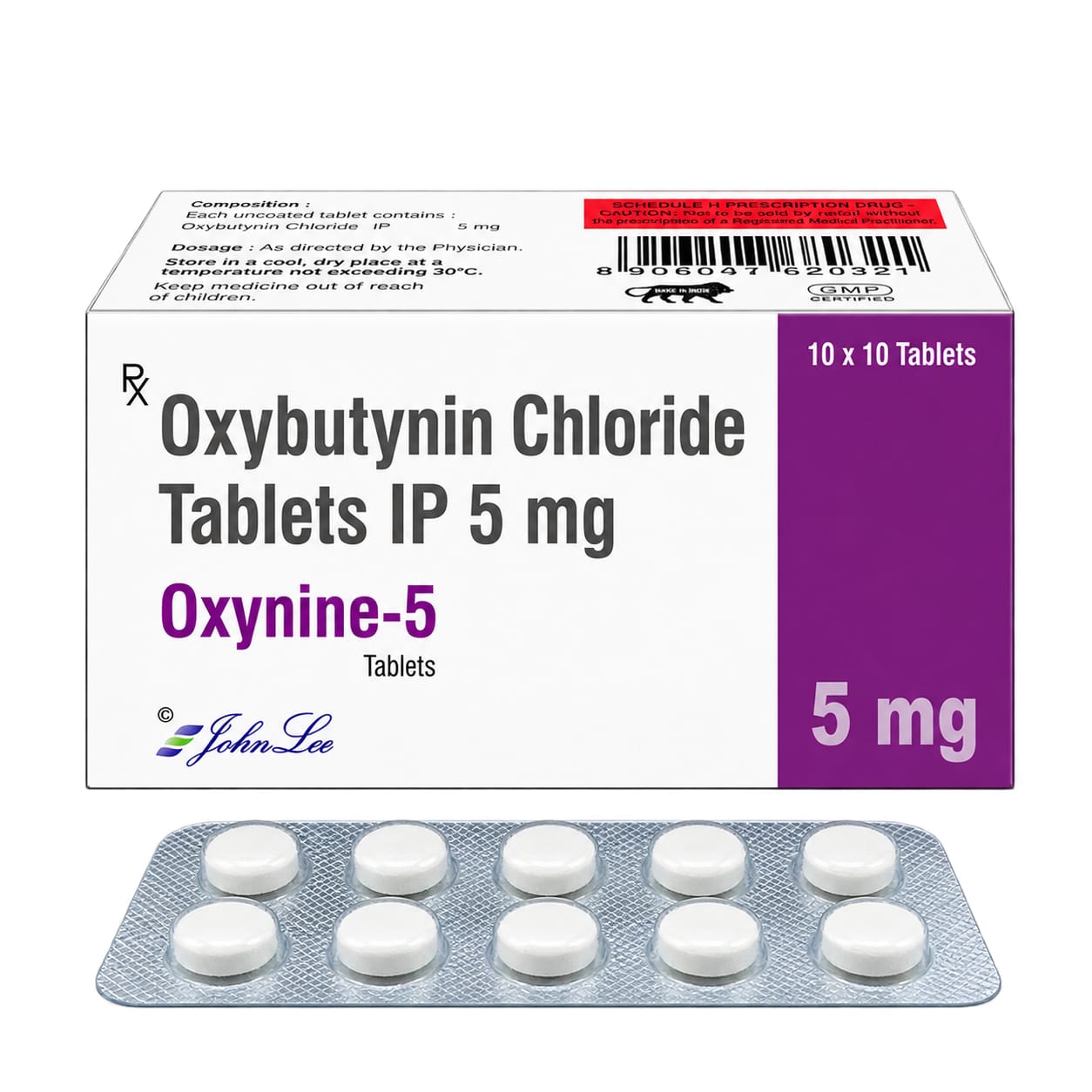
| Forms | oral tablet, 5 mg, oral syrup (5 mg/5 mL), oral tablet, extended release, transdermal patch |
Quick overview
Oxybutynin Tablet (oxybutynin chloride) is an anticholinergic/antispasmodic agent used to relieve symptoms of overactive bladder, such as urgency, frequency, leakage, and urge incontinence. It works by relaxing the bladder muscle. It is taken daily as directed by a doctor and is available in several forms, including tablets, syrup, extended-release tablets, and a patch.
What is Oxybutynin Tablet
Oxybutynin is a tablet medicine that relaxes the muscles of the bladder wall. It belongs to a group of medicines called anticholinergics and spasmolytics.
Oxybutynin Tablet uses
- Relief of symptoms associated with overactive bladder, including urgency, frequency, urinary leakage, and urge incontinence
- Relief of symptoms associated with uninhibited neurogenic bladder and reflex neurogenic bladder
- Used in children at least 5 years old with overactive bladder related to a neurologic condition such as spina bifida
Benefits of Oxybutynin Tablet
- Reduces urinary urgency
- Helps control frequent urination
- Reduces urge incontinence
- Relaxes the bladder muscle
- Helps manage symptoms of overactive bladder
- May help certain bladder-control problems caused by neurological conditions
How Oxybutynin Tablet works
Oxybutynin blocks a chemical called acetylcholine that nerves use to trigger muscle contractions. This relaxes the bladder's detrusor muscle, which reduces spasms, increases bladder capacity, and lowers how often you feel the urge to urinate.
Oxybutynin Tablet dosage
Take the medicine at about the same time each day. You may take it with or without food. Swallow the tablet or tablet half whole with a glass of water. Up to a single dose may be given at once; larger daily amounts should be divided into separate doses through the day. Continue taking the medicine every day for as long as your doctor tells you, since it controls the condition but does not cure it.
If you miss a dose, take it as soon as you remember, but if it is almost time for your next dose, skip the missed one and go back to your normal schedule — do not take a double dose. Elderly patients are usually started on a lower dose which may be increased as needed.
| Age group | Dose |
|---|---|
| 5–17 years | Often 5 mg twice daily; a clinician may adjust based on response and indication |
| Adults 18–64 years | Common immediate-release dose: 5 mg 2–3 times daily |
| 65 years and older | Often started more cautiously, commonly 2.5–5 mg 2–3 times daily, depending on tolerance |
Available forms and strengths
- Oral tablet, 5 mg
- Oral syrup (5 mg/5 mL)
- Oral tablet, extended release
- Transdermal patch
Side effects of Oxybutynin Tablet
Common
- Dry mouth
- Constipation
- Blurred vision
- Dizziness
- Drowsiness
- Nausea
- Headache
- Dry skin
- Dry eyes
- Diarrhea
- Indigestion
- Skin redness/flushing
- Urinary retention or difficulty urinating
Serious
- Severe allergic reaction: hives, difficulty breathing, swelling of face, lips, tongue, or throat
- Hallucinations, agitation, confusion, memory problems, or severe drowsiness
- Eye problems: blurred vision, tunnel vision, eye pain, seeing halos around lights, increased eye pressure (glaucoma)
- Little or no urination, or painful/difficult urination
- Severe stomach pain or constipation
- Dehydration: dizziness, confusion, extreme thirst, reduced urination
- Worsening muscle weakness in people with myasthenia gravis
- Seizures (convulsions)
- Changes in heart rhythm (irregular or forceful heartbeat)
- Heat stroke
Warnings and precautions
- Do not use this medicine if you have urinary retention, severe gastrointestinal retention problems, uncontrolled narrow-angle glaucoma, or are at risk for these conditions.
- This medicine can cause heat prostration (fever and heat stroke from reduced sweating) in hot environments.
- Use with caution if you have severe ulcerative colitis, as this medicine may trigger a serious bowel condition called toxic megacolon.
- This medicine should be used with caution in people with myasthenia gravis or dementia being treated with certain medicines, due to the risk of worsening symptoms.
- Symptoms of heart conditions such as coronary heart disease, heart failure, irregular heartbeat, fast heartbeat, and high blood pressure may be made worse by this medicine.
- This medicine can increase the risk of cognitive problems, including memory loss and confusion, especially in older adults.
- Long-term use can reduce saliva production, which may lead to tooth decay, gum disease, mouth discomfort, or oral thrush.
- Do not use this medicine as a treatment for stress incontinence.
- The safety of this medicine during pregnancy has not been established. It should only be used in pregnancy if your doctor decides the benefit outweighs the possible risk to the baby.
- It is not known whether this medicine passes into breast milk, so caution is advised when using it while breastfeeding.
- This medicine should be used with caution in people with kidney disease, as it may build up in the body and increase the risk of side effects.
- This medicine should be used with caution in people with liver disease, as it may build up in the body and increase the risk of side effects.
- Drinking alcohol can increase the drowsiness caused by this medicine.
- This medicine can cause drowsiness or blurred vision, so be careful when driving, operating machinery, or doing anything that requires alertness and clear eyesight.
Storage
- Store at 15° to 30°C in tight, light-resistant containers.
- Keep this medicine out of the sight and reach of children.
- Store in the original package.
- Keep this medicine in a cool dry place where the temperature stays below 25°C.
- Do not use this medicine after the expiry date which is stated on the carton and blister pack.
- Do not throw away any medicines via wastewater (e.g. not via the toilet or washbasin).
- Return to a pharmacy any unused medicine, and any medicine past its expiry date as shown on the dispensing label or on the packaging.
When to see a doctor
- Get emergency help right away if you have signs of a severe allergic reaction, such as swelling of the face, lips, tongue, or throat, hives, or difficulty breathing or swallowing.
- Stop the medicine and see a doctor immediately if you have hot, dry skin, extreme thirst, severe stomach pain or constipation, painful or difficult urination, or if you stop urinating.
- Seek medical help for hallucinations, agitation, confusion, memory problems, or severe drowsiness.
- Seek medical help for eye symptoms like blurred vision, tunnel vision, eye pain, or seeing halos around lights, as these could signal a serious eye problem.
- Contact your doctor or poison control immediately if you think you or someone else has taken too much of this medicine, even if there are no symptoms yet.
- Seek medical advice if nausea is accompanied by repeated vomiting.
Alternatives
- Tolterodine
- Solifenacin
- Darifenacin
Watch the video
FAQs
What is Oxybutynin Tablet used for?
It is used to relieve symptoms of overactive bladder such as urgency, frequency, urinary leakage, and urge incontinence, as well as symptoms of uninhibited or reflex neurogenic bladder. It can also be used in children at least 5 years old with overactive bladder related to a neurologic condition like spina bifida.
How does Oxybutynin Tablet work?
It blocks acetylcholine, a chemical nerves use to trigger muscle contractions, which relaxes the bladder's detrusor muscle, reduces spasms, increases bladder capacity, and lowers the frequency of urges to urinate.
What is the common dosage for Oxybutynin Tablet?
Adults aged 18-64 commonly take 5 mg 2-3 times daily, while those 65 and older often start at 2.5-5 mg 2-3 times daily. Children aged 5-17 often take 5 mg twice daily, with doses adjusted by a clinician based on response and indication.
What are the common side effects of Oxybutynin Tablet?
Common side effects include dry mouth, constipation, blurred vision, dizziness, drowsiness, nausea, headache, dry skin, dry eyes, diarrhea, indigestion, skin redness or flushing, and urinary retention or difficulty urinating.
Can Oxybutynin Tablet be used during pregnancy or breastfeeding?
Its safety during pregnancy has not been established and it should only be used if the doctor decides the benefit outweighs the possible risk to the baby. It is not known whether it passes into breast milk, so caution is advised when breastfeeding.
General information, not medical advice
Your prescriber and the leaflet in your pack know your situation. This page does not.
- Follow your prescriber and the leaflet
- Don't start, stop, or change a dose on your own
- Doses and warnings differ by country and product
Sources
Video
Related medicines

Injectafer Injection: Uses, Dosage, Side Effects, Precautions and Alternates
Iron products
Injectafer (ferric carboxymaltose) treats iron deficiency anemia and heart failure-related iron deficiency via IV. Learn uses, dosage, side effects, and

Gliclazide Tablet: Uses, Dosage, Side Effects, Precautions and Alternates
Sulfonylurea (hypoglycemic/antidiabetic agent)
Gliclazide Tablet is a sulfonylurea for type 2 diabetes that boosts insulin release. Learn about dosage, side effects, warnings, and precautions.