
Safety
General information, not medical advice
Your prescriber and the leaflet in your pack know your situation. This page does not.
- Follow your prescriber and the leaflet
- Don't start, stop, or change a dose on your own
- Doses and warnings differ by country and product
Oxycodone Tablet: Uses, Dosage, Side Effects, Precautions and Alternates
| Generic name | Oxycodone |
|---|---|
| Drug class | Opioid (narcotic) analgesic |
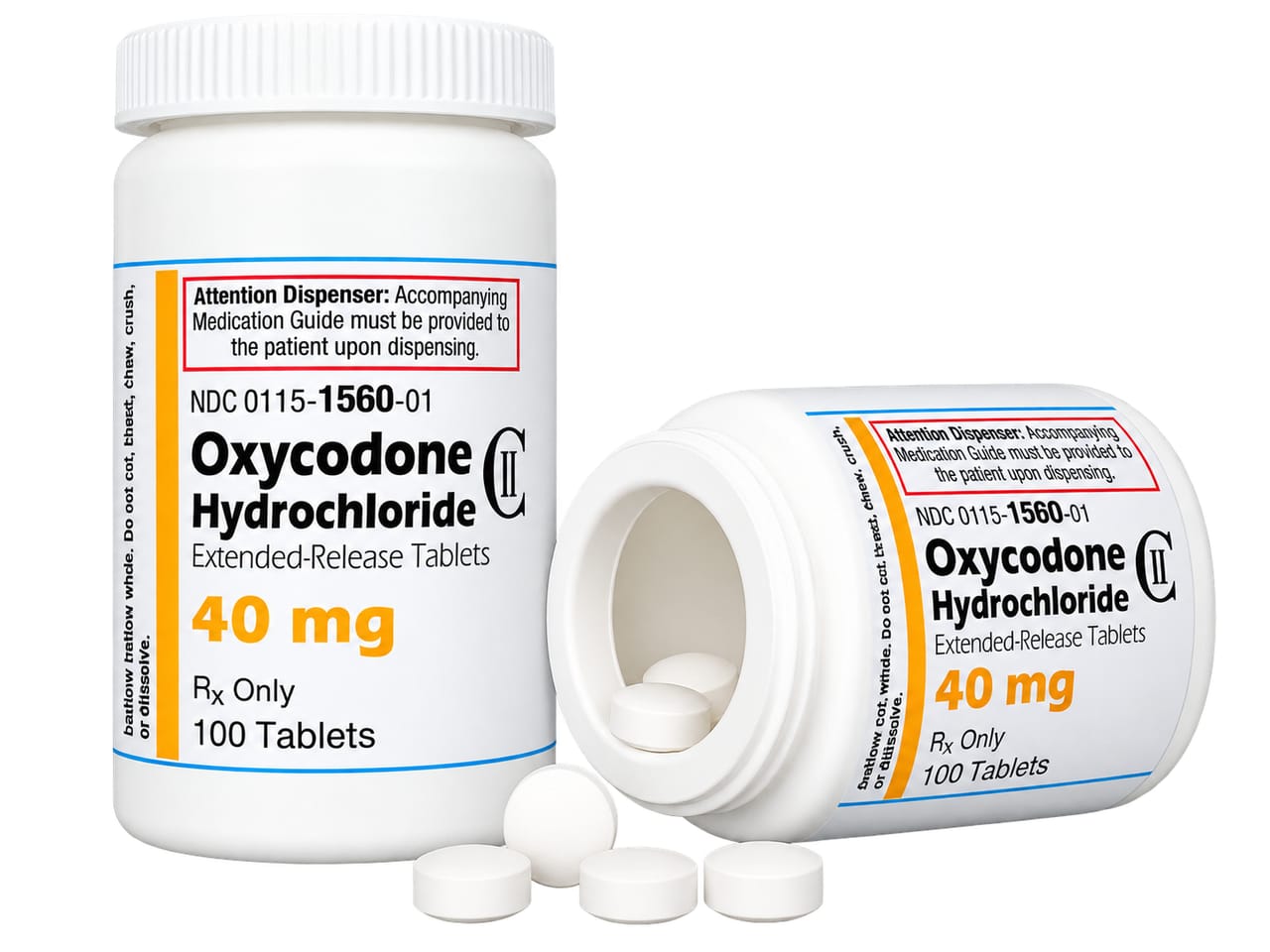
| Forms | Tablets, Extended-release (controlled-release) tablets, Capsules, Extended-release capsules, Liquid (solution) |
Quick overview
Oxycodone Tablet (oxycodone) is a strong opioid painkiller used to treat moderate to severe pain, including pain after surgery, serious injury, or cancer. It is intended for around-the-clock pain relief rather than occasional use, and is often used when medicines like paracetamol and ibuprofen have not worked. It comes in several forms, including regular tablets, extended-release tablets, capsules, and liquid, under brand names such as OxyContin, OxyNorm, Longtec, and Shortec.
What is Oxycodone Tablet
Oxycodone is a strong painkiller that belongs to a group of medicines called opioids, similar to morphine. It comes as regular tablets, extended-release (controlled-release) tablets, capsules, and liquid. Brand names include OxyContin, OxyNorm, Longtec, and Shortec.
Oxycodone Tablet uses
- Treats moderate to severe pain, including pain after surgery, serious injury, or cancer pain
- Used for around-the-clock pain relief over an extended period of time, not for occasional or as-needed pain
- Often used when other painkillers like paracetamol and ibuprofen have not worked
Benefits of Oxycodone Tablet
- Provides relief from severe pain
- May be used when less potent pain medicines are inadequate
- Can help control severe pain after certain injuries or medical procedures
- May be used for selected severe pain conditions under close medical supervision
How Oxycodone Tablet works
Oxycodone works by changing how the brain and nervous system sense and respond to pain.
Oxycodone Tablet dosage
Swallow regular tablets or capsules whole with a glass of water, with or without food. Extended-release tablets must be swallowed whole and must not be broken, chewed, crushed, dissolved, or soaked before swallowing, because this releases the full dose at once and can cause a dangerous overdose. If you have trouble swallowing extended-release capsules, the capsule can be carefully opened and the contents sprinkled on soft food like applesauce, pudding, yogurt, or jam, and swallowed right away without storing the mixture.
Extended-release tablets and capsules are taken every 12 hours at the same times each day. Regular tablets, capsules, and liquid are taken every 4 to 6 hours as needed with or without food. If using liquid oxycodone, use the dosing cup, oral syringe, or dropper provided to measure the dose accurately.
Do not drink grapefruit juice while taking this medicine. Avoid alcohol while taking this medicine, as it can increase sleepiness and risk of serious side effects.
If you miss a dose of long-acting oxycodone and remember within 4 hours, take it then and continue your regular schedule; if more than 4 hours have passed, contact your doctor or pharmacist. If you miss a dose of standard oxycodone, take it as soon as you remember unless it is nearly time for the next dose — do not take two doses together.
Do not stop taking this medicine suddenly after long-term use; your doctor will reduce your dose gradually to avoid withdrawal symptoms.
Use exactly as prescribed by your doctor or pharmacist.
Available forms and strengths
- Tablets
- Extended-release (controlled-release) tablets
- Capsules
- Extended-release capsules
- Liquid (solution)
Side effects of Oxycodone Tablet
Common
- Constipation
- Nausea and vomiting
- Feeling sleepy or tired
- Dizziness
- Confusion
- Headache
- Itchy skin or rash
- Dry mouth
- Sweating
- Weakness
Serious
- Slow, weak, or shallow breathing, or long pauses between breaths
- Extreme drowsiness or inability to wake up
- Allergic reaction with swollen throat or tongue, itchy rash, or difficulty breathing or swallowing
- Low blood pressure causing dizziness, confusion, blurred vision, or low energy
- Fainting
- Chest pain or changes in heartbeat
- Agitation, hallucinations, fever, sweating, confusion, fast heartbeat, shivering, severe muscle stiffness or twitching, loss of coordination, or diarrhea (signs of serotonin syndrome)
- Seizures
- Unusual snoring or long pauses during breathing during sleep
Warnings and precautions
- This medicine can be habit-forming and may lead to abuse or addiction, even at recommended doses. It can cause serious or life-threatening slowed breathing, especially in the first few days of treatment or whenever the dose is increased.
- Extended-release tablets must always be swallowed whole. Breaking, crushing, chewing, or dissolving them releases the entire dose at once, which can cause a fatal overdose.
- This medicine can be dangerous or fatal to other people, especially children, if they take it by accident or on purpose. Keep it in a secure place away from others. Combining this medicine with alcohol, other opioids, or certain other drugs can increase the risk of severe breathing problems, extreme sleepiness, or coma.
- Do not stop taking this medicine suddenly after regular use, as this can cause withdrawal symptoms. Your doctor will lower your dose gradually. This medicine is not suitable for people with severe breathing problems, severe asthma, or suspected bowel blockage.
- Tell your doctor if you are pregnant, planning to become pregnant, or become pregnant while taking this medicine. Taking it regularly during pregnancy can cause the baby to have life-threatening withdrawal symptoms after birth. Your doctor will discuss the risks and benefits with you.
- Tell your doctor if you are breastfeeding. This medicine is not usually used while breastfeeding because it could cause side effects in the baby, though a doctor may still recommend it if the benefits outweigh the risks.
- People with kidney problems may have higher levels of this medicine in their blood, so doses should start low and be adjusted carefully by a doctor. People with liver problems can have much higher levels of this medicine in their blood, so treatment should start at a lower dose with careful monitoring.
- Do not drink alcohol while taking this medicine. Alcohol can worsen side effects and increase the risk of dangerous breathing problems.
- Do not drive, operate heavy machinery, or do other potentially dangerous activities until you know how this medicine affects you, since it can make you sleepy or dizzy.
Storage
- Keep this medication in the container it came in, tightly closed, and out of reach of children, and in a location that is not easily accessible by others, including visitors to the home.
- Store it at room temperature and away from light and excess heat and moisture (not in the bathroom).
- Store oxycodone products in a safe place so that no one else can take it accidentally or on purpose. Keep track of how many tablets or solution is left so you will know if any are missing.
- Dispose of any oxycodone medication that is outdated or no longer needed through a medicine take-back program. If you do not have a take-back program nearby or one that you can access promptly, flush any oxycodone medication down the toilet so that others will not take it.
- Patients should be instructed to keep OxyContin in a secure place out of the reach of children. When OxyContin is no longer needed, the unused tablets should be destroyed by flushing down the toilet.
When to see a doctor
- Get medical help right away if your breathing slows down, or if you feel faint, dizzy, confused, or notice any other unusual symptoms.
- Seek urgent medical help for signs of a severe allergic reaction, such as a swollen throat or tongue, an itchy raised rash, or difficulty breathing.
- Get urgent help if breathing becomes slow, weak, or shallow, or if blood pressure drops causing dizziness, confusion, blurred vision, or low energy.
- Seek emergency care if someone shows signs of overdose, such as difficulty breathing, extreme sleepiness and being unable to wake up, limp or weak muscles, unusual pupil changes, cold clammy skin, or a slowed heartbeat.
- If someone has collapsed, had a seizure, is having trouble breathing, or cannot be woken up after taking too much of this medicine, call emergency services immediately.
Alternatives
- Paracetamol (acetaminophen)
- Ibuprofen
- Naproxen
Watch the video
FAQs
What is Oxycodone Tablet used for?
It is used to treat moderate to severe pain, including pain after surgery, serious injury, or cancer, providing around-the-clock relief rather than occasional use, often when paracetamol and ibuprofen have not worked.
How should extended-release oxycodone tablets be taken?
They must be swallowed whole and not broken, chewed, crushed, dissolved, or soaked, because doing so releases the full dose at once and can cause a dangerous overdose. They are taken every 12 hours at the same times each day.
Can I drink alcohol while taking Oxycodone Tablet?
No, alcohol should be avoided while taking this medicine because it can increase sleepiness and the risk of serious side effects, including dangerous breathing problems.
What should I do if I miss a dose of Oxycodone Tablet?
For long-acting oxycodone, if you remember within 4 hours, take it and continue your schedule; if more than 4 hours have passed, contact your doctor or pharmacist. For standard oxycodone, take it as soon as you remember unless it's nearly time for the next dose, and do not take two doses together.
What are the serious side effects of Oxycodone Tablet?
Serious side effects include slow, weak, or shallow breathing, extreme drowsiness, allergic reactions with swollen throat or tongue, low blood pressure, fainting, chest pain, seizures, and signs of serotonin syndrome such as agitation, hallucinations, and fever.
General information, not medical advice
Your prescriber and the leaflet in your pack know your situation. This page does not.
- Follow your prescriber and the leaflet
- Don't start, stop, or change a dose on your own
- Doses and warnings differ by country and product
Sources
Video
Related medicines

Injectafer Injection: Uses, Dosage, Side Effects, Precautions and Alternates
Iron products
Injectafer (ferric carboxymaltose) treats iron deficiency anemia and heart failure-related iron deficiency via IV. Learn uses, dosage, side effects, and

Gliclazide Tablet: Uses, Dosage, Side Effects, Precautions and Alternates
Sulfonylurea (hypoglycemic/antidiabetic agent)
Gliclazide Tablet is a sulfonylurea for type 2 diabetes that boosts insulin release. Learn about dosage, side effects, warnings, and precautions.