
Safety
General information, not medical advice
Your prescriber and the leaflet in your pack know your situation. This page does not.
- Follow your prescriber and the leaflet
- Don't start, stop, or change a dose on your own
- Doses and warnings differ by country and product
Oxytrol Patch: Uses, Dosage, Side Effects, Precautions and Alternates
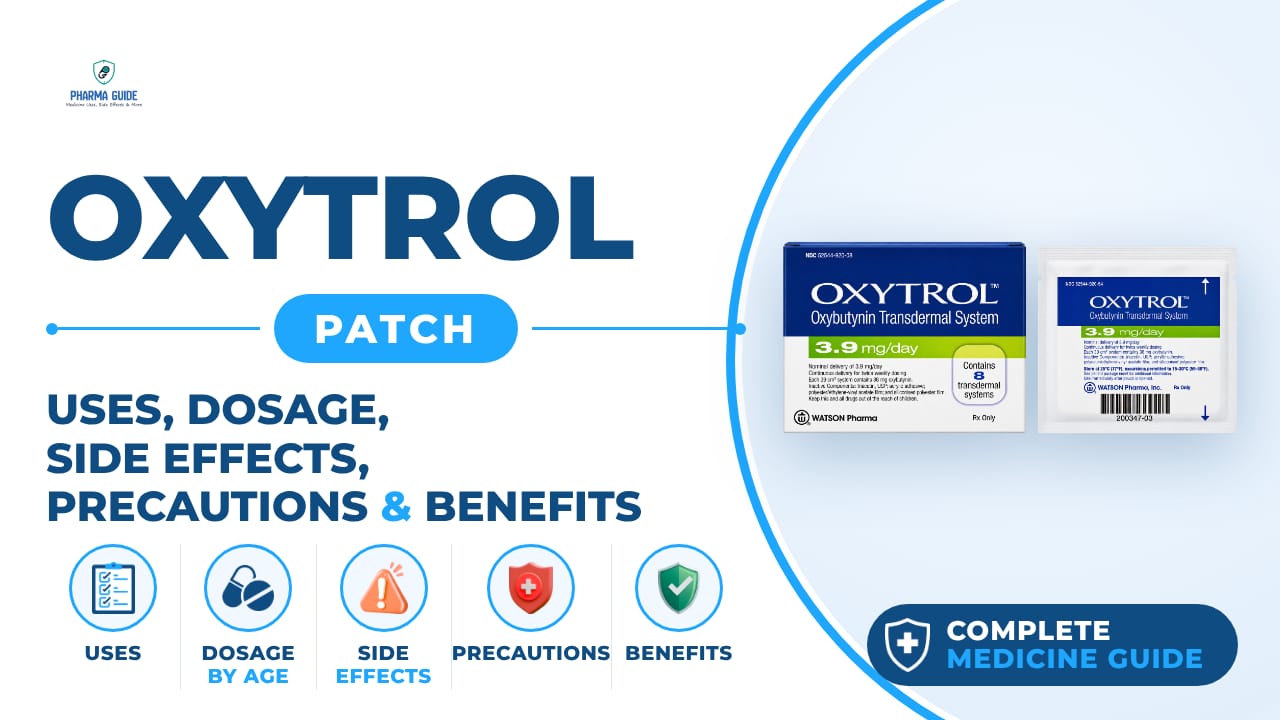
| Generic name | oxybutynin |
|---|---|
| Drug class | Urinary antispasmodics (anticholinergic, antimuscarinic, antispasmodic, muscarinic antagonist) |
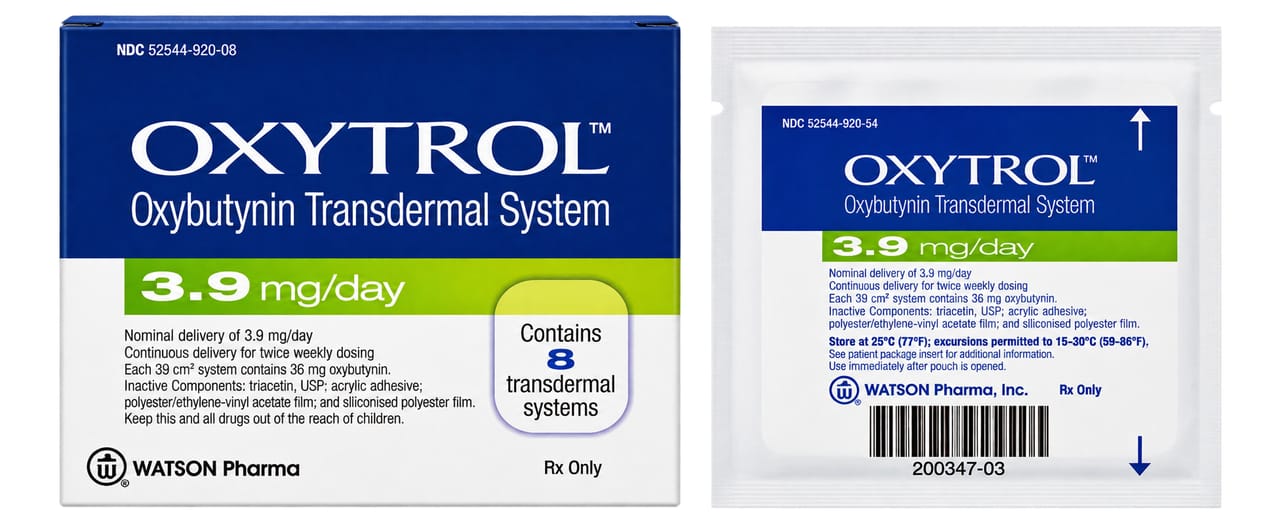
| Forms | Transdermal patch |
Quick overview
Oxytrol Patch contains oxybutynin and belongs to the urinary antispasmodic class of medicines. It is a skin patch applied to the abdomen, hip, or buttock once every 3 to 4 days to reduce muscle spasms of the bladder and urinary tract. It is used to treat symptoms of overactive bladder, including urgency, frequency, and urine leakage.
What is Oxytrol Patch
Oxytrol is a skin patch containing oxybutynin. It is placed on the abdomen, hip, or buttock once every 3 to 4 days to reduce muscle spasms of the bladder and urinary tract. It is used to treat symptoms of overactive bladder.
Oxytrol Patch uses
- Frequent or urgent urination
- Incontinence (urine leakage)
- Increased nighttime urination
- Overactive bladder in men with urge urinary incontinence, urgency, and frequency
Benefits of Oxytrol Patch
- Helps treat overactive bladder symptoms.
- Reduces sudden urinary urgency.
- Helps decrease frequent urination.
- Can reduce urge incontinence (urine leakage).
- Provides continuous oxybutynin delivery through the skin, offering longer-lasting bladder control.
How Oxytrol Patch works
Oxytrol works by relaxing a muscle in the bladder, which increases how much urine the bladder can hold.
Oxytrol Patch dosage
Do not take by mouth. Oxytrol is for use only on the skin. Apply the patch to a clean, dry area on your stomach, hip, or buttock. Avoid skin that is irritated or damaged, or skin that has been treated with oil or lotion. Avoid placing the patch on a skin area that will be rubbed by a waistband or tight clothing. Press the patch firmly into place with your fingers.
You may leave the patch on while bathing, showering, or swimming. If a patch falls off, try sticking it back into place; if it does not stick well, put on a new patch and leave it on only for the rest of your wearing time, without changing your patch removal schedule.
Wear the patch for 3 to 4 days and change it twice per week, such as every Sunday and Thursday, using a calendar to keep a steady schedule. Choose a different place on your skin each time you put on a new patch, and do not use the same skin area twice within 7 days.
Do not wear more than one patch at a time, and do not divide or cut the patch into pieces; damaged patches should not be used. Use baby oil or mild soap and water to remove adhesive residue; avoid harsh soaps, alcohol, nail polish remover, or other solvents. After removing a patch, fold it in half so it sticks together before throwing it away.
Remove the patch before undergoing an MRI, since it may burn your skin. This medicine is not approved for use in anyone younger than 18 years old.
| Age group | Dose |
|---|---|
| Under 18 years | Safety and effectiveness not established |
| Adults – Overactive bladder | Apply 1 patch (3.9 mg/day) to dry, intact skin |
| 65+ years | Generally the same adult dose; monitor for anticholinergic effects |
| Application sites | Apply to abdomen, hip, or buttock; rotate sites and avoid reusing the same site within 7 days |
Available forms and strengths
- Transdermal patch
Side effects of Oxytrol Patch
Common
- Redness, itching, or mild skin irritation where a patch was worn
- Dizziness, drowsiness
- Dry mouth
- Dry eyes, blurred vision
- Constipation, diarrhea, decreased urination
Serious
- Signs of an allergic reaction: hives; difficulty breathing; swelling of face, lips, tongue, or throat
- Little or no urination
- Severe constipation
- Confusion, hallucinations
- Vomiting, severe heartburn or upper stomach pain
- Pain or burning when you urinate
- Dehydration symptoms - feeling very thirsty or hot, being unable to urinate, heavy sweating, or hot and dry skin
- Angioedema - swelling of the lips, face, tongue, or throat
- Worsening of myasthenia gravis symptoms, including muscle weakness and breathing problems
Warnings and precautions
- Do not use this medicine if you have uncontrolled narrow-angle glaucoma, a blockage in your stomach or intestines, or if you are unable to completely empty your bladder.
- This medicine may cause central nervous system effects such as headache, dizziness, sleepiness, confusion, and hallucinations. Your doctor should monitor you for these effects after starting treatment.
- This medicine may cause you to sweat less, increasing your chance of overheating, fever, or heat stroke in hot temperatures.
- Do not put the patch on skin treated with oils, lotions, or powders, and do not expose it to sunlight; wear it under clothing.
- The patch may burn your skin if worn during an MRI scan; remove it before the test.
- It is not known if or how this medicine could affect pregnancy or harm an unborn baby. Tell your doctor if you are or plan to become pregnant.
- It is not known if this medicine passes into breast milk. Tell your doctor if you are breastfeeding or plan to breastfeed.
- Tell your doctor if you have liver or kidney disease before using this medicine.
- You should not drink alcohol while using this medicine because it can increase drowsiness and other side effects.
- This medicine can cause dizziness or blurred vision. Do not drive, operate machinery, or do other dangerous activities until you know how it affects you.
Storage
- Store at 20–25°C (68–77°F) at controlled room temperature.
- Keep each patch in its original sealed pouch until ready to use.
- Protect from excessive heat, moisture, and direct sunlight.
- Do not refrigerate or freeze the patches.
- Do not use patches that are damaged or past their expiration date.
- Keep out of reach and sight of children and pets, including used patches.
When to see a doctor
- Get emergency medical help if you have signs of an allergic reaction such as hives, difficulty breathing, or swelling of your face, lips, tongue, or throat.
- Stop using this medicine and call your doctor right away if you have little or no urination, severe constipation, confusion, hallucinations, vomiting, severe heartburn or upper stomach pain, pain or burning when urinating, or symptoms of dehydration.
- Stop using this medicine immediately and get emergency medical treatment if you notice swelling around the eyes, lips, genitals, hands, or feet, as this could be a sign of angioedema.
- Call your doctor right away if you have worsening muscle weakness or breathing problems, which could be signs of worsening myasthenia gravis.
- If you think you may be having a medical emergency, seek emergency help right away or contact a poison control center.
Alternatives
- Mirabegron
- Toviaz (Fesoterodine)
- Vesicare (Solifenacin)
- Detrol (Tolterodine)
- Ditropan XL (Oxybutynin ER)
Watch the video
FAQs
How often should I change the Oxytrol Patch?
Wear the patch for 3 to 4 days and change it twice per week, such as every Sunday and Thursday, using a calendar to keep a steady schedule.
Where should I apply the Oxytrol Patch?
Apply the patch to a clean, dry area on your stomach, hip, or buttock, avoiding irritated skin or areas treated with oil or lotion. Choose a different site each time and do not reuse the same area within 7 days.
Can I shower or swim with the Oxytrol Patch on?
Yes, you may leave the patch on while bathing, showering, or swimming.
Do I need to remove the Oxytrol Patch before an MRI?
Yes, remove the patch before undergoing an MRI, since it may burn your skin.
What are common side effects of the Oxytrol Patch?
Common side effects include redness, itching, or mild skin irritation at the patch site, dizziness, drowsiness, dry mouth, dry eyes, blurred vision, constipation, diarrhea, and decreased urination.
General information, not medical advice
Your prescriber and the leaflet in your pack know your situation. This page does not.
- Follow your prescriber and the leaflet
- Don't start, stop, or change a dose on your own
- Doses and warnings differ by country and product
Sources
- https://www.drugs.com/oxytrol.html
- https://www.webmd.com/drugs/oxytrol-oxybutynin#sideeffects
- Healio Drug Lookup - Oxytrol
- DailyMed - OXYTROL oxybutynin patch label
- Healthdirect Australia - Oxytrol
Video
Related medicines

Injectafer Injection: Uses, Dosage, Side Effects, Precautions and Alternates
Iron products
Injectafer (ferric carboxymaltose) treats iron deficiency anemia and heart failure-related iron deficiency via IV. Learn uses, dosage, side effects, and

Gliclazide Tablet: Uses, Dosage, Side Effects, Precautions and Alternates
Sulfonylurea (hypoglycemic/antidiabetic agent)
Gliclazide Tablet is a sulfonylurea for type 2 diabetes that boosts insulin release. Learn about dosage, side effects, warnings, and precautions.