
Safety
General information, not medical advice
Your prescriber and the leaflet in your pack know your situation. This page does not.
- Follow your prescriber and the leaflet
- Don't start, stop, or change a dose on your own
- Doses and warnings differ by country and product
Oziltus Injection: Uses, Dosage, Side Effects, Precautions and Alternates
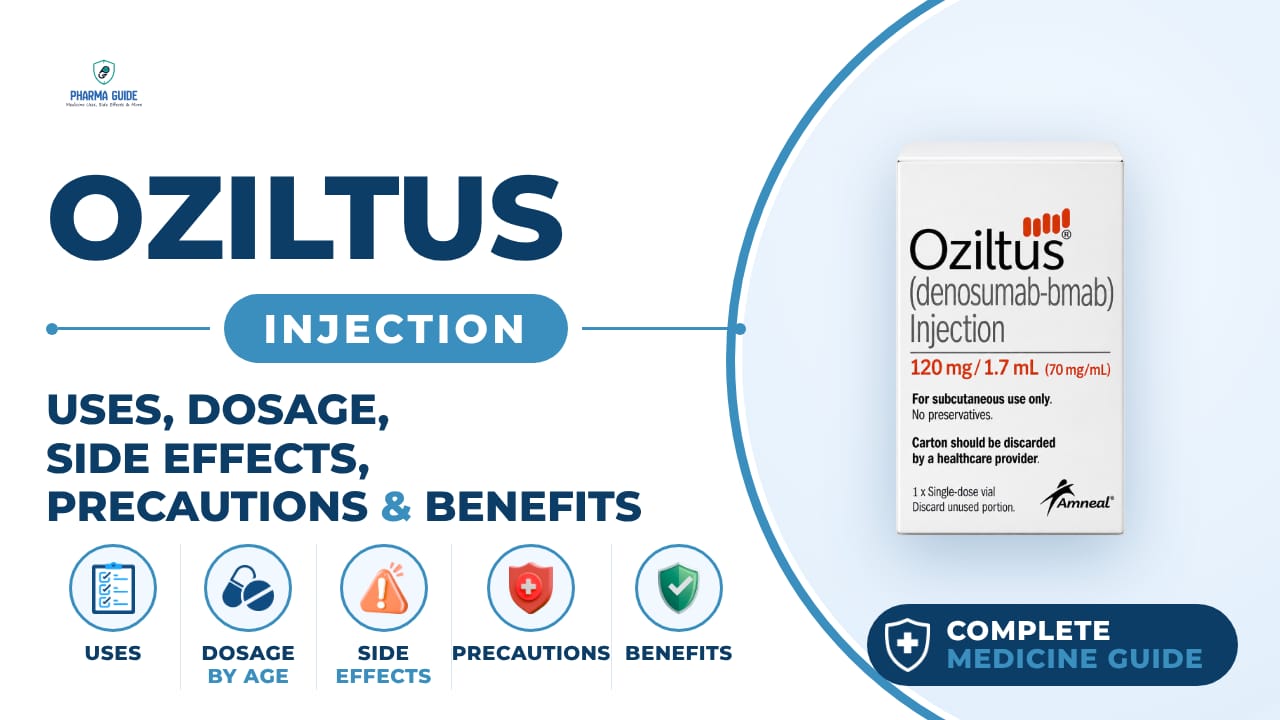
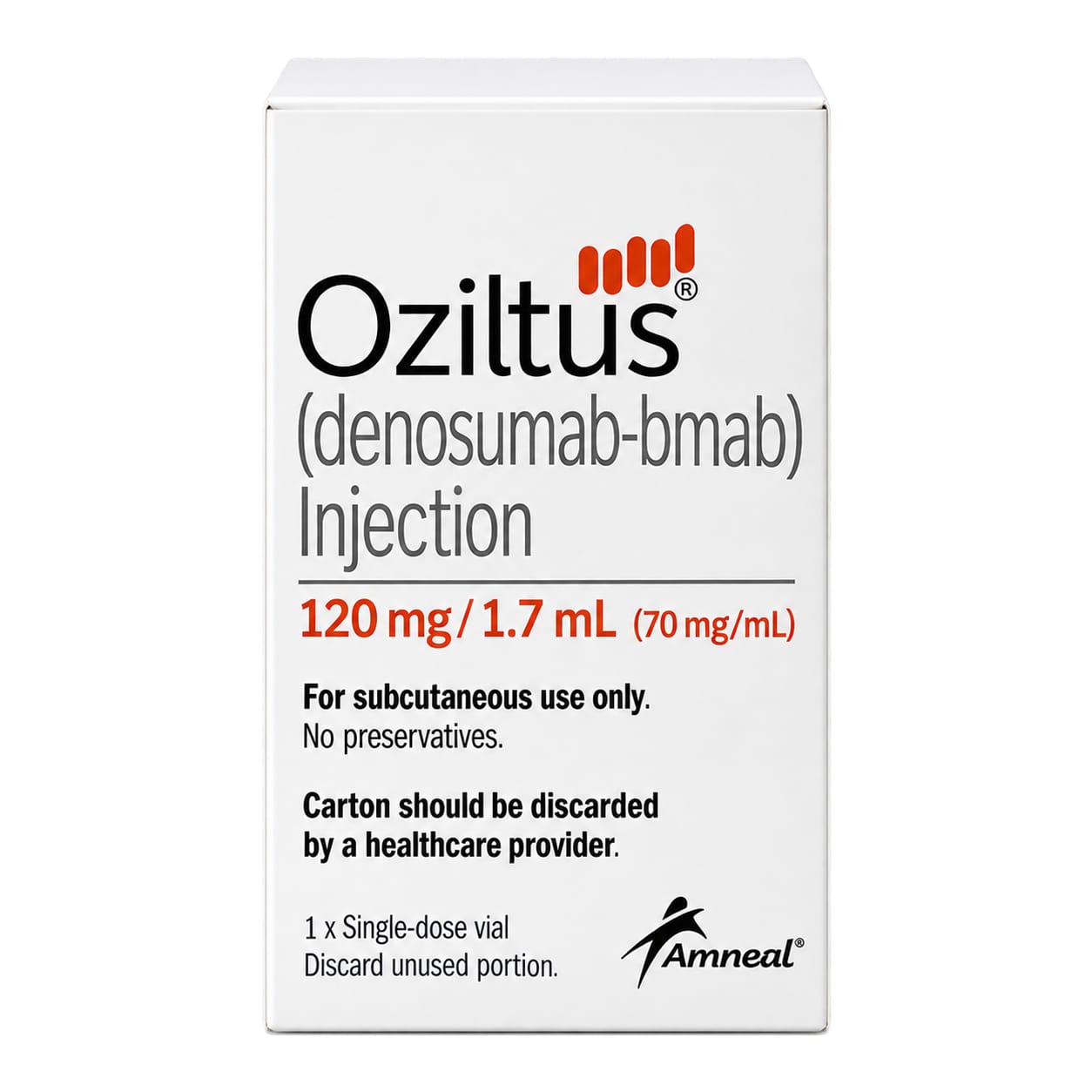
| Generic name | denosumab (denosumab-mobz) |
|---|---|
| Drug class | RANKL inhibitor (miscellaneous bone resorption inhibitor) |
| Forms | Injection, solution, Prefilled syringe, Vial |
Quick overview
Oziltus Injection contains denosumab (denosumab-mobz), a RANKL inhibitor and biosimilar to Xgeva. It is given as an injection under the skin, usually once a month, to help prevent bone problems in adults with multiple myeloma or certain cancers that have spread to the bones, to treat giant cell tumor of bone, and to treat high calcium levels caused by cancer when bisphosphonate treatment hasn't worked. It works by blocking a protein called RANKL that signals the body to break down bone. Like other biologic medicines, it can cause side effects and requires monitoring during treatment.
What is Oziltus Injection
Oziltus is a biologic medicine that is a biosimilar to Xgeva. It is given as an injection under the skin to help prevent bone problems in people with certain cancers.
Oziltus Injection uses
- Prevention of bone problems in adults with multiple myeloma or certain cancers that have spread to the bones
- Giant cell tumor of bone in adults and certain teens who can't have surgery
- High calcium levels caused by cancer (hypercalcemia of malignancy) in adults after bisphosphonate treatment hasn't worked
Benefits of Oziltus Injection
- Helps reduce serious bone problems caused by cancers
- Can be used for many cancer-related bone conditions
- Typically injected once a month
- Helps reduce bone complications
- Helps lower the risk of pathologic fractures
- Helps control giant cell tumor of bone
- Helps lower excessively high blood calcium caused by cancer
- Targets RANKL, reducing osteoclast-mediated bone destruction
How Oziltus Injection works
Oziltus blocks a protein called RANKL that signals the body to break down bone. By blocking this protein, it slows bone loss, helps strengthen bones, and lowers the risk of bone problems caused by cancer.
Oziltus Injection dosage
Oziltus is given as an injection under the skin by a healthcare professional, usually once every month. The injection is given in your upper arm, upper thigh, or stomach. Keep all of your Oziltus appointments, and you may need regular blood tests to check your calcium and other electrolyte levels during treatment. Your prescriber might recommend calcium and vitamin D supplements, regular exercise, and a bone-healthy diet while receiving this medicine. Tell your prescriber if you're taking other denosumab products before starting Oziltus, since they shouldn't be used together.
| Age group | Dose |
|---|---|
| 12–16 years, skeletally mature — giant cell tumor of bone | 120 mg subcutaneously every 4 weeks, plus 120 mg on Days 8 and 15 during the first month |
| 18–64 years — multiple myeloma/bone metastases | 120 mg subcutaneously every 4 weeks |
| 18–64 years — giant cell tumor of bone | 120 mg every 4 weeks, plus 120 mg on Days 8 and 15 of the first month |
Available forms and strengths
- Injection, solution
- Prefilled syringe
- Vial
Side effects of Oziltus Injection
Common
- Tiredness
- Low phosphate levels
- Nausea
- Diarrhea
- Low red blood cells (anemia)
- Back pain
- Joint pain
- Pain in the arms and legs
- Headache
- Common cold symptoms
- Muscle or bone pain
- Toothache
- Vomiting
- Constipation
- Cough
- Shortness of breath
- Reduced appetite
- Swelling
- Low platelet levels
- Upper respiratory tract infection
- Rash
Serious
- Serious allergic reactions, including trouble breathing, swelling of the face and throat, itchiness, and rash
- Dangerously low calcium levels causing tingling, numbness, muscle cramps, irregular heart rhythm, seizures, or confusion
- Osteonecrosis of the jaw with pain, swelling, exposed bone, bad breath, loose teeth, or gum infection
- Unusual thigh bone fractures causing thigh, hip, or groin pain
- High calcium levels after stopping treatment
- Spinal fractures after stopping treatment
Warnings and precautions
- Some people have had serious allergic reactions, including anaphylaxis, with symptoms like trouble breathing, swelling of the face, lips, mouth, or throat, rash, itching, hives, or feeling faint.
- This medicine can cause low blood calcium levels, which can sometimes be serious. The risk is higher with severe kidney problems or not getting enough calcium and vitamin D.
- Although rare, this medicine can cause osteonecrosis of the jaw, a condition where part of the jaw bone breaks down, with symptoms like jaw pain, swelling, tooth or gum infections, loose teeth, or slow healing after dental work.
- Although rare, people taking this medicine have had unusual thigh bone fractures, sometimes without a fall or injury.
- This medicine can cause dangerously high calcium levels after stopping treatment, especially for giant cell tumor of bone or in people whose bones are still growing. This risk is highest in the first year after the last dose.
- Stopping this medicine can raise the risk of spinal bone fractures, especially with a history of osteoporosis or past fractures. Do not stop the medicine without talking to your care team first.
- This medicine should not be used if you have untreated low calcium levels.
- This medicine can seriously harm an unborn baby, so it is not safe during pregnancy. Your healthcare team may ask you to take a pregnancy test before starting treatment. Use effective birth control during treatment and for at least 5 months after your last dose.
- Talk with your care team before breastfeeding while taking this medicine. Small amounts might pass into breast milk, but it's not known how this could affect a breastfed child.
- People with serious kidney problems have a higher risk of low calcium levels with this medicine.
- No standard liver-specific dosage adjustment is established.
- No major direct interaction with alcohol is established, but alcohol use should be discussed with the treating oncology team.
- Oziltus usually does not directly impair driving; avoid driving if weakness or dizziness occurs.
Storage
- Prior to administration, Oziltus may be removed from the refrigerator and brought to room temperature by standing in the original container, which generally takes 15 to 30 minutes
- Do not warm Oziltus in any other way
- Do not use if the solution is discolored or cloudy or if it contains visible particles or foreign particulate matter
- Discard vial after single entry; do not re-enter the vial
When to see a doctor
- Get medical help right away if you have signs of a serious allergic reaction, such as trouble breathing, swelling of the face or throat, rash, itching, hives, or feeling faint.
- Tell your prescriber right away if you have muscle cramps, tingling around your mouth, or numbness in your fingers or toes, since these can be signs of low calcium.
- Contact your care team right away if you develop jaw pain, swelling, or sores in your mouth that don't heal.
- Tell your prescriber right away if you have new or unusual pain in your hip, thigh, or groin, as this can be an early warning sign of a fracture.
- Tell your prescriber right away if you have loss of appetite, stomach pain, nausea, vomiting, constipation, increased thirst, frequent urination, or unusual tiredness, as these can be signs of high calcium after stopping treatment.
- Tell your prescriber right away if you develop new or worsening back pain if you stop treatment, since this could be a sign of a spinal fracture.
- Tell your prescriber right away if you become pregnant while taking this medicine.
Alternatives
- Denosumab (Xgeva)
- Zoledronic acid
- Pamidronate
Watch the video
FAQs
What is Oziltus Injection used for?
Oziltus is used to prevent bone problems in adults with multiple myeloma or cancers that have spread to bone, to treat giant cell tumor of bone, and to treat high calcium levels caused by cancer when bisphosphonate treatment hasn't worked.
How often is Oziltus Injection given?
Oziltus is typically given as an injection under the skin once every month by a healthcare professional, in the upper arm, upper thigh, or stomach.
How does Oziltus Injection work?
Oziltus blocks a protein called RANKL that signals the body to break down bone, which slows bone loss, helps strengthen bones, and lowers the risk of bone problems caused by cancer.
What are the serious side effects of Oziltus Injection?
Serious side effects include severe allergic reactions, dangerously low calcium levels, osteonecrosis of the jaw, unusual thigh bone fractures, and high calcium levels or spinal fractures after stopping treatment.
Can Oziltus Injection be used during pregnancy?
No, Oziltus can seriously harm an unborn baby and is not safe during pregnancy. Effective birth control should be used during treatment and for at least 5 months after the last dose.
General information, not medical advice
Your prescriber and the leaflet in your pack know your situation. This page does not.
- Follow your prescriber and the leaflet
- Don't start, stop, or change a dose on your own
- Doses and warnings differ by country and product
Sources
Video
Related medicines

Injectafer Injection: Uses, Dosage, Side Effects, Precautions and Alternates
Iron products
Injectafer (ferric carboxymaltose) treats iron deficiency anemia and heart failure-related iron deficiency via IV. Learn uses, dosage, side effects, and

Gliclazide Tablet: Uses, Dosage, Side Effects, Precautions and Alternates
Sulfonylurea (hypoglycemic/antidiabetic agent)
Gliclazide Tablet is a sulfonylurea for type 2 diabetes that boosts insulin release. Learn about dosage, side effects, warnings, and precautions.