
Safety
General information, not medical advice
Your prescriber and the leaflet in your pack know your situation. This page does not.
- Follow your prescriber and the leaflet
- Don't start, stop, or change a dose on your own
- Doses and warnings differ by country and product
Paclitaxel Injection: Uses, Dosage, Side Effects, Precautions and Alternates
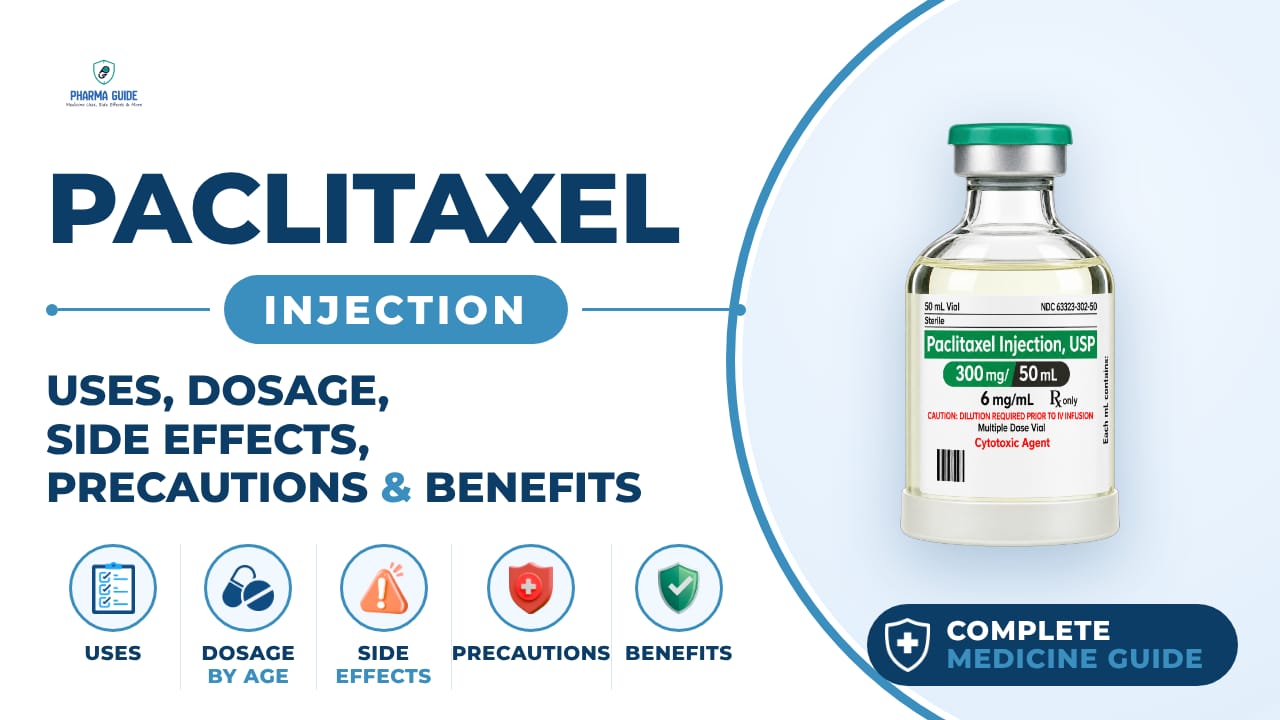
| Generic name | paclitaxel |
|---|---|
| Drug class | Antineoplastic Agent |
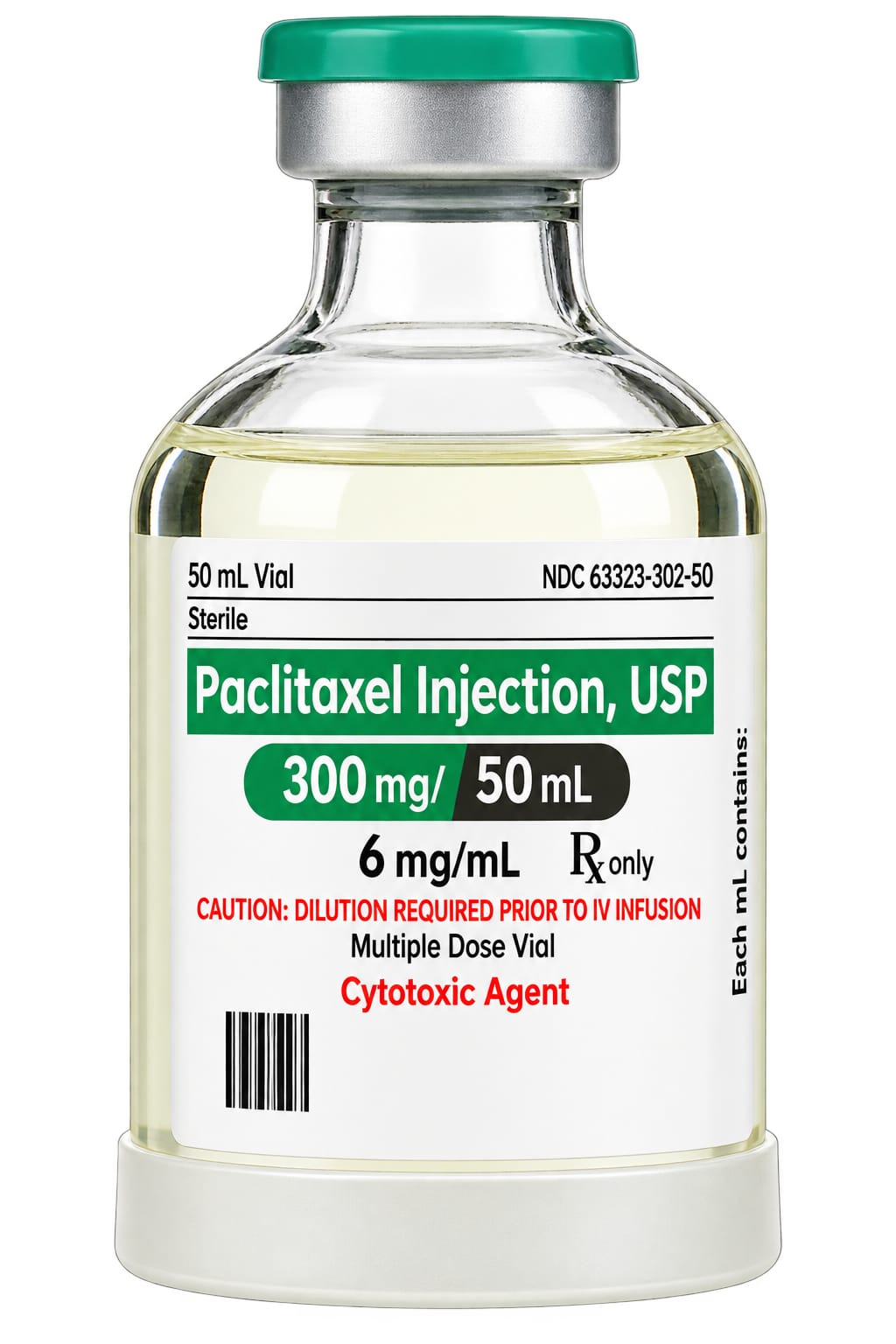
| Forms | Injection (6 mg/mL, in multidose vials and a pharmacy bulk vial) |
Quick overview
Paclitaxel Injection is a cancer chemotherapy medicine given into a vein, used alone or combined with other medicines to treat certain cancers, including ovarian, breast, and lung cancers, as well as AIDS-related Kaposi's sarcoma. It works by interfering with the internal skeleton that cells need to divide, stopping cancer cells from multiplying. It is given by a healthcare professional as an infusion, usually with other medicines beforehand to help prevent allergic reactions.
What is Paclitaxel Injection
Paclitaxel Injection is a cancer chemotherapy medicine given into a vein. It is used alone or combined with other medicines to treat certain cancers.
Paclitaxel Injection uses
- Treatment of ovarian carcinoma, alone or in combination with other chemotherapy
- Treatment of breast carcinoma, including after surgery and when cancer has spread or returned
- First-line treatment of advanced non-small cell lung cancer
- Treatment of advanced, AIDS-related Kaposi's sarcoma that has not responded to other treatment
Benefits of Paclitaxel Injection
- In first-line ovarian cancer treatment, patients given paclitaxel with cisplatin had a significantly longer time before the cancer progressed and longer survival compared with standard therapy
- In adjuvant breast cancer treatment, adding paclitaxel reduced the risk of cancer recurrence and reduced the risk of death compared to chemotherapy without paclitaxel
- Produced objective responses (shrinking or flattening of tumors) in a majority of patients with AIDS-related Kaposi's sarcoma in clinical studies
How Paclitaxel Injection works
Paclitaxel works by interfering with the internal skeleton (microtubules) that cells need to divide. It causes the microtubules to become locked in place instead of breaking down normally, which stops cancer cells from multiplying and leads to their death.
Paclitaxel Injection dosage
This medicine is given as an infusion into a vein by a healthcare professional, usually over about 3 hours, and is not self-administered. Before each dose, you will be given other medicines (such as a steroid, an antihistamine, and an acid-reducing medicine) to help prevent serious allergic reactions.
Treatment is usually repeated every 2 to 3 weeks, depending on the condition being treated and how well you tolerate it. Your doctor will check your blood counts between treatment cycles before deciding if you can have the next dose.
You should complete the full course of treatment as planned, even if you start to feel better, unless your doctor tells you otherwise. Avoid driving or operating machinery if you feel tired, dizzy, or drowsy after treatment, partly because this medicine contains alcohol.
| Age group | Dose |
|---|---|
| Under 18 years | Safety and effectiveness not established; specialist-directed |
| 18–64 years | 135–175 mg/m² IV every 3 weeks, depending on cancer type and regimen |
| 65+ years | Individualized by oncologist; dose based on cancer type, organ function, and tolerance |
Available forms and strengths
- Injection (6 mg/mL, in multidose vials and a pharmacy bulk vial)
Side effects of Paclitaxel Injection
Common
- Nausea, vomiting, and diarrhea
- Low red blood cell count (anemia), causing tiredness, paleness, or shortness of breath
- Numbness, tingling, or burning in the hands and feet (neuropathy)
- Pain, redness, swelling, or irritation at the injection site
- Joint and muscle pain a few days after treatment
- Hair loss, including eyebrows, eyelashes, and body hair
- Mouth or lip sores (mucositis)
- Low white blood cell count, which raises infection risk
- Changes in heart rate (slow heartbeat) and low blood pressure
Serious
- Severe allergic reactions with trouble breathing, very low blood pressure, sudden swelling, or hives, which can rarely be fatal
- Serious infections due to very low white blood cell counts, which can be life-threatening if untreated
- Severe nerve damage (peripheral neuropathy) that may not fully go away
- Severe injection site reactions including skin death (necrosis), ulcers, or tissue scarring if the drug leaks out of the vein
- Serious heart problems, including abnormal heart rhythms and, rarely, heart attack
- Lung problems such as scarring or inflammation of lung tissue (interstitial lung disease)
- Severe low blood counts leading to serious bleeding or bruising
- Rare serious liver problems, including liver failure
Warnings and precautions
- This medicine must be given under the supervision of a doctor who has experience using cancer chemotherapy drugs.
- Patients must be given other medicines beforehand to help reduce the chance of serious allergic reactions, which can include trouble breathing and dangerously low blood pressure. These reactions can rarely be fatal even with this preventive treatment.
- People who have had a severe allergic reaction to this medicine before should not receive it again.
- This medicine should not be used in patients whose white blood cell (neutrophil) counts are too low before starting treatment, as it increases the risk of serious infection.
- This medicine can cause serious lung damage (interstitial lung disease) that in some cases may be permanent and worsen over time.
- This medicine increases the risk of blood clots, which can be life-threatening if they travel to the lungs.
- This medicine can harm an unborn baby and should be avoided during pregnancy. Women who could become pregnant should avoid becoming pregnant while receiving this treatment.
- It is not known for certain if this medicine passes into human breast milk, but breastfeeding should be stopped during treatment.
- The effect of kidney problems on this medicine has not been specifically studied.
- People with liver problems may be at higher risk of side effects from this medicine, and caution is needed when giving it to people with moderate to severe liver impairment.
- This medicine contains alcohol, which may affect the brain and nervous system, so caution is advised, especially regarding driving afterward.
- Do not drive or operate machinery if you feel tired, sleepy, or dizzy after receiving this medicine.
Storage
- AJ-PACLITAXEL should be stored at room temperature (15-30°C)
- Retain in the original package and protect from light
- Store all drugs properly and keep them out of the reach of children
- Do not use after the expiry date printed on the label
When to see a doctor
- Get emergency help right away if you have trouble breathing, sudden swelling, hives, rash, or very low blood pressure, as these can be signs of a severe allergic reaction.
- Tell your doctor right away if you have a fever above 38°C or other signs of infection, since low white blood cell counts can make infections serious or life-threatening.
- Tell your doctor immediately if you notice unusual pain, stinging, burning, redness, or swelling at or around the injection site, either during or after treatment.
- Contact your treatment team right away if you have shortness of breath, a cough with or without fever, or any new or worsening breathing problems, as these may signal lung damage.
- Seek urgent medical care for signs of a blood clot, such as pain, redness, heat or swelling in an arm or leg, sudden shortness of breath, chest pain or tightness, or coughing up blood.
- Contact your treatment team if you have severe vomiting and cannot keep fluids down, or diarrhea occurring four or more times in 24 hours.
Alternatives
- Docetaxel
- Cabazitaxel
- Gemcitabine
Watch the video
FAQs
What is Paclitaxel Injection used for?
It is used to treat ovarian carcinoma, breast carcinoma, advanced non-small cell lung cancer, and advanced AIDS-related Kaposi's sarcoma that has not responded to other treatment.
How is Paclitaxel Injection given?
It is given as an infusion into a vein by a healthcare professional, usually over about 3 hours, with treatment repeated every 2 to 3 weeks. It is not self-administered.
Why do I need other medicines before Paclitaxel Injection?
You are given a steroid, an antihistamine, and an acid-reducing medicine before each dose to help prevent serious, potentially fatal allergic reactions.
What are the serious side effects of Paclitaxel Injection?
Serious side effects include severe allergic reactions, serious infections from low white blood cell counts, severe nerve damage, lung problems like interstitial lung disease, heart rhythm problems, severe low blood counts, and rare liver failure.
Can Paclitaxel Injection be used during pregnancy?
No, it can harm an unborn baby and should be avoided during pregnancy, and women who could become pregnant should avoid becoming pregnant during treatment.
General information, not medical advice
Your prescriber and the leaflet in your pack know your situation. This page does not.
- Follow your prescriber and the leaflet
- Don't start, stop, or change a dose on your own
- Doses and warnings differ by country and product
Sources
Video
Related medicines

Injectafer Injection: Uses, Dosage, Side Effects, Precautions and Alternates
Iron products
Injectafer (ferric carboxymaltose) treats iron deficiency anemia and heart failure-related iron deficiency via IV. Learn uses, dosage, side effects, and

Gliclazide Tablet: Uses, Dosage, Side Effects, Precautions and Alternates
Sulfonylurea (hypoglycemic/antidiabetic agent)
Gliclazide Tablet is a sulfonylurea for type 2 diabetes that boosts insulin release. Learn about dosage, side effects, warnings, and precautions.