
Safety
General information, not medical advice
Your prescriber and the leaflet in your pack know your situation. This page does not.
- Follow your prescriber and the leaflet
- Don't start, stop, or change a dose on your own
- Doses and warnings differ by country and product
Padcev Injection: Uses, Dosage, Side Effects, Precautions and Alternates
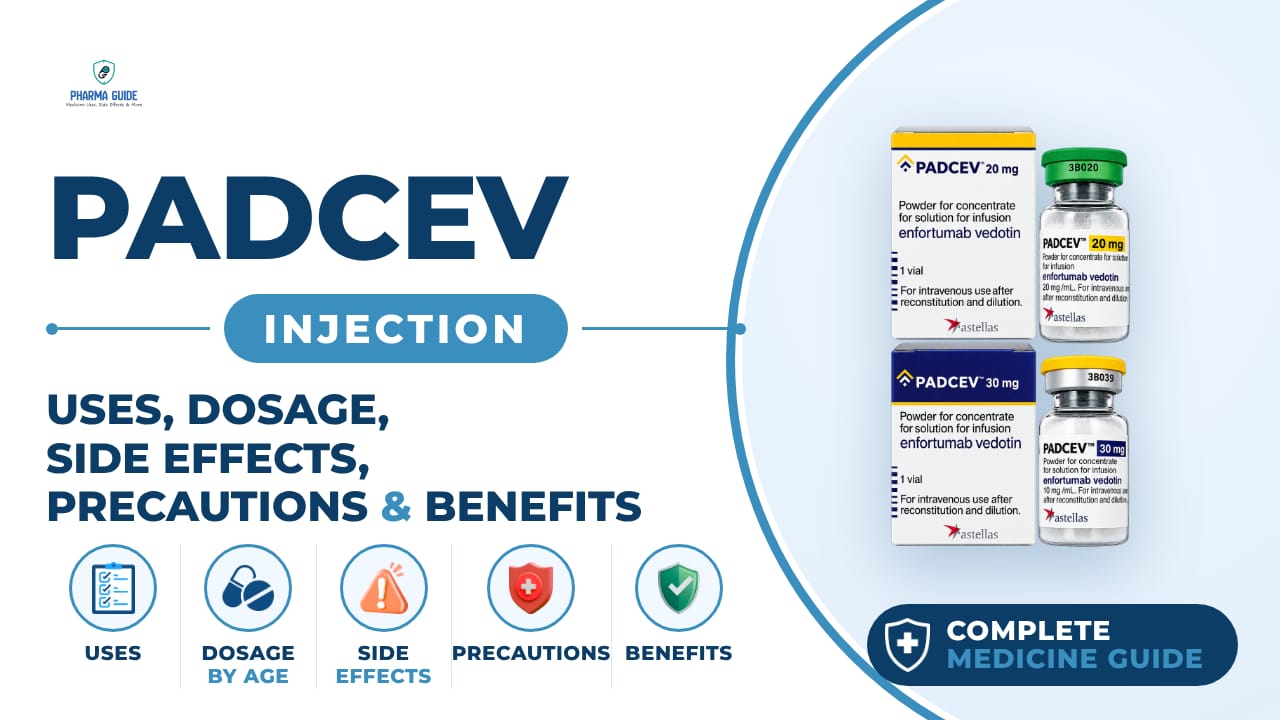
| Generic name | enfortumab vedotin |
|---|---|
| Drug class | Antineoplastic agent (antibody-drug conjugate) |
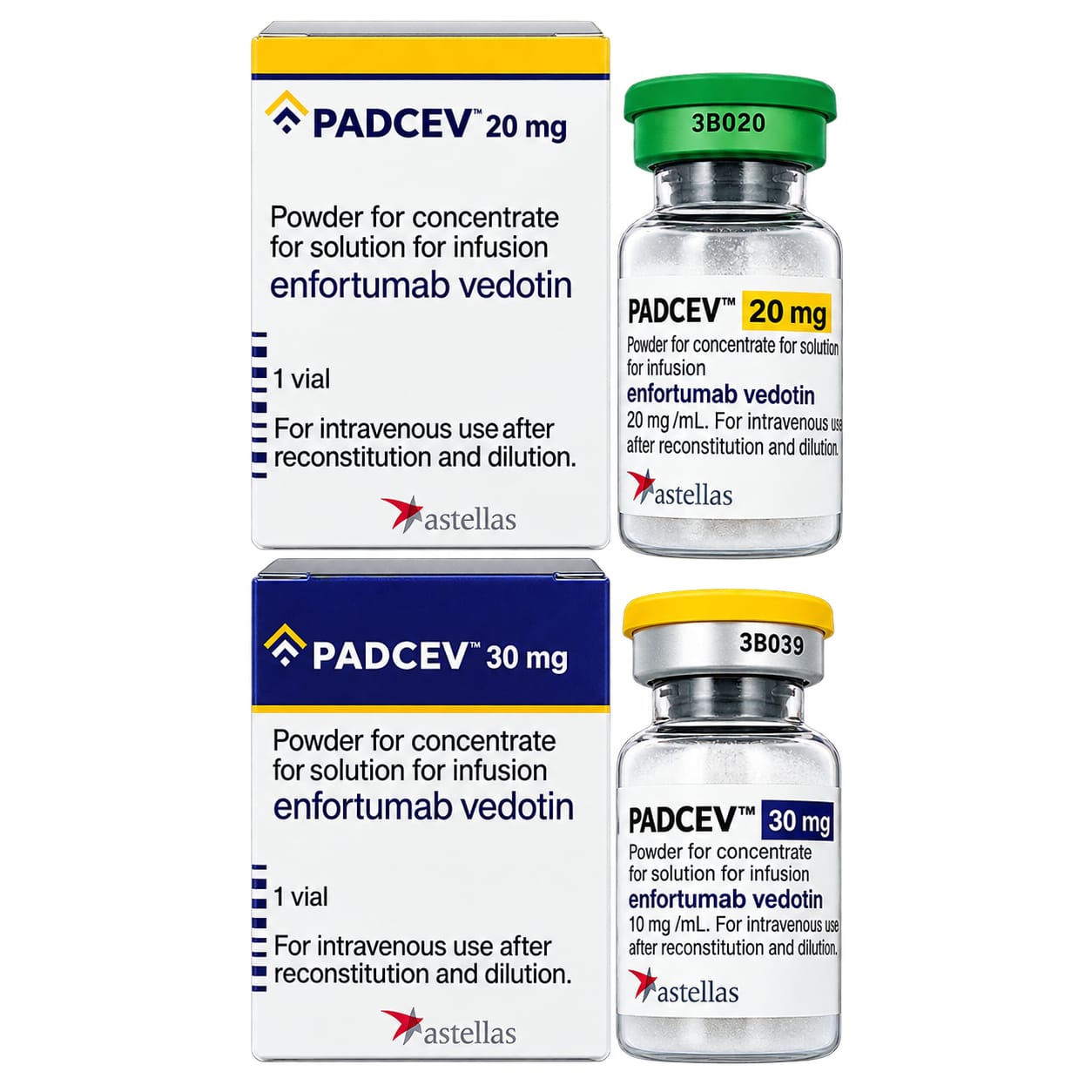
| Forms | Single-use vials containing 20 mg of enfortumab vedotin for injection, Single-use vials containing 30 mg of enfortumab vedotin for injection, Lyophilized powder for solution for intravenous infusion |
Quick overview
Padcev Injection (enfortumab vedotin) is a prescription antibody-drug conjugate used to treat adults with bladder cancer and cancers of the urinary tract that have spread or cannot be removed by surgery. It is given as an intravenous infusion by a healthcare professional, either alone or together with pembrolizumab. Padcev works by delivering a cell-killing medicine directly into cancer cells, which can also cause side effects affecting normal cells.
What is Padcev Injection
Padcev is a prescription medicine used to treat adults with bladder cancer and cancers of the urinary tract that have spread or cannot be removed by surgery. It is an antibody-drug conjugate, a type of targeted therapy that delivers cell-killing medicine directly to cancer cells.
Padcev Injection uses
- Treatment of adults with bladder cancer and cancers of the urinary tract (renal pelvis, ureter, or urethra) that has spread or cannot be removed by surgery
- Used with pembrolizumab when bladder or urinary tract cancer has spread or cannot be removed by surgery
- Used alone if you have received PD-1 or PD-L1 immunotherapy medicine and chemotherapy that contains platinum, or if you are not able to receive cisplatin-containing chemotherapy and have received one or more prior therapies
Benefits of Padcev Injection
- Treats certain advanced urothelial cancers
- Targets Nectin-4 on cancer cells
- Delivers a cytotoxic medicine directly to targeted cells
- Can be used alone or with pembrolizumab
- May help shrink tumors or delay cancer progression in eligible adults
How Padcev Injection works
Padcev is made of an antibody that attaches to a protein on cancer cells, a linker, and a cell-killing medicine. Once the antibody attaches to the cancer cell, the drug enters the cell and releases the cell-killing medicine, which disrupts the cell's internal skeleton and causes the cancer cell to die. This can also affect normal cells and cause side effects.
Padcev Injection dosage
Padcev is given by a healthcare professional in a healthcare setting as an intravenous (IV) infusion into your vein over 30 minutes.
When given alone, each treatment cycle is 28 days: you receive this medicine once a week for 3 weeks in every cycle, then take a week off before starting the next cycle.
When given with pembrolizumab, each treatment cycle is 21 days: you receive a dose on day 1 and day 8, then have a dose-free week before the next cycle.
Your healthcare professional will tell you how many treatment cycles you need. You may have blood tests during treatment with this medicine.
If you miss your appointment to receive Padcev, you should make every effort to receive the missed dose as soon as possible; doses should be given at least 1 week apart.
| Age group | Dose |
|---|---|
| 18–64 years | 1.25 mg/kg IV, maximum 125 mg per dose; schedule depends on the treatment regimen |
Available forms and strengths
- Single-use vials containing 20 mg of enfortumab vedotin for injection
- Single-use vials containing 30 mg of enfortumab vedotin for injection
- Lyophilized powder for solution for intravenous infusion
Side effects of Padcev Injection
Common
- Low red blood cells (anemia)
- Low numbers of neutrophils (neutropenia)
- Nausea
- Diarrhea
- Vomiting
- Feeling tired
- Decreased appetite
- Bad taste in your mouth
- Rash
- Hair loss
- Weight loss
- Increased liver enzymes (AST or ALT)
- Itching
- Low platelet counts
- Changes in liver and kidney function tests
- Increased uric acid in blood
- Increased lipase
- Dry skin
- Difficulty sleeping
- Constipation
- Stomach pain
- Fever
- Urinary tract infection
- Pain in the muscles and bones
- Bleeding
- Infection in the blood
Serious
- Severe skin reactions including Stevens-Johnson syndrome and toxic epidermal necrolysis
- High blood sugar (hyperglycemia) and diabetic ketoacidosis
- Peripheral neuropathy (nerve damage) causing weakness, numbness and pain in hands and feet
- Lung inflammation (pneumonitis/interstitial lung disease)
- Eye problems such as dry eye and blurred vision
- Infusion site extravasation (drug leaking outside the blood vessels) causing redness, pain, swelling, bruising, infection, or blisters
- Fast heart rate
Warnings and precautions
- Severe and fatal skin reactions, including Stevens-Johnson syndrome and toxic epidermal necrolysis, have occurred in patients treated with Padcev.
- High blood sugar, including a serious condition called diabetic ketoacidosis (DKA), and death have occurred in patients with and without diabetes treated with Padcev.
- Padcev may cause severe or life-threatening lung inflammation that can lead to death.
- Do not use Padcev if you are allergic to enfortumab vedotin or any of its ingredients.
- Padcev may cause fertility problems in females and males, which may affect the ability to have children.
- Padcev can harm an unborn baby and should not be used during pregnancy. A pregnancy test is recommended before starting treatment, and effective contraception should be used during treatment and for a period after the last dose.
- It is not known if Padcev passes into breast milk. Breastfeeding is not recommended during treatment and for a period after the last dose.
- No dose adjustment is required for patients with mild, moderate, or severe kidney impairment, but tell your healthcare provider if you have or have had kidney problems.
- Padcev should be avoided in patients with moderate or severe liver impairment. Tell your healthcare provider if you have or have had liver problems.
Storage
- PADCEV will be stored by the healthcare professional at the hospital or clinic
- Do not use this medicine after the expiry date
- Store this medicine at 2°C to 8°C
- Do not freeze
- Do not shake
- Do not expose to sunlight
- Do not store any unused portion of the infusion solution for reuse
- Any unused medicine or waste material should be disposed of in accordance with local requirements
- Keep out of reach and sight of children
When to see a doctor
- Get medical help right away if you have signs of a new or worsening skin reaction, such as ring-like skin reactions, worsening rash or itching, blistering or peeling skin, painful sores or ulcers in the mouth, nose, throat, or genital area, fever or flu-like symptoms, or swollen lymph nodes.
- Tell your healthcare provider right away if you get symptoms of high blood sugar, such as frequent urination, increased thirst, blurred vision, confusion, drowsiness, loss of appetite, a fruity smell on your breath, nausea, vomiting, or stomach pain.
- Tell your healthcare provider right away if you get new or worsening trouble breathing, shortness of breath, or cough.
- Tell your healthcare provider right away if you get new or worsening numbness or tingling in your hands or feet or muscle weakness.
- Tell your healthcare provider right away if you notice redness, swelling, itching, blistering, peeling skin, or discomfort at the infusion site.
- If you think you have taken too much Padcev, contact a healthcare professional, hospital emergency department, or your local poison control center immediately, even if there are no symptoms.
Alternatives
- Trodelvy (sacituzumab govitecan)
- Keytruda (pembrolizumab)
- Opdivo (nivolumab)
Watch the video
FAQs
What is Padcev Injection used for?
Padcev is used to treat adults with bladder cancer and cancers of the urinary tract (renal pelvis, ureter, or urethra) that have spread or cannot be removed by surgery, either alone or with pembrolizumab.
How is Padcev given?
Padcev is given by a healthcare professional as an intravenous infusion over 30 minutes. When given alone, it is administered weekly for 3 weeks in a 28-day cycle. When given with pembrolizumab, it is given on days 1 and 8 of a 21-day cycle.
What are the common side effects of Padcev Injection?
Common side effects include anemia, neutropenia, nausea, diarrhea, vomiting, fatigue, decreased appetite, bad taste in the mouth, rash, hair loss, weight loss, and increased liver enzymes, among others.
What serious warnings are associated with Padcev?
Padcev carries warnings for severe and fatal skin reactions, high blood sugar including diabetic ketoacidosis, severe lung inflammation, peripheral neuropathy, and eye problems.
Can Padcev be used during pregnancy?
No, Padcev can harm an unborn baby and should not be used during pregnancy. A pregnancy test is recommended before starting treatment, and effective contraception should be used during and after treatment.
General information, not medical advice
Your prescriber and the leaflet in your pack know your situation. This page does not.
- Follow your prescriber and the leaflet
- Don't start, stop, or change a dose on your own
- Doses and warnings differ by country and product
Sources
Video
Related medicines

Injectafer Injection: Uses, Dosage, Side Effects, Precautions and Alternates
Iron products
Injectafer (ferric carboxymaltose) treats iron deficiency anemia and heart failure-related iron deficiency via IV. Learn uses, dosage, side effects, and

Gliclazide Tablet: Uses, Dosage, Side Effects, Precautions and Alternates
Sulfonylurea (hypoglycemic/antidiabetic agent)
Gliclazide Tablet is a sulfonylurea for type 2 diabetes that boosts insulin release. Learn about dosage, side effects, warnings, and precautions.