
Safety
General information, not medical advice
Your prescriber and the leaflet in your pack know your situation. This page does not.
- Follow your prescriber and the leaflet
- Don't start, stop, or change a dose on your own
- Doses and warnings differ by country and product
Panadol Night Tablet: Uses, Dosage, Side Effects, Precautions and Alternates
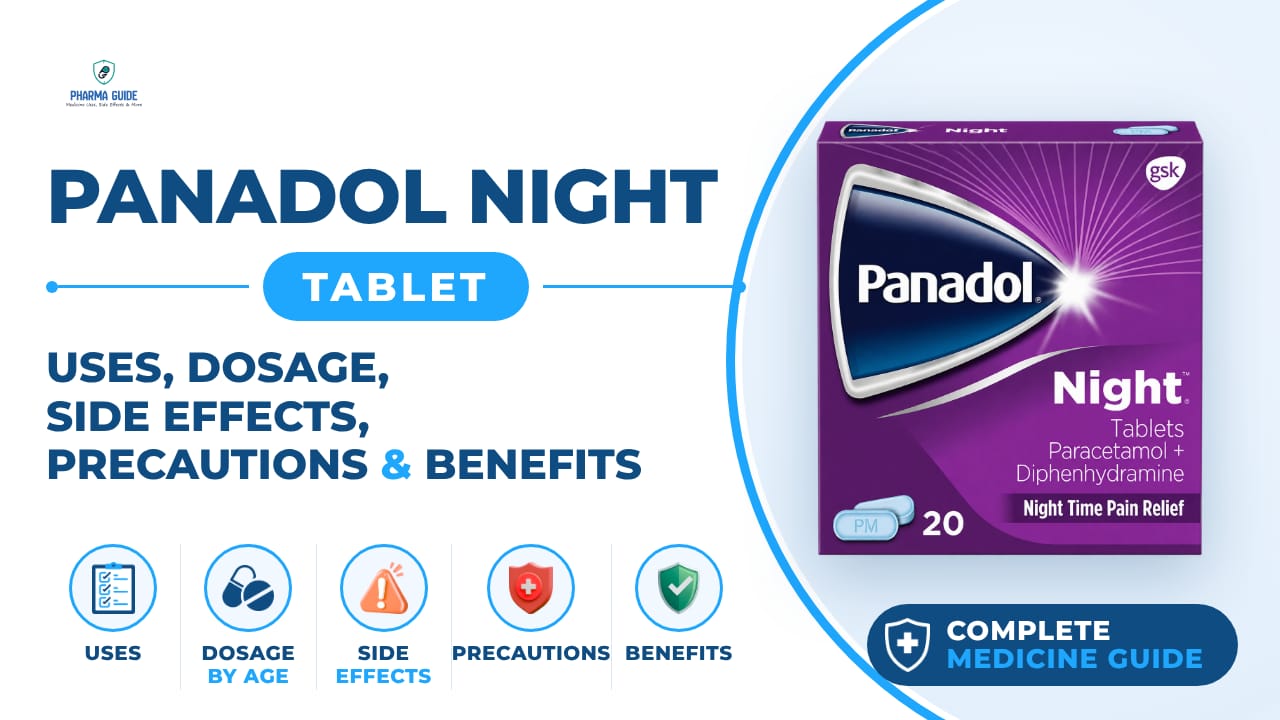
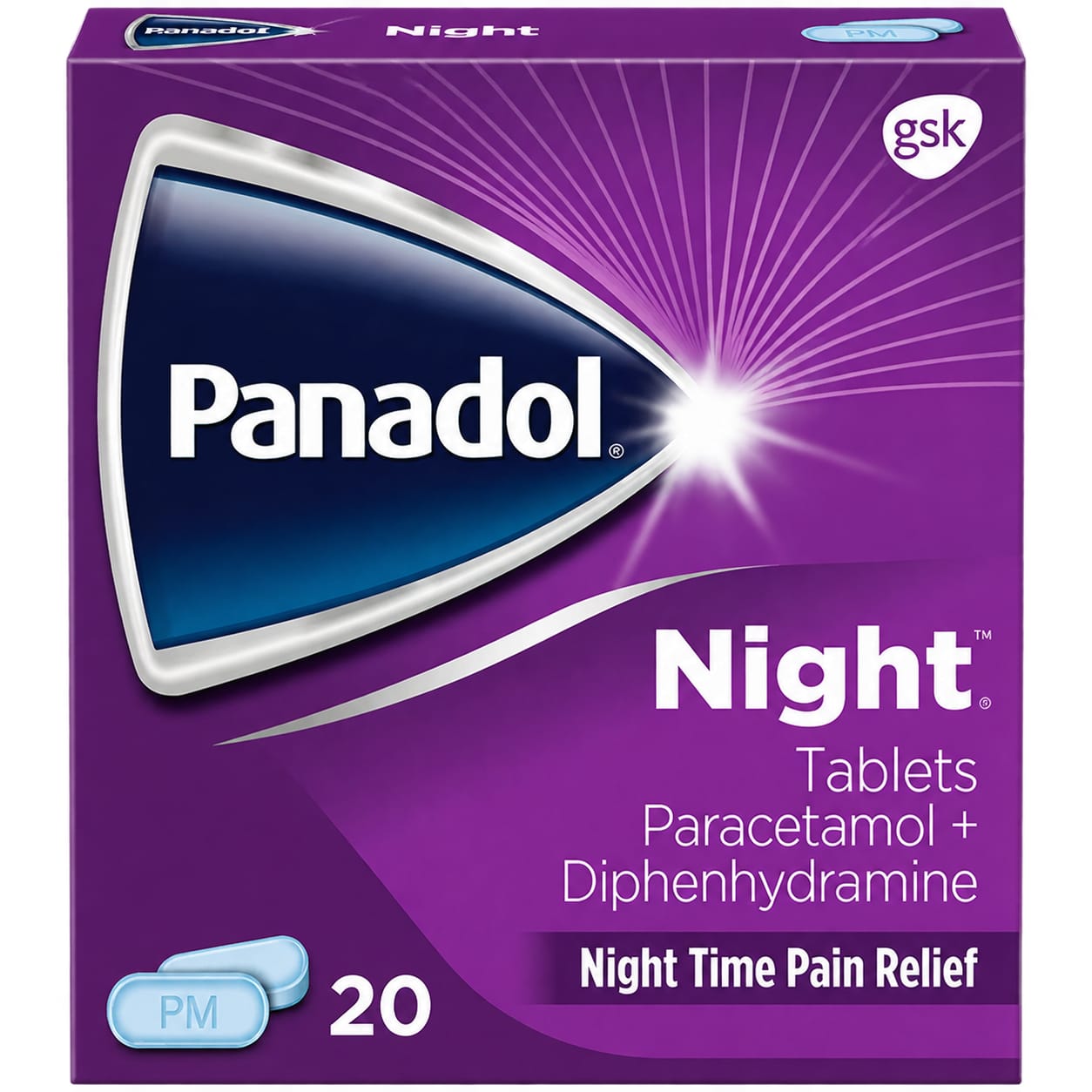
| Generic name | Paracetamol + Diphenhydramine hydrochloride |
|---|---|
| Forms | Tablet (film-coated capsule-shaped tablet/caplet) |
Quick overview
Panadol Night Tablet is a bedtime pain relief medicine containing paracetamol and diphenhydramine hydrochloride. It combines a painkiller with an antihistamine that causes drowsiness, helping relieve pain while helping you fall asleep and stay asleep. It is used for conditions such as headache, migraine, backache, and muscle pain, and also helps reduce fever.
What is Panadol Night Tablet
Panadol Night is a bedtime pain relief medicine that combines a painkiller with an antihistamine that causes drowsiness, helping you sleep when pain is keeping you awake.
Panadol Night Tablet uses
- Headache
- Migraine
- Backache
- Rheumatic and muscle pain
- Toothache
- Period pain
- Arthritis
- Neuralgia
- Cold and flu symptoms with minor aches
- Relief of fever
Benefits of Panadol Night Tablet
- Provides relief from mild to moderate pain, including headaches, backache, and muscle pain
- Contains a mild sedative to help you fall asleep and stay asleep
- Dual-action relief for painful conditions that disrupt sleep, without needing separate pain relievers and sleep aids
- Helps relieve mild pain and body aches that disturb sleep
- Paracetamol helps reduce fever
How Panadol Night Tablet works
Panadol Night contains paracetamol, which relieves pain and reduces fever, and diphenhydramine hydrochloride, an antihistamine that also causes drowsiness, helping you sleep when pain keeps you awake.
Panadol Night Tablet dosage
Swallow the tablets with water about 20 minutes before you go to bed. Do not take this medicine if you have already taken another paracetamol-containing product in the last 4 hours. Do not take Panadol Night if you have already had 4 doses of a paracetamol-containing product during the day, and do not take more than the recommended amount in 24 hours.
Do not use if you are under 16 years old unless a doctor has advised otherwise. Do not take this medicine for more than one week without seeing a doctor if your pain or headache continues. Avoid use in elderly patients who have confusion. Do not combine with other antihistamine-containing products, including skin products or cough and cold medicines.
| Age group | Dose |
|---|---|
| Under 16 Years | Not recommended unless advised by a healthcare professional |
| 16 Years and Above | 2 tablets at bedtime when needed |
| Adults (18–64 Years) | 2 tablets at bedtime (maximum according to product label) |
| Older Adults (65+ Years) | 1–2 tablets at bedtime with medical advice |
Available forms and strengths
- Tablet (film-coated capsule-shaped tablet/caplet)
Side effects of Panadol Night Tablet
Common
- Drowsiness
- Sedation
- Unsteadiness
- Dizziness
- Tiredness/fatigue
- Blurred vision
- Difficulty concentrating
- Dry mouth
- Feeling restless or excitable
- Confusion
- Tingling sensation in the skin
- Muscle twitching
Serious
- Allergic reactions which may be severe, such as skin rash and itching, sometimes with swelling of the mouth or face or shortness of breath
- Chest tightness or thickening of phlegm
- Difficulty passing urine, headaches
- Upset stomach, nausea or vomiting
- Breathing problems, especially if you've had them before with other painkillers like ibuprofen or aspirin
- Seizures or difficulty with muscle coordination
- Changes in heart rhythm
- Unexplained bruising or bleeding
- Reoccurring fevers or infections
- Nausea, sudden weight loss, loss of appetite, and yellowing of the eyes and skin
- Serious skin reactions (very rare)
- A serious blood and fluid abnormality called metabolic acidosis, especially in people who are severely ill and take paracetamol at regular doses for a long time or together with flucloxacillin
Warnings and precautions
- Do not take this medicine if you have ever had an allergic reaction to paracetamol, diphenhydramine hydrochloride, or any other ingredient in it.
- Do not take this medicine if you have porphyria, a condition involving too much of a pigment called porphyrin, which can discolor urine.
- Do not take this medicine if you have already taken another paracetamol-containing product in the last 4 hours.
- Do not use this medicine with any other antihistamine-containing products, including skin products or cough and cold medicines.
- Talk to your doctor before taking this medicine if you have epilepsy or seizure disorders, a stomach or gut obstruction, difficulty passing urine, narrow-angle glaucoma, an enlarged prostate, myasthenia gravis, asthma, bronchitis, COPD, or an intolerance to certain sugars.
- Tell your doctor immediately if you have a severe infection or illness, severe kidney impairment, sepsis, malnutrition, chronic alcoholism, or if you are taking the antibiotic flucloxacillin, since this can lead to a serious blood and fluid problem called metabolic acidosis.
- Talk to your doctor or pharmacist before taking this medicine if you are on other prescribed medicines, including MAOIs, tricyclic antidepressants, atropine, beta blockers, metoclopramide or domperidone, metoprolol or venlafaxine, colestyramine, medicines for stomach cramps or travel sickness, anxiety or sleep medicines, other drowsiness-causing or dry-mouth-causing medicines, blood thinners like warfarin, painkillers like codeine, or the antibiotic flucloxacillin.
- If you care for an elderly person who has confusion, do not give them this medicine.
- Very rare but serious skin reactions have been reported with this medicine.
- Do not take Panadol Night if you are pregnant or if you are breastfeeding.
- Ask your doctor before taking this medicine if you have kidney problems; you may need to avoid it altogether or limit how much paracetamol you take.
- Ask your doctor before taking this medicine if you have liver problems, including alcoholic liver disease; you may need to avoid it altogether or limit how much paracetamol you take.
- Do not drink alcohol while using Panadol Night.
- Do not drive or operate machinery, because this medicine is meant to make you sleepy soon after you take it.
Storage
- Keep out of the sight and reach of children.
- Do not use this medicine after the 'EXP' date shown on the pack.
- Store below 25°C in a dry place.
When to see a doctor
- Talk to a doctor right away if you take too many tablets, even if you feel fine, because too much paracetamol can cause serious, delayed liver damage.
- See your doctor if your bedtime pain lasts more than one week, or if your headache becomes persistent.
- Stop taking this medicine and tell your doctor immediately if you get a severe allergic reaction, chest tightness or thick phlegm, trouble passing urine, headaches, upset stomach, nausea or vomiting, breathing problems, seizures or muscle coordination problems, heart rhythm changes, unexplained bruising or bleeding, repeated fevers or infections, or nausea with sudden weight loss, loss of appetite, and yellowing of the eyes and skin.
- Contact a doctor immediately if you get symptoms of metabolic acidosis, such as serious breathing difficulties with deep rapid breathing, drowsiness, nausea, vomiting, and loss of appetite.
Alternatives
- Tylenol PM
- Advil PM
- Melatonin
Watch the video
FAQs
What is Panadol Night Tablet used for?
It is used to relieve pain such as headache, migraine, backache, rheumatic and muscle pain, toothache, period pain, arthritis, neuralgia, and cold and flu symptoms, while also reducing fever and helping you sleep.
How do you take Panadol Night Tablet?
Swallow the tablets with water about 20 minutes before bed. Adults and those 16 years and above typically take 2 tablets at bedtime when needed, while older adults may take 1–2 tablets with medical advice.
Can I take Panadol Night Tablet with other paracetamol products?
No, you should not take it if you have already taken another paracetamol-containing product in the last 4 hours, and you should not exceed the recommended amount in 24 hours.
What are the common side effects of Panadol Night Tablet?
Common side effects include drowsiness, sedation, unsteadiness, dizziness, tiredness, blurred vision, difficulty concentrating, dry mouth, restlessness, confusion, tingling skin sensations, and muscle twitching.
Is it safe to drive after taking Panadol Night Tablet?
No, you should not drive or operate machinery because this medicine is meant to make you sleepy soon after you take it.
General information, not medical advice
Your prescriber and the leaflet in your pack know your situation. This page does not.
- Follow your prescriber and the leaflet
- Don't start, stop, or change a dose on your own
- Doses and warnings differ by country and product
Sources
Video
Related medicines

Injectafer Injection: Uses, Dosage, Side Effects, Precautions and Alternates
Iron products
Injectafer (ferric carboxymaltose) treats iron deficiency anemia and heart failure-related iron deficiency via IV. Learn uses, dosage, side effects, and

Gliclazide Tablet: Uses, Dosage, Side Effects, Precautions and Alternates
Sulfonylurea (hypoglycemic/antidiabetic agent)
Gliclazide Tablet is a sulfonylurea for type 2 diabetes that boosts insulin release. Learn about dosage, side effects, warnings, and precautions.