
Safety
General information, not medical advice
Your prescriber and the leaflet in your pack know your situation. This page does not.
- Follow your prescriber and the leaflet
- Don't start, stop, or change a dose on your own
- Doses and warnings differ by country and product
Panadol Syrup: Uses, Dosage, Side Effects, Precautions and Alternates
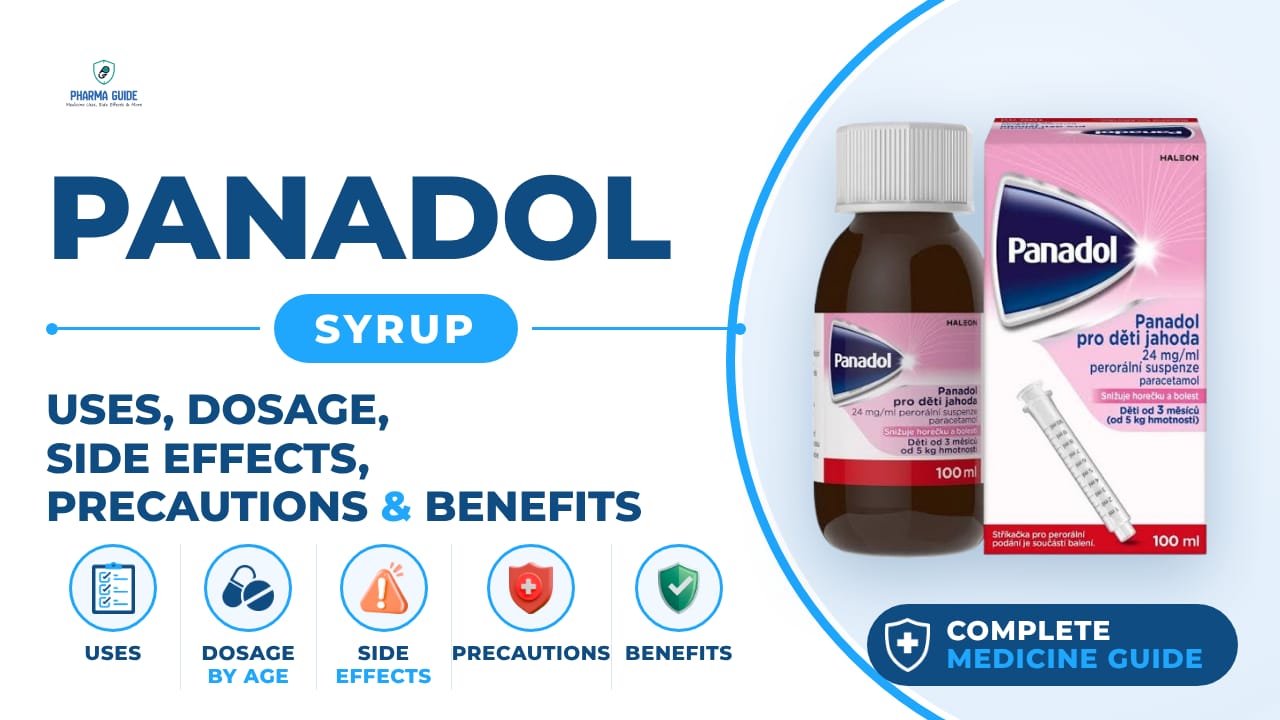
| Generic name | Paracetamol |
|---|---|
| Drug class | analgesic (pain reliever) & antipyretic (fever reducer) |
| Forms | Suspension (liquid), Bottles of 100 mL and 200 mL |
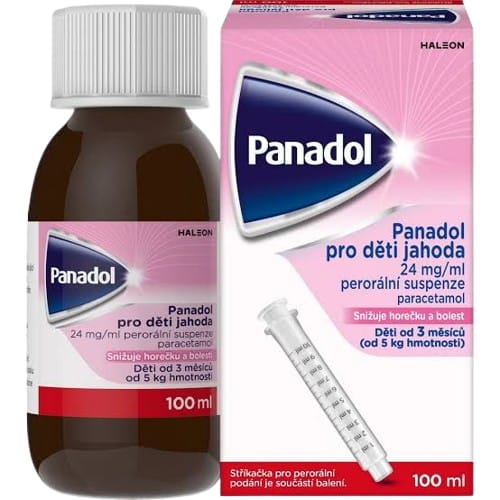
Quick overview
Panadol Syrup is a liquid medicine containing paracetamol, used to temporarily relieve pain and reduce fever in children. It can help with conditions such as earache, teething, headache, and cold and flu symptoms, as well as discomfort linked to immunisation. The syrup can be given with water or fruit juice and should be measured using the dosing device provided.
What is Panadol Syrup
Panadol Syrup is a liquid medicine containing paracetamol. It is used to temporarily relieve pain and reduce fever in children.
Panadol Syrup uses
- Temporary relief of pain, fever and discomfort linked to immunisation
- Earache
- Cold and flu symptoms
- Teething
- Headache
- Reducing fever
- Relief of mild to moderate pain such as headaches, toothaches, backaches and menstrual pain
Benefits of Panadol Syrup
- Provides effective temporary relief of pain and discomfort
- Reduces fever
- Comes as a liquid that can be given with water or fruit juice
How Panadol Syrup works
Paracetamol stops pain messages from reaching the brain. It also acts in the brain to lower fever by affecting the part that controls body temperature.
Panadol Syrup dosage
Follow all directions given by your pharmacist or doctor carefully. Do not take more frequently than every four hours. Use the smallest dose needed to treat symptoms and for the shortest time necessary. Shake the bottle thoroughly before use. This medicine can be given with water or fruit juice. Use the dosing device provided to measure accurately. Only give paracetamol to children for up to 48 hours at a time unless a doctor has told you to give it for longer. Drink plenty of water to prevent dehydration.
| Age group | Dose |
|---|---|
| 2–3 months* | 2.5 mL Max 2 Doses per Day |
| 3–6 months | 2.5 mL Every 4–6 hours as needed |
| 6–24 months | 5 mL Every 4–6 hours as needed |
| 2–4 years | 7.5 mL Every 4–6 hours as needed |
| 4–8 years | 10 mL Every 4–6 hours as needed |
| 8–10 years | 15 mL Every 4–6 hours as needed |
| 10–12 years | 20 mL Every 4–6 hours as needed |
Available forms and strengths
- Suspension (liquid)
- Bottles of 100 mL and 200 mL
Side effects of Panadol Syrup
Common
- Nausea
- Vomiting
- Constipation
- Abdominal pain
- Diarrhea
- Headache
- Dizziness
- Rash
- Itching
- Products containing sorbitol and maltitol may have a laxative effect or cause diarrhoea
Serious
- Shortness of breath
- Wheezing or difficulty breathing
- Swelling of the face, lips, tongue, throat or other parts of the body
- Allergic skin reactions such as rash, peeling, itching or hives
- Mouth ulcers
- Unexplained bruising or bleeding
- Symptoms of metabolic acidosis such as deep rapid breathing, drowsiness, nausea, vomiting and loss of appetite
- Serious skin reactions such as Stevens-Johnson syndrome and toxic epidermal necrolysis
- Signs of a serious liver problem such as pain in the upper stomach, pale stools, dark urine, yellow eyes or skin
Warnings and precautions
- Do not give more than the recommended dose as it may cause serious harm to your child's liver.
- Do not use this medicine if your child is taking any other medicine that contains paracetamol.
- This medicine contains maltitol and sorbitol. People with rare hereditary problems of fructose intolerance should not take it.
- Do not use this medicine after the expiry date or if the packaging is torn or shows signs of tampering.
- Do not give this medicine for more than 48 hours unless a doctor has told you to.
- Ask your pharmacist or a risk of drowsiness; therefore avoid using it while driving.doctor about using paracetamol if you are pregnant or plan to become pregnant.
- Paracetamol is suitable for breastfeeding mothers.
- Tell your pharmacist or doctor if your child has or has had kidney problems, as you may need to avoid this product or limit the amount of paracetamol given.
- Tell your pharmacist or doctor if your child has or has had liver problems, as you may need to avoid this product or limit the amount of paracetamol given.
- If you will be taking more than an occasional dose of paracetamol, do not drink alcohol, as this may increase the chance of liver damage. Its use has shown
Storage
- Keep your medicine in the original pack until it is time to take it.
- Keep your medicine in a cool dry place where the temperature stays below 30ºC. Do not refrigerate.
- Do not store this medicine in the bathroom or near a sink. Do not leave it on a window sill or in a car.
- Keep it where children cannot reach it.
- A locked cupboard at least one-and-a-half metres above the ground is a good place to store medicines.
- Ask your pharmacist what to do with any medicine that is left over, or if the expiry date has passed.
When to see a doctor
- Contact a doctor immediately if you think your child may be affected by metabolic acidosis, with signs such as deep, rapid, difficult breathing, nausea, vomiting, loss of appetite or drowsiness.
- If you think your child or anyone else has taken too much, immediately contact your doctor or your local poison control center, or go to the nearest hospital emergency department, even if there are no signs of discomfort, because of the risk of delayed, serious liver damage.
- If any serious side effect happens, stop using the product and tell your doctor immediately or go to the nearest hospital emergency department.
- Check with your doctor right away if you or your child have upper stomach pain or tenderness, pale stools, dark urine, loss of appetite, nausea, unusual tiredness or weakness, or yellow eyes or skin, as these could be signs of a serious liver problem.
Alternatives
- Calpol Suspension
- Disprol Suspension
- Generic Paracetamol Oral Suspension
Watch the video
FAQs
What is Panadol Syrup used for?
It is used to temporarily relieve pain and reduce fever in children, helping with conditions such as earache, teething, headache, cold and flu symptoms, and discomfort linked to immunisation.
How should Panadol Syrup be given?
Shake the bottle thoroughly before use and give it with water or fruit juice. Use the dosing device provided to measure accurately, do not dose more frequently than every four hours, and do not give for more than 48 hours at a time unless a doctor has advised otherwise.
What are the common side effects of Panadol Syrup?
Common side effects include nausea, vomiting, constipation, abdominal pain, diarrhea, headache, dizziness, rash, and itching. Products containing sorbitol and maltitol may also cause a laxative effect or diarrhoea.
When should I see a doctor after giving Panadol Syrup?
Seek medical help immediately if you suspect metabolic acidosis, an overdose, or a serious side effect, or if there are signs of a liver problem such as upper stomach pain, pale stools, dark urine, or yellow eyes or skin.
What forms and strengths does Panadol Syrup come in?
Panadol Syrup is available as a liquid suspension in bottles of 100 mL and 200 mL.
General information, not medical advice
Your prescriber and the leaflet in your pack know your situation. This page does not.
- Follow your prescriber and the leaflet
- Don't start, stop, or change a dose on your own
- Doses and warnings differ by country and product
Sources
- Panadol Children 5-12 Years Suspension Information Leaflet, Haleon, Date of preparation: January 2026
- Dawaai.pk - Panadol Liquid
- Drugs.com - Childrens Panadol 5-12 Years Side Effects, reviewed Apr 14, 2026
Video
Related medicines
Paracetamol Syrup: Uses, Dosage, Side Effects, Precautions and Alternates
analgesic (pain reliever) and antipyretic (fever reducer)
Paracetamol Syrup relieves mild-to-moderate pain and fever in babies and children, including post-vaccination fever. Learn dosage, side effects, and safety
Tylenol Syrup: Uses, Dosage, Side Effects, Precautions and Alternates
analgesic (pain reliever) and antipyretic (fever reducer
Tylenol Syrup contains acetaminophen to reduce fever and relieve minor aches in children. Learn dosage by age, uses, side effects, and warnings.