
Safety
General information, not medical advice
Your prescriber and the leaflet in your pack know your situation. This page does not.
- Follow your prescriber and the leaflet
- Don't start, stop, or change a dose on your own
- Doses and warnings differ by country and product
Paracetamol Syrup: Uses, Dosage, Side Effects, Precautions and Alternates
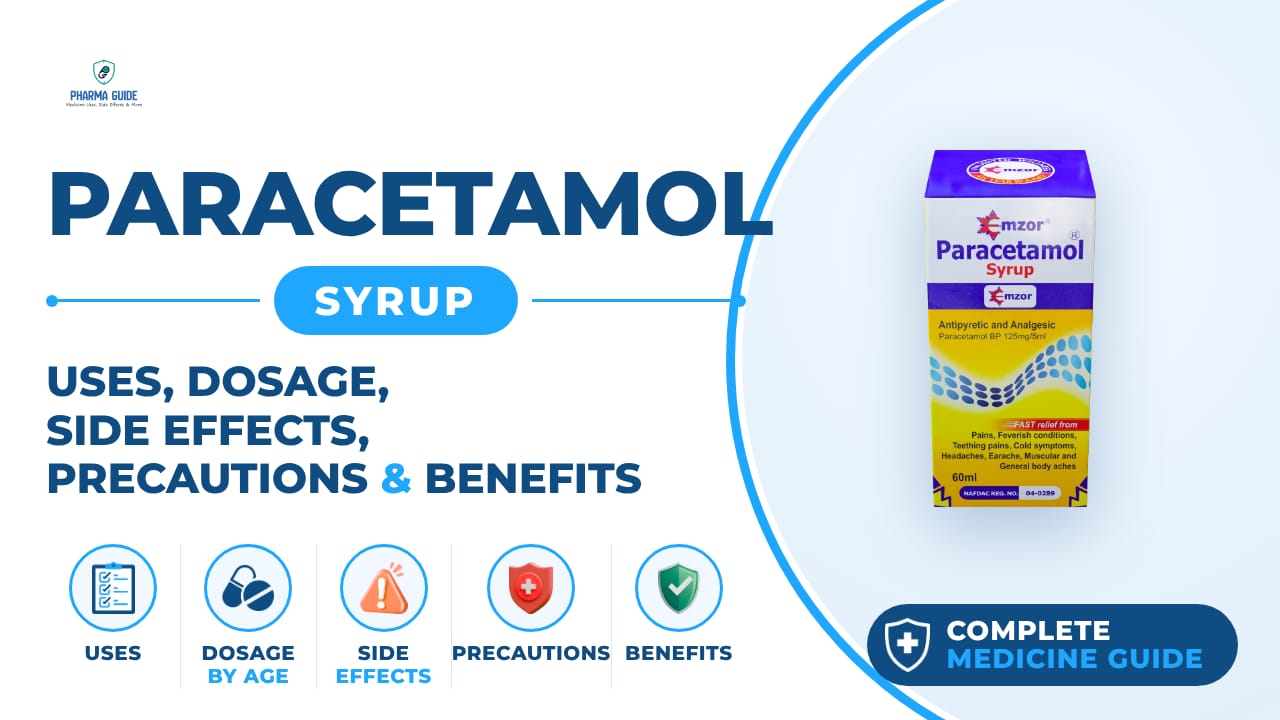
| Generic name | Paracetamol |
|---|---|
| Drug class | analgesic (pain reliever) and antipyretic (fever reducer) |
| Forms | Oral suspension, Oral elixir, Oral tablet, Oral capsule, Suppository |
Quick overview
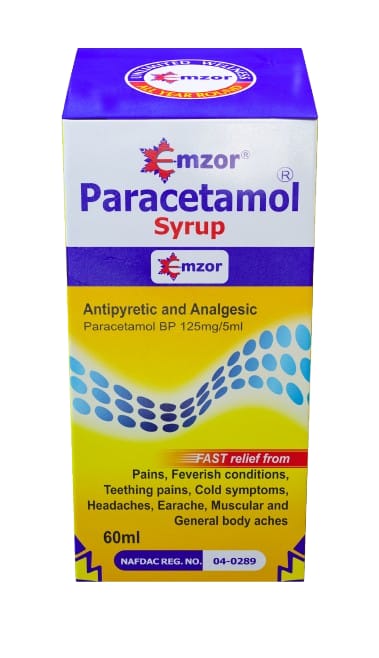
Paracetamol Syrup is a painkiller and fever reducer made for babies and children. It is used to temporarily relieve mild-to-moderate pain and to lower a high temperature, including fever after vaccination. It is taken by mouth using the syringe or spoon provided with the pack, and doses depend on the child's age.
What is Paracetamol Syrup
Paracetamol is a painkiller and fever reducer used to temporarily relieve mild-to-moderate pain and to lower a high temperature. The syrup (oral suspension/elixir) form is made for babies and children to treat mild or moderate pain and feverishness, including fever after vaccination.
Paracetamol Syrup uses
- Relief of mild-to-moderate pain
- Reducing fever (high temperature)
- Headache and tension headache
- Backache
- Rheumatic and muscle pain
- Toothache
- Period pain (dysmenorrhea)
- Cold and flu symptoms
- Fever after vaccination in babies
Benefits of Paracetamol Syrup
- Temporarily relieves mild-to-moderate pain
- Reduces high temperature (fever)
- Suitable for babies and children in syrup form
- Available without a prescription
How Paracetamol Syrup works
It is not fully known how paracetamol works. It is thought to block chemical messengers in the brain that tell us we are in pain, and to affect the chemical messengers that control body temperature, which lowers fever.
Paracetamol Syrup dosage
For oral use only. Shake the bottle for at least 10 seconds before use. Use the oral syringe or measuring spoon that comes with the medicine to give the correct amount. Do not overfill the spoon and always use the spoon supplied with the pack.
Take paracetamol regularly, at the same time each day, to get the most benefit. Leave at least 4 hours between doses. Do not give with any other paracetamol-containing product. Do not take for more than 3 days unless your doctor tells you to. Drink plenty of water to prevent dehydration. Avoid alcohol while using this medicine.
| Age group | Dose |
|---|---|
| 3 - 6 months | 2.5 ml (4 times per day) |
| 6 - 24 months | 5 ml (4 times per day) |
| 2 - 4 years | 7.5 ml (5 ml + 2.5 ml) (4 times per day) |
| 4 - 8 years | 10 ml (5 ml + 5 ml) (4 times per day) |
| 8 - 10 years | 15 ml (5 ml + 5 ml + 5 ml) (4 times per day) |
| 10 - 12 years | 20 ml (5 ml + 5 ml + 5 ml + 5 ml) (4 times per day) |
Available forms and strengths
- Oral suspension
- Oral elixir
- Oral tablet
- Oral capsule
- Suppository
Side effects of Paracetamol Syrup
Common
- Redness or soreness in or around the rectum (with suppositories)
Serious
- Allergic reaction such as rash, itchy skin, hives, swelling of the lips, eyes, tongue, throat or face, or difficulty breathing or wheezing
- Skin rash, peeling skin, or mouth ulcers
- Unexplained bruising or bleeding
- Becoming unusually tired or getting more infections than usual
- Blood disorders
- Liver problems, such as nausea, sudden weight loss, loss of appetite, and yellowing of the eyes and skin
Warnings and precautions
- Do not give this medicine with any other product containing paracetamol or acetaminophen, or with flu, cold, cough or decongestant products.
- Do not take more than the recommended dose or use more often than directed.
- Do not use for more than 3 days unless your doctor tells you to.
- Long-term use may be linked to serious problems such as heart attacks, bleeding in the digestive system, and reduced kidney function.
- This syrup contains ethanol, sorbitol and propylene glycol. It is harmful for those with alcoholism, and care is needed for people with a sugar intolerance.
- Pregnancy: There is no evidence of risk with this medicine in pregnancy, but you should ask your doctor before use. If used, take the lowest possible dose for the shortest time. This syrup is intended for children.
- Breastfeeding: Paracetamol can be taken while breastfeeding, as only small amounts pass into breast milk. Ask your doctor or pharmacist for advice first.
- Kidney: Do not give this medicine to a child who has kidney problems. Consult your doctor before use if you have kidney disease.
- Liver: Do not give this medicine to a child who has liver problems. Consult your doctor before use if you have liver disease.
- Alcohol: Avoid alcohol while taking this medicine. The effects of alcohol may be increased, and this syrup contains ethanol which is harmful for people with alcoholism.
- Driving: This syrup is intended for children and is not expected to affect the ability to drive or use machines. Some sources note paracetamol may cause drowsiness, so avoid driving if affected.
Storage
- Keep all medicines out of reach and sight of children.
- Do not store above 25°C.
- Store in the original container and keep the container in the outer carton.
- Do not use after the expiry date stated on the label or carton.
- Do not dispose of medicines via wastewater or household waste; ask your pharmacist how to dispose of medicines you no longer need.
When to see a doctor
- If you or your child takes too much of this medicine, get medical help right away, even if the child seems well, because of the risk of delayed, serious liver damage. You can contact your local poison control center.
- Stop the medicine and seek medical help immediately if you notice a rash, itching, swelling of the lips, eyes or tongue, dizziness, or difficulty breathing, as these may be signs of an allergic reaction.
- See a doctor if your child's symptoms get worse or do not improve after 3 days.
- Contact your doctor if you get a combination of deep, rapid or difficult breathing, feeling or being sick, and loss of appetite, which may be signs of metabolic acidosis.
Alternatives
- Other brand names of paracetamol include Panadol, Calpol, Tylenol and Alvedon. Paracetamol is the same drug as acetaminophen (Tylenol).
Watch the video
FAQs
What is Paracetamol Syrup used for?
It is used to temporarily relieve mild-to-moderate pain and reduce high temperature in babies and children, including fever after vaccination, headache, toothache, and cold or flu symptoms.
How much Paracetamol Syrup should I give my child?
Dosage depends on age: for example, 2.5 ml for 3-6 months, 5 ml for 6-24 months, 7.5 ml for 2-4 years, 10 ml for 4-8 years, 15 ml for 8-10 years, and 20 ml for 10-12 years, each given up to 4 times per day with at least 4 hours between doses.
How long can I give Paracetamol Syrup to my child?
Do not use it for more than 3 days unless a doctor advises otherwise, and see a doctor if symptoms worsen or do not improve within that time.
What are the side effects of Paracetamol Syrup?
Common effects include redness or soreness around the rectum if using suppositories, while serious effects include allergic reactions, skin rash or mouth ulcers, unusual bruising or bleeding, and liver problems such as nausea and yellowing of the eyes or skin.
Can Paracetamol Syrup be used with other paracetamol products?
No, it should not be given with any other product containing paracetamol or acetaminophen, or with flu, cold, cough, or decongestant products.
General information, not medical advice
Your prescriber and the leaflet in your pack know your situation. This page does not.
- Follow your prescriber and the leaflet
- Don't start, stop, or change a dose on your own
- Doses and warnings differ by country and product
Sources
- Dawaai.pk - Paracetamol 120mg suspension
- Drugs.com - Paracetamol
- Drugs.com UK Patient Information Leaflet - Paediatric Paracetamol Elixir BP 120 mg/5 ml
- Electronic Medicines Compendium (EMC) Calpol Infant Suspension 120 mg/5 ml Package Leaflet
Video
Related medicines
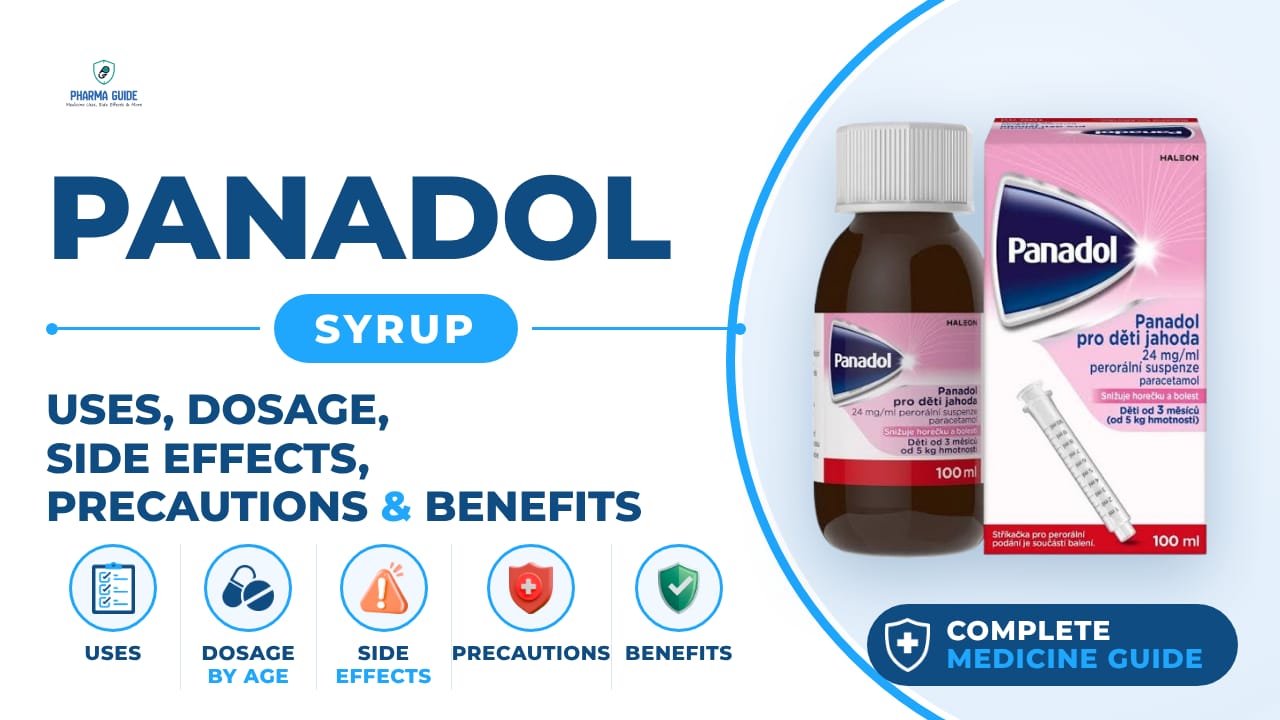
Panadol Syrup: Uses, Dosage, Side Effects, Precautions and Alternates
analgesic (pain reliever) & antipyretic (fever reducer)
Panadol Syrup contains paracetamol to relieve pain and reduce fever in children, easing earache, teething, headache and cold or flu symptoms.
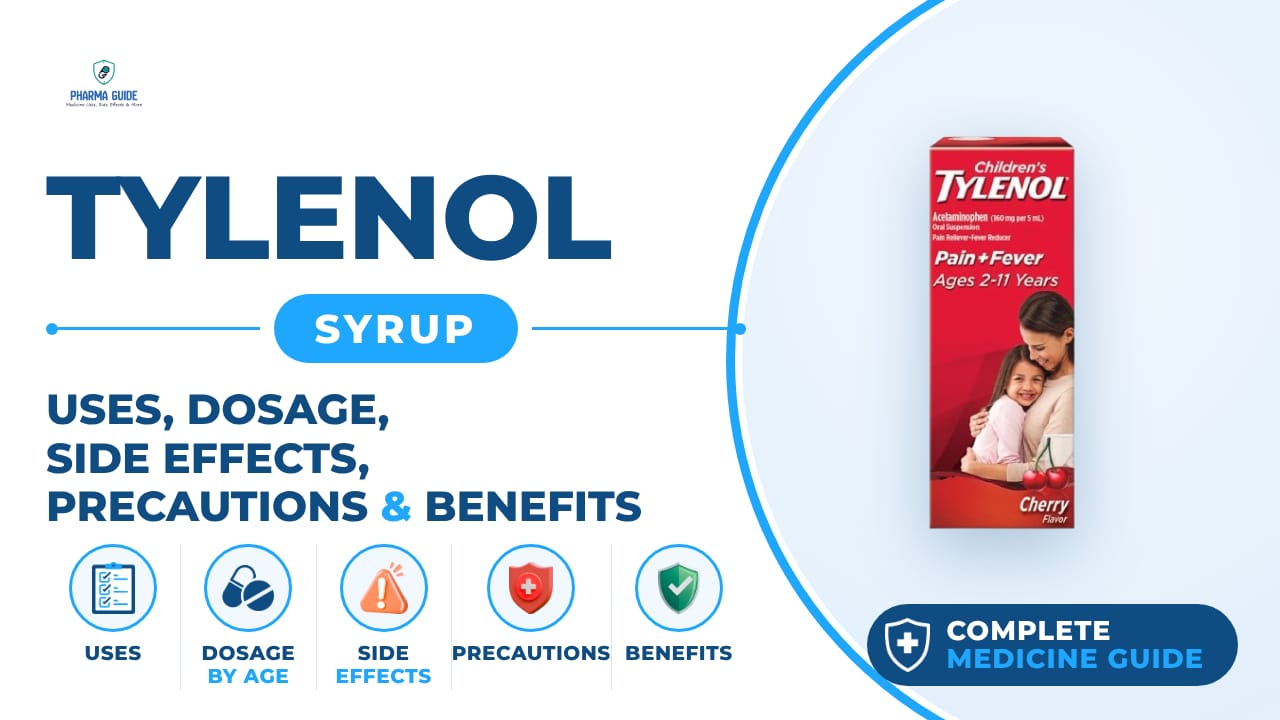
Tylenol Syrup: Uses, Dosage, Side Effects, Precautions and Alternates
analgesic (pain reliever) and antipyretic (fever reducer
Tylenol Syrup contains acetaminophen to reduce fever and relieve minor aches in children. Learn dosage by age, uses, side effects, and warnings.