
Safety
General information, not medical advice
Your prescriber and the leaflet in your pack know your situation. This page does not.
- Follow your prescriber and the leaflet
- Don't start, stop, or change a dose on your own
- Doses and warnings differ by country and product
Paracetamol Suppository: Uses, Dosage, Side Effects, Precautions and Alternates
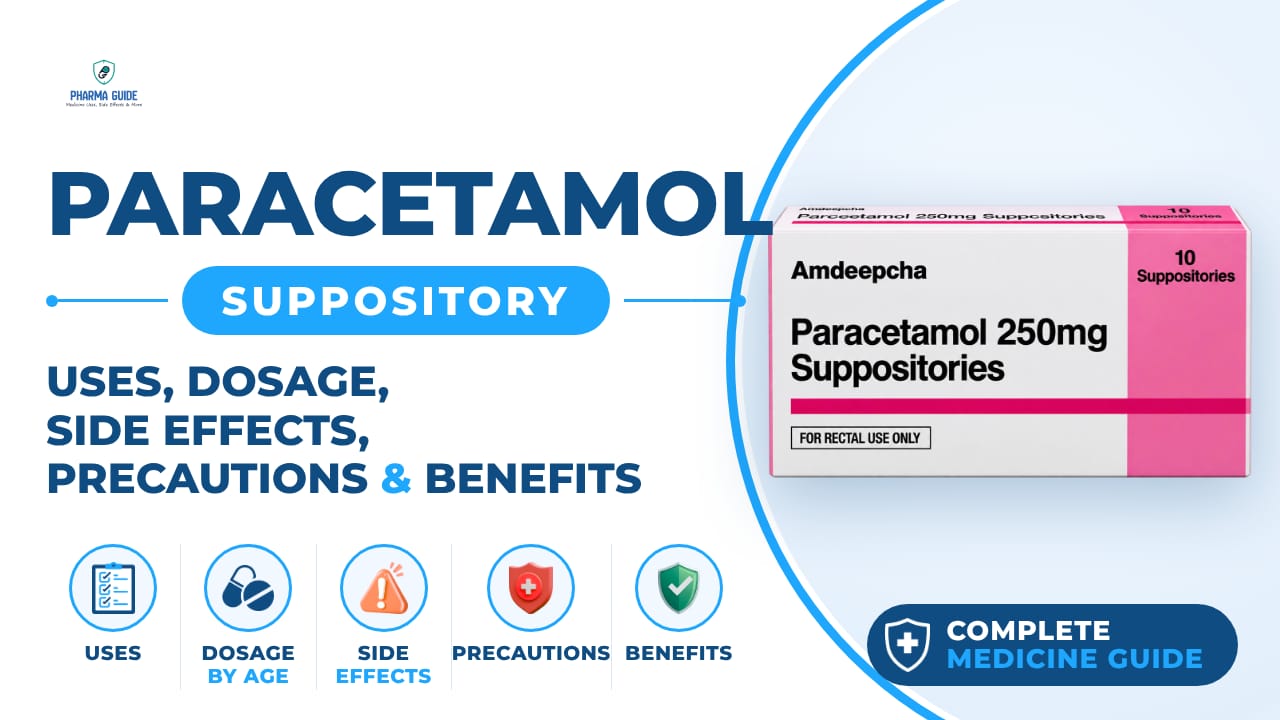
| Generic name | Paracetamol |
|---|---|
| Drug class | Pain-killer (analgesic) |
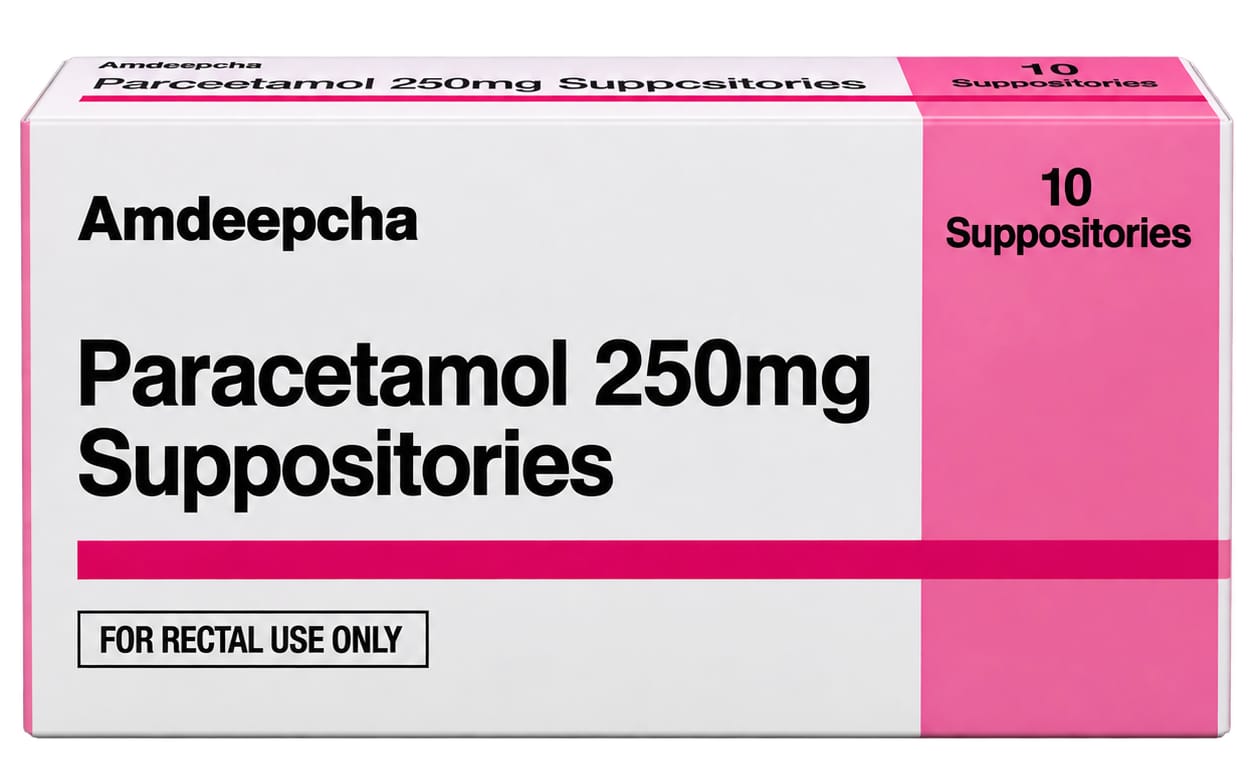
| Forms | Suppository (125mg, 250mg, 500mg, 1000mg) |
Quick overview
Paracetamol Suppository contains paracetamol, a pain-killer (analgesic), given as a torpedo-shaped suppository inserted into the back passage (rectum). It is used to treat mild to moderate pain and high temperature (fever), especially when it is difficult to take paracetamol by mouth. It comes in four strengths and should not be used for more than 3 days except on a doctor's advice.
What is Paracetamol Suppository
Paracetamol Suppositories contain a medicine called paracetamol, which belongs to a group of medicines called pain-killers (analgesics). A suppository is a small, torpedo-shaped medicine that is inserted into the back passage (rectum). It comes in four strengths.
Paracetamol Suppository uses
- Treatment of mild to moderate pain such as toothache
- Treatment of high temperature (fever)
- Used when it is difficult to take paracetamol by mouth as tablets or syrup
- In children: headache, toothache, earache, teething, sore throat, and aches and pains associated with colds and influenza
Benefits of Paracetamol Suppository
- Useful if you are unable to swallow an oral medicine for any reason
- Useful if you are vomiting or feel sick and cannot keep an oral medicine down
- Useful if you are having seizures and cannot take medicines by mouth
- Useful if you have a blockage that stops medicine moving through the digestive system
- Useful if you have had surgery and cannot take medicines by mouth
How Paracetamol Suppository works
Paracetamol is a pain-killer that works to relieve pain and reduce a high temperature (fever). When given as a suppository it is absorbed in the rectum, so it still works even if you vomit.
Paracetamol Suppository dosage
This medicine is for rectal use only. Do not put the suppository in the mouth or swallow it. Do not take any other paracetamol containing products whilst using paracetamol suppositories.
Your bowels need to be empty when you use this medicine. If you need to go to the toilet, make sure you do it before you use the suppository. It may be easier to use the suppository if you are lying on your front or side on a bed.
Wash your hands, then peel the wrapping apart to take out the suppository. Use only a whole suppository. Do not break the suppository before use. Gently push the suppository into the back passage with the pointed end first. To make it easier to use, you may warm the suppository slightly between your hands beforehand. Try to keep still for a minute or two and then wash your hands.
If you switch between oral and rectal paracetamol forms, leave at least 4 to 6 hours between doses, and never give suppositories at the same time as oral liquids or tablets containing paracetamol. If your child vomits after having a suppository, there is no need to give another dose because the suppository is absorbed in the rectum.
If the suppository is swallowed accidentally, tell your doctor straight away or contact your nearest Accident and Emergency Department. Do not use for more than 3 days, except on the advice of a doctor.
| Age group | Dose |
|---|---|
| Under 3 months | Only with medical advice |
| 3–11 months | 10–15 mg/kg per dose |
| 1–11 years | 10–15 mg/kg per dose |
| 12+ years / adults | 10–15 mg/kg per dose; adult products commonly use 500–1,000 mg per dose |
Available forms and strengths
Suppository (125mg, 250mg, 500mg, 1000mg)
Side effects of Paracetamol Suppository
Common
- Redness or soreness in and around the back passage
- Mild redness or irritation around the rectum
Serious
- Signs of allergic reaction such as rash, hives, swallowing or breathing problems, wheezing, swelling of the lips, face, throat or tongue
- Blood problems: bruising or bleeding more easily than usual, being more prone to infections, or getting a high temperature (fever) and ulcers in the mouth and throat
- Liver problems, with symptoms such as jaundice (yellowing of the skin or whites of the eyes)
- Very rare serious skin reactions with skin reddening, blisters or rash
- Metabolic acidosis (a serious condition that makes blood more acidic) in patients with severe illness
Warnings and precautions
- Do not use if you are allergic to paracetamol, soya, peanuts or any of the other ingredients of this medicine.
- Do not use other medicines containing paracetamol at the same time as these suppositories.
- This medicine is for rectal use only and must not be taken by mouth.
- There is a serious risk of a blood and fluid abnormality (metabolic acidosis) needing urgent treatment, particularly with severe kidney problems, sepsis, malnutrition, chronic alcoholism, taking flucloxacillin, or using the maximum daily doses of paracetamol.
- Do not use for more than 3 days, except on the advice of a doctor.
- Long-term daily use of paracetamol for several months or more could cause certain side effects, including liver damage.
- If necessary, Paracetamol Suppositories can be used during pregnancy. Use the lowest possible dose that reduces your pain and/or fever, for the shortest time possible. Contact your doctor if the pain or fever is not reduced or if you need the medicine more often.
- Take special care and talk to your pharmacist or doctor if you have problems with your kidneys or your liver.
Storage
- Keep this medicine out of the sight and reach of children.
- Do not use this medicine after the expiry date which is stated on the carton and on the blister strip. The expiry date refers to the last day of that month.
- Do not store over 30°C.
- Do not throw away any medicines via wastewater or household waste. Ask your pharmacist how to throw away medicines you no longer use.
When to see a doctor
- Talk to a doctor at once if you take too much of this medicine even if you feel well, because too much paracetamol can cause delayed, serious liver damage.
- Stop using the suppositories immediately and call your doctor if you notice any signs of an allergic reaction such as rash, swallowing or breathing problems, or swelling of the lips, face, throat or tongue.
- Talk to a doctor or pharmacist if you do not feel better or if you feel worse after 3 days.
- For children, tell the doctor straight away if the child has severe illness, and watch for symptoms of metabolic acidosis such as serious breathing difficulties with deep rapid breathing, drowsiness, feeling sick and being sick.
- If the suppository is swallowed accidentally, tell the doctor straight away or contact your nearest Accident and Emergency Department.
Alternatives
- Ibuprofen
- Naproxen
- Diclofenac
- Ibuprofen suppository
- Oral paracetamol syrup/tablet
Watch the video
FAQs
What is Paracetamol Suppository used for?
It is used to treat mild to moderate pain such as toothache and high temperature (fever), especially when it is difficult to take paracetamol by mouth. In children, it also helps with headache, earache, teething, sore throat, and aches and pains from colds and influenza.
How do I use a Paracetamol Suppository correctly?
This medicine is for rectal use only and must not be put in the mouth or swallowed. Empty your bowels first, wash your hands, use a whole suppository without breaking it, and gently push it into the back passage pointed end first. Stay still for a minute or two afterward and wash your hands again.
Can I use Paracetamol Suppository with other paracetamol products?
No, you should not take any other paracetamol containing products while using paracetamol suppositories. If switching between oral and rectal forms, leave at least 4 to 6 hours between doses.
What should I do if my child vomits after a suppository?
There is no need to give another dose if your child vomits after having a suppository, because the suppository is absorbed in the rectum.
How long can I use Paracetamol Suppository?
Do not use it for more than 3 days except on the advice of a doctor. Talk to a doctor or pharmacist if you do not feel better or feel worse after 3 days.
General information, not medical advice
Your prescriber and the leaflet in your pack know your situation. This page does not.
- Follow your prescriber and the leaflet
- Don't start, stop, or change a dose on your own
- Doses and warnings differ by country and product
Sources
Video
Related medicines

Injectafer Injection: Uses, Dosage, Side Effects, Precautions and Alternates
Iron products
Injectafer (ferric carboxymaltose) treats iron deficiency anemia and heart failure-related iron deficiency via IV. Learn uses, dosage, side effects, and

Gliclazide Tablet: Uses, Dosage, Side Effects, Precautions and Alternates
Sulfonylurea (hypoglycemic/antidiabetic agent)
Gliclazide Tablet is a sulfonylurea for type 2 diabetes that boosts insulin release. Learn about dosage, side effects, warnings, and precautions.