
Safety
General information, not medical advice
Your prescriber and the leaflet in your pack know your situation. This page does not.
- Follow your prescriber and the leaflet
- Don't start, stop, or change a dose on your own
- Doses and warnings differ by country and product
Parnate Tablet: Uses, Dosage, Side Effects, Precautions and Alternates
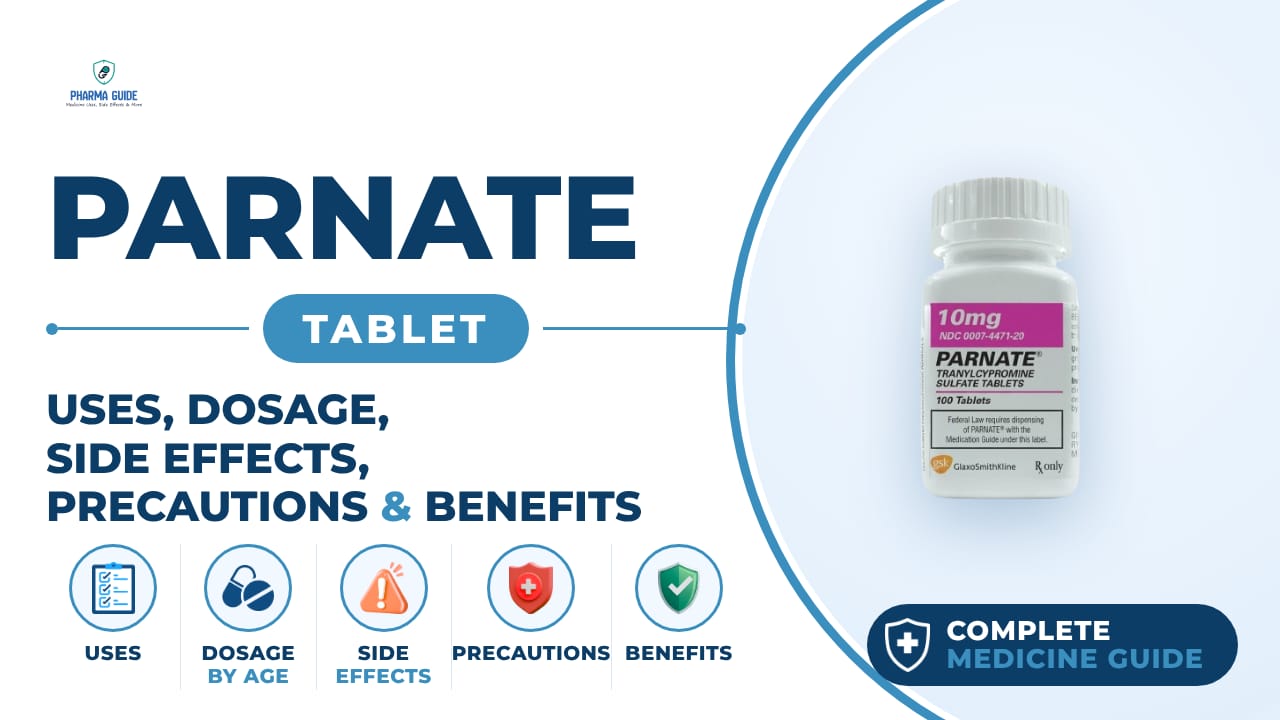
| Generic name | Tranylcypromine |
|---|---|
| Drug class | Monoamine oxidase inhibitor (MAOI) antidepressant |
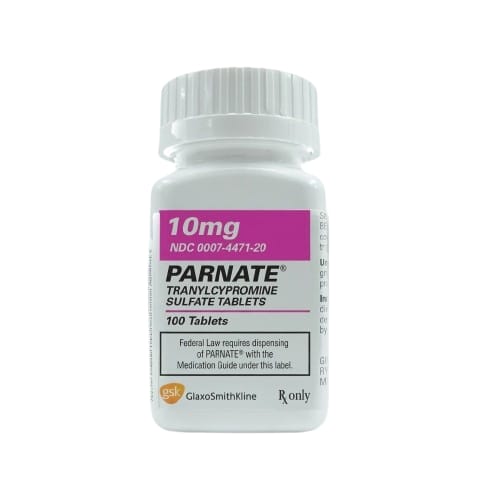
| Forms | Film-coated tablets (10 mg) |
Quick overview
Parnate Tablet contains tranylcypromine, a monoamine oxidase inhibitor (MAOI) antidepressant. It is a prescription-only medicine used to treat depression, especially when other antidepressants have not worked well, and it may also help with feelings of fear (phobia) linked to depression. It works by stopping the breakdown of serotonin and noradrenaline in the brain. It is not intended for everyday low moods caused by stress or sadness.
What is Parnate Tablet
Parnate is a prescription-only tablet that contains the active ingredient tranylcypromine. It belongs to a group of antidepressant medicines called monoamine oxidase inhibitors (MAOIs) and is used to treat depression, usually when other antidepressants have not worked well.
Parnate Tablet uses
- Treats symptoms of depression, especially when other types of antidepressants have failed
- Can help with feelings of fear (phobia) that sometimes occur with depression
- Not recommended for everyday low moods caused by stress or sadness
Benefits of Parnate Tablet
- May improve mood and emotional well-being
- May reduce persistent sadness
- May help restore interest in daily activities
- May improve everyday functioning as depression improves
- May help when other antidepressants have not worked
How Parnate Tablet works
Parnate works by stopping the breakdown of serotonin and noradrenaline, two brain chemicals linked to mood, helping bring their levels back to normal.
Parnate Tablet dosage
Swallow the tablets whole with a full glass of water or another liquid; do not chew them. They are usually taken in the morning and at midday, with the last dose of the day no later than 3 pm to help avoid sleep disturbances.
Most antidepressants take time to work, so do not be discouraged if you do not feel better right away; some symptoms may improve in a week or two, but it can take longer to feel full benefit. Continue taking the medicine for as long as your doctor tells you, even once you feel well.
If you miss a dose, wait until your next scheduled dose; do not take a double dose to make up for a missed one. Do not stop taking this medicine or change the dose without checking with your doctor, as stopping suddenly can cause withdrawal effects.
| Age group | Dose |
|---|---|
| Under 18 years | Not recommended |
| 18–64 years | 30 mg/day |
| 65+ years | 30 mg/day |
Available forms and strengths
- Film-coated tablets (10 mg)
Side effects of Parnate Tablet
Common
- Rash
- Dizziness or blurred vision
- Drowsiness, weakness or fatigue
- Numbness or pins and needles
- Difficulty sleeping
- Chills, tremors
- Nervousness
- Dry mouth
- Nausea, vomiting
- Constipation, diarrhoea
- Stomach pain, loss of appetite
- Ringing in the ears
- Swelling in ankles or limbs
- Excess sweating
- Sexual problems
Serious
- Thoughts of suicide
- Severe dizziness or fainting on standing
- Fever
- Unusual bleeding or bruising
- Reduction in some blood cells
- Yellowing of the skin and eyes (jaundice)
- Agitation, confusion or nervousness
- Muscle spasms or twitches
- Difficulty passing urine or unable to empty urine from bladder
- Serious allergic reaction (swelling of the face, lips, mouth or throat causing difficulty swallowing or breathing)
- Chest palpitations, fast heartbeat or frequent headaches
- Severe headache starting at the back of the head with chest pain, neck stiffness, nausea, vomiting, fast or slow heartbeat, sweating, paleness then flushing, enlarged pupils and light sensitivity (signs of a hypertensive crisis)
Warnings and precautions
- You must avoid certain high-tyramine foods and drinks during treatment and for at least a week after stopping, including matured cheese, cured or spoiled meats/fish/poultry, yeast and protein extracts like Marmite or Vegemite, soy products, avocados, banana skins, and red wines, because these can trigger a sudden dangerous rise in blood pressure.
- Avoid large amounts of caffeine from foods or drinks like chocolate, coffee, tea or cola during treatment and for at least a week after stopping, as this can trigger migraine-like headaches.
- Do not take this medicine with other antidepressants (including other MAOIs, SSRIs, SNRIs, and tricyclic antidepressants) without talking to your doctor, as combining them can cause a dangerous condition called serotonin syndrome.
- Do not stop taking this medicine suddenly, as some people may get dizziness, anxiety, or other withdrawal effects; your doctor will usually reduce your dose gradually.
- Watch for signs that depression or anxiety is getting worse, especially in the first few weeks of treatment, including increased agitation, panic attacks, difficulty sleeping, hostility, restlessness or thoughts of suicide.
- Tell your doctor or dentist you are taking Parnate before any surgery or emergency treatment, and also if you stopped it in the last two weeks, since it can interact with medicines used during surgery.
- Parnate should not be used during pregnancy unless your doctor believes it is essential, because of possible risks to the baby including withdrawal symptoms and a higher chance of birth defects or early birth.
- It is not recommended to breastfeed while taking Parnate because the medicine passes into breast milk.
- People with kidney problems should tell their doctor before starting this medicine, since the drug may build up in the body if kidney function is impaired.
- Parnate should not be used in people with liver disease or abnormal liver function, as it is not recommended in this situation.
- You should not drink alcohol, including non-alcoholic beer, lager or wine, while taking this medicine, as it can cause dangerous reactions and worsen drowsiness or dizziness.
- Be careful driving or operating machinery until you know how this medicine affects you, since it can cause drowsiness, dizziness or light-headedness.
Storage
- Keep your tablets in the blister pack until it is time to take them
- Keep the pack in a cool, dry place where the temperature stays at or below 25°C
- Do not store in the bathroom or near a sink; do not leave it on a window sill or in the car, since heat and dampness can destroy some medicines
- Keep where children cannot reach it; a locked cupboard at least one-and-a-half metres above the ground is a good place to store medicines
- If your doctor tells you to stop taking it or the expiry date has passed, ask your pharmacist what to do with any leftover tablets
When to see a doctor
- Get help right away if you have any thoughts of harming yourself or ending your life, as this is a serious warning sign.
- Contact your doctor, a mental health advisor, or go to the nearest hospital if you or someone you know shows thoughts or talk of death, suicide, self-harm, harming others, recent self-harm attempts, or increasing aggression, irritability or agitation.
- Stop taking the medicine and get emergency care right away for signs of a serious allergic reaction, such as swelling of the face, lips, mouth or throat that causes trouble breathing or swallowing.
- Get emergency help immediately for chest palpitations, a fast heartbeat, or frequent headaches, or a severe headache with chest pain, neck stiffness, nausea, vomiting, sweating, paleness then flushing, and light sensitivity, as these can be signs of a life-threatening blood pressure crisis.
- If you think you or someone else may have taken too much of this medicine, get medical help immediately, even if there are no symptoms yet.
Alternatives
- Venlafaxine
- Selegiline
- Phenelzine
Watch the video
FAQs
What is Parnate Tablet used for?
Parnate treats symptoms of depression, especially when other antidepressants have not worked well, and may also help with feelings of fear (phobia) linked to depression. It is not recommended for everyday low moods caused by stress or sadness.
How does Parnate Tablet work?
Parnate works by stopping the breakdown of serotonin and noradrenaline, two brain chemicals linked to mood, helping bring their levels back to normal.
What foods should be avoided while taking Parnate?
You must avoid high-tyramine foods and drinks during treatment and for at least a week after stopping, including matured cheese, cured or spoiled meats/fish/poultry, yeast and protein extracts like Marmite or Vegemite, soy products, avocados, banana skins, and red wines, as these can trigger a sudden dangerous rise in blood pressure.
How should Parnate Tablet be taken?
Swallow the tablets whole with a full glass of water or another liquid without chewing them. They are usually taken in the morning and at midday, with the last dose no later than 3 pm to help avoid sleep disturbances.
Can I drink alcohol while taking Parnate?
No, you should not drink alcohol, including non-alcoholic beer, lager or wine, while taking this medicine, as it can cause dangerous reactions and worsen drowsiness or dizziness.
General information, not medical advice
Your prescriber and the leaflet in your pack know your situation. This page does not.
- Follow your prescriber and the leaflet
- Don't start, stop, or change a dose on your own
- Doses and warnings differ by country and product
Sources
Video
Related medicines

Injectafer Injection: Uses, Dosage, Side Effects, Precautions and Alternates
Iron products
Injectafer (ferric carboxymaltose) treats iron deficiency anemia and heart failure-related iron deficiency via IV. Learn uses, dosage, side effects, and

Gliclazide Tablet: Uses, Dosage, Side Effects, Precautions and Alternates
Sulfonylurea (hypoglycemic/antidiabetic agent)
Gliclazide Tablet is a sulfonylurea for type 2 diabetes that boosts insulin release. Learn about dosage, side effects, warnings, and precautions.