
Safety
General information, not medical advice
Your prescriber and the leaflet in your pack know your situation. This page does not.
- Follow your prescriber and the leaflet
- Don't start, stop, or change a dose on your own
- Doses and warnings differ by country and product
Paxil Tablet: Uses, Dosage, Side Effects, Precautions and Alternates
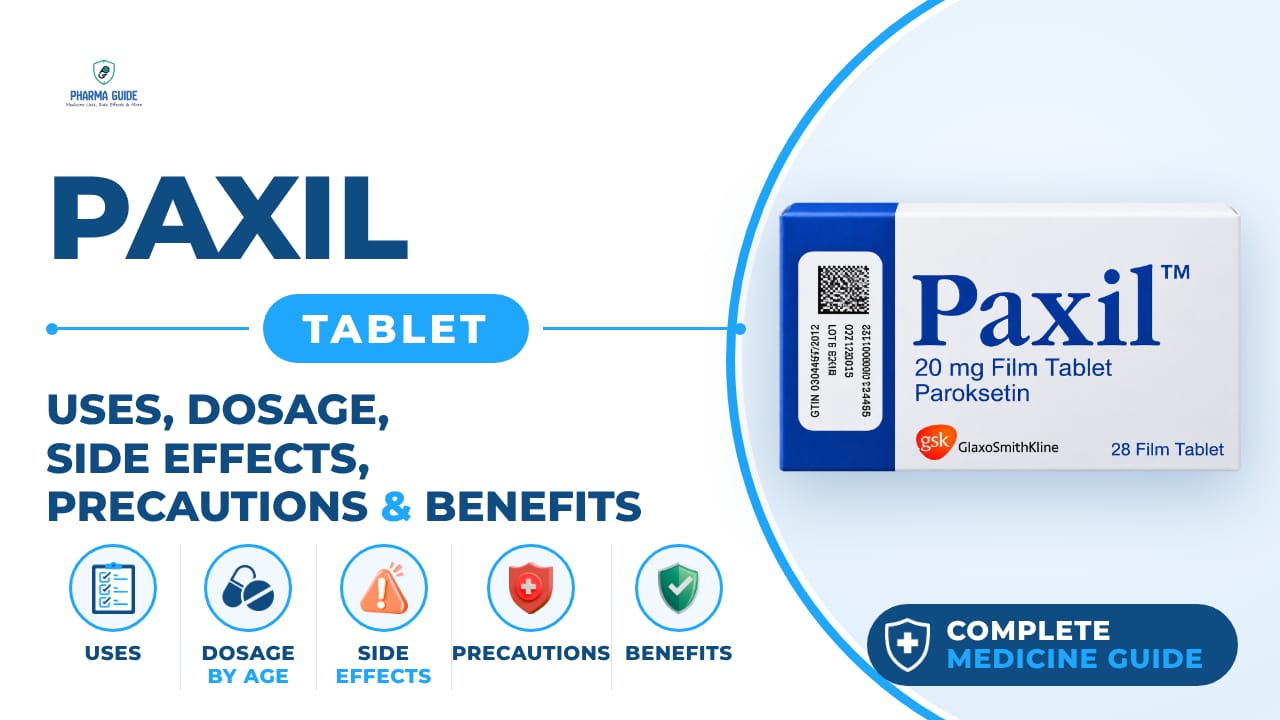
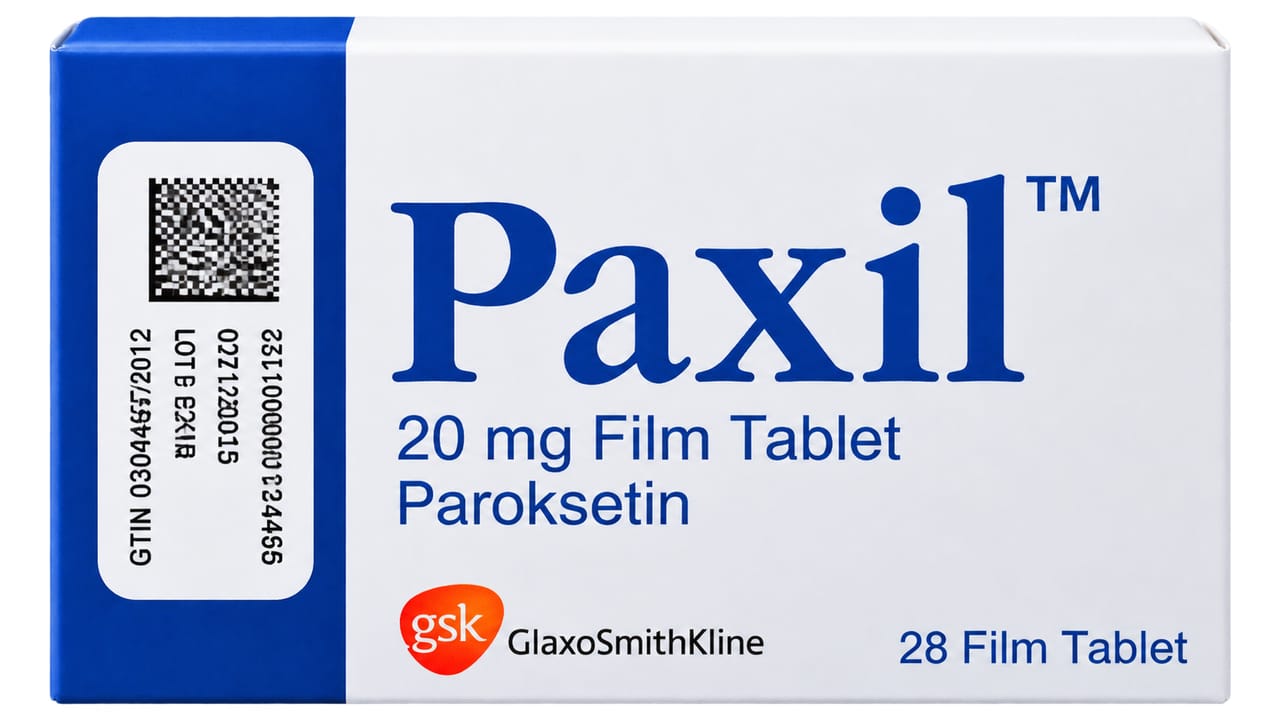
| Generic name | Paroxetine |
|---|---|
| Drug class | SSRI (selective serotonin reuptake inhibitor) |
| Forms | Tablets, Oral suspension (liquid) |
Quick overview
Paxil Tablet (paroxetine) is a prescription SSRI antidepressant used in adults to treat depression and several anxiety-related conditions. It is taken once daily, with or without food, and is also available as an oral liquid. Treatment must be started and stopped gradually under a doctor's guidance, as Paxil carries important warnings along with its benefits.
What is Paxil Tablet
Paxil is a prescription medicine that belongs to a group of antidepressants called selective serotonin reuptake inhibitors (SSRIs). It is used in adults to treat depression and several anxiety-related conditions.
Paxil Tablet uses
- Major Depressive Disorder (MDD)
- Obsessive Compulsive Disorder (OCD)
- Panic Disorder (PD)
- Social Anxiety Disorder (SAD)
- Generalized Anxiety Disorder (GAD)
- Posttraumatic Stress Disorder (PTSD)
Benefits of Paxil Tablet
- Only needs to be taken once daily
- Available as a tablet and oral liquid
- Can be taken with or without food
- Can be used for many different mental health conditions
- Can be helpful for people who have both anxiety and depression
How Paxil Tablet works
Paxil works by increasing the amount of serotonin, a brain chemical that helps regulate mood, available in the brain by blocking its reabsorption into nerve cells.
Paxil Tablet dosage
Take Paxil exactly as prescribed by your healthcare provider. Take it once a day, in the morning. You can take it with or without food.
If you take the oral suspension (liquid), shake it well before each use, and measure your dose with an oral syringe or dosing cup instead of a household spoon.
Do not stop taking Paxil suddenly; your provider will help you lower the dose gradually over time to avoid withdrawal symptoms.
Older adults, and people with kidney or liver problems, may be started on a lower dose.
| Age group | Dose |
|---|---|
| Under 18 Years | Not routinely recommended unless prescribed by a specialist |
| Adults (18–64 Years) | 20 mg once daily initially; adjusted based on condition (usual range 20–50 mg/day) |
| Older Adults (65+ years) | 10 mg once daily initially; adjusted based on response (maximum dose depends on condition) |
Available forms and strengths
- Tablets
- Oral suspension (liquid)
Side effects of Paxil Tablet
Common
- Abnormal ejaculation
- Nausea
- Weakness
- Sleepiness or trouble sleeping
- Dry mouth
- Constipation
- Sweating
- Dizziness
- Diarrhea
- Low libido
- Shakiness
- Blurry vision
- Nervousness
- Low appetite
- Anxiety
- Numbness or tingling
- Weight gain
- Yawning
Serious
- Suicidal thoughts or behaviors
- Serotonin syndrome (fast heart rate, dizziness, sweating, flushing, tremor, muscle stiffness, muscle twitching or spasms, uncoordinated movement, seizures, hallucinations, coma)
- Seizures
- Abnormal heart rhythm (QT prolongation) with chest pounding, shortness of breath, chest pain, feeling faint or lightheaded
- Severe bleeding (bruising that doesn't improve, black-colored stools, pink or red-colored urine, coughing up or vomiting blood, unusual bleeding from the nose or gums)
- Low blood sodium levels (nausea, fatigue, headache, confusion, disorientation, hallucinations, seizures, unconsciousness)
- Manic episodes in people with bipolar disorder
- Angle-closure glaucoma
- Bone fractures
Warnings and precautions
- Paxil can increase the risk of suicidal thoughts and behavior, especially in people 24 years of age or younger, particularly during the first few weeks of treatment or when the dose changes.
- Paxil can cause a rare but potentially life-threatening condition called serotonin syndrome, especially when combined with other medicines that raise serotonin levels.
- Do not take Paxil with certain medicines including MAOIs, pimozide, or thioridazine, as this combination is dangerous.
- Paxil can increase the risk of bleeding, especially if taken with aspirin, NSAIDs, or blood thinners.
- In people with bipolar disorder, Paxil can trigger a manic or mixed episode if used alone.
- Stopping Paxil suddenly can cause withdrawal-like symptoms; the dose should be lowered gradually under medical supervision.
- Paxil may cause or worsen a type of eye problem called angle-closure glaucoma in people with certain untreated eye conditions.
- Paxil can cause low sodium levels in the blood, which can be serious, especially in older adults.
- Paxil should be used cautiously in people with a history of seizures, and should be stopped if seizures occur.
- Paxil is not recommended during pregnancy because it may cause serious harm to an unborn baby, including heart problems. Tell your provider right away if you become pregnant or are planning to become pregnant.
- Paxil passes into breast milk, so talk with your healthcare provider about the safest way to feed your baby if you are breastfeeding while taking this medicine.
- People with severe kidney problems are usually started on a lower dose of Paxil because the drug can build up more in the body.
- People with severe liver problems are usually started on a lower dose of Paxil because the drug can build up more in the body.
- Avoid drinking alcohol while taking Paxil, as it can make side effects like drowsiness and dizziness worse and can worsen depression symptoms.
- Paxil can make you sleepy and dizzy, so don't drive or do anything that requires focus until you know how the medicine affects you.
Storage
- Store tablets between 59°F to 86°F (15°C to 30°C).
- Store oral suspension at or below 77°F (25°C).
- Keep Paxil and all medicines out of the reach of children.
When to see a doctor
- Get emergency help right away if you have thoughts of suicide or self-harm, or notice sudden changes in mood or behavior.
- Seek emergency care if you notice signs of serotonin syndrome, such as agitation, hallucinations, fast heartbeat, high fever, muscle stiffness or twitching, loss of coordination, or seizures.
- Get medical help right away if you notice eye pain, vision changes, or swelling or redness around the eyes.
- Seek medical attention if you have symptoms of low blood sodium like headache, confusion, memory problems, weakness, or fainting.
- Contact your provider about any unusual bleeding or bruising.
- Get medical help if you notice signs of a manic episode, such as greatly increased energy, racing thoughts, or reckless behavior.
Alternatives
- Sertraline
- Escitalopram
- Venlafaxine
Watch the video
FAQs
What is Paxil Tablet used for?
Paxil is used to treat Major Depressive Disorder, Obsessive Compulsive Disorder, Panic Disorder, Social Anxiety Disorder, Generalized Anxiety Disorder, and Posttraumatic Stress Disorder.
How should I take Paxil Tablet?
Take Paxil once a day in the morning, with or without food, exactly as prescribed. If using the oral suspension, shake it well and measure the dose with an oral syringe or dosing cup.
Can I stop taking Paxil suddenly?
No, you should not stop Paxil suddenly. Your provider will help you lower the dose gradually over time to avoid withdrawal symptoms.
What are the common side effects of Paxil?
Common side effects include nausea, dry mouth, constipation, dizziness, diarrhea, sweating, low libido, sleepiness or trouble sleeping, and weight gain.
Is Paxil safe during pregnancy?
Paxil is not recommended during pregnancy because it may cause serious harm to an unborn baby, including heart problems. Tell your provider right away if you become pregnant or are planning to become pregnant.
General information, not medical advice
Your prescriber and the leaflet in your pack know your situation. This page does not.
- Follow your prescriber and the leaflet
- Don't start, stop, or change a dose on your own
- Doses and warnings differ by country and product
Sources
Video
Related medicines

Injectafer Injection: Uses, Dosage, Side Effects, Precautions and Alternates
Iron products
Injectafer (ferric carboxymaltose) treats iron deficiency anemia and heart failure-related iron deficiency via IV. Learn uses, dosage, side effects, and

Gliclazide Tablet: Uses, Dosage, Side Effects, Precautions and Alternates
Sulfonylurea (hypoglycemic/antidiabetic agent)
Gliclazide Tablet is a sulfonylurea for type 2 diabetes that boosts insulin release. Learn about dosage, side effects, warnings, and precautions.